• Fri frakt över 249 kr
  • •
  • Snabba leveranser
  • •
  • Billiga böcker
Kundservice

Du är på sajten för privatpersoner.

Företag, bibliotek eller offentlig verksamhet?

Du handlar på classic.bokus.com, där alla dina funktioner finns intakta.
Till classic.bokus.com
Bokus logotyp. Gå till startsidan.
  • Erbjudanden
  • Nyheter
  • Student
  • Topplistor
  • Barn & ungdom
  • Bokus Play
  • E-böcker
  • Pocketböcker
  • Spel & pussel

10% rabatt på allt med kod: NYSTART10 →

Sidfot

Mina sidor

    Hjälp

    • Kundservice
    • Vanliga frågor och svar
    • Frakt och leverans
    • Retur vid ångerrätt
    • Reklamera vara
    • Betalning
    • Köpvillkor
    • Allmänna villkor
    • Information om webbplatsens tillgänglighet

    Om Bokus

    • Om oss
    • Pressrum
    • För studenter
    • För företag
    • För bibliotek och offentlig verksamhet
    • För leverantörer
    • Hållbarhet

    Populärt

    • Aktuella erbjudanden
    • Presentkort
    • Studentlitteratur
    • Nya böcker
    • Topplistor
    • Signerade böcker
    • Engelska böcker

    Inspiration

    • Boktips
    • BookTok
    • Populära bokserier
    • Barnbokskaraktärer
    • Populära författare
    Logotyp för Bokus
    Följ oss på Facebook (extern länk)Följ oss på Instagram (extern länk)Följ oss på YouTube (extern länk)Följ oss på TikTok (extern länk)
    bokus @ CookiesAnpassa cookiesIntegritetspolicyKöpvillkor
    Till Citymail hemsida (extern länk)Till Budbee hemsida (extern länk)Till Postnord hemsida (extern länk)Till Schenker hemsida (extern länk)Till Early Bird hemsida (extern länk)Till Walleys hemsida (extern länk)
    1. Psykologi och pedagogik
    2. Psykologi
    3. Arbetspsykologi

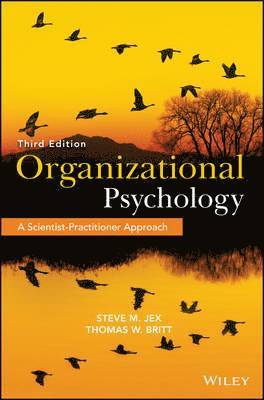
    Organizational Psychology

    A Scientist-Practitioner Approach

    AvSteve M. Jex,Thomas W. Britt

    Inbunden, Engelska, 2015

    1 235 kr

    Tillfälligt slut

    Beskrivning

    The foundation of organizational psychology, updated to reflect the changing workplace Organizational Psychology: A Scientist-Practitioner Approach, Third Edition provides students with a thorough overview of both the science and practice of organizational psychology. Reflecting changes in the global workplace, the third edition expands coverage of the effects of technology on processes and personnel, the generalizability of theories across cultures, including organizational climate, and employee health and well-being. The new edition retains the hallmark features of the text and Expanded coverage of the pervasive effects of technology on the social environment of work, including virtual work and the impact of social media.More graphics, including tables and charts, to help students understand and remember various related concepts and theories.Includes a unique full chapter on research methods and the use of statistics in understanding organizations.New chapter on the work/non-work interface, including consideration of both employees' life stages and changes over their careers.Provides Instructors with comprehensive presentation and testing materials.More on ethics, in light of relatively recent scandals in corporations and in politics.Expanded coverage throughout on cross-cultural issues and diversity in organizations.Additional readings facilitate in-depth learning.Industrial and organizational psychologists contribute to the success of an organization by improving the performance, satisfaction, and well-being of employees. By identifying how behaviors and attitudes can be improved through hiring practices, training programs, and feedback and management systems, I/O psychologists also help organizations transition during periods of change and development. Organizational Psychology: A Scientist-Practitioner Approach, Third Edition is a comprehensive guide to the theory and application of behavioral science in the workplace.

    Produktinformation

    • Utgivningsdatum:2015-02-20
    • Mått:188 x 259 x 41 mm
    • Vikt:1 429 g
    • Format:Inbunden
    • Språk:Engelska
    • Antal sidor:720
    • Upplaga:3
    • Förlag:John Wiley & Sons Inc
    • ISBN:9781118724071

    Utforska kategorier

    • Arbetspsykologi inom Psykologi och pedagogik

    Mer om författaren

    STEVE M. JEX, PHD, is a well-known researcher in workplace stress and consults for many organizations including the United States Army. He teaches and directs graduate students at Bowling Green State University.THOMAS W. BRITT, PHD, is a social psychologist specializing in work and family. He brings that expertise as well as his teaching experience with undergraduates to this new edition of Organizational Psychology. He teaches and directs graduate students at Clemson University.

    Innehållsförteckning

    • Preface xiCHAPTER 1 INTRODUCTION TO ORGANIZATIONAL PSYCHOLOGY 1What Is Organizational Psychology? 2Organizational Psychology in Context 4The Scientist-Practitioner Approach 6Historical Influences in Organizational Psychology 11Recent Past and Beyond 22The Chapter Sequence 23Chapter Summary 24Suggested Additional Readings 25CHAPTER 2 RESEARCH METHODS AND STATISTICS 27Methods of Data Collection 28Special Issues in Data Collection 44Ethics in Data Collection 53Statistical Methods in Organizational Psychology 54Special Issues in Statistical Analysis 59Chapter Summary 67Suggested Additional Readings 68CHAPTER 3 ATTRACTION AND SOCIALIZATION 69The Recruitment Process: An Organizational Perspective 70The Recruitment Process: The Applicant’s Perspective 74Organizational Socialization 77The Impact of Diversity on Organizational Socialization 101The Future of Organizational Socialization Research 102Chapter Summary 103Suggested Additional Readings 104CHAPTER 4 THE WORK–NONWORK INTERFACE 105Kelsey-Jo Ritter and Steve M. JexSome Basic Assumptions About the Work and NonWork Interface 106The Transition Into Work: Youth Employment 107Transition to a Career 112Balancing Work and Nonwork Demands 113Antecedents of Work-Family Conflict 115Consequences of Work-Family Conflict 116Reducing and Preventing Work-Family Conflict 117The Positive Side of Work-Family Interface 119Work-Family Balance 121Transitioning Out of Work: Retirement 121Chapter Summary 130Suggested Additional Readings 131CHAPTER 5 PRODUCTIVE BEHAVIOR IN ORGANIZATIONS 133Defining Productive Behavior 134Job Performance 134Measurement of Job Performance 143Determinants of Job Performance 150Organizational Citizenship Behavior 160Innovation and Adaptability in Organizations 166Chapter Summary 174Suggested Additional Readings 175CHAPTER 6 COUNTERPRODUCTIVE BEHAVIOR IN ORGANIZATIONS 177Defining Counterproductive Work Behavior 178The Structure of Counterproductive Work Behavior 178Causes of Counterproductive Work Behavior 180Common Forms of Counterproductive Work Behavior 186Low Base Rate Counterproductive Work Behavior 194Some Final Thoughts on Counterproductive Work Behavior 204Chapter Summary 204Suggested Additional Readings 206CHAPTER 7 OCCUPATIONAL STRESS AND EMPLOYEE HEALTH AND WELL-BEING 207A Brief History 208Approaches and Terminology 209Occupational Stress Terminology 211Occupational Stress Models 213Workplace Stressors 222Employee Safety 235Employee Health in Vulnerable Populations 236Reducing the Impact of Workplace Stressors 237Cross-Cultural Occupational Stress Research 242Chapter Summary 244Suggested Additional Readings 245CHAPTER 8 BELIEFS AND ATTITUDES ABOUT WORK AND THE ORGANIZATION 247Job Satisfaction 248Organizational Commitment 269Additional Job Beliefs 280Chapter Summary 286Suggested Additional Readings 288CHAPTER 9 THEORIES OF MOTIVATION 289Defining Motivation, Basic Assumptions, and Theoretical Approaches 290Need-Based Theories of Motivation 292Cognitive Process Theories of Motivation 296The Behavioral Approach to Motivation 312Self-Determination Theory 316Job-Based Theories of Motivation 318The Practical Value of Motivation Theories 327Chapter Summary 329Suggested Additional Readings 330CHAPTER 10 ORGANIZATIONAL APPLICATIONS OF MOTIVATION THEORY 331Some Basic Assumptions 331Behaviors Organizations Attempt to Influence 332Organizational Reward Systems 334Motivation Through the Design of Work 350Proactive Motivation and Job Crafting 364Organizational Disciplinary Procedures 366Chapter Summary 368Suggested Additional Readings 369CHAPTER 11 LEADERSHIP AND INFLUENCE PROCESSES 371Defining Leadership 371General Approaches to Leadership 374Modern Theories of Leadership 380Power and Influence in Organizations 398Chapter Summary 408Suggested Additional Readings 409CHAPTER 12 TEAM DYNAMICS AND PROCESSES WITHIN ORGANIZATIONS 411Stages of Team Development 412Defining Team Effectiveness 415Models of Team Effectiveness 416Determinants of Team Effectiveness 428Within-Team Processes 436Enhancing the Effectiveness of Teams 446The Future of Teams in Organizations 450Chapter Summary 451Suggested Additional Readings 452CHAPTER 13 ORGANIZATIONAL THEORY AND DESIGN 453What Is an “Organizational Theory”? 454Major Organizational Theories 456Determinants of Organizational Design 463Recent Innovations in Organizational Design 475Research on Organizational Design 480The Future of Organizational Design 481Chapter Summary 483Suggested Additional Readings 484CHAPTER 14 ORGANIZATIONAL CULTURE AND CLIMATE 487Defining Organizational Culture 488Models of Organizational Culture 491Manifestations of Organizational Culture 493The Development of Organizational Culture 499Measuring Organizational Culture 500Changing Organizational Culture 502The Impact of Organizational Culture 508Organizational Climate: The Psychological Experience 512Chapter Summary 514Suggested Additional Readings 517CHAPTER 15 ORGANIZATIONAL CHANGE AND DEVELOPMENT 519What Is Organizational Development and Why Is It Used? 519A Brief History of Organizational Development 521The Theory Base of Organizational Development 523Organizational-Change Interventions 533Conditions Necessary for Successful Organizational Change 544Evaluation of Organizational-Development Programs 549Special Issues in Client–Consultant Relationships 555Chapter Summary 558Suggested Additional Readings 559References 561Author Index 663Subject Index 685