• Fri frakt över 249 kr
  • •
  • Snabba leveranser
  • •
  • Billiga böcker
Kundservice

Du är på sajten för privatpersoner.

Företag, bibliotek eller offentlig verksamhet?

Du handlar på classic.bokus.com, där alla dina funktioner finns intakta.
Till classic.bokus.com
Bokus logotyp. Gå till startsidan.
  • Erbjudanden
  • Student
  • Topplistor
  • Barn & ungdom
  • Bokus Play
  • E-böcker
  • Ljudböcker
  • Pocketböcker
  • Spel & pussel

Upp till 25% på utvalda nyheter →

Sidfot

Mina sidor

    Hjälp

    • Kundservice
    • Vanliga frågor och svar
    • Frakt och leverans
    • Retur vid ångerrätt
    • Reklamera vara
    • Betalning
    • Köpvillkor
    • Allmänna villkor
    • Information om webbplatsens tillgänglighet

    Om Bokus

    • Om oss
    • Pressrum
    • För studenter
    • För företag
    • För bibliotek och offentlig verksamhet
    • För leverantörer
    • Hållbarhet

    Populärt

    • Aktuella erbjudanden
    • Presentkort
    • Studentlitteratur
    • Nya böcker
    • Topplistor
    • Signerade böcker
    • Engelska böcker

    Inspiration

    • Boktips
    • BookTok
    • Populära bokserier
    • Barnbokskaraktärer
    • Populära författare
    Logotyp för Bokus
    Följ oss på Facebook (extern länk)Följ oss på Instagram (extern länk)Följ oss på YouTube (extern länk)Följ oss på TikTok (extern länk)
    bokus @ CookiesAnpassa cookiesIntegritetspolicyKöpvillkor
    Till Citymail hemsida (extern länk)Till Budbee hemsida (extern länk)Till Postnord hemsida (extern länk)Till Schenker hemsida (extern länk)Till Early Bird hemsida (extern länk)Till Walleys hemsida (extern länk)
    1. Naturvetenskap och teknik
    2. Teknik och industri
    3. Elektronik och kommunikationer

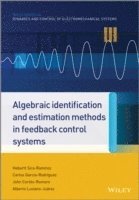
    Algebraic Identification and Estimation Methods in Feedback Control Systems

    AvHebertt Sira-Ramírez,Carlos García Rodríguez

    Inbunden, Engelska, 2014

    Del i serien Wiley Series in Dynamics and Control of Electromechanical Systems

    1 519 kr

    Beställningsvara. Skickas inom 5-8 vardagar. Fri frakt över 249 kr.

    Beskrivning

    Algebraic Identification and Estimation Methods in Feedback Control Systems presents a model-based algebraic approach to online parameter and state estimation in uncertain dynamic feedback control systems. This approach evades the mathematical intricacies of the traditional stochastic approach, proposing a direct model-based scheme with several easy-to-implement computational advantages. The approach can be used with continuous and discrete, linear and nonlinear, mono-variable and multi-variable systems. The estimators based on this approach are not of asymptotic nature, and do not require any statistical knowledge of the corrupting noises to achieve good performance in a noisy environment. These estimators are fast, robust to structured perturbations, and easy to combine with classical or sophisticated control laws.This book uses module theory, differential algebra, and operational calculus in an easy-to-understand manner and also details how to apply these in the context of feedback control systems. A wide variety of examples, including mechanical systems, power converters, electric motors, and chaotic systems, are also included to illustrate the algebraic methodology. Key features: Presents a radically new approach to online parameter and state estimation.Enables the reader to master the use and understand the consequences of the highly theoretical differential algebraic viewpoint in control systems theory.Includes examples in a variety of physical applications with experimental results.Covers the latest developments and applications.Algebraic Identification and Estimation Methods in Feedback Control Systems is a comprehensive reference for researchers and practitioners working in the area of automatic control, and is also a useful source of information for graduate and undergraduate students.

    Produktinformation

    • Utgivningsdatum:2014-05-07
    • Mått:178 x 252 x 25 mm
    • Vikt:748 g
    • Format:Inbunden
    • Språk:Engelska
    • Serie:Wiley Series in Dynamics and Control of Electromechanical Systems
    • Antal sidor:392
    • Förlag:John Wiley & Sons Inc
    • ISBN:9781118730607

    Utforska kategorier

    • Elektronik och kommunikationer inom Naturvetenskap och teknik
    • Teknik: allmänt inom Naturvetenskap och teknik

    Mer om författaren

    H. Sira-Ramírez obtained an Electrical Engineer’s degree from the Universidad de Los Andes in Mérida (Venezuela) in 1970; an MSc in Electrical Engineering and an Electrical Engineer’s degree in 1974, and a PhD in Electrical Engineering in 1977, all from the Massachusetts Institute of Technology (Cambridge, MA). Dr. Sira-Ramírez worked for 28 years at the Universidad de Los Andes, becoming an Emeritus Professor. Currently, he is a Titular Researcher in the Centro de Investigación y Estudios Avanzados del Instituto Politécnico Nacional (Cinvestav-IPN) in Mexico City, Mexico. He is a co-author of five books on automatic control, and the author of over 460 technical articles in book chapters, credited journals, and international conferences. Dr. Sira-Ramírez is interested in the theoretical and practical aspects of feedback regulation of nonlinear systems, with special emphasis on variable structure feedback control, algebraic methods in automatic control, power electronics, and active disturbance rejection control.C. García-Rodríguez received a B.Eng. degree from the Technological Institute of Veracruz, Veracruz, Mexico in 2002, and Master’s and Doctor of Science degrees from the Center for Research and Advanced Studies of the National Polytechnic Institute, Cinvestav-IPN, Mexico in 2005 and 2011, respectively, all in Electrical Engineering. He was with the Technological Institute for Higher Studies of Ecatepec, Edo. de México, in 2005. Since 2010, he has been a Professor at the Electronic and Mechatronic Institute, Technological University of Mixteca, Oaxaca, Mexico. He is currently also Coordinator of the Master’s Program in Electronics with Option in Applied Intelligent Systems of this university. Dr. García-Rodríguez is a candidate member of the National System of Researchers and a member of the CONACYT Registry of Accredited Evaluators. His current research and teaching interests include control of electrical machines, power converters for variable-speed systems, power electronics, robust control, and algebraic identification.A. Luviano Juárez received a BS degree in Mechatronics Engineering from the National Polytechnic Institute (Mexico), an MSc in Automatic Control from the Department of Automatic Control at the Center of Research and Advanced Studies of the National Polytechnic Institute (Cinvestav-IPN), and a PhD in Electrical Engineering from the Electrical Engineering Department at Cinvestav -IPN. Currently, he is a Professor at the National Polytechnic Institute – UPIITA in the Research and Postgraduate Section. His teaching and research interests include control of mechatronic systems, algebraic methods in estimation, identification and control, robotics, and related subjects.John Cortés-Romero, PhD is a Research Associate Professor in the Department of Electrical and Electronic Engineering at the National University of Colombia. During his tenure at the NationalUniversity, Professor Cortés-Romero served as the coordinator of the Industrial Automation Master’s program. Professor Cortés-Romero received his BS in Electrical Engineering, MSc in Industrial Automation, and MSc in Mathematics from the National University of Colombia in 1995, 1999, and 2007, respectively. In 2007, he was selected for the prestigious OAS fellowship program and earned his PhD in Electrical Engineering from the Centro de Investigación y de Estudios Avanzados del Instituto Politécnico Nacional (CINVESTAV-IPN), Mexico City, Mexico in 2011. He is the author of over 40 technical papers in journals and international conference proceedings. His main research areas include nonlinear control applications, active disturbance rejection control, algebraic identification and estimation methods in feedback control systems, and supervisory control of industrial processes.

    Innehållsförteckning

    • Series Preface xiii Preface xv1 Introduction 11.1 Feedback Control of Dynamic Systems 21.1.1 Feedback 21.1.2 Why Do We Need Feedback? 31.2 The Parameter Identification Problem 31.2.1 Identifying a System 41.3 A Brief Survey on Parameter Identification 41.4 The State Estimation Problem 51.4.1 Observers 61.4.2 Reconstructing the State via Time Derivative Estimation 71.5 Algebraic Methods in Control Theory: Differences from Existing Methodologies 81.6 Outline of the Book 9References 122 Algebraic Parameter Identification in Linear Systems 152.1 Introduction 152.1.1 The Parameter-Estimation Problem in Linear Systems 162.2 Introductory Examples 172.2.1 Dragging an Unknown Mass in Open Loop 172.2.2 A Perturbed First-Order System 242.2.3 The Visual Servoing Problem 302.2.4 Balancing of the Plane Rotor 352.2.5 On the Control of the Linear Motor 382.2.6 Double-Bridge Buck Converter 422.2.7 Closed-Loop Behavior 432.2.8 Control of an unknown variable gain motor 472.2.9 Identifying Classical Controller Parameters 502.3 A Case Study Introducing a “Sentinel” Criterion 532.3.1 A Suspension System Model 542.4 Remarks 67References 683 Algebraic Parameter Identification in Nonlinear Systems 713.1 Introduction 713.2 Algebraic Parameter Identification for Nonlinear Systems 723.2.1 Controlling an Uncertain Pendulum 743.2.2 A Block-Driving Problem 803.2.3 The Fully Actuated Rigid Body 843.2.4 Parameter Identification Under Sliding Motions 903.2.5 Control of an Uncertain Inverted Pendulum Driven by a DC Motor 923.2.6 Identification and Control of a Convey Crane 963.2.7 Identification of a Magnetic Levitation System 1033.3 An Alternative Construction of the System of Linear Equations 1053.3.1 Genesio–Tesi Chaotic System 1073.3.2 The Ueda Oscillator 1083.3.3 Identification and Control of an Uncertain Brushless DC Motor 1123.3.4 Parameter Identification and Self-tuned Control for the Inertia Wheel Pendulum 1193.3.5 Algebraic Parameter Identification for Induction Motors 1283.3.6 A Criterion to Determine the Estimator Convergence: The Error Index 1363.4 Remarks 141References 1414 Algebraic Parameter Identification in Discrete-Time Systems 1454.1 Introduction 1454.2 Algebraic Parameter Identification in Discrete-Time Systems 1454.2.1 Main Purpose of the Chapter 1464.2.2 Problem Formulation and Assumptions 1474.2.3 An Introductory Example 1484.2.4 Samuelson’s Model of the National Economy 1504.2.5 Heating of a Slab from Two Boundary Points 1554.2.6 An Exact Backward Shift Reconstructor 1574.3 A Nonlinear Filtering Scheme 1604.3.1 Hénon System 1614.3.2 A Hard Disk Drive 1644.3.3 The Visual Servo Tracking Problem 1664.3.4 A Shape Control Problem in a Rolling Mill 1704.3.5 Algebraic Frequency Identification of a Sinusoidal Signal by Means of Exact Discretization 1754.4 Algebraic Identification in Fast-Sampled Linear Systems 1784.4.1 The Delta-Operator Approach: A Theoretical Framework 1794.4.2 Delta-Transform Properties 1814.4.3 A DC Motor Example 1814.5 Remarks 188References 1885 State and Parameter Estimation in Linear Systems 1915.1 Introduction 1915.1.1 Signal Time Derivation Through the “Algebraic Derivative Method” 1925.1.2 Observability of Nonlinear Systems 1925.2 Fast State Estimation 1935.2.1 An Elementary Second-Order Example 1935.2.2 An Elementary Third-Order Example 1945.2.3 A Control System Example 1985.2.4 Control of a Perturbed Third-Order System 2015.2.5 A Sinusoid Estimation Problem 2035.2.6 Identification of Gravitational Wave Parameters 2055.2.7 A Power Electronics Example 2105.2.8 A Hydraulic Press 2135.2.9 Identification and Control of a Plotter 2185.3 Recovering Chaotically Encrypted Signals 2225.3.1 State Estimation for a Lorenz System 2275.3.2 State Estimation for Chen’s System 2295.3.3 State Estimation for Chua’s Circuit 2315.3.4 State Estimation for Rossler’s System 2325.3.5 State Estimation for the Hysteretic Circuit 2345.3.6 Simultaneous Chaotic Encoding–Decoding with Singularity Avoidance 2395.3.7 Discussion 2405.4 Remarks 241References 2426 Control of Nonlinear Systems via Output Feedback 2456.1 Introduction 2456.2 Time-Derivative Calculations 2466.2.1 An Introductory Example 2476.2.2 Identifying a Switching Input 2536.3 The Nonlinear Systems Case 2556.3.1 Control of a Synchronous Generator 2566.3.2 Control of a Multi-variable Nonlinear System 2616.3.3 Experimental Results on a Mechanical System 2676.4 Remarks 278References 2797 Miscellaneous Applications 2817.1 Introduction 2817.1.1 The Separately Excited DC Motor 2827.1.2 Justification of the ETEDPOF Controller 2857.1.3 A Sensorless Scheme Based on Fast Adaptive Observation 2877.1.4 Control of the Boost Converter 2927.2 Alternative Elimination of Initial Conditions 2987.2.1 A Bounded Exponential Function 2997.2.2 Correspondence in the Frequency Domain 3007.2.3 A System of Second Order 3017.3 Other Functions of Time for Parameter Estimation 3047.3.1 A Mechanical System Example 3047.3.2 A Derivative Approach to Demodulation 3107.3.3 Time Derivatives via Parameter Identification 3127.3.4 Example 3147.4 An Algebraic Denoising Scheme 3187.4.1 Example 3217.4.2 Numerical Results 3227.5 Remarks 325References 326Appendix A Parameter Identification in Linear Continuous Systems: A Module Approach 329A.1 Generalities on Linear Systems Identification 329A.1.1 Example 330A.1.2 Some Definitions and Results 330A.1.3 Linear Identifiability 331A.1.4 Structured Perturbations 333A.1.5 The Frequency Domain Alternative 337References 338Appendix B Parameter Identification in Linear Discrete Systems: A Module Approach 339B.1 A Short Review of Module Theory over Principal Ideal Rings 339B.1.1 Systems 340B.1.2 Perturbations 340B.1.3 Dynamics and Input–Output Systems 341B.1.4 Transfer Matrices 341B.1.5 Identifiability 342B.1.6 An Algebraic Setting for Identifiability 342B.1.7 Linear identifiability of transfer functions 344B.1.8 Linear Identification of Perturbed Systems 345B.1.9 Persistent Trajectories 347References 348Appendix C Simultaneous State and Parameter Estimation: An Algebraic Approach 349C.1 Rings, Fields and Extensions 349C.2 Nonlinear Systems 350C.2.1 Differential Flatness 351C.2.2 Observability and Identifiability 352C.2.3 Observability 352C.2.4 Identifiable Parameters 352C.2.5 Determinable Variables 352C.3 Numerical Differentiation 353C.3.1 Polynomial Time Signals 353C.3.2 Analytic Time Signals 353C.3.3 Noisy Signals 354References 354Appendix D Generalized Proportional Integral Control 357D.1 Generalities on GPI Control 357D.2 Generalization to MIMO Linear Systems 365References 368Index 369