• Fri frakt över 249 kr
  • •
  • Snabba leveranser
  • •
  • Billiga böcker
Kundservice

Du är på sajten för privatpersoner.

Företag, bibliotek eller offentlig verksamhet?

Du handlar på classic.bokus.com, där alla dina funktioner finns intakta.
Till classic.bokus.com
Bokus logotyp. Gå till startsidan.
  • Erbjudanden
  • Nyheter
  • Student
  • Topplistor
  • Barn & ungdom
  • Bokus Play
  • E-böcker
  • Pocketböcker
  • Spel & pussel

10% rabatt på allt med kod: NYSTART10 →

Sidfot

Mina sidor

    Hjälp

    • Kundservice
    • Vanliga frågor och svar
    • Frakt och leverans
    • Retur vid ångerrätt
    • Reklamera vara
    • Betalning
    • Köpvillkor
    • Allmänna villkor
    • Information om webbplatsens tillgänglighet

    Om Bokus

    • Om oss
    • Pressrum
    • För studenter
    • För företag
    • För bibliotek och offentlig verksamhet
    • För leverantörer
    • Hållbarhet

    Populärt

    • Aktuella erbjudanden
    • Presentkort
    • Studentlitteratur
    • Nya böcker
    • Topplistor
    • Signerade böcker
    • Engelska böcker

    Inspiration

    • Boktips
    • BookTok
    • Populära bokserier
    • Barnbokskaraktärer
    • Populära författare
    Logotyp för Bokus
    Följ oss på Facebook (extern länk)Följ oss på Instagram (extern länk)Följ oss på YouTube (extern länk)Följ oss på TikTok (extern länk)
    bokus @ CookiesAnpassa cookiesIntegritetspolicyKöpvillkor
    Till Citymail hemsida (extern länk)Till Budbee hemsida (extern länk)Till Postnord hemsida (extern länk)Till Schenker hemsida (extern länk)Till Early Bird hemsida (extern länk)Till Walleys hemsida (extern länk)
    1. Ekonomi och Ledarskap
    2. Nationalekonomi

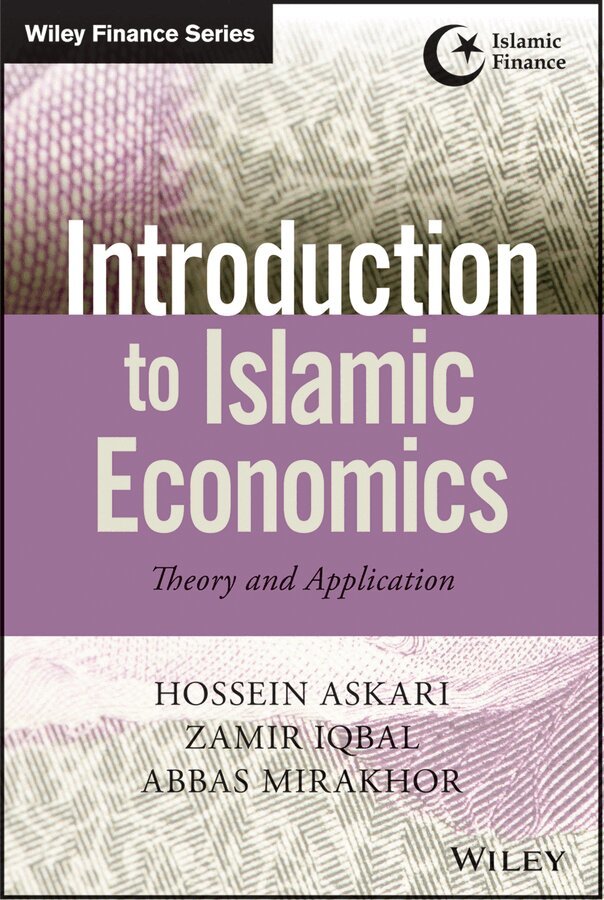
    Introduction to Islamic Economics

    Theory and Application

    AvHossein Askari,Zamir Iqbal

    Inbunden, Engelska, 2015

    Del i serien Wiley Finance

    910 kr

    Tillfälligt slut

    Beskrivning

    Gain deeper insight into the principles and theory of Islamic economics Introduction to Islamic Economics: Theory and Application provides an overview of the organizing principles and fundamentals of an Islamic economy. With deep discussion of the characteristics, rationale, key institutions, objectives, and instruments at work, the book addresses the core economic principles underlying a system based on the foundational teachings of Islam, and examines the implications for economic policies. Social welfare, economic justice, market functionality, efficiency, and equity are explored from an Islamic perspective, and the role and instruments of fiscal and monetary policy in Islamic systems are used to illustrate contemporary applications.Universities around the globe are offering courses on Islamic economics and finance, but despite the industry's rapid growth, most research has been focused on the financial principles rather than underlying economic principles. The first book of its kind, Introduction to Islamic Economics brings all the key concepts together into one reference volume. By outlining the ways in which Islamic finance and Islamic economics interrelate, this book can help readers to: Develop an understanding of the Islamic economic system and its institutional scaffoldingDifferentiate between the major characteristics of the dominant conventional economy and one based on the fundamental sources of IslamUnderstand the conditions that must be met for a just, well-balanced, stable, and growing economyClarify the role of State, public policy, and risk-sharing in the Islamic financial systemThe Islamic financial system is expanding quickly, and those looking to increase their relevance in a changing economic landscape must get up to speed. Introduction to Islamic Economics provides a comprehensive overview of underlying economic system offering a deeper understanding of the feature of the system. This book is an excellent complement to Introduction to Islamic Finance, 2E by Iqbal and Mirakhor.

    Produktinformation

    • Utgivningsdatum:2015-01-30
    • Mått:163 x 241 x 27 mm
    • Vikt:662 g
    • Format:Inbunden
    • Språk:Engelska
    • Serie:Wiley Finance
    • Antal sidor:256
    • Förlag:John Wiley & Sons Inc
    • ISBN:9781118732960

    Utforska kategorier

    • Nationalekonomi inom Ekonomi och Ledarskap
    • Sociala grupper och identitet inom Samhälle och politik

    Mer om författaren

    Hossein Askari is the Iran Professor of International Business and International Affairs at the George Washington University. Before coming to GW, he was a professor of Business and Middle Studies at the University of Texas at Austin and assistant professor of Economics at Tufts University. He has also served on the executive board of the International Monetary Fund and as consultant to a number of governments, institutions, and multinational corporations. He received all his university education at the Massachusetts Institute of Technology, where he earned a BS in civil engineering and a PhD in economics.Zamir Iqbal is a lead specialist at Finance and Markets (F&M) Global Practice of the World Bank. He heads the World Bank Global Center for Islamic Finance Development in Istanbul. He has more than 20 years of experience in risk management, capital markets, and asset management at the World Bank Treasury. Islamic finance is his research focus, and he has coauthored several books on Islamic finance topics such as banking risk, financial stability, and risk sharing. His most recent coedited book, Economic Development and Islamic Finance, was published by the World Bank in 2013. He earned his PhD in international finance from the George Washington University and serves on the professional faculty at the Carey Business School of Johns Hopkins University.Abbas Mirakhor is currently the first holder of the chair of Islamic Finance at the International Center for Education in Islamic Finance (INCEIF). He served as the dean of the executive board of the International Monetary Fund from 1997 to 2008 and as the executive director representing Afghanistan, Algeria, Ghana, Iran, Morocco, Pakistan, and Tunisia from 1990 to 2008. He has authored numerous publications and research papers on Islamic finance; among them are Introduction to Islamic Finance (Wiley 2011), Risk Sharing in Islamic Finance (Wiley 2011), and The Stability of Islamic Finance (Wiley 2010).

    Innehållsförteckning

    • Acknowledgments xi About the Authors xiiiCHAPTER 1Economic Systems 1What Is an Economic System? 2Current State of the Global Economic System 9Islamic Economics Paradigm 19Short History of Economic Thought in Islam 20Summary 26Key Terms 27Questions 27CHAPTER 2Foundation of the Islamic Economic Paradigm 29Meta-Framework and Archetype of Economic Rules 31Implications of the Agent-Trustee Relationship 33Significance of Rule Compliance 34Impact of Scarcity 35Rationality and Freedom of Choice 38Individual Obligations, Rights, and Self-Interest 39Central Notion of Justice 41Shariah: The Law 44Summary 47Key Terms 47Questions 48CHAPTER 3Institutional Framework and Key Institutions 49Key Institutions 53Summary 72Key Terms 72Questions 73CHAPTER 4The Islamic Economic System 75Social and Economic Justice 76Prohibition of Interest (Al-Riba) 81Risk-Sharing Economic System 84Role of the State 91Summary 93Key Terms 94Questions 94CHAPTER 5Key Microeconomic Concepts 95Defining Microeconomics 97Issue of Needs versus Wants 100Consumer Behavior 102Theory of the Firm 105Dynamics of Demand and Supply 112Efficiency versus Equity 116Market Models 117Role of the State 121Summary 123Key Terms 124Questions 124CHAPTER 6Key Macroeconomics Concepts 125Principal Economic Agents 126National Income 127Consumption, Savings, Investment, and National Incomec Determination 135National Income and Output Determination 143Inflation 148Unemployment 152Open Economy: Trade in Goods and Services with Other Countries 154Why International Trade Is So Central to Islam 156Summary 162Key Terms 163Questions 164CHAPTER 7Macroeconomic Equilibrium: Characteristics of an Islamic Economy 165Models of an Interest-Free Economy 166Summary 184Key Terms 185Questions 185CHAPTER 8The Financial System 187Notion of Risk Sharing 190Building Blocks of the Islamic Financial System 191Takaful (Islamic Insurance) 210Summary 216Key Terms 217Questions 217CHAPTER 9Role of the State and Public Policy 219Basic Roles of the State in All Economic Systems 220Role of the State in the Islamic Economic System 224Policy Instruments of the State in Islam 228Economic Justice and Public Policy 230Role of Public Policy 232Summary 243Key Terms 244Questions 244CHAPTER 10Fiscal Policy 247Role of Fiscal Policy 250Fiscal Policy in an Islamic Economy 254Public Finance 259Summary 267Key Terms 268Questions 268CHAPTER 11Monetary Policy 271Role of Monetary Policy 272Monetary Policy in an Islamic Economy 277Summary 303Key Terms 304Questions 305CHAPTER 12Economic Development and Growth 307Evolution ofWestern Economic Thought: From Smith to North and Sen 307Foundation and Framework of Development and Growth in Islam 312Islamic Perspective on Financial Inclusion 322Summary 330Key Terms 331Questions 331CHAPTER 13Economic and Social Welfare 333Social Safety Net Provisions 335Concept of Safety Net and Welfare 337Empirical Evidence on SocialWelfare from Select Muslim Countries 339Summary 359Key Terms 360Questions 360CHAPTER 14Economic State of Affairs in OIC Countries 361Public Policy in the Islamic Economic System 362Dimensions of Economic and Social Achievements in Muslim Countries 364Summary 372Key Terms 373Questions 373Glossary of Arabic Terms 375Bibliography 381Index 393