• Fri frakt över 249 kr
  • •
  • Snabba leveranser
  • •
  • Billiga böcker
Kundservice

Du är på sajten för privatpersoner.

Företag, bibliotek eller offentlig verksamhet?

Du handlar på classic.bokus.com, där alla dina funktioner finns intakta.
Till classic.bokus.com
Bokus logotyp. Gå till startsidan.
  • Erbjudanden
  • Nyheter
  • Student
  • Topplistor
  • Barn & ungdom
  • Bokus Play
  • E-böcker
  • Pocketböcker
  • Spel & pussel

10% rabatt på allt med kod: NYSTART10 →

Sidfot

Mina sidor

    Hjälp

    • Kundservice
    • Vanliga frågor och svar
    • Frakt och leverans
    • Retur vid ångerrätt
    • Reklamera vara
    • Betalning
    • Köpvillkor
    • Allmänna villkor
    • Information om webbplatsens tillgänglighet

    Om Bokus

    • Om oss
    • Pressrum
    • För studenter
    • För företag
    • För bibliotek och offentlig verksamhet
    • För leverantörer
    • Hållbarhet

    Populärt

    • Aktuella erbjudanden
    • Presentkort
    • Studentlitteratur
    • Nya böcker
    • Topplistor
    • Signerade böcker
    • Engelska böcker

    Inspiration

    • Boktips
    • BookTok
    • Populära bokserier
    • Barnbokskaraktärer
    • Populära författare
    Logotyp för Bokus
    Följ oss på Facebook (extern länk)Följ oss på Instagram (extern länk)Följ oss på YouTube (extern länk)Följ oss på TikTok (extern länk)
    bokus @ CookiesAnpassa cookiesIntegritetspolicyKöpvillkor
    Till Citymail hemsida (extern länk)Till Budbee hemsida (extern länk)Till Postnord hemsida (extern länk)Till Schenker hemsida (extern länk)Till Early Bird hemsida (extern länk)Till Walleys hemsida (extern länk)
    1. Naturvetenskap och teknik
    2. Matematik och naturvetenskap
    3. Kemi

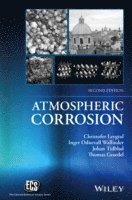
    Atmospheric Corrosion

    AvChristofer Leygraf,Inger Odnevall Wallinder

    Inbunden, Engelska, 2016

    Del i serien ECS Series of Texts and Monographs

    1 505 kr

    Beställningsvara. Skickas inom 5-8 vardagar. Fri frakt över 249 kr.

    Beskrivning

    ATMOSPHERIC CORROSION Presents a comprehensive look at atmospheric corrosion, combining expertise in corrosion science and atmospheric chemistry Atmospheric corrosion has been a subject of engineering study, largely empirical, for nearly a century. Scientists came to the field rather later on and had considerable difficulty bringing their arsenal of tools to bear on the problem. Atmospheric corrosion was traditionally studied by specialists in corrosion having little knowledge of atmospheric chemistry, history, or prospects. Atmospheric Corrosion provides a combined approach bringing together experimental corrosion and atmospheric chemistry. The second edition expands on this approach by including environmental aspects of corrosion, atmospheric corrosion modeling, and international corrosion exposure programs. The combination of specialties provides a more comprehensive coverage of the topic. These scientific insights into the corrosion process and its amelioration are the focus of this book. Key topics include the following: Basic principles of atmospheric corrosion chemistryCorrosion mechanisms in controlled and uncontrolled environments Degradation of materials in architectural, transport, and structural applications; electronic devices; and cultural artifacts Protection of existing materials and choosing new ones that resist corrosionPrediction of how and where atmospheric corrosion may evolve in the future Complete with appendices discussing experimental techniques, computer models, and the degradation of specific metals, Atmospheric Corrosion, Second Edition continues to be an invaluable resource for corrosion scientists, corrosion engineers, conservators, environmental scientists, and anyone interested in the theory and application of this evolving field. The book concerns primarily the atmospheric corrosion of metals and is written at a level suitable for advanced undergraduates or beginning graduate students in any of the physical or engineering sciences.

    Produktinformation

    • Utgivningsdatum:2016-08-16
    • Mått:163 x 241 x 25 mm
    • Vikt:671 g
    • Format:Inbunden
    • Språk:Engelska
    • Serie:ECS Series of Texts and Monographs
    • Antal sidor:400
    • Upplaga:2
    • Förlag:John Wiley & Sons Inc
    • ISBN:9781118762271

    Utforska kategorier

    • Kemi inom Naturvetenskap och teknik

    Mer om författaren

    Christofer Leygraf is Professor Emeritus at KTH Royal Institute of Technology, Division of Surface and Corrosion Science, Stockholm, Sweden. Inger Odnevall Wallinder is Professor at KTH Royal Institute of Technology, Division of Surface and Corrosion Science, Stockholm, Sweden. Johan Tidblad is Manager for the Section Corrosion Protection and Surface Technology at Swerea KIMAB, Stockholm, Sweden. Thomas Graedel is Professor Emeritus at Yale School of Forestry and Environmental Studies, New Haven, Connecticut, USA.

    Innehållsförteckning

    • Preface xv1 The Many Faces of Atmospheric Corrosion 11.1 Dr. Vernon’s Legacy 11.2 Concepts and Consequences 21.3 The Evolution of a Field 31.4 Controlled Laboratory Environments 41.5 Uncontrolled Field Environments 51.6 New Approaches to Atmospheric Corrosion Studies 61.7 An Overview of this Book 62 A Conceptual Picture of Atmospheric Corrosion 72.1 Introduction 72.2 Initial Stages of Atmospheric Corrosion 72.3 Intermediate Stages of Atmospheric Corrosion 112.4 Final Stages of Atmospheric Corrosion 17Further Reading 203 A Multiregime Perspective on Atmospheric Corrosion Chemistry 223.1 Introduction to Moist‐Layer Chemistry 223.2 The Gaseous Regime 243.3 The Interface Regime 253.4 The Liquid Regime 273.5 The Deposition Regime 283.6 The Electrodic Regime 303.7 The Solid Regime 313.8 The Multiregime Perspective 32Further Reading 324 Atmospheric Gases and their Involvement in Corrosion 344.1 Chemical Species of Interest 344.2 Atmospheric Corrosive Gases 354.3 Historic Trends in Atmospheric Corrosive Gas Concentrations 404.4 Predicted Future Emissions of Corrosive Species 43Further Reading 455 Atmospheric Particles and their Involvement in Corrosion 465.1 Introduction 465.2 Chemical Species of Interest 495.3 Sources of Atmospheric Aerosol Particles 505.4 Aerosol Particle Physics and Chemistry 515.5 Implications of Aerosol Particles for Atmospheric Corrosion 55Further Reading 576 Corrosion in Laboratory Exposures 596.1 The Need for Well‐Defined Laboratory Experiments 596.2 Considerations for Specific Metals 596.3 Design Considerations 606.4 Examples of Important Laboratory Exposures 656.5 Can Corrosion Processes in the Field be Reasonably Simulated by Laboratory Experiments? 676.6 Computational Model Studies of SO2 ‐Induced Atmospheric Corrosion of Copper 706.7 Summary 76Further Reading 777 Corrosion in Indoor Exposures 797.1 General Characteristics of Indoor Environments 797.2 The Interplay Between Pollutants and Corrosion Rates 857.3 Corrosion Rates 887.4 Indoor Corrosion Products 937.5 Indoor Environmental Classification 947.6 An Example of Indoor Corrosion: Metal Artifacts 957.7 Summary 98Further Reading 998 Corrosion in Outdoor Exposures 1008.1 The Effect of Exposure Conditions 1008.2 Design Considerations 1018.3 Influence of Exposure Parameters 1038.4 Dose–Response Functions 1148.5 Summary 118Further Reading 1189 Advanced Stages of Corrosion 1219.1 Introduction 1219.2 Evolution of Corrosion Products on Zinc 1229.3 Evolution of Corrosion Products on Copper 1319.4 Evolution of Corrosion Products on Carbon Steel 1409.5 Evolution of Corrosion Products on Aluminum 1449.6 Summary 146Further Reading 14810 Environmental Dispersion of Metals From Corroded Outdoor Constructions 15110.1 Introduction 15110.2 Metal Dispersion (Runoff): Atmospheric Corrosion 15210.3 Time‐Dependent Aspects and Importance of Rain and Environmental Conditions 15410.4 Influence of Construction Geometry on the Metal Runoff and Runoff Rate Predictions 15910.5 Environmental Fate and Speciation: Importance for Risk Assessment and Management 162Further Reading 16311 Applied Atmospheric Corrosion: Electronic Devices 16611.1 Introduction 16611.2 Corrosion‐Induced Failures of Contacts and Connectors 16811.3 Corrosion‐Induced Failures of Integrated Circuits 17011.4 Accelerated Tests of Electronics 17411.5 Classification of Environments with Respect to Corrosivity 17511.6 Methods of Protection 177Further Reading 18012 Applied Atmospheric Corrosion: Automotive Corrosion and Corrosion in the Road Environment 18112.1 Introduction 18112.2 Typical Corrosion Rates in the Road Environment 18212.3 Parameters Affecting Corrosion in Road Environments 18312.4 Corrosion of Vehicles 18812.5 Accelerated Corrosion Testing for Automotive Applications 190Further Reading 19613 Applied Atmospheric Corrosion: Alloys in Architecture 19813.1 Introduction 19813.2 Varying Exposure Conditions 19913.3 Copper‐Based Alloys 20013.4 Aluminum–Zinc Alloys 20813.5 Weathering Steel 21413.6 Stainless Steel 218Further Reading 22114 Applied Atmospheric Corrosion: Unesco Cultural Heritage Sites 22414.1 Introduction 22414.2 Description of Selected Sites 22514.3 Estimation of Corrosion Rates 22714.4 Estimation of Corrosion Costs 22914.5 Preventing Further Damage Through Air Quality Policy 234Further Reading 23615 Scenarios for Atmospheric Corrosion in the Twenty‐First Century 23815.1 Atmospheric Corrosion in the Recent Millenium 23915.2 Atmospheric Corrosion in the Twentieth Century and Today 24015.3 Atmospheric Corrosion in the Twenty‐First Century: Effect of Changes in Pollution 24215.4 Atmospheric Corrosion in the Twenty‐First Century: Effect of Changes in Climate 24615.5 Responding to Increasing Rates of Corrosion 246Further Reading 248Appendix A Experimental Techniques in Atmospheric Corrosion 249A.1 Introduction 249A.2 Techniques for Detecting Mass Change 250A.3 Techniques for Analyzing Surface Topography 251A.4 Techniques for Analyzing Surface Composition 253A.5 Techniques for Identifying Phases in Corrosion Products 255A.6 Techniques for Corrosion Electrode Potential 256A.7 Techniques for Monitoring Atmospheric Corrosive Species 258A.8 Summary 259Further Reading 260Appendix B Computer Models of Atmospheric Corrosion 261B.1 Formulating Computer Models 261B.2 The Status of Computer Models of Atmospheric Corrosion 262B.3 An Overview of Chemical Model Formulation 263B.4 The Transport of Reactants 265B.5 Physicochemical Processes 266B.6 Electrochemical Processes 268Further Reading 270Appendix C The Atmospheric Corrosion Chemistry of Aluminum 272C.1 Introduction 272C.2 Corrosion Layer Formation Rates 272C.3 The Morphology of Atmospheric Corrosion Layers on Aluminum 273C.4 Chemical Mechanisms of Corrosion 274C.5 Summary 280Appendix D The Atmospheric Corrosion Chemistry of Carbonate Stone 282D.1 Introduction 282D.2 Corrosion Layer Formation Rates 282D.3 Morphology of Atmospheric Corrosion on Carbonate Stone 283D.4 Chemical Mechanisms of Carbonate Stone Corrosion 284D.5 Summary 288Appendix E The Atmospheric Corrosion Chemistry of Copper 290E.1 Introduction 290E.2 Corrosion Layer Formation Rates 291E.3 The Morphology of Natural Patinas on Copper 291E.4 Chemical Mechanisms of Copper Corrosion 292E.5 Discussion 300Appendix F The Atmospheric Corrosion Chemistry of Iron and Low Alloy Steels 302F.1 Introduction 302F.2 Formation Rates for Rust Layers 302F.3 The Morphology of Natural Rust Layers 303F.4 Chemical Mechanisms of Iron and Steel Corrosion 304F.5 Stainless Steels in the Atmosphere 313F.6 Summary 313Appendix G The Atmospheric Corrosion Chemistry of Lead 316G.1 Introduction 316G.2 Environmental Interactions with Lead Surfaces 316G.3 Physical Characteristics of Lead Corrosion 317G.4 Chemical Mechanisms of Lead Corrosion 317G.5 Physical and Chemical Characteristics of Corroding Lead Alloys 324G.6 Summary 324Further Reading 326Appendix H The Atmospheric Corrosion Chemistry of Nickel 327H.1 Introduction 327H.2 Corrosion Layer Formation Rates 327H.3 The Morphology of Atmospheric Corrosion Layers on Nickel 328H.4 Chemical Mechanisms of Nickel Corrosion 328H.5 Laboratory and Computational Studies of Nickel’s Atmospheric Corrosion 334H.6 Conclusions 335Further Reading 336Appendix I The Atmospheric Corrosion Chemistry of Silver 337I.1 Introduction 337I.2 Environmental Interactions with Silver Surfaces 337I.3 Chemical Mechanisms of Silver Corrosion 339I.4 Physical Characteristics of Silver Corrosion 343I.5 Chemical Transformation Sequences 345Further Reading 347Appendix J The Atmospheric Corrosion Chemistry of Zinc 348J.1 Introduction 348J.2 Corrosion Layer Formation Rates 348J.3 The Morphology of Atmospheric Corrosion Layers on Zinc 349J.4 Chemical Mechanisms of Zinc Corrosion 349J.5 Transformation Processes 357J.6 Summary 358Appendix K Index of Minerals Related to Atmospheric Corrosion 360Glossary 363Index 367