• Fri frakt över 249 kr
  • •
  • Snabba leveranser
  • •
  • Billiga böcker
Kundservice

Du är på sajten för privatpersoner.

Företag, bibliotek eller offentlig verksamhet?

Du handlar på classic.bokus.com, där alla dina funktioner finns intakta.
Till classic.bokus.com
Bokus logotyp. Gå till startsidan.
  • Erbjudanden
  • Nyheter
  • Student
  • Topplistor
  • Barn & ungdom
  • Bokus Play
  • E-böcker
  • Pocketböcker
  • Spel & pussel

10% rabatt på allt med kod NYSTART10 →

Sidfot

Mina sidor

    Hjälp

    • Kundservice
    • Vanliga frågor och svar
    • Frakt och leverans
    • Retur vid ångerrätt
    • Reklamera vara
    • Betalning
    • Köpvillkor
    • Allmänna villkor
    • Information om webbplatsens tillgänglighet

    Om Bokus

    • Om oss
    • Pressrum
    • För studenter
    • För företag
    • För bibliotek och offentlig verksamhet
    • För leverantörer
    • Hållbarhet

    Populärt

    • Aktuella erbjudanden
    • Presentkort
    • Studentlitteratur
    • Nya böcker
    • Topplistor
    • Signerade böcker
    • Engelska böcker

    Inspiration

    • Boktips
    • BookTok
    • Populära bokserier
    • Barnbokskaraktärer
    • Populära författare
    Logotyp för Bokus
    Följ oss på Facebook (extern länk)Följ oss på Instagram (extern länk)Följ oss på YouTube (extern länk)Följ oss på TikTok (extern länk)
    bokus @ CookiesAnpassa cookiesIntegritetspolicyKöpvillkor
    Till Citymail hemsida (extern länk)Till Budbee hemsida (extern länk)Till Postnord hemsida (extern länk)Till Schenker hemsida (extern länk)Till Early Bird hemsida (extern länk)Till Walleys hemsida (extern länk)
    1. Naturvetenskap och teknik
    2. Teknik och industri
    3. Byggnadsteknik

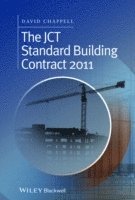
    JCT Standard Building Contract 2011

    An Explanation and Guide for Busy Practitioners and Students

    AvDavid Chappell

    Häftad, Engelska, 2014

    Del i serien *Wiley-Blackwell

    787 kr

    Beställningsvara. Skickas inom 5-8 vardagar. Fri frakt över 249 kr.

    Fler format och utgåvor

    E-bok

    900 kr

    E-bok

    902 kr

    Beskrivning

    Books about construction contracts tend to be dense and wordy, but what most architects, quantity surveyors, project managers, builders and employers are looking for is an easily navigable, simple guide to using a contract, written in plain language.The JCT Standard Building Contract 2011 is an uncomplicated book about a complex and commonly used contract. It straightforwardly and concisely sets out exactly what the contract requires in various circumstances, as far as possible without legal jargon and without assuming any particular legal or contractual expertise from the reader. It explains, often from first principles, exactly what is meant by a contract and why certain clauses, such as extension of time clauses or liquidated damages clauses are present and more importantly, what they mean. The book is divided into many chapters, each with many sub-headings, to make it easy to read and to help readers to find relevant explanations quickly. Tables and flowcharts are used to ensure clarity and most chapters include a section dealing with common problems. Covers the recently issued JCT Standard Building Contract 2011Straightforward, concise, and as far as possible free of legal jargonSets out exactly what the contract requires in various circumstancesIncludes many tables and flowcharts to ensure clarity

    Produktinformation

    • Utgivningsdatum:2014-03-28
    • Mått:170 x 244 x 18 mm
    • Vikt:712 g
    • Format:Häftad
    • Språk:Engelska
    • Serie:*Wiley-Blackwell
    • Antal sidor:368
    • Förlag:John Wiley and Sons Ltd
    • ISBN:9781118819753

    Utforska kategorier

    • Byggnadsteknik inom Naturvetenskap och teknik
    • Avtalsrätt inom Juridik

    Mer om författaren

    David Chappell BA(Hons Arch), MA(Arch), MA(Law), PhD, RIBA has 50 years of experience in the construction industry. David has worked as an architect in the public and private sectors, as a contracts administrator, as a lecturer in construction law and contracts procedure and as a construction contracts consultant. He was Professor of Architectural Practice and Management Research at The Queen’s University of Belfast and Visiting Professor of Practice Management and Law at the University of Central England in Birmingham. Theauthor of many books for the construction industry, he is Director of David Chappell Consultancy Limited, is a specialist advisor to the RIBA and RSUA and regularly acts as an adjudicator.

    Innehållsförteckning

    • Preface xiv Abbreviations used in the text xviNotes before reading xviiPart I Preliminaries 11 Introduction 11.1 What is a contract? 11.2 Purpose of building contracts 41.3 Types of construction contracts 41.4 Characteristics of a standard form 71.5 Commonly used contracts 91.6 Important background to SBC 111.7 SBC and variants 112 Basic matters 132.1 Works 132.2 Drawings 132.3 Specification 142.4 Schedules 152.5 Bills of quantities 152.6 The Standard Method of Measurement 162.7 Privity of contract and the Third Party Act 172.8 Third party rights and collateral warranties 182.9 Base Date 192.10 Common problems 203 About the contract documents 233.1 What constitutes the contract? 233.2 What are articles and recitals? 243.3 How to complete the contract form 253.4 Priority of documents 293.5 Errors, discrepancies and divergences 303.6 Custody and copies 343.7 Limits to use 353.8 Reckoning days 353.9 Certificates, notices and other communications 363.10 Applicable law 373.11 Common problems 374 Related matters 404.1 The Housing Grants, Construction and Regeneration Act 1996 as amended 404.2 Entire contracts 424.3 Express and implied terms 434.4 Limitation periods 444.5 Letters of intent 464.6 Quantum meruit 474.7 Limited companies 484.8 Bonds 494.9 Common problems 51Part Ii Participants 535 The architect’s powers and duties 535.1 What the architect can do or must do 535.2 Specific requirements under the JCT contract 545.3 Powers 545.4 The architect’s design role under SBC 545.5 The architect as agent for the employer 615.6 No power to direct contractor 625.7 Issue of certificates 635.8 The issue of instructions 665.9 Instructions in detail 705.10 Issue of information 705.11 Duties under the contract 735.12 General duties 775.13 Does the architect have any duty to the contractor? 795.14 Common problems 796 The contractor’s powers and duties 826.1 What the contractor can do or must do 826.2 Person-in-charge 826.3 Access to the Works and premises 826.4 Carrying out the Works 966.5 Levels and setting out 986.6 Workmanship and materials 986.7 Contractor’s master programme and other documents 1006.8 Statutory obligations 1036.9 Antiquities 1046.10 Drawings, details and information 1046.11 Compliance with architect’s instructions 1066.12 Suspension of performance 1076.13 Does the contractor have a duty to warn of design defects? 1086.14 Common problems 1087 The employer’s powers and duties 1107.1 What the employer can or must do 1107.2 Express and implied powers and duties 1107.3 General powers 1157.4 General duties 1227.5 Common problems 1238 Consultants 1258.1 General points 1258.2 Quantity surveyors 1268.3 Employer’s representative/project manager 1288.4 Structural engineers, mechanical engineers and others 1298.5 Common problems 1299 The clerk of works 1319.1 Method of appointment 1319.2 Duties 1319.3 Snagging lists 1329.4 Defacing materials 1329.5 Common problems 13310 Sub-contractors and suppliers 13410.1 General 13410.2 Assignment 13510.3 Sub-contracting 13610.4 Listed sub-contractors 13810.5 Named specialists 13910.6 Common problems 14011 Statutory authorities 14311.1 Work not forming part of the contract 14311.2 Statutory authorities in contract 14311.3 The CDM Regulations 2007 14511.4 Common problems 147Part Iii Work in Progress 14912 Insurance 14912.1 Why insurance? 14912.2 Types of insurance in the contract 14912.3 What is an indemnity? 15012.4 Injury to persons and property 15112.5 Things that are the liability of the employer 15212.6 Insurance terms 15312.7 Insurance of the Works: alternatives 15412.8 A new building where the contractor is required to insure 15512.9 A new building where the employer insures 15612.10 Alterations or extensions to an existing building 15712.11 Benefits for sub-contractors 15812.12 The Joint Fire Code 15812.13 Terrorism cover 15912.14 Common problems 15913 Possession of the site 16113.1 General 16113.2 Date of possession 16213.3 Common problems 16314 Extension of time 16514.1 Basics 16514.2 Extension of time 16614.3 Grounds 16814.4 Procedure 17714.5 Important conditions 18614.6 Common problems 18815 Liquidated damages 19015.1 What are liquidated damages? 19015.2 Procedure 19115.3 Common problems 19316 Financial claims 19516.1 Loss and expense claims 19516.2 Procedure 19616.3 Effect on regular progress 20016.4 The architect’s opinion 20116.5 Ascertainment 20216.6 Reimbursement under other contract provisions 20316.7 Relevant matters forming the basis of a claim 20316.8 Certification of direct loss and/or expense 20716.9 Contractor’s other rights and remedies 20816.10 Common problems 20817 Architect’s instructions 21017.1 Purpose 21017.2 Scope 21017.3 Common problems 21618 Variations 21918.1 What is a variation? 21918.2 Does extra work always involve payment? 22118.3 Valuation 22218.4 Treatment of approximate quantities, defined and undefined provisional sums 22718.5 If the conditions for carrying out other work are altered 22818.6 Valuation of obligations and restrictions 22918.7 Schedule 2 quotations 22918.8 Acceleration 23118.9 Daywork 23218.10 Valuation of contractor’s designed portion 23318.11 Common problems 23319 Payment 23519.1 The Contract Sum 23519.2 Valuation 23719.3 Method and timing 23919.4 Payment procedure 24019.5 Retention 24319.6 Final payment 24519.7 The effect of certificates 24819.8 Off-site materials 25019.9 Fluctuations 25119.10 Common problems 25220 Contractor’s design 25420.1 Contractor’s Designed Portion (CDP) 25420.2 Documents 25420.3 The contractor’s obligations 25520.4 Liability 25820.5 Variations 25920.6 Insurance 26020.7 Common problems 261Part Iv Closing Stages 26321 Practical completion 26321.1 Definition 26321.2 What the contract says 26321.3 Consequences 26521.4 Partial possession and sectional completion 26521.5 Common problems 26722 Defects liability 26922.1 During construction 26922.2 Rectification period 27122.3 Definition 27122.4 Defects, shrinkages or other faults 27122.5 Frost 27222.6 Procedure 27222.7 Common problems 27523 Termination 27623.1 General points 27623.2 Termination by the employer 27823.3 Grounds: contractor’s defaults 27923.4 Grounds: insolvency of contractor 28223.5 Grounds: corruption 28323.6 Grounds: neutral causes 28323.7 Grounds: insurance risks and terrorism cover 28423.8 Consequences of termination for contractor’s default or insolvency 28523.9 Consequences of termination for neutral causes or insurance risks 28823.10 Termination by the contractor 28823.11 Grounds: employer’s defaults 28823.12 Grounds: insolvency of employer 29223.13 Grounds: neutral causes 29323.14 Grounds: insurance risks and terrorism cover 29323.15 Consequences of termination for employer’s default, neutral causes or insolvency of the employer, etc. 29323.16 Consequences of termination for insurance risks 29423.17 Suspension of the Works by the contractor 29523.18 Common problems 295Part V Intractable Problems 29724 Dispute resolution procedures 29724.1 General 29724.2 Adjudication 30124.3 Arbitration 31024.4 Legal proceedings (litigation) 31724.5 Mediation 31724.6 Common problems 317Notes and references 319Table of cases 330Subject index 339Clause number index to text 346