• Fri frakt över 249 kr
  • •
  • Snabba leveranser
  • •
  • Billiga böcker
Kundservice

Du är på sajten för privatpersoner.

Företag, bibliotek eller offentlig verksamhet?

Du handlar på classic.bokus.com, där alla dina funktioner finns intakta.
Till classic.bokus.com
Bokus logotyp. Gå till startsidan.
  • Erbjudanden
  • Nyheter
  • Student
  • Topplistor
  • Barn & ungdom
  • Bokus Play
  • E-böcker
  • Pocketböcker
  • Spel & pussel

10% rabatt på allt med kod: NYSTART10 →

Sidfot

Mina sidor

    Hjälp

    • Kundservice
    • Vanliga frågor och svar
    • Frakt och leverans
    • Retur vid ångerrätt
    • Reklamera vara
    • Betalning
    • Köpvillkor
    • Allmänna villkor
    • Information om webbplatsens tillgänglighet

    Om Bokus

    • Om oss
    • Pressrum
    • För studenter
    • För företag
    • För bibliotek och offentlig verksamhet
    • För leverantörer
    • Hållbarhet

    Populärt

    • Aktuella erbjudanden
    • Presentkort
    • Studentlitteratur
    • Nya böcker
    • Topplistor
    • Signerade böcker
    • Engelska böcker

    Inspiration

    • Boktips
    • BookTok
    • Populära bokserier
    • Barnbokskaraktärer
    • Populära författare
    Logotyp för Bokus
    Följ oss på Facebook (extern länk)Följ oss på Instagram (extern länk)Följ oss på YouTube (extern länk)Följ oss på TikTok (extern länk)
    bokus @ CookiesAnpassa cookiesIntegritetspolicyKöpvillkor
    Till Citymail hemsida (extern länk)Till Budbee hemsida (extern länk)Till Postnord hemsida (extern länk)Till Schenker hemsida (extern länk)Till Early Bird hemsida (extern länk)Till Walleys hemsida (extern länk)
    1. Ekonomi och Ledarskap
    2. Företagsekonomi
    3. Affärsförhandlingar

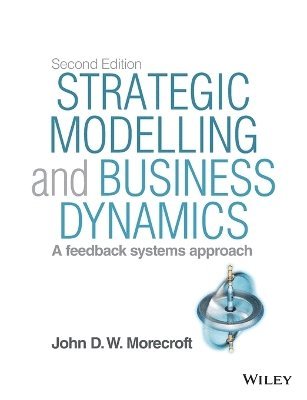
    Strategic Modelling and Business Dynamics, + Website

    A feedback systems approach

    AvJohn D. W. Morecroft

    Häftad, Engelska, 2015

    922 kr

    Beställningsvara. Skickas inom 5-8 vardagar. Fri frakt över 249 kr.

    Beskrivning

    Insightful modelling of dynamic systems for better business strategyThe business environment is constantly changing and organisations need the ability to rehearse alternative futures.  By mimicking the interlocking operations of firms and industries, modelling serves as a ‘dry run’ for testing ideas, anticipating consequences, avoiding strategic pitfalls and improving future performance.Strategic Modelling and Business Dynamics is an essential guide to credible models; helping you to understand modelling as a creative process for distilling and communicating those factors that drive business success and sustainability. Written by an internationally regarded authority, the book covers all stages of model building, from conceptual to analytical. The book demonstrates a range of in-depth practical examples that vividly illustrate important or puzzling dynamics in firm operations, strategy, public policy, and everyday life. This updated new edition also offers a rich Learners' website with models, articles and videos, as well as a separate Instructors' website resource, with lecture slides and other course materials (see Related Websites/Extra section below). Together the book and websites deliver a powerful package of blended learning materials that: Introduce the system dynamics approach of modelling strategic problems in business and societyInclude industry examples and public sector applications with interactive simulators and contemporary visual modelling softwareProvide the latest state-of-the-art thinking, concepts and techniques for systems modellingThe comprehensive Learners' website features models, microworlds, journal articles and videos. Easy-to-use simulators enable readers to experience dynamic complexity in business and society.  Like would-be CEOs, readers can re-design operations and then re-simulate in the quest for well-coordinated strategy and better performance. The simulators include a baffling hotel shower, a start-up low-cost airline, an international radio broadcaster, a diversifying tyre maker, commercial fisheries and the global oil industry. "Much more than an introduction, John Morecroft’s Strategic Modelling and Business Dynamics uses interactive ‘mini-simulators and microworlds’ to create an engaging and effective learning environment in which readers, whatever their background, can develop their intuition about complex dynamic systems."John Sterman, Jay W. Forrester Professor of Management, MIT Sloan School of Management"Illustrated by examples from everyday life, business and policy, John Morecroft expertly demonstrates how systems thinking aided by system dynamics can improve our understanding of the world around us." Stewart Robinson, Associate Dean Research, President of the Operational Research Society, Professor of Management Science, School of Business and Economics, Loughborough University

    Produktinformation

    • Utgivningsdatum:2015-06-26
    • Mått:185 x 246 x 25 mm
    • Vikt:975 g
    • Format:Häftad
    • Språk:Engelska
    • Antal sidor:512
    • Upplaga:2
    • Förlag:John Wiley & Sons Inc
    • ISBN:9781118844687

    Utforska kategorier

    • Affärsförhandlingar inom Ekonomi och Ledarskap
    • Affärsstrategi inom Ekonomi och Ledarskap

    Mer om författaren

    John Morecroft is Senior Fellow in Management Science and Operations at London Business School where he has taught system dynamics, problem structuring and strategy in MBA, PhD and Executive Education programmes. He served as Associate Dean of the School's Executive MBA and co-designed EMBA-Global, a dual degree programme with New York's Columbia Business School.

    Innehållsförteckning

    • About the Author xviiForeword by Peter Checkland xixPreface to the Second Edition xxiPreface from the First Edition xxvHow to Use This Book xxxvChapter 1 The Appeal and Power of Strategic Modelling 1Introduction 1A New Approach to Modelling 5The Puzzling Dynamics of International Fisheries 7Model of a Natural Fishery 10Simulated Dynamics of a Natural Fishery 12Operating a Simple Harvested Fishery 13Harvesting in Bonavista, Newfoundland – A Thought Experiment 15A Start on Analysing Dynamics and Performance Through Time 17Saving Bonavista – Using Simulation to Devise a Sustainable Fishery 20Dynamic Complexity and Performance Through Time 20Cunning Fish – A Scenario with Reduced Dynamic Complexity 23Preview of the Book and Topics Covered 25Appendix – Archive Materials from World Dynamics 27References 28Chapter 2 Introduction to Feedback Systems Thinking 31Ways of Interpreting Situations in Business and Society 31Event-oriented Thinking 32Feedback Systems Thinking – An Illustration 34A Shift of Mind 37The Invisibility of Feedback 38A Start on Causal Loop Diagrams 39Structure and Behaviour Through Time – Feedback Loops and the Dynamics of a Slow-to-Respond Shower 41Processes in a Shower ‘System’ 44Simulation of a Shower and the Dynamics of Balancing Loops 45From Events to Dynamics and Feedback – Drug-related Crime 47A Feedback View 48Scope and Boundary of Factors in Drug-related Crime 50An Aside – More Practice with Link Polarity and Loop Types 51Purpose of Causal Loop Diagrams – A Summary 52Feedback Structure and Dynamics of a Technology-based Growth Business 52Causal Loop Diagrams – Basic Tips 55Picking and Naming Variables 55Meaning of Arrows and Link Polarity 56Drawing, Identifying and Naming Feedback Loops 57Causal Loop Diagram of Psychological Pressures and Unintended Haste in a Troubled Internet Start-Up 58References 61Chapter 3 Modelling Dynamic Systems 63Asset Stock Accumulation 63Accumulating a ‘Stock’ of Faculty at Greenfield University 65Asset Stocks in a Real Organisation – BBC World Service 69The Coordinating Network 70Modelling Symbols in Use: A Closer Look at Drug-related Crime 72Equation Formulations 75Drug-related Crime 76Funds Required to Satisfy Addiction 77Street Price and Price Change 78Allocation of Police 79Experiments with the Model of Drug-related Crime 80A Tour of the Model 80Escalating Crime – The Base Case 82Drilling Down to the Equations 84Anomalous Behaviour Over Time and Model Boundary 86Benefits of Model Building and Simulation 89References 90Chapter 4 World of Showers 91Getting Started 91Taking a Shower in World of Showers A 92Taking a Shower in World of Showers B 95Redesigning Your World of Showers 96Reflections on the World of Showers 98Metaphorical Shower Worlds in GlaxoSmithKline, IBM and Harley-Davidson 100Inside World of Showers 102A Tour of Formulations in the Comfort-seeking Loop of the Hidden Shower 102Interdependence of Showers – Coupling Formulations 105Simulations of World of Showers B 105References 107Chapter 5 Cyclical Dynamics and the Process of Model Building 109An Overview of the Modelling Process 109Dynamic Hypothesis and Fundamental Modes of Dynamic Behaviour 111Team Model Building 112Employment and Production Instability – Puzzling Performance Over Time 117Dialogue About Production Control 120Thought Experiment: A Surprise Demand Increase in an Ideal Factory 122Equation Formulations and Computations in Production Control 124Forecasting Shipments – Standard Formulations for Information Smoothing 126Inventory Control – Standard Formulations for Asset Stock Adjustment 127Desired Production 128The Computations Behind Simulation 129Modelling Workforce Management and Factory Production Dynamics 133Dialogue About Workforce Management 133Operating Constraint Linking Workforce to Production 135Simulation of the Complete Model: A Surprise Demand Increase in a Factory Where Production is Constrained by the Size of the Workforce 136Pause for Reflection 140Equation Formulations in Workforce Management 140Departure Rate – Standard Formulation for Stock Depletion 141Hiring – Standard Formulations for Asset Stock Replacement and Adjustment 142Workforce Planning 144Chronic Cyclicality in Employment and Production and How to Cure It 145The Curious Effect of Random Variations in Demand 145Industry Cyclicality and Business Cycles 147Policy Formulation and What-ifs to Improve Factory Performance 148Modelling for Learning and Soft Systems 152A Second Pause for Reflection: System Dynamics and Soft Systems 153A Link to Soft Systems Methodology 156Alternative Views of a Radio Broadcaster 159Appendix 1: Model Communication and Policy Structure Diagrams 162Appendix 2: The Dynamics of Information Smoothing 164References 166Chapter 6 The Dynamics of Growth from Diffusion 169Stocks and Flows in New Product Adoption – A Conceptual Diffusion Model 171The Bass Model – An Elegant Special Case of a Diffusion Model 172The Dynamics of Product Adoption by Word-of-mouth 175The Need to Kick-start Adoption 177The Complete Bass Diffusion Model With Advertising 177The Dynamics of Product Adoption by Word-of-mouth and Advertising 179A Variation on the Diffusion Model: The Rise of Low-cost Air Travel in Europe 182easyJet – A Bright Idea, but Will it Work? 182Visualising the Business: Winning Customers in a New Segment 183Visualising Retaliation and Rivalry 186Feedback Loops in the easyJet Model 188Strategy and Simulation of Growth Scenarios 189Using the Fliers Simulator to Create Your Own Scenarios 193Simulation, Predictions and Scenarios 194Conclusion 194Appendix: More About the Fliers Model 195Back to the Future – From easyJet to People Express and Beyond 197References 199Chapter 7 Managing Business Growth 201A Conceptual Model of Market Growth and Capital Investment 203Background to the Case 203Adopting a Feedback View 204Formulation Guidelines for Portraying Feedback Structure 206Review of Operating Policies and Information Flows in the Market Growth Model 209Customer Ordering 209Sales Force Expansion 210Budgeting 211Capital Investment 212Goal Formation 214An Information Feedback View of Management and Policy 215Information Available to Decision Makers and Bounded Rationality 217Nature of Decision Making and the Decision Process 220Policy Structure and Formulations for Sales Growth 222Sales Force Hiring – Standard Stock Adjustment Formulation 223Sales Force Budgeting – Revenue Allocation and Information Smoothing 223Order Fulfilment – Standard Stock Depletion Formulation 225Customer Ordering 226Policy Structure and Formulations for Limits to Sales Growth 226Customer Response to Delivery Delay – Non-linear Graphical Converter 228Customers’ Perception of Delivery Delay – Information Smoothing 229Order Fulfilment and Capacity Utilisation 229Policy Structure and Formulations for Capital Investment 231Assessment of Delivery Delay 232Goal Formation – Weighted Average of Adaptive and Static Goals 232Capacity Expansion – Fractional Asset Stock Adjustment 233Production Capacity – Two-Stage Stock Accumulation 236Simulation Experiments 237Simulation of Sales Growth Loop 238Strength of Reinforcing Loop 241Simulation of Sales Growth and Customer Response Loops 242Simulation of the Complete Model with all Three Loops Active – The Base Case 246Redesign of the Investment Policy 250Top Management Optimism in Capital Investment 251High and Unyielding Standards – A Fixed Operating Goal for Delivery Delay 253Policy Design, Growth and Dynamic Complexity 256Conclusion 257Overview of Policy Structure 257Growth and Underinvestment at People Express? 261More Examples of Growth Strategies that Failed or Faltered – and One that Succeeded 262Growth Strategy for New Products and Services in a Competitive Industry 264Appendix – Gain of a Reinforcing Loop 266References 268Chapter 8 Industry Dynamics – Oil Price and the Global Oil Producers 271Problem Articulation – Puzzling Dynamics of Oil Price 272Towards a Dynamic Hypothesis 274Model Development Process 275A Closer Look at the Stakeholders and Their Investment Decision Making 278Investment by the Independent Producers 279Development Costs 280Policy Structure and Formulations for Upstream Investment – Fractional Asset Stock Adjustment 282Oil Price and Demand 284The Swing Producer 286Quota Setting 288The Opportunists 290The Rise of Russian Oil – Incorporating Unforeseen Political Change 291The Shale Gale – Incorporating Unforeseen Technological Change 292Connecting the Pieces – A Feedback Systems View 294Two Invisible Hands and More 295The Visible Hand of OPEC 297Webs of Intrigue – Inside OPEC’s Opulent Bargaining Rooms 297A Simple Thought Experiment: Green Mindset and Global Recession 300Using the Model to Generate Scenarios 301Archive Scenario 1: 10-Year Supply Squeeze Followed by SupplyGlut 301Archive Scenario 2: Quota Busting in a Green World 306Scenario from the Mid-1990s to 2020: Asian Boom with Quota Busting, Cautious Upstream Investment and Russian Oil 309A High Price Scenario from the Mid-1990s to 2020: How to PushOil Price Over $60 per Barrel 314A 2010–2034 Scenario: Subdued Global Oil Economy with Shale Gale and OPEC Supply Boost 317Modified 2010–2034 Scenario: Subdued Global Oil Economy with Shale Gale and Punitive Saudi Supply Control 3222010–2034 Thought Experiment: Subdued Global Oil Economy with a Shale Gale and Mooted US Supply Control – The ‘Saudi America’ Hypothesis 324Devising New Scenarios 327Effect of Global Economy and Environment on Demand 327Cartel Quota Bias 327Opportunists’ Capacity Bias 328Oil Price Bias 328Capex Optimism 328Time to Build Trust in Russia (in Oil World 1995 and 2010) 329Endnote: A Brief History of the Oil Producers’ Project 329References 331Chapter 9 Public Sector Applications of Strategic Modelling 333Urban Dynamics – Growth and Stagnation in Cities 334Urban Model Conceptualisation 335Medical Workforce Dynamics and Patient Care 340Background 341Medical Workforce Planning Model 342Quality of Patient Care 346Base Run – Changing Composition of the Medical Workforce 348Base Run – Quality of Patient Care 350Intangible Effects of the European Working Time Directive 351Modelling Junior Doctor Morale 351Overview of the Complete Model 353The Formulation of Work–Life Balance and Flexibility 354Simulations of the Complete Model 355Conclusions from the Medical Workforce Study 359Fishery Dynamics and Regulatory Policy 361Fisheries Management 361A Simple Harvested Fishery – Balancing Catch and Fish Regeneration 363A Harvested Fishery with Endogenous Investment – Coping with a Tipping Point 366Simulated Dynamics of a Harvested Fishery with Endogenous Investment 369Control and Regulation – Policy Design for Sustainable Fisheries 371Formulation of Deployment Policy 373Stock and Flow Equations for Ships at Sea, Ships in Harbour and Scrap Rate 375Simulated Dynamics of a Regulated Fishery – The Base Case 375Policy Design – A Higher Benchmark for Fish Density 379Dynamics of a Weakly Regulated Fishery 381Policy Design – Lower Exit Barriers Through Quicker Scrapping of Idle Ships 383Sustainability, Regulation and Self-Restraint 387Conclusion 387Appendix – Alternative Simulation Approaches 388From Urban Dynamics to SimCity 389Discrete-event Simulation and System Dynamics 390Conclusions on Alternative Approaches to Simulation Modelling 396References 398Chapter 10 Model Validity, Mental Models and Learning 403Mental Models, Transitional Objects and Formal Models 404Models of Business and Social Systems 406Tests for Building Confidence in Models 407Model Confidence Building Tests in Action: A Case Study in Fast-moving Consumer Goods 410Soap Market Overview 410The Modelling Project 411Model Structure Tests and the Soap Industry Model 412Boundary Adequacy and Structure Verification Tests Applied to a Simple Soap Model 413A Refined View of the Market 416Boundary Adequacy and Sector Map of the Complete Soap Industry Model 417Managerial Decision-making Processes in the Old English Bar Soap Company 419Managerial Decision-making Processes in Global Personal Care 420Managerial Decision-making Processes in Supermarkets 421Equation Formulation Tests and the Soap Industry Model 422Substitution of Bar Soap by Shower Gel 423Brand Switching Between Competing Bar Soap Products 424Model Behaviour Tests and Fit to Data 428Tests of Fit on Simulations of the Soap Industry Model – The Base Case 432Tests of Learning from Simulation 436Comparing Simulations with Expectations and Interpreting Surprise Behaviour 436Partial Model Simulations to Examine Pet Theories and Misconceptions 437Family Member Tests 438Policy Implication Tests 439Understanding Competitive Dynamics in Fast-moving Consumer Goods 439Summary of Confidence Building Tests 441Conclusion – Model Fidelity and Usefulness 444Endnote: The Loops of Feedback 447References 449About the Website Resources 451Index 452