• Fri frakt över 249 kr
  • •
  • Snabba leveranser
  • •
  • Billiga böcker
Kundservice

Du är på sajten för privatpersoner.

Företag, bibliotek eller offentlig verksamhet?

Du handlar på classic.bokus.com, där alla dina funktioner finns intakta.
Till classic.bokus.com
Bokus logotyp. Gå till startsidan.
  • Erbjudanden
  • Nyheter
  • Student
  • Topplistor
  • Barn & ungdom
  • Bokus Play
  • E-böcker
  • Pocketböcker
  • Spel & pussel

10% rabatt på allt med kod NYSTART10 →

Sidfot

Mina sidor

    Hjälp

    • Kundservice
    • Vanliga frågor och svar
    • Frakt och leverans
    • Retur vid ångerrätt
    • Reklamera vara
    • Betalning
    • Köpvillkor
    • Allmänna villkor
    • Information om webbplatsens tillgänglighet

    Om Bokus

    • Om oss
    • Pressrum
    • För studenter
    • För företag
    • För bibliotek och offentlig verksamhet
    • För leverantörer
    • Hållbarhet

    Populärt

    • Aktuella erbjudanden
    • Presentkort
    • Studentlitteratur
    • Nya böcker
    • Topplistor
    • Signerade böcker
    • Engelska böcker

    Inspiration

    • Boktips
    • BookTok
    • Populära bokserier
    • Barnbokskaraktärer
    • Populära författare
    Logotyp för Bokus
    Följ oss på Facebook (extern länk)Följ oss på Instagram (extern länk)Följ oss på YouTube (extern länk)Följ oss på TikTok (extern länk)
    bokus @ CookiesAnpassa cookiesIntegritetspolicyKöpvillkor
    Till Citymail hemsida (extern länk)Till Budbee hemsida (extern länk)Till Postnord hemsida (extern länk)Till Schenker hemsida (extern länk)Till Early Bird hemsida (extern länk)Till Walleys hemsida (extern länk)
    1. Naturvetenskap och teknik
    2. Teknik och industri
    3. Maskinteknik och material

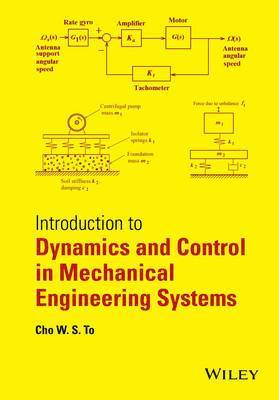
    Introduction to Dynamics and Control in Mechanical Engineering Systems

    AvCho W. S. To

    Inbunden, Engelska, 2016

    Del i serien Wiley-ASME Press Series

    1 296 kr

    Beställningsvara. Skickas inom 5-8 vardagar. Fri frakt över 249 kr.

    Fler format och utgåvor

    E-bok

    1 708 kr

    E-bok

    1 704 kr

    Beskrivning

    One of the first books to provide in-depth and systematic application of finite element methods to the field of stochastic structural dynamicsThe parallel developments of the Finite Element Methods in the 1950’s and the engineering applications of stochastic processes in the 1940’s provided a combined numerical analysis tool for the studies of dynamics of structures and structural systems under random loadings. In the open literature, there are books on statistical dynamics of structures and books on structural dynamics with chapters dealing with random response analysis. However, a systematic treatment of stochastic structural dynamics applying the finite element methods seems to be lacking. Aimed at advanced and specialist levels, the author presents and illustrates analytical and direct integration methods for analyzing the statistics of the response of structures to stochastic loads. The analysis methods are based on structural models represented via the Finite Element Method. In addition to linear problems the text also addresses nonlinear problems and non-stationary random excitation with systems having large spatially stochastic property variations.

    Produktinformation

    • Utgivningsdatum:2016-05-06
    • Mått:175 x 246 x 20 mm
    • Vikt:567 g
    • Format:Inbunden
    • Språk:Engelska
    • Serie:Wiley-ASME Press Series
    • Antal sidor:320
    • Förlag:John Wiley & Sons Inc
    • ISBN:9781118934920

    Utforska kategorier

    • Maskinteknik och material inom Naturvetenskap och teknik

    Mer om författaren

    Dr. To, obtained his Ph.D. in 1980 from the University of Southampton, is a professor in the Department of Mechanical and Materials Engineering at the University of Nebraska, Lincoln (UNL). Prior to joining UNL in 1996, he was a professor at the University of Western Ontario (UWO). Before joining UWO he was an associate professor at the University of Calgary. He was a University Research Fellow of the Natural Sciences and Engineering Research Council of Canada (NSERC) between 1982 and 1992. He is a Fellow of the American Society of Mechanical Engineers (ASME), and a member of several other professional societies. He served as chair of the ASME Finite Element Techniques and Computational Technologies Technical Committee. He serves as associate editors and member of editorial boards of several refereed journals. His research interests cover sound and vibration studies, solid and computational mechanics, system dynamics and controls, and design methodology.

    Innehållsförteckning

    • Series Preface xiiiPreface xvAcknowledgments xvii1 Introduction 11.1 Important Difference between Static and Dynamic Responses 11.2 Classification of Dynamic Systems 21.3 Applications of Control Theory 31.4 Organization of Presentation 4References 52 Review of Laplace Transforms 72.1 Definition 82.2 First and Second Shifting Theorems 102.3 Dirac Delta Function (Unit Impulse Function) 102.4 Laplace Transforms of Derivatives and Integrals 112.5 Convolution Theorem 112.6 Initial and Final Value Theorems 132.7 Laplace Transforms of Periodic Functions 132.8 Partial Fraction Method 152.9 Questions and Solutions 162.10 Applications of MATLAB 22Exercise Questions 26References 273 Dynamic Behaviors of Hydraulic and Pneumatic Systems 293.1 Basic Elements of Liquid and Gas Systems 293.1.1 Liquids 303.1.3 Remarks 313.2 Hydraulic Tank Systems 323.2.1 Non-interacting Hydraulic Tank Systems 323.2.2 Interacting Hydraulic Tank Systems 343.3 Nonlinear Hydraulic Tank and Linear Transfer Function 353.4 Pneumatically Actuated Valves 373.5 Questions and Solutions 39Appendix 3A: Transfer Function of Two Interacting Hydraulic Tanks 49Exercise Questions 524 Dynamic Behaviors of Oscillatory Systems 574.1 Elements of Oscillatory Systems 574.2 Free Vibration of Single Degree-of-Freedom Systems 594.3 Single Degree-of-Freedom Systems under Harmonic Forces 634.4 Single Degree-of-Freedom Systems under Non-Harmonic Forces 654.5 Vibration Analysis of Multi-Degrees-of-Freedom Systems 674.5.1 Formulation and Solution for Two-Degrees-of-Freedom Systems 674.5.2 Vibration Analysis of a System with a Dynamic Absorber 724.5.3 Normal Mode Analysis 734.6 Vibration of Continuous Systems 774.6.1 Vibrating Strings or Cables 784.6.2 Remarks 804.7 Questions and Solutions 81Appendix 4A: Proof of Equation (4.19b) 97Exercise Questions 99References 1045 Formulation and Dynamic Behavior of Thermal Systems 1055.1 Elements of Thermal Systems 1055.1.1 Thermal Resistance 1055.1.2 Thermal Capacitance 1065.1.3 Thermal Radiation 1075.2 Thermal Systems 1075.2.1 Process Control 1075.2.2 Space Heating 1085.2.3 Three-Capacitance Oven 1095.3 Questions and Solutions 112Exercise Questions 1176 Formulation and Dynamic Behavior of Electrical Systems 1216.1 Basic Electrical Elements 1216.2 Fundamentals of Electrical Circuits 1226.2.1 Resistors Connected in Series 1226.2.2 Resistors Connected in Parallel 1236.2.3 Kirchhoff’s Laws 1246.4 Electromechanical Systems 1266.4.1 Armature-Controlled DC Motor 1276.4.2 Field-Controlled DC Motor 1296.4.3 DC Generator 1306.5 Questions and Solutions 131Exercise Questions 134References 1357 Dynamic Characteristics of Transducers 1377.1 Basic Theory of the Tachometer 1377.2 Principles and Applications of Oscillatory Motion Transducers 1387.2.1 Equation of Motion 1397.2.2 Design Considerations of Two Types of Transducer 1407.3 Principles and Applications of Microphones 1417.3.1 Moving-Coil Microphone 1417.3.2 Condenser Microphone 1447.4 Principles and Applications of the Piezoelectric Hydrophone 1467.5 Questions and Solutions 148Appendix 7A: Proof of Approximated Current Solution 150Exercise Questions 153References 1548 Fundamentals of Control Systems 1558.1 Classification of Control Systems 1568.2 Representation of Control Systems 1568.3 Transfer Functions 1568.3.1 Transfer Function of Elements in Cascade Connection 1578.3.2 Transfer Function of Elements in Parallel Connection 1578.3.3 Remarks 1588.4 Closed-Loop Control Systems 1588.4.1 Closed-Loop Transfer Functions and System Response 1598.4.2 Summary of Steps for Determination of Closed-Loop Transfer Functions 1618.5 Block Diagram Reduction 1618.5.1 Moving Starting Points of Signals 1618.5.2 Moving Summing Points 1628.5.3 System Transfer Function by Block Diagram Reduction 1628.6 Questions and Solutions 164Exercise Questions 170References 1729 Analysis and Performance of Control Systems 1739.1 Response in the Time Domain 1739.2 Transient Responses as Functions of Closed-Loop Poles 1759.3 Control System Design Based on Transient Responses 1779.4 Control Types 1809.4.2 Integral Control 1819.4.3 Derivative Control 1819.5 Steady-State Errors 1829.5.1 Unit Step Input 1829.5.2 Unit Ramp Input 1839.5.3 Unit Parabolic Input 1839.6 Performance Indices and Sensitivity Functions 1849.6.1 Performance Indices 1849.6.2 Sensitivity Functions 1859.7 Questions and Solutions 185Exercise Questions 19010 Stability Analysis of Control Systems 19510.1 Concept of Stability in Linear Control Systems 19510.2 Routh–Hurwitz Stability Criterion 19510.3 Applications of Routh–Hurwitz Stability Criterion 19710.4 Questions and Solutions 202Exercise Questions 208References 21011 Graphical Methods for Control Systems 21111.1 Root Locus Method and Root Locus Plots 21111.1.1 Rules for Root Locus Plots of Negative Feedback Control Systems 21211.1.2 Construction of Root Loci 21311.2 Polar and Bode Plots 21511.3 Nyquist Plots and Stability Criterion 22111.3.1 Conformal Mapping and Cauchy’s Theorem 22111.3.2 Nyquist Method and Stability Criterion 22311.4 Gain Margin and Phase Margin 22611.5 Lines of Constant Magnitude: M Circles 22911.6 Lines of Constant Phase: N Circles 23311.7 Nichols Charts 23411.8 Applications of MATLAB for Graphical Constructions 23611.8.1 Root Locus Plots 23611.8.2 Bode Plots 24311.8.3 Nyquist Plots 249Exercise Questions 257References 26012 Modern Control System Analysis 26112.1 State Space Method 26112.2 State Transition Matrix 26212.3 Relationship between Laplace Transformed State Equation and Transfer Function 26412.4 Stability Based on Eigenvalues of the Coefficient Matrix 26712.6 Stabilizability and Detectability 27712.7 Applications of MATLAB 277Appendix 12A: Solution of System of First-Order Differential Equations 286Appendix 12B: Maclaurin’s Series 291Appendix 12C: Rank of A Matrix 294Exercise Questions 294References 296Index 297