• Fri frakt över 249 kr
  • •
  • Snabba leveranser
  • •
  • Billiga böcker
Kundservice

Du är på sajten för privatpersoner.

Företag, bibliotek eller offentlig verksamhet?

Du handlar på classic.bokus.com, där alla dina funktioner finns intakta.
Till classic.bokus.com
Bokus logotyp. Gå till startsidan.
  • Erbjudanden
  • Nyheter
  • Student
  • Topplistor
  • Barn & ungdom
  • Bokus Play
  • E-böcker
  • Pocketböcker
  • Spel & pussel

10% rabatt på allt med kod: NYSTART10 →

Sidfot

Mina sidor

    Hjälp

    • Kundservice
    • Vanliga frågor och svar
    • Frakt och leverans
    • Retur vid ångerrätt
    • Reklamera vara
    • Betalning
    • Köpvillkor
    • Allmänna villkor
    • Information om webbplatsens tillgänglighet

    Om Bokus

    • Om oss
    • Pressrum
    • För studenter
    • För företag
    • För bibliotek och offentlig verksamhet
    • För leverantörer
    • Hållbarhet

    Populärt

    • Aktuella erbjudanden
    • Presentkort
    • Studentlitteratur
    • Nya böcker
    • Topplistor
    • Signerade böcker
    • Engelska böcker

    Inspiration

    • Boktips
    • BookTok
    • Populära bokserier
    • Barnbokskaraktärer
    • Populära författare
    Logotyp för Bokus
    Följ oss på Facebook (extern länk)Följ oss på Instagram (extern länk)Följ oss på YouTube (extern länk)Följ oss på TikTok (extern länk)
    bokus @ CookiesAnpassa cookiesIntegritetspolicyKöpvillkor
    Till Citymail hemsida (extern länk)Till Budbee hemsida (extern länk)Till Postnord hemsida (extern länk)Till Schenker hemsida (extern länk)Till Early Bird hemsida (extern länk)Till Walleys hemsida (extern länk)
    1. Ekonomi och Ledarskap
    2. Ledarskapsböcker

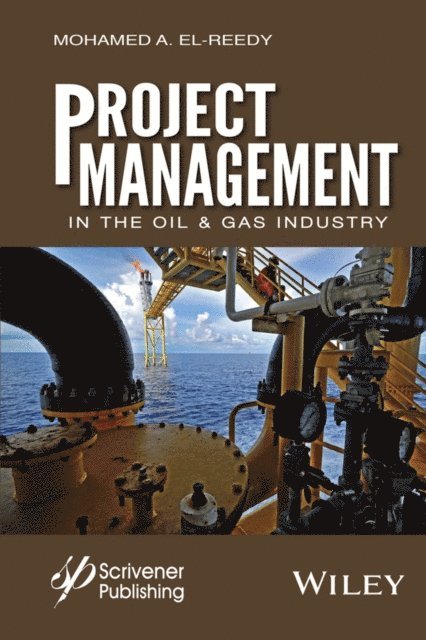
    Project Management in the Oil and Gas Industry

    AvMohamed A. El-Reedy

    Inbunden, Engelska, 2016

    2 338 kr

    Beställningsvara. Skickas inom 5-8 vardagar. Fri frakt över 249 kr.

    Fler format och utgåvor

    E-bok

    2 811 kr

    E-bok

    2 681 kr

    Beskrivning

    Oil and gas projects have special characteristics that need a different technique in project management. The development of any country depends on the development of the energy reserve through investing in oil and gas projects through onshore and offshore exploration, drilling, and increasing facility capacities. Therefore, these projects need a sort of management match with their characteristics, and project management is the main tool to achieving a successful project.Written by a veteran project manager who has specialized in oil and gas projects for years, this book focuses on using practical tools and methods that are widely and successfully used in project management for oil and gas projects. Most engineers study all subjects, but focus on project management in housing projects, administration projects, and commercial buildings or other similar projects. However, oil and gas projects have their own requirements and characteristics in management from the owners, engineering offices, and contractors' side.Not only useful to graduating engineers, new hires, and students, this volume is also an invaluable addition to any veteran project manager's library as a reference or a helpful go-to guide. Also meant to be a refresher for practicing engineers, it covers all of the project management subjects from an industrial point of view specifically for petroleum projects, making it the perfect desktop manual.Not just for project managers and students, this book is helpful to any engineering discipline or staff in sharing or applying the work of a petroleum project and is a must-have for anyone working in this industry.

    Produktinformation

    • Utgivningsdatum:2016-04-19
    • Mått:160 x 236 x 27 mm
    • Vikt:658 g
    • Format:Inbunden
    • Språk:Engelska
    • Antal sidor:336
    • Förlag:John Wiley & Sons Inc
    • ISBN:9781119083610

    Utforska kategorier

    • Ledarskapsböcker inom Ekonomi och Ledarskap
    • Energiindustri inom Ekonomi och Ledarskap

    Mer om författaren

    Mohamed El-Reedy has over 20 years of experience working on oil and gas projects and electric power projects, working with BP, Apachi, Amoco, Saipem, Agip. He has worked as a chief engineer with Worley Parsons in Egypt, and has published many papers in international conferences sponsored by API, ASME, ASCE, ACI. He has taught numerous courses in construction management and project management throughout the Middle East, Malaysia and Singapore, and he has published 3 books with CRC Press and 4 books in Arabic.

    Innehållsförteckning

    • Preface xvAbout the Author xvii1 How to Manage Oil and Gas Projects 11.1 The Principal of Project Management 11.2 Project Characteristics 21.3 Project Life Cycle 51.3.1 Initiation of the Project 71.3.1.1 Getting to the Scope Baseline 91.3.2 Feasibility Study 101.3.3 FEED (Preliminary) Engineering 111.3.4 Detail Engineering 151.3.5 Decision Support Package 171.3.6 Design Management 191.3.7 Execution Phase 201.3.8 Commissioning and Startup 211.4 Is this Project Successful? 221.4.1 Project Management Goals 221.4.1.1 Project Integration Management 231.4.1.2 Project Scope Management 231.4.1.3 Project Time Management 241.4.1.4 Project Cost Management 241.4.1.5 Project Quality Management 241.4.1.6 Project Human Resource Management 251.4.1.7 Project Communications Management 251.4.1.8 Project Risk Management 251.4.1.9 Project Procurement Management 251.5 Project Management Tasks 261.5.1 Define the Project Target 261.5.2 Define the Scope of Work 271.5.3 Define the Time Frame 271.5.4 Define the Available Resources 271.5.5 Define the Cost 281.5.6 Evaluate the Master Plan 281.5.7 Accept the Master Plan 281.5.8 Schedule Follow Up 291.5.9 Cost Follow Up 291.5.10 Comparing Between Actual Work and Master Plan Cost 291.5.11 Performance Evaluation 291.6 Project Manager Skill 30Quiz 312 Project Economic Analysis 392.1 Introduction 392.2 Project Cash Flow 402.2.1 Depreciation Methods 432.2.1.1 Straight-Line Method 442.2.1.2 Declining-Balance Method 452.2.1.3 Sum-of-the-Year-Digits 452.2.1.4 Sinking-Fund Method 462.2.1.5 Service-Out Method 462.2.2 Method of Net Present Value (NPV) 472.2.2.1 Inflation Rate 472.2.3 Minimum Internal Rate of Return (MIRR) 482.2.4 Payout Method 492.3 Economic Risk Assessment 502.3.1 Probability Theory 502.3.2 Probability Distribution of Variables 552.3.2.1 Normal Distribution 552.3.2.2 Log Normal Distribution 572.3.2.3 Binominal Distribution 602.3.2.4 Poisson Distribution 632.3.2.5 Exponential Distribution 632.3.2.6 Weibull Distribution (Rayleigh Distribution) 632.3.2.7 Gamma Distribution 642.3.2.8 Logistic Distribution 652.3.2.9 Extreme Value (Gumbel Distribution) 662.3.2.10 Pareto Distribution 662.3.3 Distribution for Uncertainty Parameters 672.3.3.1 Triangular Distribution 672.3.3.2 Uniform Distribution 682.3.4 Choose the Appropriate Probability Distribution 692.3.4.1 Chai Square Method 702.3.4.2 Kolmograv-Smirnov (K-S) 702.4 Decision Tree 712.5 Monte-Carlo Simulation Technique 752.6 Risk Adjusted Value (RAV) 783 Pitfalls in Time Schedule Planning 813.1 Introduction 813.1.1 Plan Single Point of Accountability (SPA) 843.1.2 Starting the Plan 853.1.3 Work Breakdown Structure (WBS) 873.2 Responsibilities of the Team 903.3 Expected Activity Time Period 913.4 Calculate the Activity Time Period 933.5 Time Schedule Preparation 943.5.1 Gantt Chart 953.5.2 Arrow Diagram Method (ADM) 953.5.3 Precedence Diagram Method (PDM) 963.5.4 Critical Path Method (CPM) 963.5.5 Program Evaluation and Review Technique (PERT) 973.5.6 Example 983.5.7 Application of the PERT Method 1023.5.7.1 Statistics Calculation for Activity Time 1023.5.7.2 Example 1033.5.7.3 Time schedule control 1043.6 Planning Overview 107Quiz 1094 Project Cost Control 1134.1 Introduction 1134.2 Cost Types 1154.2.1 Cost Estimate 1164.2.1.1 Top-Down Estimates 1174.2.1.2 Bottom-Up Estimates 1174.2.1.3 Analogous Estimates 1174.2.1.4 Parametric Estimates 1184.2.2 Steel Structure Cost Estimate 1224.2.3 Detailed Cost 1244.2.4 Cost Estimate to Project Control 1244.3 Economic Analysis to Project Cost 1254.3.1 Work Breakdown Structure (WBS) 1254.3.2 Organization Breakdown Structure (OBS) 1264.3.3 OBS/WBS Matrix 1264.3.4 Work Packages 1274.3.5 Cost Control 1284.3.6 (S) Curve 1314.3.7 Engineering Cost Control 1344.4 Cash Flow Calculation 1354.4.1 Project Cash Flow 1354.4.2 Impact on Increasing Cost 1374.4.3 Project Late Impact 1374.4.4 Impact of Operation Efficiency 138Quiz 1395 Resource Hiring 1435.1 Introduction 1435.2 Project Organization 1445.2.1 Types of Organizations 1445.2.1.1 Project Organization as a Part of the Company 1455.2.1.2 Separate Project Organization 1465.2.1.3 Matrix Organization 1475.2.2 Selecting the Best Organization 1495.3 Roles and Responsibilities of the Project Manager 1515.3.1 Project Manager as a Leader 1525.4 Administrative Organization for Total Quality Management 1545.5 Team Member Selection 1555.6 Managing the Team 1575.7 Allocate Resources to Project Plan 1585.7.1 Example 1585.8 Relation Between Project Parties 1625.9 Document and Information Transfer 1625.10 Information Transfer 1635.11 Quality Control in the Design Phase 1645.11.1 Inputs and Outputs of the Design Phase 1695.11.2 Design Verification 1695.11.3 Change in the Design 1695.11.4 Approval of the Design 174Quiz 1776 Tendering, Bidding, and Contract Traps 1836.1 Introduction 1836.2 Contracts 1846.2.1 Measured Contract 1866.2.2 Lump Sum 1866.2.3 Cost Plus 1876.3 Contract Between the Owner and Engineering Office 1876.4 The Importance of Contracts in Assuring the Quality of the Project 1896.5 Contracts in ISO 1906.6 FIDIC Contracts 1906.7 General Conditions in the Contracts 1976.8 Arbitration and the Arbitrator 1986.9 Bids and Tenders 2006.9.1 Public (Open) Tender 2006.9.2 Limited Tender 2026.9.3 Negotiated Tender 2036.9.4 Direct Order 2036.9.5 Tender Technical Evaluation 2046.9.6 Commercial Evaluation 2076.9.6.1 Commercial Evaluation Methods 2076.10 Closeout Report 208Quiz 2107 New Approach in Managing Oil and Gas Projects 2157.1 Introduction 2157.2 Quality System 2167.3 ISO 9000 2177.4 Quality Management Requirements 2187.4.1 Quality Manual 2187.4.2 Quality Plan 2197.4.3 Quality Control 2197.4.3.1 Why is Quality Control Important? 2207.4.3.2 Submittal Data 2217.4.3.3 How to Check Incoming Materials 2227.4.3.4 Methods of Laying Out and Checking Work 2227.4.3.5 Material/Equipment Compliance Tests 2247.4.3.6 When to Inspect Work 2257.4.3.7 Paperwork/Documentation 2267.4.3.8 Quality Control Plans 2287.4.4 Quality Assurance 2297.4.4.1 Quality Assurance in the ISO 2317.4.4.2 The Responsibility of the Contractor (Manufacturer) 2327.4.4.3 Responsibility of the Owner 2337.5 Project Quality Control in Various Stages 2347.5.1 Feasibility Study Stage 2347.5.2 Feed (Preliminary) Engineering 2357.5.3 Detailed Engineering Study 2387.5.3.1 Design Quality Control 2397.5.4 Execution Phase 2407.5.4.1 ISO and Control Work 2427.5.4.2 Inspection Procedures 2427.5.4.3 Importance of Contracts in Assuring the Project Quality 2437.5.4.4 Checklists 2437.6 Operational Phase of the Project 2497.7 Total Building Commissioning System 2507.7.1 Planning Stage 2527.7.1.1 Identify Commissioning Team 2527.7.1.2 Define Owner’s Project Requirements with the Customer Agency 2587.7.1.3 Develop Preliminary Commissioning Plan 2587.7.1.4 Commissioning for Certifications (LEED, Energy Star, etc.) 2587.7.1.5 Commissioning Agent Costs 2617.7.1.6 Cost-Benefit Analysis for Commissioning 2627.7.2 Design Stage 2627.7.2.1 Incorporate Commissioning into A/E and CM Scope of Services 2627.7.3 Construction Stage 2727.7.3.1 Review Submittals for Performance Parameters 2727.7.3.2 Develop and Utilize Construction Checklists 2737.7.3.3 Oversee and Document Functional Performance Testing 2747.7.3.4 Test Data Records 2747.7.3.5 Hold Commissioning Team Meetings and Report Progress 2757.7.3.6 Conduct Owner Training 2767.7.3.7 Turnover Commissioning Record 2777.7.4 Building Commissioning Process Post-Construction Stage 2797.7.4.1 Post-Construction Stage 2797.7.4.2 Perform Deferred and Seasonal Testing 2797.7.4.3 Re-inspect/Review Performance Before End of Warranty Period 2807.7.4.4 Complete Final Commissioning Report 2807.7.4.5 Recommission Facility Every 3–5 Years 2827.7.4.6 Recommissioning 2827.7.5 Advantages for Total Building Commissioning System 283Quiz 2848 Practical Risk Management for Oil and Gas Projects 2878.1 Introduction 2878.1.1 The Risk Management Process 2888.2 Project Risks 2898.3 Risk Assessment 2938.4 Risk Identification 2948.4.1 Methods of Defining Risk 2968.4.1.1 Brainstorming 2968.4.1.2 Delphi Technique 2978.4.1.3 Nominal Group Technique 2988.4.1.4 Crawford Slip 2998.4.1.5 Expert Interviews 2998.4.1.6 Root Cause Identification 3008.4.1.7 Checklists 3008.4.1.8 Documentation Reviews 3008.4.2 Grouping the Risks 3018.5 Define Priorities 3028.5.1 Matrix Method 3028.5.2 Tabulated Method 3038.6 Risk Response Planning and Strategies 3058.7 Risk Monitoring and Control 3068.8 Example 3078.9 Operations risk 3108.10 Methods of Risk Avoidance 312Quiz 313References 315