• Fri frakt över 249 kr
  • •
  • Snabba leveranser
  • •
  • Billiga böcker
Kundservice

Du är på sajten för privatpersoner.

Företag, bibliotek eller offentlig verksamhet?

Du handlar på classic.bokus.com, där alla dina funktioner finns intakta.
Till classic.bokus.com
Bokus logotyp. Gå till startsidan.
  • Erbjudanden
  • Nyheter
  • Student
  • Topplistor
  • Barn & ungdom
  • Bokus Play
  • E-böcker
  • Pocketböcker
  • Spel & pussel

Upp till 20% på populära nyheter →

Sidfot

Mina sidor

    Hjälp

    • Kundservice
    • Vanliga frågor och svar
    • Frakt och leverans
    • Retur vid ångerrätt
    • Reklamera vara
    • Betalning
    • Köpvillkor
    • Allmänna villkor
    • Information om webbplatsens tillgänglighet

    Om Bokus

    • Om oss
    • Pressrum
    • För studenter
    • För företag
    • För bibliotek och offentlig verksamhet
    • För leverantörer
    • Hållbarhet

    Populärt

    • Aktuella erbjudanden
    • Presentkort
    • Studentlitteratur
    • Nya böcker
    • Topplistor
    • Signerade böcker
    • Engelska böcker

    Inspiration

    • Boktips
    • BookTok
    • Populära bokserier
    • Barnbokskaraktärer
    • Populära författare

    Mina sidor

      Hjälp

      • Kundservice
      • Vanliga frågor och svar
      • Frakt och leverans
      • Retur vid ångerrätt
      • Reklamera vara
      • Betalning
      • Köpvillkor
      • Allmänna villkor
      • Information om webbplatsens tillgänglighet

      Om Bokus

      • Om oss
      • Pressrum
      • För studenter
      • För företag
      • För bibliotek och offentlig verksamhet
      • För leverantörer
      • Hållbarhet

      Populärt

      • Aktuella erbjudanden
      • Presentkort
      • Studentlitteratur
      • Nya böcker
      • Topplistor
      • Signerade böcker
      • Engelska böcker

      Inspiration

      • Boktips
      • BookTok
      • Populära bokserier
      • Barnbokskaraktärer
      • Populära författare
      Logotyp för Bokus
      Följ oss på Facebook (extern länk)Följ oss på Instagram (extern länk)Följ oss på YouTube (extern länk)Följ oss på TikTok (extern länk)
      bokus @ CookiesIntegritetspolicyKöpvillkor
      Till Citymail hemsida (extern länk)Till Budbee hemsida (extern länk)Till Postnord hemsida (extern länk)Till Schenker hemsida (extern länk)Till Early Bird hemsida (extern länk)Till Walleys hemsida (extern länk)
      1. Naturvetenskap och teknik
      2. Geovetenskap
      3. Geovetenskap

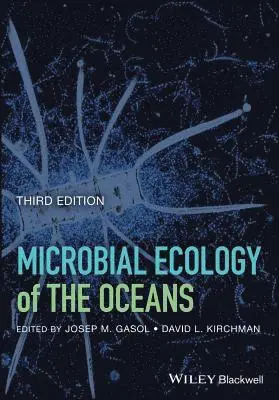
      Microbial Ecology of the Oceans

      AvJosep M. Gasol,David L. Kirchman

      Inbunden, Engelska, 2018

      1 555 kr

      Beställningsvara. Skickas inom 11-20 vardagar. Fri frakt över 249 kr.

      Beskrivning

      The newly revised and updated third edition of the bestselling book on microbial ecology in the oceans The third edition of Microbial Ecology of the Oceans features new topics, as well as different approaches to subjects dealt with in previous editions. The book starts out with a general introduction to the changes in the field, as well as looking at the prospects for the coming years. Chapters cover ecology, diversity, and function of microbes, and of microbial genes in the ocean. The biology and ecology of some model organisms, and how we can model the whole of the marine microbes, are dealt with, and some of the trophic roles that have changed in the last years are discussed. Finally, the role of microbes in the oceanic P cycle are presented.Microbial Ecology of the Oceans, Third Edition offers chapters on The Evolution of Microbial Ecology of the Ocean; Marine Microbial Diversity as Seen by High Throughput Sequencing; Ecological Significance of Microbial Trophic Mixing in the Oligotrophic Ocean; Metatranscritomics and Metaproteomics; Advances in Microbial Ecology from Model Marine Bacteria; Marine Microbes and Nonliving Organic Matter; Microbial Ecology and Biogeochemistry of Oxygen-Deficient Water Columns; The Ocean’s Microscale; Ecological Genomics of Marine Viruses; Microbial Physiological Ecology of The Marine Phosphorus Cycle; Phytoplankton Functional Types; and more. A new and updated edition of a key book in aquatic microbial ecologyIncludes widely used methodological approachesFully describes the structure of the microbial ecosystem, discussing in particular the sources of carbon for microbial growthOffers theoretical interpretations of subtropical plankton biogeographyMicrobial Ecology of the Oceans is an ideal text for advanced undergraduates, beginning graduate students, and colleagues from other fields wishing to learn about microbes and the processes they mediate in marine systems.

      Produktinformation

      • Utgivningsdatum:2018-03-09
      • Mått:180 x 249 x 31 mm
      • Vikt:1 157 g
      • Format:Inbunden
      • Språk:Engelska
      • Antal sidor:528
      • Upplaga:3
      • Förlag:John Wiley and Sons Ltd
      • ISBN:9781119107187

      Utforska kategorier

      • Geovetenskap inom Naturvetenskap och teknik
      • Biologi inom Naturvetenskap och teknik

      Mer om författaren

      About the Editors Josep M. Gasol is a Research Professor at the Institut de Ciències del Mar, CSIC, in Barcelona, Spain. David L. Kirchman is a Professor in the School of Marine Science and Policy at the University of Delaware, USA.

      Innehållsförteckning

      • PREFACE xiiiCONTRIBUTORS xv1 INTRODUCTION: THE EVOLUTION OF MICROBIAL ECOLOGY OF THE OCEAN 1Josep M. Gasol and David L. Kirchman1.1 Introduction 11.2 A Brief History of Marine Microbial Ecology 31.2.1 Biological Oceanography and “Black Box” Microbial Ecology 61.2.2 Opening the Black Box for Variability in Activity and Growth Rates 91.2.3 The Molecular Description of Microbial Diversity: rRNA]Based Approaches 111.2.4 The Molecular Description of Microbial Diversity: Whole Organisms and Genomes 141.2.5 N2 Fixation Studies as a Model for Marine Microbial Ecology 181.3 An Assessment of Current Marine Microbial Ecology 201.4 The Future of Marine Microbial Ecology 241.4.1 Toward Single]Cell Microbial Oceanography 241.4.2 Toward Understanding Cell]Cell Interactions 261.4.3 Toward Comprehensive Exploration of All Marine Habitats 271.4.4 Toward Changing Our View of the Fluxes of C and the Role of the Various Microbes 281.4.5 Toward Describing the Unknown Component of Microbial Diversity in the Oceans 291.5 Summary 301.6 References 312 MARINE MICROBIAL DIVERSITY AS SEEN BY HIGH]THROUGHPUT SEQUENCING 47Carlos Pedrós]Alió, Silvia G. Acinas, Ramiro Logares and Ramon Massana2.1 Diversity 472.1.1 Mechanisms Promoting Appearance of Novel Taxa 482.1.2 Mechanisms Promoting Coexistence 502.2 The Methods 532.2.1 First Applications of Sequencing Technology to the Marine Environment 552.2.2 HTS for Diversity Studies 562.2.3 rDNA Tags Extracted from Metagenomes 582.2.4 Single]Cell Genomics 582.2.5 Challenges of Processing Sequence Data 592.3 The Use of Sequences as Proxies for Taxa 592.3.1 Building Taxonomic Units from Sequences 592.3.2 Tools for Data Analysis 642.3.3 Comparison of Tag Sequences and the Biological Species Concept 652.3.4 Contribution of HTS and Genomes to a Novel Definition of Microbial Species 662.4 Diversity after HTS 682.4.1 One Sample (Alpha Diversity) 682.4.2 Comparison of Several Samples (Beta and Gamma Diversity) 712.4.3 The Unknown Marine Microbial Diversity 842.5 Conclusion 862.6 Summary 872.7 Acknowledgments 872.8 References 873 ECOLOGICAL SIGNIFICANCE OF MICROBIAL TROPHIC MIXING IN THE OLIGOTROPHIC OCEAN: THE ATLANTIC OCEAN CASE STUDIES 99Mikhail V. Zubkov and Manuela Hartmann3.1 Oligotrophic Oceanic Gyres: The Most Extensive, Microbe]Dominated Biome on Earth 993.2 Microbial Composition of the Subtropical Gyres 1013.3 Prokaryotic Photoheterotrophy in Gyres: The Ability to Use Light Energy and to Take up Organic Molecules Simultaneously 1033.4 Eukaryotic Mixotrophy in Gyres: The Ability to Use Light Energy and Simultaneously Prey on Bacterioplankton 1063.5 How Do Photoheterotrophy and Mixotrophy Affect the Coexistence of Bacteria and Eukaryotes in Gyres? 1093.6 Knowledge Gaps 1123.7 Summary 1143.8 Acknowledgments 1143.9 References 1144 METATRANSCRIPTOMICS AND METAPROTEOMICS: ELUCIDATING MARINE MICROBIAL ECOSYSTEM FUNCTIONS 123Robert M. Morris4.1 Introduction to Marine “Omics” and Big Data 1234.2 Overview of the Metatranscriptomics Approach 1264.3 Overview of the Metaproteomics Approach 1294.4 Key Considerations in Detecting Community Ecosystem Functions 1314.5 Importance of Cultivation]Based Studies, Replication, and Quantification 1344.6 Marine Microbial Community Transcriptomics and Proteomics 1344.6.1 Primary and Secondary Transporters Signal Shifts in Marine Microbial Communities 1364.6.2 Significant Photoheterotrophic Contribution to Marine Microbial Communities 1374.6.3 Microbial Metabolism of Single]Carbon Compounds 1394.6.4 Uncovering Suspected and Surprising Temporal Rhythms 1394.7 Summary 1414.8 Acknowledgments 1414.9 References 1425 ADVANCES IN MICROBIAL ECOLOGY FROM MODEL MARINE BACTERIA: BEYOND THE ESCHERICHIA COLI PARADIGM 149Sandra Martínez]García and Jarone Pinhassi5.1 Introduction 1495.2 Cultivation Approaches 1535.3 Lessons Learned from Ecophysiological Response Experiments with Cultivated Bacteria 1555.3.1 Nutrient Cycling (C, N, P, S, and Micronutrients) 1555.3.2 Photoheterotrophy in Marine Bacteria 1635.3.3 Microbial Interactions 1665.3.4 Phage]Host Model Systems in Cyanobacteria and Heterotrophic Bacteria 1685.3.5 Deep]Sea Bacteria 1715.4 Concluding Remarks 1725.5 Summary 1745.6 Acknowledgments 1755.7 References 1756 AN INSEPARABLE LIAISON: MARINE MICROBES AND NONLIVING ORGANIC MATTER 189Thorsten Dittmar and Carol Arnosti6.1 An Inseparable Liaison: Marine Microbes and Nonliving Organic Matter 1896.2 Marine Carbon Reservoirs 1926.3 Biogeochemical Cycles and Their Microbial Engines 1956.3.1 Surface Ocean Cycling 1956.3.2 Particle Formation and Flux 1976.3.3 Cycling in Sediments 1986.4 Driving Forces for Turnover Kinetics 2006.5 Spatial and Temporal Changes in Organic Matter and Microbial Communities 2096.5.1 Terrestrial Inputs and Transformations 2096.5.2 Variability in Primary Productivity and Microbial Communities 2106.5.3 Broad]Scale Patterns of Microbial Community Composition and Activities 2116.6 The Challenge for Future Research: Understanding the Functional Network of Marine Microbes and Organic Molecules 2146.7 Summary 2176.8 Acknowledgments 2186.9 References 2187 MICROBIAL ECOLOGY AND BIOGEOCHEMISTRY OF OXYGEN]DEFICIENT WATER COLUMNS 231Klaus Jürgens and Gordon T. Taylor7.1 Introduction 2317.2 Current Trends 2337.3 Characterizing Oxygen Deficiency: Terms and Definitions 2347.4 Types of Oxygen]Deficient Aquatic Systems 2377.5 Physico]Chemical Profiles as Indicators of Biogeochemical Zones 2407.6 General Considerations of Microbial Metabolism in ODWCs 2437.7 Biogeochemical Cycles in Oxygen]Deficient Systems and Major Prokaryotes Involved 2497.7.1 Carbon Cycle 2527.7.2 Nitrogen Cycle 2547.7.3 Sulfur Cycle 2617.7.4 Trace Metal Cycling (with a Focus on Manganese) 2647.8 Microbial Food Webs in ODWCs 2657.9 Summary 2727.10 Acknowledgments 2737.11 References 2738 THE OCEAN’S MICROSCALE: A MICROBE’S VIEW OF THE SEA 289Justin R. Seymour and Roman Stocker8.1 Introduction 2898.2 The Microscale Physics of the Pelagic Ocean 2928.2.1 The Importance of Cell]to]Cell Distance 2928.2.2 A World Dominated by Diffusion 2958.2.3 The Effects of Turbulence at the Microscale 2998.2.4 Other Effects of Flow on Marine Microbes 3018.3 Particles, Patches, and Phycospheres 3028.3.1 Particles as Resource Islands 3028.3.2 A Continuum of Organic Matter? 3038.3.3 Microbial Processes Create Patchiness 3058.3.4 The Phycosphere 3068.4 Motility and Chemotaxis 3068.4.1 Motility in the Ocean 3078.4.2 Chemotaxis to Microscale Hotspots 3138.5 Microscale Microbial Interactions 3198.5.1 Quorum Sensing in Microscale Hotspots 3198.5.2 Antagonistic Interactions within Microscale Habitats 3218.5.3 Symbiosis within the Phycosphere 3228.6 Microbial Metabolic Adaptions to Microscale Heterogeneity in Seawater 3258.7 Biogeochemical Implications of Microscale Interactions 3278.7.1 Phytoplankton Production 3278.7.2 Carbon Cycling 3288.7.3 Nitrogen Cycling 3298.7.4 Sulfur Cycling 3308.8 Summary 3318.9 Acknowledgments 3328.10 References 3329 ECOLOGICAL GENOMICS OF MARINE VIRUSES 345Jennifer R. Brum and Matthew B. Sullivan9.1 Introduction 3459.2 Genomics of Isolated Marine Viruses 3489.3 Investigating Viral Community Diversity in Nature 3509.4 Marine Viral Community Diversity and Structure 3519.4.1 Estimating the Size of the Global Virome 3539.4.2 Estimating Viral Richness 3549.4.3 Marine Viral Community Structure and Ecological Drivers 3549.5 Depth]Related Patterns Emerging from Analysis of Marine Viral Metagenomic Data Sets 3569.6 Emerging Temporal Patterns in Marine Viral Communities 3599.7 Annotating the Unknown: The Need for Creative Solutions 3619.8 Investigation of Virus]Host Interactions in the Wild 3649.9 Future Challenges in Marine Viral Ecology 3659.9.1 The Need to Capture Other Viral Types 3659.9.2 Moving Beyond Upper]Ocean Waters 3669.9.3 Making the Genes]to]Ecosystems Leap to Evaluate Processes 3679.10 Summary 3689.11 Acknowledgments 3699.12 References 36910 MICROBIAL PHYSIOLOGICAL ECOLOGY OF THE MARINE PHOSPHORUS CYCLE 377Sonya T. Dyhrman10.1 Introduction 37710.2 Methodological Advances and Challenges 37910.3 Phosphorus Biogeochemistry 38210.3.1 The Phosphorus Cycle 38210.3.2 Sources and Sinks 38210.3.3 Phosphorus Stoichiometry 38310.4 Phosphorus in the Cell 38310.4.1 Phosphorus Biochemicals 38310.4.2 Phosphorus Redox State 38510.4.3 Phosphorus Bond Classes 38610.5 Microbial Biogeochemistry of Phosphorus Bond Types 38610.5.1 Polyphosphate 38710.5.2 Phosphoester 38910.5.3 Phosphonate 39010.6 Inorganic Phosphorus Utilization 39110.6.1 Phosphate Uptake 39110.6.2 Polyphosphate Utilization 39310.6.3 Phosphite Metabolism 39410.7 Organic Phosphorus Utilization 39510.7.1 Phosphoester Enzymes 39510.7.2 Phosphonate Enzymes 40010.8 Phosphorus Stress Responses 40210.8.1 Phosphorus Stress Signaling 40510.8.2 Phosphorus Sparing or Recycling 40610.8.3 High]Affinity or Increased Phosphate Transport 41010.8.4 Utilization of Alternative Phosphorus Forms 41010.9 Case Studies in Phosphorus Physiology 41110.9.1 Bacteria: Pelagibacter 41110.9.2 Diazotroph: Trichodesmium 41310.9.3 Archaea: Nitrosopumilus 41410.9.4 Microeukaryote: Thalassiosira 41510.10 Case Studies with Different Systems 41610.10.1 Western North Atlantic 41610.10.2 Mediterranean 41710.10.3 Gulf of Mexico 41810.11 Summary 41910.12 Acknowledgments 42010.13 References 42011 PHYTOPLANKTON FUNCTIONAL TYPES: A TRAIT PERSPECTIVE 435Andrew J. Irwin and Zoe V. Finkel11.1 What Are Functional Types? 43511.2 The Major Functional Traits 43711.2.1 What Is a Trait? 43711.2.2 Types of Traits 43811.2.3 Size as a Master Trait 44311.2.4 Trait Trade]Offs 44511.2.5 Trait Differences across Phytoplankton Functional Types 44511.3 Challenges Using Traits to Represent Functional Types 44611.3.1 Challenges Estimating Average Trait Values for Phytoplankton Functional Types 44611.3.2 Challenges Posed by Acclimation and Adaptation 44911.4 Using Field Data to Identify Relevant Traits and Estimate Trait Values 45011.4.1 Why Use Field Data? 45011.4.2 How Can We Identify Traits and Niches of Phytoplankton Functional Types from Field Data? 45211.4.3 Are Phytoplankton Niches Stable over Time? 45311.5 Should We Model Functional Types or Individual Species? 45511.6 A Way Forward 45711.7 Summary 45911.8 References 45912 THEORETICAL INTERPRETATIONS OF SUBTROPICAL PLANKTON BIOGEOGRAPHY 467Michael J. Follows, Stephanie Dutkiewicz, Ben A. Ward and Christopher N. Follett12.1 Introduction: Phytoplankton Biogeography in the Subtropical Ocean 46812.2 Resource Competition, Fitness, and Cell Size 47612.3 Coexisting Size Classes: Predation Levels the Playing Field 48112.4 Niche Differentiation and Resource Ratio Theory 48312.4.1 Resource Ratio Theory for Nitrogen Fixation 48512.4.2 Predicted Global Biogeography of Nitrogen Fixation 48812.5 Discussion and Outlook 48812.5.1 Outlook 48912.6 Summary 49012.7 Acknowledgments 49012.8 References 491INDEX 495
      Hoppa över listan

      Du kanske också är intresserad av

      David L. Kirchman, Josep M. Gasol - Microbial Ecology of the Oceans, E-bok

      Microbial Ecology of the Oceans

      David L. Kirchman, Josep M. Gasol

      E-bok
      2018

      1 719 kr

      David L. Kirchman, Josep M. Gasol - Microbial Ecology of the Oceans, E-bok

      Microbial Ecology of the Oceans

      David L. Kirchman, Josep M. Gasol

      E-bok
      2018

      1 719 kr

      David L. Kirchman, Ashley Shade - Processes in Microbial Ecology, Inbunden
      • Nyhet

      Processes in Microbial Ecology

      David L. Kirchman, Ashley Shade

      Inbunden, 2026

      1 298 kr

      David L. Kirchman - Microbes, E-bok

      Microbes

      David L. Kirchman

      E-bok
      2024

      271 kr

      David L. Kirchman - Dead Zones, Inbunden

      Dead Zones

      David L. Kirchman

      Inbunden, 2021

      526 kr

      David L. Kirchman - Dead Zones, E-bok

      Dead Zones

      David L. Kirchman

      E-bok
      2021

      363 kr

      David L. Kirchman - Microbial Ecology of the Oceans, Häftad
      Del 29

      Microbial Ecology of the Oceans

      David L. Kirchman

      Häftad, 2000

      1 835 kr

      David L. Kirchman, Ashley Shade - Processes in Microbial Ecology, Häftad

      Processes in Microbial Ecology

      David L. Kirchman, Ashley Shade

      Häftad, 2026

      572 kr

      David L. Kirchman - Microbes, Inbunden

      Microbes

      David L. Kirchman

      Inbunden, 2024

      340 kr

      David L. Kirchman - Dead Zones, E-bok

      Dead Zones

      David L. Kirchman

      E-bok
      2021

      363 kr