• Fri frakt över 249 kr
  • •
  • Snabba leveranser
  • •
  • Billiga böcker
Kundservice

Du är på sajten för privatpersoner.

Företag, bibliotek eller offentlig verksamhet?

Du handlar på classic.bokus.com, där alla dina funktioner finns intakta.
Till classic.bokus.com
Bokus logotyp. Gå till startsidan.
  • Erbjudanden
  • Nyheter
  • Student
  • Topplistor
  • Barn & ungdom
  • Bokus Play
  • E-böcker
  • Pocketböcker
  • Spel & pussel

10% rabatt på allt med kod: NYSTART10 →

Sidfot

Mina sidor

    Hjälp

    • Kundservice
    • Vanliga frågor och svar
    • Frakt och leverans
    • Retur vid ångerrätt
    • Reklamera vara
    • Betalning
    • Köpvillkor
    • Allmänna villkor
    • Information om webbplatsens tillgänglighet

    Om Bokus

    • Om oss
    • Pressrum
    • För studenter
    • För företag
    • För bibliotek och offentlig verksamhet
    • För leverantörer
    • Hållbarhet

    Populärt

    • Aktuella erbjudanden
    • Presentkort
    • Studentlitteratur
    • Nya böcker
    • Topplistor
    • Signerade böcker
    • Engelska böcker

    Inspiration

    • Boktips
    • BookTok
    • Populära bokserier
    • Barnbokskaraktärer
    • Populära författare
    Logotyp för Bokus
    Följ oss på Facebook (extern länk)Följ oss på Instagram (extern länk)Följ oss på YouTube (extern länk)Följ oss på TikTok (extern länk)
    bokus @ CookiesAnpassa cookiesIntegritetspolicyKöpvillkor
    Till Citymail hemsida (extern länk)Till Budbee hemsida (extern länk)Till Postnord hemsida (extern länk)Till Schenker hemsida (extern länk)Till Early Bird hemsida (extern länk)Till Walleys hemsida (extern länk)
    1. Naturvetenskap och teknik
    2. Teknik och industri
    3. Tillverkningsteknik

    Greening of Pharmaceutical Engineering, Theories and Solutions

    AvM. R. Islam,Jaan S. Islam

    Inbunden, Engelska, 2016

    Del i serien Greening of Pharmaceutical Engineering

    2 331 kr

    Beställningsvara. Skickas inom 5-8 vardagar. Fri frakt över 249 kr.
    Beskrivning

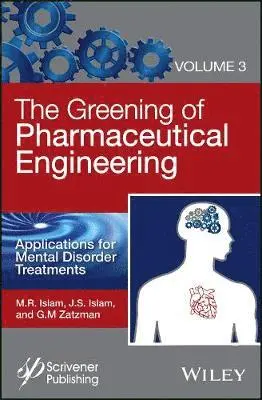
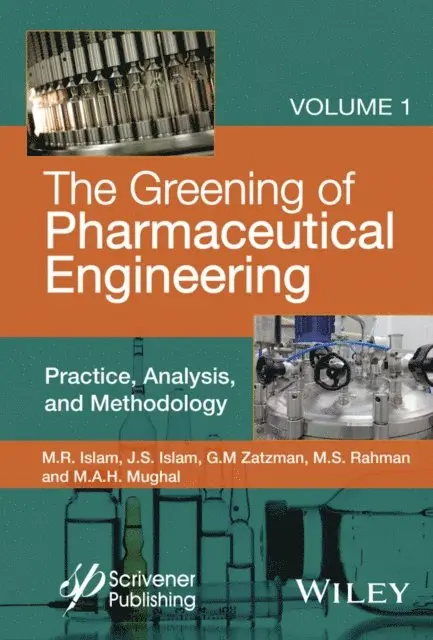
    This is the second volume in a four-volume series aimed at guiding the pharmaceutical industry toward sustainability. After analyzing and exposing some of the backward and ill-conceived notions that guide the present state of the industry, this volume presents key theories and new, groundbreaking solutions for re-thinking the processes involved in the engineering of pharmaceuticals and offers a fundamental paradigm shift.The 4 volumes in this ambitious project are: Volume 1: Practice, Analysis, and MethodologyVolume 2: Theories and SolutionsVolume 3: Applications for Mental Disorder TreatmentsVolume 4: Applications for Physical Disorder TreatmentsThis ground-breaking set of books is a unique and state-of-the-art study that only appears here, within these pages.  A fascinating study for the engineer, scientist, and pharmacist working in the pharmaceutical industry and interested in sustainability, it is also a valuable textbook for students and faculty studying these subjects.

    Produktinformation

    • Utgivningsdatum:2016-07-26
    • Mått:160 x 236 x 28 mm
    • Vikt:726 g
    • Format:Inbunden
    • Språk:Engelska
    • Serie:Greening of Pharmaceutical Engineering
    • Antal sidor:370
    • Förlag:John Wiley & Sons Inc
    • ISBN:9781119159674

    Utforska kategorier

    • Tillverkningsteknik inom Naturvetenskap och teknik

    Mer om författaren

    M. R. Islam, PhD, is a world-wide consultant on environment and energy-related issues. Dr. Islam is known as the most published engineer in the world. He is credited to have coined terms, such as "green petroleum" and "sustainable petroleum development" at a time when "sustainable petroleum" was considered to be an oxymoron. Dr. Islam's most notable contributions are in the areas of sustainability, environmental integrity, and knowledge modeling, on which topic he has written dozens of books and over 700 research papers.Jaan S. Islam has been active in research on the topics of science and social science. He is a co-author of the theory of mass, energy, time, and human thought material that formed the core of a number of books, including the current series. His previous works include Reconstituting the Curriculum (with M.R. Islam & Gary Zatzman).Gary M. Zatzman has decades of investigative journalism and research experience, dozens of articles in technical journals, and four previously published books:?Sustainable Resource Development, Sustainable Energy Pricing, Economics of Intangibles (with M.R. Islam), and Reconstituting the Curriculum (with M.R. & J.S. Islam).M. Safiur Rahman, PhD, is the principal scientific officer at Bangladesh Atomic Energy Commission in the field of environmental engineering. Since 2000, Dr. Rahman has been carrying out research works related to the distribution of toxic trace elements in surface and ground water, food chains and the environment for many government agencies and has published over 100 scientific articles and several books.M.A.H. Mughal is a prominent philanthropist, author, speaker, mentor and a business consultant with 22 years of global experience with some of the world's top companies. He is the author of many articles and is a Chartered Fellow of the British Computer Society and holds many professional designations.

    Innehållsförteckning

    • Preface ix1 Introduction 11.1 Opening Statement 11.2 The Way Out: How Do We Make Use of Existing Knowledge? 11.3 The Driver of The Knowledge Model 31.4 The Proof of The Pudding is in The Eating! 71.5 The Proof is in The Pudding 81.6 Summary of Introduction 92 Nature-Science Approach: Some Further Consequences 112.1 Cognitive Dissonance 112.1.1 Summary Remarks about Theories that Disconnect Conscience from Humanity 112.2 Foods for Thought 122.2.1 Artificial Food Addiction 122.2.2 Organic and Mechanical Frequencies 132.3 Example from CCD Analysis 172.4 A New Approach to Product Characterization 222.5 A New Paradigm 252.5.1 Violation of Characteristic Time 252.5.2 Observation of Nature: Importance of Intangibles 252.5.3 Analogy of Physical Phenomena 282.5.4 Intangible Cause to Tangible Consequence 282.5.5 Removable Discontinuities: Phases and Renewability of Materials 302.5.6 Redefining Force and Energy 372.5.6.1 Force 372.5.6.2 Energy 382.6 What is a Natural Energy Source? 422.7 The Science of Water and Oil 472.7.1 Comparison between Water and Petroleum 502.7.2 Combustion and Oxidation 652.7.3 Natural Energy vs. Artificial Energy 672.8 From Natural Energy to Natural Mass 722.9 Avalanche Theory of Mass and Energy 982.10 Aims of Modeling Natural Phenomena 1062.11 Simultaneous Characterization of Matter and Energy 1082.12 Implications 1102.13 Consequences of Nature-Science for Classical Set Theory and Conventional Notions of Mensuration 1142.14 Conclusions 1162.14.1 Need for a Change 1162.14.2 The Nature Science Approach 1173 A Knowledge-Based Cognition Model 1193.1 Abstract 1193.2 Introduction 1203.3 The Current Cognitive Model 1253.3.1 Policy-Making and The Aphenomenal Model 1263.3.2 The Aphenomenal Model in ‘Science’ 1323.3.2.1 Example 1: Aphenomenal Time Function 1343.3.3 Fear and Perception 1483.4 What is Human Thought Material (HTM)? 1513.5 Knowledge through Experience or Delinearized History? 1543.6 HTM from The Standpoint of Nature-Science 1563.6.1 Cognition with Conscious and Conscientious Participation 1563.7 The Basic Quantum of HTM 1573.8 Freedom of Intention 1693.8.1 The Knowledge-Based Cognition Process 1713.9 Conclusions 1774 Implications of a Comprehensive Material Balance Equation for Detecting Causes of Medical Disorders 1794.1 Summary 1794.2 Introduction 1804.3 Paradox and New Science 1834.3.1 Obesity Paradox 1844.3.2 Obesity/Mortality Paradox 1844.3.3 Simpson’s Paradox 1844.3.4 Low Birth Weight Paradox 1874.3.5 Prevention Paradox 1884.3.6 The Novelty Paradox 1894.3.7 The Paradox of Worsening Conditions With Medications 1904.3.8 The Prostate Paradox 1924.3.9 The Health-Lifespan Paradox 1924.3.10 Smoker’s Paradox 1934.3.11 Paradox of The Natural 1934.3.12 The French Paradox 1944.3.13 Paradox of Aging 1944.3.14 Paradox of Translational Medicine 1944.3.15 Peto’s Paradox 1954.3.16 TGF-β Paradox 1954.3.17 Hispanic Paradox 1954.4 Origin of Paradox: Implication of Probability Assumptions 1964.4.1 Probability of Creation and Life 1994.5 A Word About Inductive and Conductive Rules 2014.6 Deconstructing Game Theory 2084.6.1 Impact of The Deliberate “Hunger Game” 2264.6.2 The Prisoner’s Dilemma 2374.7 Towards Explaining Phenomena 2534.7.1 Blood-Brain Barrier and Cancer 2534.7.2 New Drug that Works on Cells that Mutate Faster and Works on Smokers 2544.7.3 Wireless Energy Transfer 2564.7.4 “Curing” Colorblindness 2584.7.5 Surgical Intervention—Recapitulating the HSSA Model 2604.7.6 Editing Embryo: To Engineer or Not to Engineer 2644.7.7 From ‘Original Sin’ to ‘Original’ Lunacy 2654.7.8 Teenagers’ Heavy Pot Smoking Tied to Memory Problems (or “How Many Angels can Dance on the Head of a Pin” Updated) 2684.7.9 Cigarettes – Even a Fetus can Tell What’s Harmful 2694.7.10 Water, or: Commodification of The Most Abundant Fluid on EarTh2714.7.11 Accelerating in Reverse 2734.7.12 Recycling The “Hunger Games” Mantra 2764.7.13 The Ultimate of ‘Original Sin’ 2784.7.14 Fifteen Immune-System Boosting Foods (via WebMD) 2824.7.14.1 Elderberry 2824.7.14.2 Acai Berry 2824.7.14.3 Oysters 2824.7.14.4 Watermelon 2834.7.14.5 Cabbage 2834.7.14.6 Almonds 2834.7.14.7 Grapefruit 2834.7.14.8 Wheat Germ 2834.7.14.9 Low-Fat Yogurt 2834.7.14.10 Garlic 2844.7.14.11 Spinach 2844.7.14.12 Tea 2844.7.14.13 Sweet Potato 2844.7.14.14 Broccoli 2844.7.14.15 Button Mushrooms 2844.7.15 OK for Food… But Not Pets? 2855 Conclusion and Recommendation 2875.1 The Importance of Being Earnest AboutCognition versus Perception 2875.2 HSSAN Degradation 2885.3 Greening of Pharmaceutical Industry 2895.3.1 Phases of Life 2895.3.2 Recognize The Stimulant 2905.3.3 Remove Negative Stimulant in Order toReverse The Symptoms 2905.3.4 Replacement of Artificial with Natural 2915.3.5 Medicines and Therapies with Natural Substitutes 2915.3.6 Mental Conditioning and Staged Prevention 291References and Bibliography 295Appendix 319Index 353