• Fri frakt över 249 kr
  • •
  • Snabba leveranser
  • •
  • Billiga böcker
Kundservice

Du är på sajten för privatpersoner.

Företag, bibliotek eller offentlig verksamhet?

Du handlar på classic.bokus.com, där alla dina funktioner finns intakta.
Till classic.bokus.com
Bokus logotyp. Gå till startsidan.
  • Erbjudanden
  • Nyheter
  • Student
  • Topplistor
  • Barn & ungdom
  • Bokus Play
  • E-böcker
  • Pocketböcker
  • Spel & pussel

10% rabatt på allt med kod: NYSTART10 →

Sidfot

Mina sidor

    Hjälp

    • Kundservice
    • Vanliga frågor och svar
    • Frakt och leverans
    • Retur vid ångerrätt
    • Reklamera vara
    • Betalning
    • Köpvillkor
    • Allmänna villkor
    • Information om webbplatsens tillgänglighet

    Om Bokus

    • Om oss
    • Pressrum
    • För studenter
    • För företag
    • För bibliotek och offentlig verksamhet
    • För leverantörer
    • Hållbarhet

    Populärt

    • Aktuella erbjudanden
    • Presentkort
    • Studentlitteratur
    • Nya böcker
    • Topplistor
    • Signerade böcker
    • Engelska böcker

    Inspiration

    • Boktips
    • BookTok
    • Populära bokserier
    • Barnbokskaraktärer
    • Populära författare
    Logotyp för Bokus
    Följ oss på Facebook (extern länk)Följ oss på Instagram (extern länk)Följ oss på YouTube (extern länk)Följ oss på TikTok (extern länk)
    bokus @ CookiesAnpassa cookiesIntegritetspolicyKöpvillkor
    Till Citymail hemsida (extern länk)Till Budbee hemsida (extern länk)Till Postnord hemsida (extern länk)Till Schenker hemsida (extern länk)Till Early Bird hemsida (extern länk)Till Walleys hemsida (extern länk)
    1. Naturvetenskap och teknik
    2. Teknik och industri
    3. Byggnadsteknik

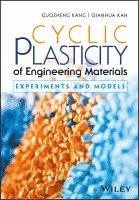
    Cyclic Plasticity of Engineering Materials

    Experiments and Models

    AvGuozheng Kang,Qianhua Kan

    Inbunden, Engelska, 2017

    1 511 kr

    Beställningsvara. Skickas inom 11-20 vardagar. Fri frakt över 249 kr.

    Beskrivning

    New contributions to the cyclic plasticity of engineering materialsWritten by leading experts in the field, this book provides an authoritative and comprehensive introduction to cyclic plasticity of metals, polymers, composites and shape memory alloys. Each chapter is devoted to fundamentals of cyclic plasticity or to one of the major classes of materials, thereby providing a wide coverage of the field.The book deals with experimental observations on metals, composites, polymers and shape memory alloys, and the corresponding cyclic plasticity models for metals, polymers, particle reinforced metal matrix composites and shape memory alloys. Also, the thermo-mechanical coupled cyclic plasticity models are discussed for metals and shape memory alloys.Key features: Provides a comprehensive introduction to cyclic plasticityPresents Macroscopic and microscopic observations on the ratchetting of different materialsEstablishes cyclic plasticity constitutive models for different materials.Analysis of cyclic plasticity in engineering structures.This book is an important reference for students, practicing engineers and researchers who study cyclic plasticity in the areas of mechanical, civil, nuclear, and aerospace engineering as well as materials science.

    Produktinformation

    • Utgivningsdatum:2017-04-21
    • Mått:173 x 252 x 31 mm
    • Vikt:975 g
    • Format:Inbunden
    • Språk:Engelska
    • Antal sidor:560
    • Förlag:John Wiley & Sons Inc
    • ISBN:9781119180807

    Utforska kategorier

    • Byggnadsteknik inom Naturvetenskap och teknik
    • Maskinteknik och material inom Naturvetenskap och teknik

    Mer om författaren

    Professor Guozheng Kang achieved his Bachelor Degree from Tsinghua University, China in 1992, and then he obtained his Master and PhD degrees from Southwest Jiaotong University, China in 1994 and 1997, respectively. Kang joined Southwest Jiaotong University, China as a lecturer in 1997 and was promoted to associate professor and professor in 2003 and 2005, respectively. He has received the "Alexander von Humboldt Fellowship", "Outstanding Young Investigator Award of NSFC", "Cheung Kong Chair Professor of MOE, China", and "Program for Ten Thousands Talent, China". His research interests focus on the cyclic constitutive models of advanced materials, fatigue and fracture, and meso-mechanics analysis of composites. Kang has published 5 books, 4 book chapters and 130 international journal papers. Currently, he is a member of the editorial board for five international peer-reviewed journals, including the International Journal of Plasticity, ZAMM-Zeitschrift fur Angewandte Mathematik und Mechanik, Acta Mechanica Sinica and the Journal of the Mechanical Behavior of Materials. Dr. Qianhua Kan obtained his Bachelor Degree in Civil Engineering with first class honors from Zhengzhou University in 2002. He obtained his Master Degree in Solid Mechanics from Southwest Jiaotong University in 2005 and his PhD degree from the same University in 2009. Following this, Dr. Kan joined Southwest Jiaotong University as a lecturer in 2009 and was promoted to associate professor in 2012. Dr. Kan visited Monash University (Australia) as an award holder of the Endeavour Research Fellowship for six months in 2011. His research interests include fatigue failures of smart materials, wheel-rail contact, biomechanics and finite element analysis. Dr. Kan has been awarded 5 research grants from NSFC and National Key Laboratories since 2009. Currently, he is supervising and co-supervising 13 postgraduate research students. Dr. Kan has published 5 books, 2 book chapters and 45 international journal papers.

    Innehållsförteckning

    • Introduction 1I.1 Monotonic Elastoplastic Deformation 1I.2 Cyclic Elastoplastic Deformation 3I.2.1 Cyclic Softening/Hardening Features 3I.2.2 Mean Stress Relaxation 6I.2.3 Ratchetting 7I.3 Contents of This Book 9References 101 Fundamentals of Inelastic Constitutive Models 131.1 Fundamentals of Continuum Mechanics 131.1.1 Kinematics 131.1.2 Definitions of Stress Tensors 151.1.3 Frame‐Indifference and Objective Rates 161.1.4 Thermodynamics 171.1.4.1 The First Thermodynamic Principle 171.1.4.2 The Second Thermodynamic Principle 171.1.5 Constitutive Theory of Solid Continua 181.1.5.1 Constitutive Theory of Elastic Solids 181.1.5.2 Constitutive Theory of Elastoplastic Solids 191.2 Classical Inelastic Constitutive Models 221.2.1 J2 Plasticity Model 231.2.2 Unified Visco‐plasticity Model 241.3 Fundamentals of Crystal Plasticity 251.3.1 Single Crystal Version 251.3.2 Polycrystalline Version 271.4 Fundamentals of Meso‐mechanics for Composite Materials 281.4.1 Eshelby’s Inclusion Theory 291.4.2 Mori–Tanaka’s Homogenization Approach 30References 322 Cyclic Plasticity of Metals: I. Macroscopic and Microscopic Observations and Analysis of Micro-mechanism 352.1 Macroscopic Experimental Observations 352.1.1 Cyclic Softening/Hardening Features in More Details 352.1.1.1 Uniaxial Cases 352.1.1.2 Multiaxial Cases 432.1.2 Ratchetting Behaviors 472.1.2.1 Uniaxial Cases 482.1.2.2 Multiaxial Cases 622.1.3 Thermal Ratchetting 752.2 Microscopic Observations of Dislocation Patterns and Their Evolutions 772.2.1 FCC Metals 802.2.1.1 Uniaxial Case 802.2.1.2 Multiaxial Case 862.2.2 BCC Metals 952.2.2.1 Uniaxial Case 952.2.2.2 Multiaxial Case 1032.3 Micro‐mechanism of Ratchetting 1112.3.1 FCC Metals 1112.3.1.1 Uniaxial Ratchetting 1112.3.1.2 Multiaxial Ratchetting 1142.3.2 BCC Metals 1152.3.2.1 Uniaxial Ratchetting 1152.3.2.2 Multiaxial Ratchetting 1172.4 Summary 118References 1193 Cyclic Plasticity of Metals: II. Constitutive Models 1233.1 Macroscopic Phenomenological Constitutive Models 1243.1.1 Framework of Cyclic Plasticity Models 1243.1.1.1 Governing Equations 1243.1.1.2 Brief Review on Kinematic Hardening Rules 1263.1.1.3 Combined Kinematic and Isotropic Hardening Rules 1313.1.2 Viscoplastic Constitutive Model for Ratchetting at Elevated Temperatures 1363.1.2.1 Nonlinear Kinematic Hardening Rules 1363.1.2.2 Nonlinear Isotropic Hardening Rule 1373.1.2.3 Verification and Discussion 1383.1.3 Constitutive Models for Time‐Dependent Ratchetting 1443.1.3.1 Separated Version 1463.1.3.2 Unified Version 1523.1.4 Evaluation of Thermal Ratchetting 1613.2 Physical Nature‐Based Constitutive Models 1633.2.1 Crystal Plasticity‐Based Constitutive Models 1633.2.1.1 Single Crystal Version 1633.2.1.2 Application to Polycrystalline Metals 1673.2.2 Dislocation‐Based Crystal Plasticity Model 1753.2.2.1 Single Crystal Version 1753.2.2.2 Verification and Discussion 1773.2.3 Multi‐mechanism Constitutive Model 1833.2.3.1 2M1C Model 1873.2.3.2 2M2C Model 1883.3 Two Applications of Cyclic Plasticity Models 1893.3.1 Rolling Contact Fatigue Analysis of Rail Head 1893.3.1.1 Experimental and Theoretical Evaluation to the Ratchetting of Rail Steels 1903.3.1.2 Finite Element Simulations 1943.3.2 Bending Fretting Fatigue Analysis of Axles in Railway Vehicles 1973.3.2.1 Equivalent Two‐Dimensional Finite Element Model 1993.3.2.2 Finite Element Simulation to Bending Fretting Process 2013.3.2.3 Predictions to Crack Initiation Location and Fretting Fatigue Life 2033.4 Summary 209References 2114 Thermomechanically Coupled Cyclic Plasticity of Metallic Materials at Finite Strain 2194.1 Cyclic Plasticity Model at Finite Strain 2214.1.1 Framework of Finite Elastoplastic Constitutive Model 2214.1.1.1 Equations of Kinematics 2214.1.1.2 Constitutive Equations 2214.1.1.3 Kinematic and Isotropic Hardening Rules 2224.1.1.4 Logarithmic Stress Rate 2234.1.2 Finite Element Implementation of the Proposed Model 2244.1.2.1 Discretization Equations of the Proposed Model 2244.1.2.2 Implicit Stress Integration Algorithm 2274.1.2.3 Consistent Tangent Modulus 2284.1.3 Verification of the Proposed Model 2304.1.3.1 Determination of Material Parameters 2304.1.3.2 Simulation of Monotonic Simple Shear Deformation 2304.1.3.3 Simulation of Cyclic Free‐End Torsion and Tension–Torsion Deformations 2314.1.3.4 Simulation of Uniaxial Ratchetting at Finite Strain 2354.2 Thermomechanically Coupled Cyclic Plasticity Model at Finite Strain 2394.2.1 Framework of Thermodynamics 2394.2.1.1 Kinematics and Logarithmic Stress Rate 2394.2.1.2 Thermodynamic Laws 2394.2.1.3 Generalized Constitutive Equations 2414.2.1.4 Restrictions on Specific Heat and Stress Response Function 2434.2.2 Specific Constitutive Model 2444.2.2.1 Nonlinear Kinematic Hardening Rule 2464.2.2.2 Nonlinear Isotropic Hardening Rule 2474.2.3 Simulations and Discussions 2494.3 Summary 261References 2625 Cyclic Viscoelasticity–Viscoplasticity of Polymers 2675.1 Experimental Observations 2685.1.1 Cyclic Softening/Hardening Features 2685.1.1.1 Uniaxial Strain‐Controlled Cyclic Tests 2695.1.1.2 Multiaxial Strain‐Controlled Cyclic Tests 2735.1.2 Ratchetting Behaviors 2755.1.2.1 Uniaxial Ratchetting 2755.1.2.2 Multiaxial Ratchetting 2885.2 Cyclic Viscoelastic Constitutive Model 2995.2.1 Original Schapery’s Model 3025.2.1.1 Main Equations of Schapery’s Viscoelastic Model 3025.2.1.2 Determination of Material Parameters 3035.2.1.3 Simulations and Discussion 3035.2.2 Extended Schapery’s Model 3045.2.2.1 Main Modification 3045.2.2.2 Simulations and Discussion 3075.3 Cyclic Viscoelastic–Viscoplastic Constitutive Model 3105.3.1 Main Equations 3105.3.1.1 Viscoelasticity 3135.3.1.2 Viscoplasticity 3145.3.2 Verification and Discussion 3155.3.2.1 Determination of Material Parameters 3155.3.2.2 Simulations and Discussion 3165.4 Summary 327References 3276 Cyclic Plasticity of Particle‐Reinforced Metal Matrix Composites 3316.1 Experimental Observations 3326.1.1 Cyclic Softening/Hardening Features 3326.1.2 Ratchetting Behaviors 3356.1.2.1 Uniaxial Ratchetting at Room Temperature 3356.1.2.2 Uniaxial Ratchetting at 573 K 3386.2 Finite Element Simulations 3416.2.1 Time‐Independent Cyclic Plasticity 3426.2.1.1 Main Equations of the Time‐Independent Cyclic Plasticity Model 3436.2.1.2 Basic Finite Element Model and Simulations 3466.2.1.3 Effect of Interfacial Bonding 3516.2.1.4 Results with 3D Multiparticle Finite Element Model 3626.2.2 Time‐Dependent Cyclic Plasticity 3676.2.2.1 Finite Element Model 3686.2.2.2 Simulations and Discussion 3686.3 Meso‐mechanical Time‐Independent Plasticity Model 3736.3.1 Framework of the Model 3736.3.1.1 Time‐Independent Cyclic Plasticity Model for the Matrix 3746.3.1.2 Extension of the Mori–Tanaka Homogenization Approach 3746.3.2 Numerical Implementation of the Model 3766.3.2.1 Under the Strain‐Controlled Loading Condition 3766.3.2.2 Under the Stress‐Controlled Loading Condition 3786.3.2.3 Continuum and Algorithmic Consistent Tangent Operators 3796.3.3 Verification and Discussion 3806.3.3.1 Determination of Material Parameters 3806.3.3.2 Simulations and Discussion 3806.4 Meso‐mechanical Time‐Dependent Plasticity Model 3876.4.1 Framework of the Model 3886.4.1.1 Time‐Dependent Cyclic Plasticity Model for the Matrix 3896.4.1.2 Mori–Tanaka Homogenization Approach 3906.4.2 Numerical Implementation of the Model 3906.4.2.1 Generalized Incrementally Affine Linearization Formulation 3906.4.2.2 Extension of Mori–Tanaka’s Model 3916.4.2.3 Algorithmic Consistent Tangent Operator and Its Regularization 3936.4.2.4 Numerical Integration of the Viscoplasticity Model 3946.4.3 Verification and Discussion 3956.4.3.1 Under Monotonic Tension 3956.4.3.2 Under Strain‐Controlled Cyclic Loading Conditions 3956.4.3.3 Time‐Dependent Uniaxial Ratchetting 3956.5 Summary 398References 4017 Thermomechanical Cyclic Deformation of Shape‐Memory Alloys 4057.1 Experimental Observations 4077.1.1 Degeneration of Super‐Elasticity and Transformation Ratchetting 4077.1.1.1 Thermomechanical Cyclic Deformation Under Strain‐Controlled Loading Conditions 4077.1.1.2 Thermomechanical Cyclic Deformation Under Uniaxial Stress‐Controlled Loading Conditions 4117.1.1.3 Thermomechanical Cyclic Deformation Under Multiaxial Stress‐Controlled Loading Conditions 4197.1.2 Rate‐Dependent Cyclic Deformation of Super‐Elastic NiTi SMAs 4267.1.2.1 Thermomechanical Cyclic Deformation Under Strain‐Controlled Loading Conditions 4287.1.2.2 Thermomechanical Cyclic Deformation Under Stress‐Controlled Loading Conditions 4347.1.3 Thermomechanical Cyclic Deformation of Shape‐Memory NiTi SMAs 4417.1.3.1 Pure Mechanical Cyclic Deformation under Stress‐Controlled Loading Conditions 4417.1.3.2 Thermomechanical Cyclic Deformation with Thermal Cycling and Axial Stress 4517.2 Phenomenological Constitutive Models 4527.2.1 Pure Mechanical Version 4527.2.1.1 Thermodynamic Equations and Internal Variables 4527.2.1.2 Main Equations of Constitutive Model 4537.2.1.3 Predictions and Discussions 4577.2.2 Thermomechanical Version 4647.2.2.1 Strain Definitions 4647.2.2.2 Evolution Rules of Transformation and Transformation‐Induced Plastic Strains 4697.2.2.3 Simplified Temperature Field 4737.2.2.4 Predictions and Discussions 4777.3 Crystal Plasticity‐Based Constitutive Models 4897.3.1 Pure Mechanical Version 4897.3.1.1 Strain Definitions 4897.3.1.2 Evolution Rules of Internal Variables 4927.3.1.3 Explicit Scale Transition Rule 4947.3.1.4 Verifications and Discussions 4957.3.2 Thermomechanical Version 5007.3.2.1 Strain Definitions 5027.3.2.2 Evolution Rules of Internal Variables 5037.3.2.3 Thermomechanical Coupled Analysis for Temperature Field 5057.3.2.4 Verifications and Discussions 5077.4 Summary 524References 525Index 531