• Fri frakt över 249 kr
  • •
  • Snabba leveranser
  • •
  • Billiga böcker
Kundservice

Du är på sajten för privatpersoner.

Företag, bibliotek eller offentlig verksamhet?

Du handlar på classic.bokus.com, där alla dina funktioner finns intakta.
Till classic.bokus.com
Bokus logotyp. Gå till startsidan.
  • Erbjudanden
  • Nyheter
  • Student
  • Topplistor
  • Barn & ungdom
  • Bokus Play
  • E-böcker
  • Pocketböcker
  • Spel & pussel

10% rabatt på allt med kod: NYSTART10 →

Sidfot

Mina sidor

    Hjälp

    • Kundservice
    • Vanliga frågor och svar
    • Frakt och leverans
    • Retur vid ångerrätt
    • Reklamera vara
    • Betalning
    • Köpvillkor
    • Allmänna villkor
    • Information om webbplatsens tillgänglighet

    Om Bokus

    • Om oss
    • Pressrum
    • För studenter
    • För företag
    • För bibliotek och offentlig verksamhet
    • För leverantörer
    • Hållbarhet

    Populärt

    • Aktuella erbjudanden
    • Presentkort
    • Studentlitteratur
    • Nya böcker
    • Topplistor
    • Signerade böcker
    • Engelska böcker

    Inspiration

    • Boktips
    • BookTok
    • Populära bokserier
    • Barnbokskaraktärer
    • Populära författare
    Logotyp för Bokus
    Följ oss på Facebook (extern länk)Följ oss på Instagram (extern länk)Följ oss på YouTube (extern länk)Följ oss på TikTok (extern länk)
    bokus @ CookiesAnpassa cookiesIntegritetspolicyKöpvillkor
    Till Citymail hemsida (extern länk)Till Budbee hemsida (extern länk)Till Postnord hemsida (extern länk)Till Schenker hemsida (extern länk)Till Early Bird hemsida (extern länk)Till Walleys hemsida (extern länk)
    1. Naturvetenskap och teknik
    2. Teknik och industri
    3. Elektronik och kommunikationer

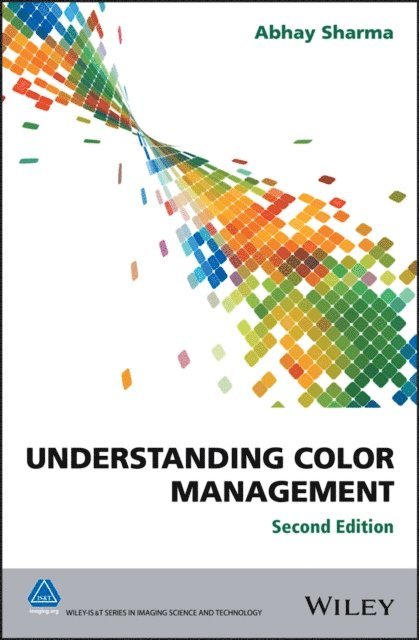
    Understanding Color Management

    AvAbhay Sharma

    Inbunden, Engelska, 2018

    Del i serien Wiley-IS&T Series in Imaging Science and Technology

    1 307 kr

    Beställningsvara. Skickas inom 5-8 vardagar. Fri frakt över 249 kr.

    Fler format och utgåvor

    E-bok

    1 514 kr

    E-bok

    1 514 kr

    Beskrivning

    An accessible but technically rigorous guide to color management for all users in all market segmentsUnderstanding Color Management, 2nd Edition explains the basics of color science as needed to understand color profiling software, color measuring instruments, and software applications, such as Adobe Photoshop and proofing RIPs. It also serves as a practical guide to International Color Consortium (ICC) profiles describing procedures for managing color with digital cameras, LCD displays, inkjet proofers, digital presses and web browsers and tablets. Updates since the first edition include new chapters on iPads, tablets and smartphones; home-cinema projection systems, as well as, with the industrial user in mind, new additional chapters on large-format inkjet for signage and banner printing, flexography, xerography and spot color workflows.Key features: Managing color in digital cameras with Camera Raw and DNG.Step-by-step approach to using color management in Adobe Photoshop CC.M0, M1, M2 instrument measurement modes explained.Testing of low cost, iPhone color measuring instruments.Updated to include iccMAX (Version 5.0) ICC profiles.G7 calibration explained with practical examples.Conventional printing conditions described - SNAP, GRACoL, SWOP, Fogra, CRPC.New sections on Pantone EXTENDED GAMUT Guide.Introduction to XML for color management applications.Understanding Color Management, 2nd Edition is a valuable resource for digital photographers, keen amateurs and end-users, graphic designers and artists, web masters, production and prepress operators and supervisors, color scientists and researchers, color consultants, and manufacturers. It is a must-have course text for college and university students of graphics arts, graphic communications, digital photography, print media, and imaging arts and sciences.The Society for Imaging Science and Technology (imaging.org) is an international professional society whose mission is to keep members and others aware of the latest scientific and technological developments in the greater field of imaging. A major objective of the Wiley-IS&T series is to advance this goal at the professional level. The broad scope of the series focuses on imaging in all its aspects, with particular emphasis on digital printing, electronic imaging, image assessment and reproduction, image archiving and preservation, color science, pre-press technologies, and hybrid imaging systems.

    Produktinformation

    • Utgivningsdatum:2018-08-31
    • Mått:173 x 246 x 20 mm
    • Vikt:816 g
    • Format:Inbunden
    • Språk:Engelska
    • Serie:Wiley-IS&T Series in Imaging Science and Technology
    • Antal sidor:344
    • Upplaga:2
    • Förlag:John Wiley & Sons Inc
    • ISBN:9781119223634

    Utforska kategorier

    • Elektronik och kommunikationer inom Naturvetenskap och teknik

    Mer om författaren

    Abhay Sharma has a BS in Imaging Sciences from the University of Westminster, UK, and a PhD in Physics from King's College London, UK. Sharma developed color products as a Senior Research Scientist at FujiFilm Electronic Imaging, UK, before accepting a position as Associate Professor at Western Michigan University, USA. Dr Sharma is now a Professor in the School of Graphic Communications Management, Ryerson University in Toronto, where he teaches color management to students on the only degree program in print media in Canada. Sharma is well known in the industry via his involvement with the ICC and major Idealliance color evaluation projects for color proofing, color in digital presses, ink optimization, large-format inkjet printing, etc.

    Innehållsförteckning

    • Foreword to 2nd Edition xvForeword to 1st Edition xviiPreface xixAcknowledgments xxvii1 Introduction 11.1 Why Do We Need Color Management? 11.2 Closed-loop Color Control 31.3 Need for an Open System 41.4 A Color Management System 51.5 Color Management Workflows 81.6 ICC – International Color Consortium 101.7 RGB and CMYK Color Specification 131.8 CIE 1931 Yxy and CIE 1976 L∗a∗b∗ 161.9 Color Conversions 171.10 Three Cs of Color Management 191.11 Profile Types 201.11.1 Custom Profiles 201.11.2 Generic Profiles 211.11.3 Standard Profiles 221.12 Color Gamuts 241.13 Rendering Intents 261.14 Color Accuracy 281.15 Late-binding Workflows 291.16 Spot Colors and Proprietary Systems 301.17 Benefits of Color Management 311.18 Summary 342 Principles of Light and Color 372.1 Introduction 372.2 Light Source – Object – Human Observer 382.3 Electromagnetic Radiation 392.3.1 The Visible Spectrum 392.4 Specifying the Light Source 402.4.1 Spectral Power Distribution 402.4.2 Color Temperature 422.4.3 CIE Illuminants and Standard Sources 432.4.4 Viewing Booths 452.4.5 “Warm” and “Cold” Colors 462.5 Measuring the Sample Spectrum 462.5.1 Practical Color Samples 472.6 Quantifying Human Color Vision 492.6.1 CIE Standard Observer 502.6.2 Trichromatic Vision 512.7 Changing the Light Source 532.7.1 Chromatic Adaptation 532.7.2 Yellow Sodium-Vapor Street Lighting 542.7.3 Metamerism – Matching Jacket and Trousers 562.7.4 PANTONE® D50 Lighting Indicator 582.8 Vision and Measurement 582.8.1 Viewing the Invisible – Infrared 592.8.2 Ultraviolet Fluorescence 602.8.3 Color Illusions 602.8.4 Color Appearance Modeling 612.9 Summary 633 Color by Numbers 653.1 Introduction 653.2 Basic Attributes of Color: Hue, Saturation, and Lightness 663.3 Munsell Color System 673.4 CIE Color Specification 683.5 XYZ Tristimulus Values 693.5.1 Calculating XYZ 693.5.2 XYZ Example Colors 713.5.3 XYZ for Light Sources 723.6 CIE 1931 Yxy System 723.6.1 Advantages of the Yxy Chromaticity Diagram 743.6.2 Disadvantages of the Yxy Chromaticity Diagram 753.7 CIE 1976 L∗a∗b∗ System 773.7.1 L∗a∗b∗ Practical Examples 803.7.2 L∗a∗b∗ vs. Spectral Data 823.8 CIE 1976 L∗C∗h 833.9 Quantifying Color Difference 843.9.1 Calculating ΔE 853.9.2 Improved ΔE Equations 883.9.3 Which ΔE Should I Use? 913.9.4 ΔE and Images 923.10 Summary 934 Measuring Instruments 954.1 Introduction 954.2 Instrument Types 964.3 Instrument Filter Bands 974.4 Densitometers 984.4.1 Density Equation 994.4.2 Status Densitometry 994.4.3 Density and Process Control 1004.5 Colorimeters 1014.5.1 Filter-based Colorimetry 1014.5.2 Improvements in Display Colorimeters 1034.6 Spectrophotometers 1044.6.1 Spectrophotometer Features and Functions 1064.6.2 Ever Popular X-Rite i1Pro2 1094.6.3 OBA and UV Fluorescence 1104.6.4 M0, M1, M2, M3 Measurement Modes 1114.7 Smartphone and Other Low-cost Systems 1144.8 Inter-instrument and Inter-model Agreement 1154.9 Instrument Repeatability vs. Accuracy 1164.10 Instrument Calibration 1174.11 Summary 1205 Inside Profiles 1215.1 Introduction 1215.2 ICC Profile Specification 1225.3 Hexadecimal Profile Encoding 1235.4 Structure of an ICC Profile 1245.5 Profile Header 1245.5.1 Preferred CMM 1255.5.2 Specification Version 1255.5.3 Profile Class 1265.5.4 Data Color Space and PCS 1275.5.5 Flags 1285.5.6 Rendering Intent 1305.5.7 PCS Illuminant 1305.5.8 Profile Creator 1305.6 Tag Table 1315.6.1 Profile Description Tag 1315.6.2 XYZ Primaries Tag 1325.6.3 Tone Reproduction Curve Tag 1335.6.4 Media White Point Tag 1335.6.5 Chromatic Adaptation Tag 1335.6.6 Lookup Table Tags 1355.6.7 Target Tag 1375.6.8 Gamut Tag 1395.6.9 Optional Tags 1395.6.10 Private Tags 1405.7 Version 2 and Version 4 Profiles 1405.8 Version 5 Profiles and iccMAX 1415.9 How Does a Lookup Table Work? 1425.10 Summary 1446 Managing Color in Digital Cameras 1476.1 Introduction 1476.2 Scanner Profiling 1486.2.1 Making a Scanner Profile 1486.3 Paradigm Shift from Scanners to Digital Cameras 1496.4 Color Management for a Digital Camera 1526.4.1 Bayer Color Filter Array 1526.4.2 In-Camera JPEG Processing 1536.4.3 Camera RAW Processing 1546.4.4 Camera RAW Color Management 1556.4.5 Creating a Camera RAW Profile 1576.4.6 Digital Negative – DNG 1576.5 File Formats for Digital Cameras 1596.5.1 JPEG Lossy File Format 1606.5.2 TIFF Lossless File Format 1616.6 Studio Color Management 1616.7 Summary 1627 Monitor Profiles 1657.1 Introduction 1657.2 Three Cs of Monitor Profiling 1677.3 Monitor Profiling Solutions 1677.3.1 Free Utilities 1677.3.2 Commercial Profiling Software 1687.3.3 Integrated Soft Proofing Solutions 1697.3.4 Hardware Calibrated Monitor Systems 1707.4 Monitor Basics 1717.4.1 External Brightness and Contrast 1717.4.2 RGB Primaries 1727.4.3 White Point 1747.4.4 Monitor Gamma 1747.4.5 Luminance Levels 1757.4.6 The Dingy Yellow Effect 1757.5 Making a Monitor Profile 1777.6 Checking a Monitor Profile 1787.7 Monitor Profiles and Windows 1797.8 Monitor Profiles and Web Browsers 1807.9 Monitor Profiles and Mobile Devices 1817.10 Soft Proofing in Adobe Acrobat 1827.11 Standards for Viewing Booths 1837.12 Summary 1848 Press and Printer Profiling 1878.1 Introduction 1878.2 The Three Cs in Printer Profiling 1888.3 Calibration in Inkjet Systems 1888.3.1 Ink Limiting 1898.3.2 Ink Hooking 1908.3.3 Ink Splitting 1918.4 Calibration in Digital Presses 1928.5 Calibration in Offset Printing 1938.5.1 G7 Calibration 1948.5.2 Shared Neutral Appearance vs. Full Color Match 1968.6 Printer Test Charts 1978.6.1 Commonly Used Printer Test Charts 1978.6.2 Visual vs. Random Layout 1998.7 Printing and Measuring the Test Chart 2008.7.1 RGB or CMYK or Halftone Printer? 2008.7.2 Printing with “No Color Management” 2028.7.3 Layout for Different Measuring Instruments 2048.7.4 White Backing 2058.7.5 Examining the Measurement File 2058.7.6 Averaging Measurement Files 2068.8 Making a Printer Profile 2068.8.1 Black Channel Generation 2068.8.2 Profile Quality 2098.9 Checking the Printer Profile 2108.9.1 Quantitative Checking 2108.9.2 Qualitative Checking 2128.10 Reference Printing Conditions 2138.10.1 Developing Reference Printing Conditions 2148.10.2 American and European Reference Printing Conditions 2158.10.3 Using Reference Printing Conditions in Prepress and Press 2178.10.4 “Printing to the Numbers” 2198.11 Rendering Intents 2218.11.1 Perceptual Rendering Intent 2228.11.2 Relative Colorimetric Rendering Intent 2238.11.3 Absolute Colorimetric Rendering Intent 2248.11.4 Saturation Rendering Intent 2258.12 Device LinkWorkflows 2258.12.1 ICC Device Linking 2258.12.2 Proprietary Device Linking 2268.13 Process Control in Printing 2278.14 Summary 2309 Spot Colors & Expanded Gamut Printing 2339.1 Introduction 2339.2 Specifying a Spot Color – PANTONE MATCHING SYSTEM® 2369.2.1 PANTONE Guides 2369.2.2 Pantone Digital Color Libraries 2399.2.3 PANTONE Ink Formulation Recipes 2419.2.4 Advantages and Disadvantages of the PMS System 2429.3 Printing a Spot Color 2439.3.1 Printing with a Spot Color Ink 2439.3.2 Simulating a Spot Color in CMYK 2449.4 Spot Colors and Digital Presses 2469.4.1 Creating a Swatch Book on a Digital Press 2479.4.2 Spot Color Matching in Digital Presses 2479.4.3 Spot Color Editor for a Digital Press 2499.5 Expanded Gamut Printing 2499.6 Software Solutions for Spot Colors and Expanded Gamut Printing 2539.6.1 Gamut Warning in Adobe Photoshop 2539.6.2 Using PANTONE Color Manager 2539.6.3 Color Conversion with Esko Equinox 2549.6.4 Gamut Calculation in Esko Color Engine Pilot 2559.7 Summary 25610 XML and Color Management 25910.1 Introduction 25910.2 Markup Languages 26010.3 XML Design Principles 26110.4 Basics of XML 26210.4.1 Declaration 26210.4.2 Elements 26310.4.3 Attributes 26310.4.4 Schema 26410.4.5 Private Schemas 26510.4.6 Validation and Conformance 26510.5 Working with XML 26710.5.1 iccMAX 26710.5.2 Windows Color System (WCS) 26810.5.3 Color Exchange Format (CxF) 26910.5.4 X-Rite i1Profiler 27110.5.5 JDF 27210.6 XML not-best Practices 27210.7 Summary 27411 Color Management in Photoshop 27511.1 Introduction 27511.2 Photoshop Through the Ages 27611.3 Photoshop’s Color Management Rules 27811.3.1 Rule 1: Image + Profile 27911.3.2 Rule 2: Profile – Connection Space – Profile 27911.3.3 Rule 3: Real vs. Simulated Conversions 27911.4 Photoshop’s Working Space 28011.5 Menus in Photoshop 28111.5.1 Opening an Image 28211.5.2 Image Status 28311.5.3 Color Settings 28411.5.4 Assign Profile 28611.5.5 Convert to Profile 28711.5.6 Soft Proof Setup 28911.6 Photoshop and Printing 29011.6.1 Photoshop’s Print Settings 29011.6.2 Hard Proofing 29211.7 Putting It All Together 29311.8 Summary 295A Appendix 297Index 305