• Fri frakt över 249 kr
  • •
  • Snabba leveranser
  • •
  • Billiga böcker
Kundservice

Du är på sajten för privatpersoner.

Företag, bibliotek eller offentlig verksamhet?

Du handlar på classic.bokus.com, där alla dina funktioner finns intakta.
Till classic.bokus.com
Bokus logotyp. Gå till startsidan.
  • Erbjudanden
  • Nyheter
  • Student
  • Topplistor
  • Barn & ungdom
  • Bokus Play
  • E-böcker
  • Pocketböcker
  • Spel & pussel

10% rabatt på allt med kod NYSTART10 →

Sidfot

Mina sidor

    Hjälp

    • Kundservice
    • Vanliga frågor och svar
    • Frakt och leverans
    • Retur vid ångerrätt
    • Reklamera vara
    • Betalning
    • Köpvillkor
    • Allmänna villkor
    • Information om webbplatsens tillgänglighet

    Om Bokus

    • Om oss
    • Pressrum
    • För studenter
    • För företag
    • För bibliotek och offentlig verksamhet
    • För leverantörer
    • Hållbarhet

    Populärt

    • Aktuella erbjudanden
    • Presentkort
    • Studentlitteratur
    • Nya böcker
    • Topplistor
    • Signerade böcker
    • Engelska böcker

    Inspiration

    • Boktips
    • BookTok
    • Populära bokserier
    • Barnbokskaraktärer
    • Populära författare
    Logotyp för Bokus
    Följ oss på Facebook (extern länk)Följ oss på Instagram (extern länk)Följ oss på YouTube (extern länk)Följ oss på TikTok (extern länk)
    bokus @ CookiesAnpassa cookiesIntegritetspolicyKöpvillkor
    Till Citymail hemsida (extern länk)Till Budbee hemsida (extern länk)Till Postnord hemsida (extern länk)Till Schenker hemsida (extern länk)Till Early Bird hemsida (extern länk)Till Walleys hemsida (extern länk)
    1. Naturvetenskap och teknik
    2. Teknik och industri
    3. Maskinteknik och material

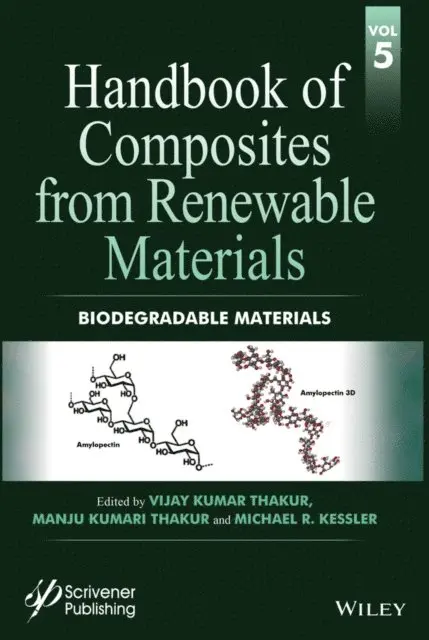
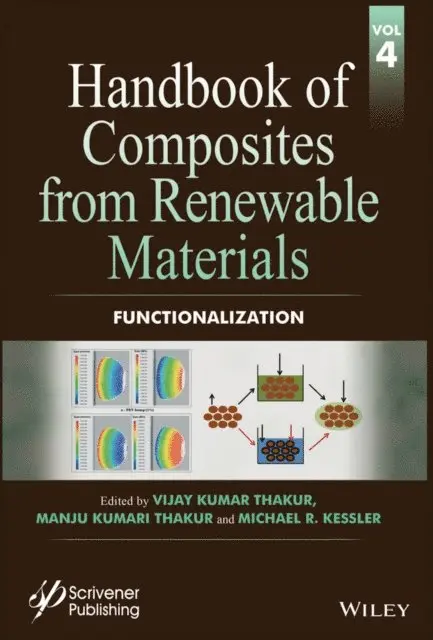
    Handbook of Composites from Renewable Materials, Functionalization

    AvVijay Kumar Thakur,Manju Kumari Thakur

    Inbunden, Engelska, 2017

    Del i serien Handbook of Composites from Renewable Materials

    3 306 kr

    Beställningsvara. Skickas inom 11-20 vardagar. Fri frakt över 249 kr.

    Beskrivning

    This unique multidisciplinary 8-volume set focuses on the emerging issues concerning synthesis, characterization, design, manufacturing and various other aspects of composite materials from renewable materials and provides a shared platform for both researcher and industry.The Handbook of Composites from Renewable Materials comprises a set of 8 individual volumes that brings an interdisciplinary perspective to accomplish a more detailed understanding of the interplay between the synthesis, structure, characterization, processing, applications and performance of these advanced materials. The Handbook comprises 169 chapters from world renowned experts covering a multitude of natural polymers/ reinforcement/ fillers and biodegradable materials.Volume 4 is solely focused on the Functionalization of renewable materials. Some of the important topics include but not limited to: Chitosan-based bio sorbents; oil spill clean-up by textiles; pyridine and bipyridine end-functionalized polylactide; functional separation membranes from chitin and chitosan derivatives; acrylated epoxidized flaxseed oil bio-resin and its biocomposites; encapsulation of inorganic renewable nanofiller; chitosan coating on textile fibers for functional properties; surface functionalization of cellulose whiskers for nonpolar composites; impact of chemical treatment and the manufacturing process on mechanical, thermal and rheological properties of natural fibers based composites; bio-polymers modification; review on fibers from natural resources; strategies to improve the functionality of starch based films; the effect of gamma-radiation on biodegradability of natural fibers; surface functionalization through vapor-phase assisted surface polymerization (VASP) on natural materials from agricultural by-products; okra bast fiber as potential reinforcement element of biocomposites; silane coupling agent used in natural fiber/plastic composites; composites of olefin polymer /natural fibers: the surface modifications on natural fibers; surface functionalization of biomaterials; thermal and mechanical behaviors of bio-renewable fibres based polymer composites; natural and artificial diversification of starch; role of radiation and surface modification on bio-fiber for reinforced polymer composites.

    Produktinformation

    • Utgivningsdatum:2017-03-14
    • Mått:180 x 254 x 38 mm
    • Vikt:1 157 g
    • Format:Inbunden
    • Språk:Engelska
    • Serie:Handbook of Composites from Renewable Materials
    • Antal sidor:608
    • Förlag:John Wiley & Sons Inc
    • ISBN:9781119223672

    Utforska kategorier

    • Maskinteknik och material inom Naturvetenskap och teknik

    Mer om författaren

    Vijay Kumar Thakur is a Lecturer in the School of Aerospace, Transport and Manufacturing Engineering, Cranfield University, UK. Previously he had been a Staff Scientist in the School of Mechanical and Materials Engineering at Washington State University, USA. He spent his postdoctoral study in Materials Science & Engineering at Iowa State University, USA, and gained his PhD in Polymer Chemistry (2009) at the National Institute of Technology, India. He has published more than 90 SCI journal research articles in the field of polymers/materials science and holds one US patent. He has also published about 25 books and 33 book chapters on the advanced state-of-the-art of polymers/materials science with numerous publishers, including Wiley-Scrivener.Manju Kumar Thakur has been working as an Assistant Professor of Chemistry at the Division of Chemistry, Govt. Degree College Sarkaghat Himachal Pradesh University, Shimla, India since 2010. She received her PhD in Polymer Chemistry from the Chemistry Department at Himachal Pradesh University. She has deep experience in the field of organic chemistry, biopolymers, composites/ nanocomposites, hydrogels, applications of hydrogels in the removal of toxic heavy metal ions, drug delivery etc. She has published more than 30 research papers in peer-reviewed journals, 25 book chapters and co-authored five books all in the field of polymeric materials. Michael R. Kessler is a Professor and Director of the School of Mechanical and Materials Engineering at Washington State University, USA. He is an expert in the mechanics, processing, and characterization of polymer matrix composites and nanocomposites. His honours include the Army Research Office Young Investigator Award, the Air Force Office of Scientific Research Young Investigator Award, the NSF CAREER Award, and the Elsevier Young Composites Researcher Award from the American Society for Composites. He has more than 150 journal articles and 5800 citations, holds 6 patents, published 5 books on the synthesis and characterization of polymer materials, and presented at least 200 talks at national and international meetings.

    Innehållsförteckning

    • Preface xixAbout the Editors xxi1 Chitosan-based Biosorbents: Modifications and Application for Sequestration of PPCPs and Metals for Water Remediation 1Dipali Rahangdale, G. Archana, Rita Dhodapkar and Anupama Kumar1.1 Introduction 11.2 Modification of Chitosan 51.3 Interactions of Chitosan-based MIP Sorbents with Pollutants (Organic & Inorganic) 151.4 Applications of Chitosan 171.5 Conclusion 192 Oil Spill Cleanup by Textiles 27D.P. Chattopadhyay and Varinder Kaur2.1 Introduction 272.2 Causes of Oil Spilling 282.3 Problems Faced due to Oil Spilling 282.4 Oil Sorption Phenomenon 292.5 Removal of Oil Spill 302.6 Recent Developments for Effective Water Cleaning 372.7 Test Methods for Evaluation of Oil Sorbents 382.8 Conclusions 413 Pyridine and Bipyridine End-functionalized Polylactide: Synthesis and Catalytic Applications 47Marco Frediani, Werner Oberhauser, Elisa Passaglia, Luca Rosi, Damiano Bandelli, Mattia Bartoli and Giorgio Petrucci3.1 Introduction 473.2 Macroligand Synthesis 493.3 Macroligand Coordination to Palladium 523.4 Pd-nanoparticles Supported onto End-functionalized Stereocomplexes 553.5 Catalytic Applications 583.6 Outlook 634 Functional Separation Membranes from Chitin and Chitosan Derivatives 69Tadashi Uragami4.1 Introduction 694.2 Preparation of Separation Membrane from Chitin, Chitosan, and their Derivatives 734.3 Functional Separation Membranes from Chitin, Chitosan, and their Derivatives 744.4 Conclusions 1135 Acrylated Epoxidized Flaxseed Oil Bio-Resin and its Biocomposites 121Anup Rana and Richard W. Evitts5.1 Introduction 1215.2 Experimental 1245.3 Results and Discussion 1275.4 Conclusions 137Acknowledgment 1386 Encapsulation of Inorganic Renewable Nanofiller 143Anyaporn Boonmahitthisud, Saowaroj Chuayjuljit and Takaomi Kobayashi6.1 Introduction 1436.2 Synthesis of Polymer-encapsulated Silica Nanoparticles 1476.3 Concluding Remarks 160Acknowledgments 161References 1617 Chitosan Coating on Textile Fibers for Functional Properties 165Franco Ferrero and Monica Periolatto7.1 Introduction 1657.2 Antimicrobial Coating of Textiles by Chitosan UV Curing 1717.3 Chitosan Coating of Wool for Antifelting Properties 1817.4 Chitosan Coating on Textile Fibers to Increasing Uptake of Ionic Dyes in Dyeing 1837.5 Chitosan Coating on Cotton Filter for Removal of Dyes and Metal Ions from Wastewaters 1867.6 Conclusions 190References 1918 Surface Functionalization of Cellulose Whiskers for Nonpolar Composites Applications 199Kelcilene B. R. Teodoro, Adriana de Campos, Ana Carolina Corrêa, Eliangela de Morais Teixeira, José Manoel Marconcini and Luiz Henrique Capparelli Mattoso8.1 Introduction 2008.2 Experimental 2078.3 Results and Discussion 2118.4 Conclusion 219References 2199 Impact of Chemical Treatment and the Manufacturing Process on Mechanical, Thermal, and Rheological Properties of Natural Fibers-based Composites 225Marya Raji, Hamid Essabir, Rachid Bouhfid and Abou el kacem Qaiss9.1 Introduction 2259.2 Physicochemical Characteristics of Natural Fibers 2289.3 Problematic 2309.4 Natural Fibers Treatments 2319.5 Composites Manufacturing 2359.6 Composites Properties 2369.7 Conclusion 247References 24810 Biopolymers Modification and their Utilization in Biomimetic Composites for Osteochondral Tissue Engineering 253Kausik Kapat and Santanu Dhara10.1 Introduction 25410.2 Failure, Defect, and Design: Role of Composites 25510.3 Cell-ECM Composite Hierarchy in Bone-cartilage Interface 25710.4 Polymers for Osteochondral Tissue Engineering 25810.5 Polymer Modification for Osteochondral Tissue Engineering 26110.6 Composite Scaffolds for Osteochondral Tissue Engineering 27110.7 Osteochondral Composite Scaffolds: Clinical Status 27510.8 Current Challenges and Future Direction 276References 27611 Review on Fibers from Natural Resources 287Jessica Flesner and Boris Mahltig11.1 Introduction 28711.2 Materials and Methods 28811.3 Fiber Characteristics 29011.4 Conclusions 304Acknowledgments 304References 30512 Strategies to Improve the Functionality of Starch-Based Films 311A. Cano, M. Chafer, A. Chiralt and C. Gonzalez-Martinez12.1 Introduction 31112.2 Starch: Sources and Main Uses 31212.3 Strategies to Improve the Functionality of Biopolymer-Based Films 31712.4 Bioactive Compounds with Antimicrobial Activity 32612.5 Conclusion 329References 32913 The Effect of Gamma Radiation on Biodegradability of Natural Fiber/PP-HMSPP Foams: A Study of Thermal Stability and Biodegradability 339Elizabeth C. L. Cardoso, Sandra R. Scagliusi and Ademar B. Lugão13.1 Introduction 33913.2 Materials and Methods 34213.3 Results and Discussion 34413.3 Conclusions 351Acknowledgments 351References 35114 Surface Functionalization through Vapor-Phase-Assisted Surface Polymerization (VASP) on Natural Materials from Agricultural By-Products 355Yoshito Andou and Haruo Nishida14.1 Introduction 35514.2 Surface Modification by Steam Treatment 35814.3 Surface Modification by Compatibilizer 35914.4 Vapor-Phase-Assisted Surface Polymerization 36014.5 Vapor-Phase-Assisted Surface Modification of Biomass Fillers 36214.6 Vapor-Phase Chemical Modification of Biomass Fillers 36514.7 Green Composites Through VASP Process 36814.8 Conclusions and Outlook 372References 37415 Okra Bast Fiber as Potential Reinforcement Element of Biocomposites: Can It Be the Flax of the Future? 379G.M. Arifuzzaman Khan, Nazire Deniz Yilmaz and Kenan Yilmaz15.1 Introduction 37915.2 Cultivation and Harvesting of Okra Plant 38115.3 Extraction of Bast Fibers from Okra Plant 38215.4 Composition, Morphology, and Properties of Okra Bast Fiber 38315.5 Modification Methods of Okra Bast fiber 39115.6 Potential Application Areas of Okra Bast Fiber-reinforced Biocomposites 39815.7 Conclusions and Future Work 400References 40016 Silane Coupling Agents Used in Natural Fiber/Plastic Composites 407Yanjun Xie, Zefang Xiao, Holger Militz and Xiaolong Hao16.1 Introduction 40716.2 Hydrolysis of Silanes 40916.3 Interaction with Natural Fibers 41316.4 Interaction with Plastics 41516.5 Summary 422Acknowledgments 423Abbreviations 423References 42417 Composites of Olefin Polymer/Natural Fibers: The Surface Modifications on Natural Fibers 431Sandra Regina Albinante, Gabriel Platenik and Luciano N. Batista17.1 Introduction 43117.2 Vegetable Fiber 43217.3 Chemical Treatments 43317.4 Mercerization 43417.5 Acetylation Process: Way to Insert Fibers on Hydrophilic Polymers 43817.6 Acetylation Treatment 43917.7 Catalyst for Acetylation Process 43917.7 Methods for Determination Acetylation 44117.8 Weight Percentage Gain 44217.9 Fourier Transformer Infrared Spectroscopy 44217.10 Chemical Modification of Fiber through the Reaction with Polymer-modified Olefin 44317.11 Other Treatments 44517.12 Maximum Stress in Tension 44817.13 Elongation at Break 44917.14 Elastic Modulus 44917.15 Impact Resistance 450References 45118 Surface Functionalization of Biomaterials 457Karol Kyzio³, £ukasz Kaczmarek and Agnieszka Kyzio³18.1 Introduction 45718.2 Biomaterials 45818.3 Surface Modification Technologies 46618.4 Surface Functionalization of Metallic Biomaterials: Selected Examples 47518.5 Surface Functionalization of Polymeric Biomaterials: Selected Examples 47818.6 Conclusions and Future Directions 481References 48319 Thermal and Mechanical Behaviors of Biorenewable Fibers-Based Polymer Composites 491K. Anbukarasi and S. Kalaiselvam19.1 Introduction 49119.2 Classification of Natural Fibers 49419.3 Structure of Biofiber 49419.4 Surface Treatment of Natural Fibers 49619.5 Hemp Fiber Composites 49919.6 Bamboo Fiber Composites 50019.7 Banana Fiber Composites 50119.8 Kenaf Fiber Composites 50219.9 Coir Fiber Composites 50319.10 Jute Fiber Composites 50419.11 Flax Fiber Composites 50519.12 Date Palm Fibers Composites 50619.13 Rice Straw Fiber Composites 50619.14 Agava Fibers Composites 50719.15 Sisal Fibers Composites 50719.16 Pineapple Leaf Fiber Composites 50819.17 Basalt Fiber Composites 50819.18 Grewia optiva Fiber Composites 50919.19 Luffa Fiber Composites 50919.20 Some Other Natural Fibers Composites 51219.21 Conclusion 514References 51520 Natural and Artificial Diversification of Starch 521M. Kapelko-¯eberska, A. Gryszkin, T. Ziêba and Akhilesh Vikram Singh20.1 Introduction 521References 53521 Role of Radiation and Surface Modification on Biofiber for Reinforced Polymer Composites: A Review 541M. Masudul Hassan, A. Karim and Manfred H. Wagner21.1 Introduction 54121.2 Natural Fibers 54221.3 Chemistry of Cellulose in NF 54421.4 Drawback of NFs 54521.5 Surface Modification of NFs 54521.6 Radiation Effect on the Surface of Biofiber 54821.7 Biocomposites 55021.8 Hybrid Biocomposites 55221.9 Nanofillers and Nanocomposites 55421.10 Initiative in Product Development of NF Composite 55421.11 Conclusion 555Acknowledgments 556References 556Index 563