• Fri frakt över 249 kr
  • •
  • Snabba leveranser
  • •
  • Billiga böcker
Kundservice

Du är på sajten för privatpersoner.

Företag, bibliotek eller offentlig verksamhet?

Du handlar på classic.bokus.com, där alla dina funktioner finns intakta.
Till classic.bokus.com
Bokus logotyp. Gå till startsidan.
  • Erbjudanden
  • Nyheter
  • Student
  • Topplistor
  • Barn & ungdom
  • Bokus Play
  • E-böcker
  • Pocketböcker
  • Spel & pussel

10% rabatt på allt med kod: NYSTART10 →

Sidfot

Mina sidor

    Hjälp

    • Kundservice
    • Vanliga frågor och svar
    • Frakt och leverans
    • Retur vid ångerrätt
    • Reklamera vara
    • Betalning
    • Köpvillkor
    • Allmänna villkor
    • Information om webbplatsens tillgänglighet

    Om Bokus

    • Om oss
    • Pressrum
    • För studenter
    • För företag
    • För bibliotek och offentlig verksamhet
    • För leverantörer
    • Hållbarhet

    Populärt

    • Aktuella erbjudanden
    • Presentkort
    • Studentlitteratur
    • Nya böcker
    • Topplistor
    • Signerade böcker
    • Engelska böcker

    Inspiration

    • Boktips
    • BookTok
    • Populära bokserier
    • Barnbokskaraktärer
    • Populära författare
    Logotyp för Bokus
    Följ oss på Facebook (extern länk)Följ oss på Instagram (extern länk)Följ oss på YouTube (extern länk)Följ oss på TikTok (extern länk)
    bokus @ CookiesAnpassa cookiesIntegritetspolicyKöpvillkor
    Till Citymail hemsida (extern länk)Till Budbee hemsida (extern länk)Till Postnord hemsida (extern länk)Till Schenker hemsida (extern länk)Till Early Bird hemsida (extern länk)Till Walleys hemsida (extern länk)
    1. Samhälle och politik
    2. Samhälle och kultur
    3. Sociala grupper och identitet
    4. Genusvetenskap

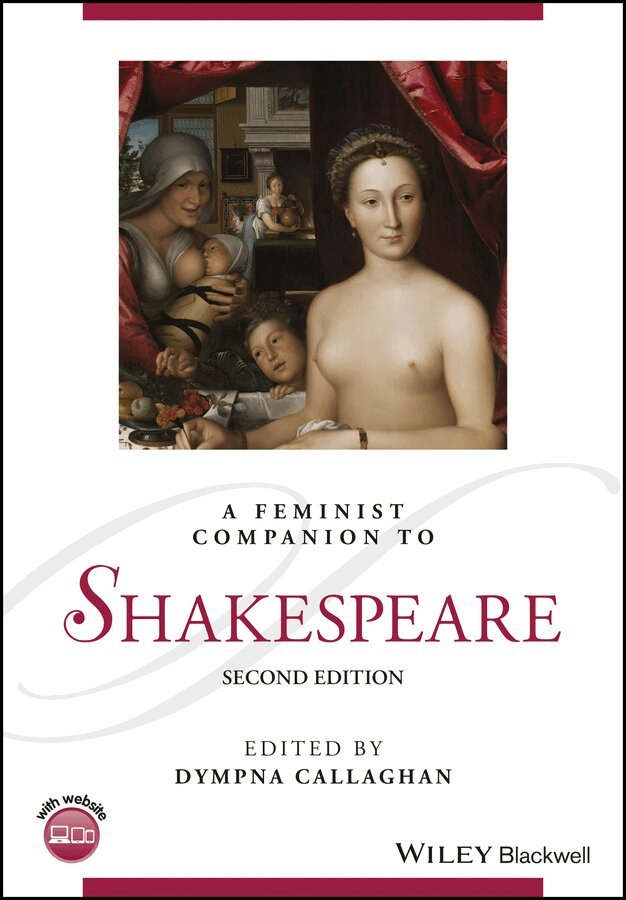
    Feminist Companion to Shakespeare

    AvDympna Callaghan

    Häftad, Engelska, 2026

    Del i serien Blackwell Companions to Literature and Culture

    532 kr

    Kommande

    Beskrivning

    The question is not whether Shakespeare studies needs feminism, but whether feminism needs Shakespeare. This is the explicitly political approach taken in the dynamic and newly updated edition of A Feminist Companion to Shakespeare. Provides the definitive feminist statement on Shakespeare for the 21st centuryUpdates address some of the newest theatrical andcreative engagements with Shakespeare, offering fresh insights into Shakespeare’s plays and poems, and gender dynamics in early modern EnglandContributors come from across the feminist generations and from various stages in their careers to address what is new in the field in terms of historical and textual discoveryExplores issues vital to feminist inquiry, including race, sexuality, the body, queer politics, social economies, religion, and capitalismIn addition to highlighting changes, it draws attention to the strong continuities of scholarship in this field over the course of the history of feminist criticism of ShakespeareThe previous edition was a recipient of a Choice Outstanding Academic Title award; this second edition maintains its coverage and range, and bringsthe scholarship right up to the present day

    Produktinformation

    • Utgivningsdatum:2026-08-18
    • Mått:171 x 246 x 49 mm
    • Vikt:1 185 g
    • Format:Häftad
    • Språk:Engelska
    • Serie:Blackwell Companions to Literature and Culture
    • Antal sidor:608
    • Upplaga:2
    • Förlag:John Wiley and Sons Ltd
    • ISBN:9781119240044

    Utforska kategorier

    • Genusvetenskap inom Samhälle och politik
    • Litteraturvetenskap inom Skönlitteratur

    Mer om författaren

    Dympna Callaghan is William L. Safire Professor of Modern Letters at Syracuse University, New York. Her books inlcude Shakespeare Without Women (2000), The Impact of Feminism in English Renaissance Culture (2006), Shakespeare’s Sonnets (2007), Who Was William Shakespeare (Wiley Blackwell, 2013), and Hamlet: Language and Writing (2015). She is a past president of Shakespeare Association of America.

    Innehållsförteckning

    • Notes on Contributors xPreface to the Second Edition xviiIntroduction 1Dympna CallaghanPart I The History of Feminist Shakespeare Criticism 191 The Ladies’ Shakespeare 21Juliet Fleming2 Margaret Cavendish, Shakespeare Critic 39Katherine M. Romack3 Misogyny Is Everywhere 60Phyllis RackinPart II Text and Language 754 Feminist Editing and the Body of the Text 77Laurie E. Maguire5 “Made to write ‘whore’ upon?”: Male and Female Use of the Word “Whore” in Shakespeare’s Canon 98Kay Stanton6 “A word, sweet Lucrece”: Confession, Feminism, and The Rape of Lucrece 121Margo HendricksPart III Social Economies 1377 Gender, Class, and the Ideology of Comic Form: Much Ado about Nothing and Twelfth Night 139Mihoko Suzuki8 Gendered “Gifts” in Shakespeare’s Belmont: The Economies of Exchange in Early Modern England 162Jyotsna G. SinghPart IV Race and Colonialism 1799 The Great Indian Vanishing Trick – Colonialism, Property, and the Family in A Midsummer Night’s Dream 181Ania Loomba10 Black Ram, White Ewe: Shakespeare, Race, and Women 206Joyce Green MacDonald11 Sycorax in Algiers: Cultural Politics and Gynecology in Early Modern England 226Rachana Sachdev12 Black and White, and Dread All Over: The Shakespeare Theatre’s “Photonegative” Othello and the Body of Desdemona 244Denise AlbanesePart V Performing Sexuality 26713 Women and Boys Playing Shakespeare 269Juliet Dusinberre14 Mutant Scenes and “Minor” Conflicts in Richard II 281Molly Smith15 Lovesickness, Gender, and Subjectivity: Twelfth Night and As You Like It 294Carol Thomas Neely16 … in the Lesbian Void: Woman–Woman Eroticism in Shakespeare’s Plays 318Theodora A. Jankowski17 Duncan’s Corpse 339Susan ZimmermanPart VI Religion 35918 Others and Lovers in The Merchant of Venice 361M. Lindsay Kaplan19 Between Idolatry and Astrology: Modes of Temporal Repetition in Romeo and Juliet 378Philippa BerryPart VII Character, Genre, History 39320 Putting on the Destined Livery: Isabella, Cressida, and our Virgin/Whore Obsession 395Anna Kamaralli21 The Virginity Dialogue in All’s Well That Ends Well: Feminism, Editing, and Adaptation 411Rory Loughnane22 Competitive Mourning and Female Agency in Richard III 428Mario DiGangi23 Bearing Death in The Winter’s Tale 440Amy K. Burnette24 Monarchs Who Cry: The Gendered Politics of Weeping in the English History Play 457Jean E. Howard25 Shakespeare’s Women and the Crisis of Beauty 467Farah Karim]CooperPart VIII Appropriating Women, Appropriating Shakespeare 48126 Women and Land: Henry VIII 483Lisa Hopkins27 Desdemona: Toni Morrison’s Response to Othello 494Ayanna Thompson28 Woman]Crafted Shakespeares: Appropriation, Intermediality, and Womanist Aesthetics 507Sujata Iyengar29 A Thousand Voices: Performing Ariel 520Amanda Eubanks WinklerIndex 539