• Fri frakt över 249 kr
  • •
  • Snabba leveranser
  • •
  • Billiga böcker
Kundservice

Du är på sajten för privatpersoner.

Företag, bibliotek eller offentlig verksamhet?

Du handlar på classic.bokus.com, där alla dina funktioner finns intakta.
Till classic.bokus.com
Bokus logotyp. Gå till startsidan.
  • Erbjudanden
  • Nyheter
  • Student
  • Topplistor
  • Barn & ungdom
  • Bokus Play
  • E-böcker
  • Pocketböcker
  • Spel & pussel

10% rabatt på allt med kod NYSTART10 →

Sidfot

Mina sidor

    Hjälp

    • Kundservice
    • Vanliga frågor och svar
    • Frakt och leverans
    • Retur vid ångerrätt
    • Reklamera vara
    • Betalning
    • Köpvillkor
    • Allmänna villkor
    • Information om webbplatsens tillgänglighet

    Om Bokus

    • Om oss
    • Pressrum
    • För studenter
    • För företag
    • För bibliotek och offentlig verksamhet
    • För leverantörer
    • Hållbarhet

    Populärt

    • Aktuella erbjudanden
    • Presentkort
    • Studentlitteratur
    • Nya böcker
    • Topplistor
    • Signerade böcker
    • Engelska böcker

    Inspiration

    • Boktips
    • BookTok
    • Populära bokserier
    • Barnbokskaraktärer
    • Populära författare
    Logotyp för Bokus
    Följ oss på Facebook (extern länk)Följ oss på Instagram (extern länk)Följ oss på YouTube (extern länk)Följ oss på TikTok (extern länk)
    bokus @ CookiesAnpassa cookiesIntegritetspolicyKöpvillkor
    Till Citymail hemsida (extern länk)Till Budbee hemsida (extern länk)Till Postnord hemsida (extern länk)Till Schenker hemsida (extern länk)Till Early Bird hemsida (extern länk)Till Walleys hemsida (extern länk)
    1. Naturvetenskap och teknik
    2. Matematik och naturvetenskap
    3. Matematik

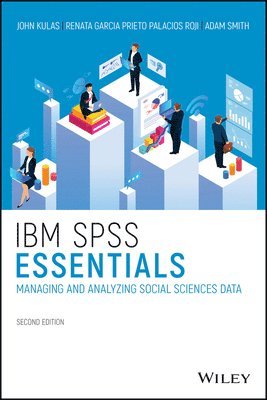
    IBM SPSS Essentials

    Managing and Analyzing Social Sciences Data

    AvJohn T. Kulas,Renata Garcia Prieto Palacios Roji

    Häftad, Engelska, 2021

    814 kr

    Beställningsvara. Skickas inom 5-8 vardagar. Fri frakt över 249 kr.

    Beskrivning

    Master the fundamentals of SPSS with this newly updated and instructive resourceThe newly and thoroughly revised Second Edition of SPSS Essentials delivers a comprehensive guide for students in the social sciences who wish to learn how to use the Statistical Package for the Social Sciences (SPSS) for the effective collection, management, and analysis of data. The accomplished researchers and authors provide readers with the practical nuts and bolts of SPSS usage and data entry, with a particular emphasis on managing and manipulating data. The book offers an introduction to SPSS, how to navigate it, and a discussion of how to understand the data the reader is working with. It also covers inferential statistics, including topics like hypothesis testing, one-sample Z-testing, T-testing, ANOVAs, correlations, and regression. Five unique appendices round out the text, providing readers with discussions of dealing with real-world data, troubleshooting, advanced data manipulations, and new workbook activities.SPSS Essentials offers a wide variety of features, including: A revised chapter order, designed to match the pacing and content of typical undergraduate statistics classesAn explanation of when particular inferential statistics are appropriate for use, given the nature of the data being worked withAdditional material on understanding your data sample, including discussions of SPSS output and how to find the most relevant informationA companion website offering additional problem sets, complete with answersPerfect for undergraduate students of the social sciences who are just getting started with SPSS, SPSS Essentials also belongs on the bookshelves of advanced placement high school students and practitioners in social science who want to brush up on the fundamentals of this powerful and flexible software package.

    Produktinformation

    • Utgivningsdatum:2021-06-04
    • Mått:150 x 226 x 20 mm
    • Vikt:454 g
    • Format:Häftad
    • Språk:Engelska
    • Antal sidor:288
    • Upplaga:2
    • Förlag:John Wiley & Sons Inc
    • ISBN:9781119417422

    Utforska kategorier

    • Matematik inom Naturvetenskap och teknik

    Mer om författaren

    JOHN T. KULAS, PhD, is a Professor of Industrial and Organizational Psychology at Montclair State University in Montclair, NJ, United States. RENATA GARCIA PRIETO PALACIOS ROJI, MA, is a PhD candidate in Industrial and Organizational Psychology at Montclair State University in Montclair, NJ, United States. ADAM M. SMITH, PhD, is an associate consultant at Kincentric and adjunct instructor at Wentworth Institute of Technology and Harvard University.

    Innehållsförteckning

    • Preface xiiiAcknowledgments xviiAuthor Biography xixPart I Introduction 11 What is SPSS? 3Chapter Learning Objectives 3What Is SPSS Used For 4The Power of SPSS 5SPSS Compared to Other Programs 5Summary 6Key Terms 6Discussion Questions 62 Navigating SPSS 7Chapter Learning Objectives 7How the Program Works 7Important File Types 8Data Files 8Syntax Files 10Output Files 10The “Others” 11Managing Your SPSS Life 11The Importance of Maintaining the Raw Data as an “Untouched” File 12Summary 13Key Terms 13Discussion Questions 133 Introduction to Data 15Chapter Learning Objectives 15Understanding Your Data 16Independent Versus Dependent Variables 16Scales of Measurement 16The SPSS Data Perspective 17Data Represented by Numbers (Numeric) 17Data Represented by Words (String) 18The Other Variable Types 18Your Data in SPSS – Think Matrices 19Summary 20Key Terms 21Discussion Questions 214 Getting Your Data into SPSS 23Chapter Learning Objectives 23Before SPSS 24Specifying Operations Through SPSS 25Creating a Data Shell 25Creating Data Files Via Syntax 28Numeric Versus String Variables 29Data Entry Within the Syntax File 31“Saving” Populated Datafiles 33Having SPSS Auto-Generate Your Syntax 34Controlling Your “Open” Datafiles 35Summary 37Key Terms 38Discussion Questions 39References 395 Accessing Your Data 41Chapter Learning Objectives 41Accessing Your Data Files 42Get File and Save Outfile 43Creating Subsets of Data 44Importing Data from Excel 44Using the Import Data Wizard 45The Copy–Paste “Option” (aka This Is a Terrible Idea) 47Summary 48Key Terms 48Discussion Questions 486 Defining Your Data 49Chapter Learning Objectives 49Annotation 50Defining Your Dataset 51Adding Variable Labels 51Adding Value Labels 52Summary 54Key Terms 55Discussion Questions 55Part II Statistics 577 Descriptive Statistics 59Chapter Learning Objectives 59Frequencies 60Displaying Data Graphically 62Location and Spread 63Descriptive Statistics 65Measures of Central Tendency and Variability 65A General Note on Analyses 67A General Note About Output Files 68Summary 68Key Terms 68Discussion Questions 698 Hypothesis Testing 71Chapter Learning Objectives 71Descriptive Versus Inferential Statistics 72Hypothesis Testing (A Process for Interpreting Inferential Statistics) 72Six Steps of Hypothesis Testing 73Summary 75Key Terms 75Discussion Questions 769 Z-and T-Tests 77Chapter Learning Objectives 77The One Sample Z-Test 78The t-Test 80One-Sample T-Test 80Two Independent Samples T-Test 84Two Correlated/Paired Samples T-Test 88Summary 93Key Terms 93Discussion Questions 9410 Inferential Analyses (ANOVAs) 97Chapter Learning Objectives 97One-Way ANOVA (One-Way Command) 98Repeated-Measures ANOVA (GLM Command) 101Factorial ANOVA (Unianova Command) 109Follow-Up Contrasts 113Summary 113Key Terms 114Discussion Questions 115Reference 11611 Inferential Analyses (Correlation or Regression) 117Chapter Learning Objectives 117Correlation 118Simple Regression 122Multiple Regression 125Straight Regression 126Hierarchical Regression 130Visualizing Your Relationship 135Summary 137Key Terms 137Discussion Questions 13812 Nonparametric Analyses 141Chapter Learning Objectives 141Parametric Versus Nonparametric Analyses 141“The” (Pearson’s) Chi-Square: χ2 143Two Variable Example 146Summary 150Key Terms 150Discussion Questions 151Part III Advanced Data Management 15313 Manipulating Your Data 155Chapter Learning Objectives 155Creating Scale Scores 156How SPSS Thinks About Data 156Recoding Your Data 157Creating Your Scales 157The Importance of Selecting All 161Summary 167Key Terms 167Discussion Questions 16714 Collapsing and Merging Data Files 169Chapter Learning Objectives 169Same People, Different Information 170Different People, Same Information 175Summary 177Key Terms 177Discussion Questions 17815 Differential Treatment of Your Data 179Chapter Learning Objectives 179Isolating Interesting Cases 180Creating a New Data File 180Splitting Files 184Summary 188Key Terms 188Discussion Questions 18816 Using Your Output 189Chapter Learning Objectives 189Problem Solving 190Spaces in All the Wrong Places 190Column Information 195There Is One Little Thing… 198Maximizing Output Information 199Summary 200Key Terms 201Discussion Questions 20117 Other Tricks of the Trade 203Chapter Learning Objectives 203Salvaging Old Syntax 204The Importance of Notepad 204Tricking SPSS To “Think” Across Rows 210Transposing Your Matrix 210Aggregating Your Files 211“Do If” and “End If” 215Summary 218Key Terms 219Discussion Questions 219Appendix A: Completed Questionnaire Form Example 221Appendix B: Example Code Sheet for Questionnaire 227Appendix C: Summary of Creating and Defining a Data File 233Appendix D: Example Syntax File Integrating Multiple Commands (Fulfilling Multiple Purposes) 239Appendix E: Commands To Know, Organized By Importance 249Answers to Chapter Discussion Questions 251Index 263