• Fri frakt över 249 kr
  • •
  • Snabba leveranser
  • •
  • Billiga böcker
Kundservice

Du är på sajten för privatpersoner.

Företag, bibliotek eller offentlig verksamhet?

Du handlar på classic.bokus.com, där alla dina funktioner finns intakta.
Till classic.bokus.com
Bokus logotyp. Gå till startsidan.
  • Erbjudanden
  • Nyheter
  • Student
  • Topplistor
  • Barn & ungdom
  • Bokus Play
  • E-böcker
  • Pocketböcker
  • Spel & pussel

10% rabatt på allt med kod: NYSTART10 →

Sidfot

Mina sidor

    Hjälp

    • Kundservice
    • Vanliga frågor och svar
    • Frakt och leverans
    • Retur vid ångerrätt
    • Reklamera vara
    • Betalning
    • Köpvillkor
    • Allmänna villkor
    • Information om webbplatsens tillgänglighet

    Om Bokus

    • Om oss
    • Pressrum
    • För studenter
    • För företag
    • För bibliotek och offentlig verksamhet
    • För leverantörer
    • Hållbarhet

    Populärt

    • Aktuella erbjudanden
    • Presentkort
    • Studentlitteratur
    • Nya böcker
    • Topplistor
    • Signerade böcker
    • Engelska böcker

    Inspiration

    • Boktips
    • BookTok
    • Populära bokserier
    • Barnbokskaraktärer
    • Populära författare
    Logotyp för Bokus
    Följ oss på Facebook (extern länk)Följ oss på Instagram (extern länk)Följ oss på YouTube (extern länk)Följ oss på TikTok (extern länk)
    bokus @ CookiesAnpassa cookiesIntegritetspolicyKöpvillkor
    Till Citymail hemsida (extern länk)Till Budbee hemsida (extern länk)Till Postnord hemsida (extern länk)Till Schenker hemsida (extern länk)Till Early Bird hemsida (extern länk)Till Walleys hemsida (extern länk)
    1. Naturvetenskap och teknik
    2. Teknik och industri
    3. Övrig teknik och tillämpad vetenskap

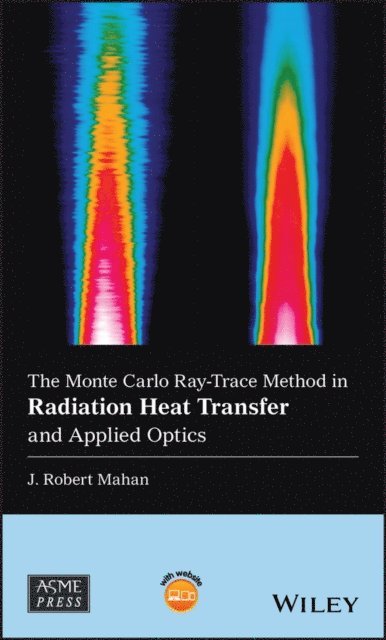
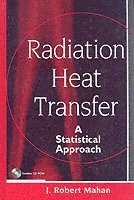
    Monte Carlo Ray-Trace Method in Radiation Heat Transfer and Applied Optics

    AvJ. Robert Mahan

    Inbunden, Engelska, 2019

    Del i serien Wiley-ASME Press Series

    1 745 kr

    Beställningsvara. Skickas inom 5-8 vardagar. Fri frakt över 249 kr.

    Fler format och utgåvor

    E-bok

    2 019 kr

    E-bok

    2 019 kr

    Beskrivning

    A groundbreaking guide dedicated exclusively to the MCRT method in radiation heat transfer and applied optics The Monte Carlo Ray-Trace Method in Radiation Heat Transfer and Applied Optics offers the most modern and up-to-date approach to radiation heat transfer modelling and performance evaluation of optical instruments. The Monte Carlo ray-trace (MCRT) method is based on the statistically predictable behavior of entities, called rays, which describe the paths followed by energy bundles as they are emitted, reflected, scattered, refracted, diffracted and ultimately absorbed.The author – a noted expert on the subject – covers a wide variety of topics including the mathematics and statistics of ray tracing, the physics of thermal radiation, basic principles of geometrical and physical optics, radiant heat exchange among surfaces and within participating media, and the statistical evaluation of uncertainty of results obtained using the method. The book is a guide to help formulate and solve models that accurately describe the distribution of radiant energy in thermal and optical systems of practical engineering interest. This important guide: Combines radiation heat transfer and applied optics into a single disciplineCovers the MCRT method, which has emerged as the dominant tool for radiation heat transfer modellingHelps readers to formulate and solve models that describe the distribution of radiant energyFeatures pages of color images and a wealth of line drawingsWritten for faculty and graduate students in mechanical and aerospace engineering and applied optics professionals, The Monte Carlo Ray-Trace Method in Radiation Heat Transfer and Applied Optics is the first book dedicated exclusively to the MCRT method.

    Produktinformation

    • Utgivningsdatum:2019-02-01
    • Mått:140 x 216 x 15 mm
    • Vikt:431 g
    • Format:Inbunden
    • Språk:Engelska
    • Serie:Wiley-ASME Press Series
    • Antal sidor:280
    • Förlag:John Wiley & Sons Inc
    • ISBN:9781119518518

    Utforska kategorier

    • Övrig teknik och tillämpad vetenskap inom Naturvetenskap och teknik
    • Energiteknik inom Naturvetenskap och teknik

    Mer om författaren

    J. Robert Mahan is Professor Emeritus of Mechanical Engineering at Virginia Polytechnic Institute and State University, where he leads the NASA-funded Thermal Radiation Group.

    Innehållsförteckning

    • Series Preface xiPreface xiiiAcknowledgments xviiAbout the Companion Website xix1 Fundamentals of Ray Tracing 11.1 Rays and Ray Segments 11.2 The Enclosure 21.3 Mathematical Preliminaries 21.4 Ideal Models for Emission, Reflection, and Absorption of Rays 111.5 Scattering and Refraction 171.6 Meshing and Indexing 18Problems 21Reference 282 Fundamentals of Thermal Radiation 292.1 Thermal Radiation 292.2 Terminology 312.3 Intensity of Radiation (Radiance) 322.4 Directional Spectral Emissive Power 342.5 Hemispherical Spectral Emissive Power 342.6 Hemispherical Total Emissive Power 342.7 The Blackbody Radiation Distribution Function 352.8 Blackbody Properties 382.9 Emission and Absorption Mechanisms 402.10 Definition of Models for Emission, Absorption, and Reflection 422.11 Introduction to the Radiation Behavior of Surfaces 522.12 Radiation Behavior of Surfaces Composed of Electrical Non-Conductors (Dielectrics) 542.13 Radiation Behavior of Surfaces Composed of Electrical Conductors (Metals) 59Problems 61References 653 The Radiation Distribution Factor for Diffuse-Specular Gray Surfaces 673.1 The Monte Carlo Ray-Trace (MCRT) Method and the Radiation Distribution Factor 673.2 Properties of the Total Radiation Distribution Factor 683.3 Estimation of the Distribution Factor Matrix Using the MCRT Method 693.4 Binning of Rays on a Surface Element; Illustrative Example 833.5 Case Study: Thermal and Optical Analysis of a Radiometric Instrument 853.6 Use of Radiation Distribution Factors for the Case of Specified Surface Temperatures 943.7 Use of Radiation Distribution Factors When Some Surface Net Heat Fluxes Are Specified 96Problems 97Reference 1014 Extension of the MCRT Method to Non-Diffuse, Non-Gray Enclosures 1034.1 Bidirectional Spectral Surfaces 1034.2 Principles Underlying a Practical Bidirectional Reflection Model 1064.3 First Example: A Highly Absorptive Surface Whose Reflectivity is Strongly Specular 1094.4 Second Example: A Highly Reflective Surface Whose Reflectivity is Strongly Diffuse 1194.5 The Band-Averaged Spectral Radiation Distribution Factor 1274.6 Use of the Band-Averaged Spectral Radiation Distribution Factor for the Case of Specified Surface Temperatures 1334.7 Use of the Band-Averaged Spectral Radiation Distribution Factor for the Case of One or More Specified Surface Net Heat Fluxes 134Problems 138References 1425 The MCRT Method for Participating Media 1435.1 Radiation in a Participating Medium 1435.2 Example: The Absorption Filter 1465.3 Ray Tracing in a Participating Medium 1545.4 Estimating the Radiation Distribution Factors in Participating Media 1715.5 Using the Radiation Distribution Factors When All Temperatures are Specified 1725.6 Using the Radiation Distribution Factors for a Mixture of Specified Temperatures and Specified Heat Transfer Rates 1735.7 Simulating Infrared Images 175Problems 178References 1796 Extension of the MCRT Method to Physical Optics 1836.1 Some Ideas from Physical Optics 1836.2 Geometrical Versus Physical Optics 1856.3 Anatomy of a Ray Suitable for Physical Optics Applications 1866.4 Modeling of Polarization Effects: A Case Study 1876.5 Diffraction and Interference Effects: A Case Study 1956.6 Monte Carlo Ray-Trace Diffraction Based on the Huygens–Fresnel Principle 198Problems 209References 2107 Statistical Estimation of Uncertainty in the MCRT Method 2137.1 Statement of the Problem 2137.2 Statistical Inference 2147.3 Hypothesis Testing for Population Means 2187.4 Confidence Intervals for Population Proportions 2207.5 Effects of Uncertainties in the Enclosure Geometry and Surface Models 2247.6 Single-Sample versus Multiple-Sample Experiments 2257.7 Evaluation of Aggravated Uncertainty 2267.8 Uncertainty in Temperature and Heat Transfer Results 2277.9 Application to the Case of Specified Surface Temperatures 2297.10 Experimental Design of MCRT Algorithms 232Problems 237References 239A Random Number Generators and Autoregression Analysis 241A.1 Pseudo-Random Number Generators 242A.2 Properties of a “Good” Pseudo-Random Number Generator 242A.3 A “Minimal Standard” Pseudo-Random Number Generator 245A.4 Autoregression Analysis 247Problems 253References 254Index 255