• Fri frakt över 249 kr
  • •
  • Snabba leveranser
  • •
  • Billiga böcker
Kundservice

Du är på sajten för privatpersoner.

Företag, bibliotek eller offentlig verksamhet?

Du handlar på classic.bokus.com, där alla dina funktioner finns intakta.
Till classic.bokus.com
Bokus logotyp. Gå till startsidan.
  • Erbjudanden
  • Student
  • Topplistor
  • Barn & ungdom
  • Bokus Play
  • E-böcker
  • Ljudböcker
  • Pocketböcker
  • Spel och pussel

Pocketfynda! Hundratals böcker för 49 kr/st →

Sidfot

Mina sidor

    Hjälp

    • Kundservice
    • Vanliga frågor och svar
    • Frakt och leverans
    • Retur vid ångerrätt
    • Reklamera vara
    • Betalning
    • Köpvillkor
    • Allmänna villkor
    • Information om webbplatsens tillgänglighet

    Om Bokus

    • Om oss
    • Pressrum
    • För studenter
    • För företag
    • För bibliotek och offentlig verksamhet
    • För leverantörer
    • Hållbarhet

    Populärt

    • Aktuella erbjudanden
    • Presentkort
    • Studentlitteratur
    • Nya böcker
    • Topplistor
    • Signerade böcker
    • Engelska böcker

    Inspiration

    • Boktips
    • BookTok
    • Barnbokskaraktärer
    • Populära författare
    Logotyp för Bokus
    Följ oss på Facebook (extern länk)Följ oss på Instagram (extern länk)Följ oss på YouTube (extern länk)Följ oss på TikTok (extern länk)
    bokus @ CookiesAnpassa cookiesIntegritetspolicyKöpvillkor
    Till Citymail hemsida (extern länk)Till Budbee hemsida (extern länk)Till Postnord hemsida (extern länk)Till Schenker hemsida (extern länk)Till Early Bird hemsida (extern länk)Till Walleys hemsida (extern länk)
    1. Samhälle och politik
    2. Sociologi och antropologi
    3. Antropologi

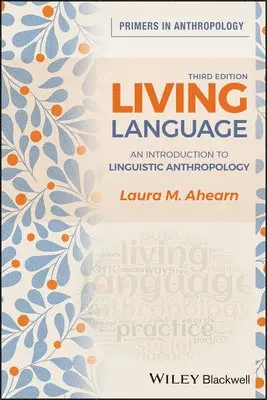
    Living Language

    An Introduction to Linguistic Anthropology

    AvLaura M. Ahearn

    Häftad, Engelska, 2021

    Del i serien Primers in Anthropology

    520 kr

    Beställningsvara. Skickas inom 5-8 vardagar. Fri frakt över 249 kr.

    Fler format och utgåvor

    E-bok

    617 kr

    E-bok

    617 kr

    Häftad

    Kommande

    E-bok

    1 316 kr

    E-bok

    455 kr

    Beskrivning

    A new, fully revised edition of this bestselling textbook in linguistic anthropology, updated to address the impacts of globalization, pandemics, and other contemporary socio-economic issues in the study of languageLiving Language: An Introduction to Linguistic Anthropology has introduced thousands of students to the engaging and compelling field of linguistic anthropology. Now in a new, fully updated and revised third edition, this bestselling textbook provides a student-friendly exploration of language as a social and cultural practice. Covering both theory and real-world practice, this clear and highly accessible textbook examines the relationship between language and social context while highlighting the advantages of an ethnographic approach to the study of language. The third edition includes a timely new chapter that investigates how technologies such as social media and online meetings have changed language. The new edition also considers the impact of the COVID-19 pandemic on linguistic practices, ensuring that this text will be a valuable resource for students for years to come. This insightful text: Offers an engaging introduction to the field of linguistic anthropologyFeatures all-new material covering contemporary technologies and global developmentsExplains how language use is studied as a form of social actionCovers nonverbal and multimodal communication, language acquisition and socialization, the relationship between language and thought, and language endangerment and revitalizationExplores various forms of linguistic and social communities, and discusses social and linguistic differentiation and inequality along racial, ethnic, and gender dimensionsRequiring no prior knowledge in linguistics or anthropology, Living Language: An Introduction to Linguistic Anthropology, Third Edition, is the perfect textbook for undergraduate and graduate courses in introductory linguistic anthropology as well as related courses in sociolinguistics, sociology, and communication.

    Produktinformation

    • Utgivningsdatum:2021-03-25
    • Mått:145 x 218 x 25 mm
    • Vikt:476 g
    • Format:Häftad
    • Språk:Engelska
    • Serie:Primers in Anthropology
    • Antal sidor:400
    • Upplaga:3
    • Förlag:John Wiley and Sons Ltd
    • ISBN:9781119608141

    Utforska kategorier

    • Antropologi inom Samhälle och politik
    • Språkvetenskap och lingvistik inom Språk och ordböcker

    Mer om författaren

    Laura M. Ahearn is a linguistic and cultural anthropologist who has conducted research in Nepal on agency, language, and changing marriage practices. Formerly a tenured professor at Rutgers University, she is currently a Senior Learning Advisor at Social Impact, a global development management consulting firm, where she studies and supports the implementation of USAID's Digital Development Strategy. She is the author of Invitations to Love: Literacy, Love Letters, and Social Change in Nepal.

    Innehållsförteckning

    • List of Figures ixList of Tables xiPreface xiiiAcknowledgments xixPart I Language: Some Basic Questions 11 The Socially Charged Life of Language 3So, What Do You Need to Know in Order to “Know” a Language? 9Examples of Linguistic Diversity 13Examples of Diversity in Research Topics in Linguistic Anthropology 17Keith Basso 18Marjorie Harness Goodwin 18Bonnie Urciuoli 19Alessandro Duranti 20Kathryn A. Woolard 20James M. Wilce 21Key Terms in Linguistic Anthropology 21Multifunctionality 22Language Ideologies 24Practice 26Indexicality 29The Inseparability of Language, Culture, and Social Relations 332 Gestures, Sign Languages, and Multimodality 35Bakhtin’s Double-Voiced Discourse 37Goffman’s Participation Framework and Production Format 38Speech and the Analysis of Conversation 39Gestures and Other Forms of Embodied Communication 42Sign Languages 47Poetry, Whistled Languages, Song, and Images 503 The Research Process in Linguistic Anthropology 54What Kinds of Research Questions Do Linguistic Anthropologists Formulate? 55What Kinds of Data Do Linguistic Anthropologists Collect, and with What Methods? 57Participant Observation 58Interviews 58Surveys and Questionnaires 60Naturally Occurring Conversations 60Experimental Methods 62Matched Guise Tests 63Written Texts 64How Do Linguistic Anthropologists Analyze Their Data? 64What Products Do Linguistic Anthropologists Generate from their Research? 67What Sorts of Ethical Issues Do Linguistic Anthropologists Face? 684 Language Acquisition and Socialization 72Language Acquisition and the Socialization Process 74Gaps in the “Language Gap” Approach 78Language Socialization in Bilingual or Multilingual Contexts 81Language Socialization throughout the Lifespan 84Conclusion 885 Language, Thought, and Culture 90A Hundred Years of Linguistic Relativity 91The Sapir–Whorf Hypothesis 94Investigating the Effects of Language on Thought 97Language-in-General 98Linguistic Structures 102Color 106Space 108Time 110Language Use 111Conclusion 117Part II Global Communities of Speakers, Hearers, Readers, and Writers 1216 Global Communities of Multilingual Language Users 123Defining “Speech Community” 124Size and Location of the Community 124What Is Shared by the Members of a Speech Community? 125The Type of Interactions that Speech Community Members Have 125Alternatives to the Concept of “Speech Community” 129Speech Areas 129Speech Networks 130Communities of Practice 132Multilingual and Transnational Linguistic Practices 136Diglossia, Code-Mixing, and Code-Switching 144Diglossia 145Code-Switching 146Code-Mixing 148Heteroglossia 151Conclusion 1527 Literacy Practices 153Literacy Events vs. Literacy Practices 155“Autonomous” vs. “Ideological” Approaches to Studying Literacy 156Some Examples of Situated Literacy Research 158Preschool Literacy Practices in the Southeastern United States 158Pema Kumari’s letter 162Love-letter Writing in Nepal 164Instant Messaging: More like Speech or Writing? 1668 Online Communities and Internet Linguistic Practices 170Online Literacy Practices 171Capitalization, Punctuation, and Emojis 172Online Communities, Relationships, and Social Media 175Who’s Zoomin’ Who? 177Online Avatars 179So Close and yet so Far 183Conclusion 1859 Performance, Performativity, and the Constitution of Communities 186Performance Defined in Opposition to Competence 188Performativity 189Performance as a Display of Verbal Artistry 197Ethnographies of Performance and Performativity 200VIII Contents Part III Language, Power, and Social Differentiation 21110 Language and Gender 213What is Gender, and How Does it Relate to Language? 215Do Men and Women Speak Alike or Differently? 221Do Women and Men of All Ages and All Ethnic, Racial, and Cultural Backgrounds Share the Same Gendered Differences in Their Language Use? 233Some Thoughts on Myths and Realities 23711 Language, Race, and Ethnicity 240Defining Race and Ethnicity 241The Rule-Governed Nature of African American English 246Invariant or Habitual “Be” 248Copula Deletion 249Double Negatives 250The Reduction of Final Consonants 251Pronouncing the Word “Ask” as “Aks” 252Racist Language and Racism in Language 253Language and Racial/Ethnic Identities 258Conclusion 26112 Language Endangerment and Revitalization 262Enumerating the Crisis: How Many Endangered Languages are There? 265What Dies When a Language Dies? 270Why Do Languages Die? 276Can Endangered Languages Be Saved? 278Conclusion 28013 Conclusion: Language, Power, and Agency 281What Is Power? 283Hegemony 284Foucault’s Power Relations and Discourse 285Practice Theory and Power 287Agency 298The Grammatical Encoding of Agency 302Talk About Agency: Meta-Agentive Discourse 305Power and Agency In/through/by/of Language 310Notes 313References 328Index 364