• Fri frakt över 249 kr
  • •
  • Snabba leveranser
  • •
  • Billiga böcker
Kundservice

Du är på sajten för privatpersoner.

Företag, bibliotek eller offentlig verksamhet?

Du handlar på classic.bokus.com, där alla dina funktioner finns intakta.
Till classic.bokus.com
Bokus logotyp. Gå till startsidan.
  • Erbjudanden
  • Nyheter
  • Student
  • Topplistor
  • Barn & ungdom
  • Bokus Play
  • E-böcker
  • Pocketböcker
  • Spel & pussel

10% rabatt på allt med kod NYSTART10 →

Sidfot

Mina sidor

    Hjälp

    • Kundservice
    • Vanliga frågor och svar
    • Frakt och leverans
    • Retur vid ångerrätt
    • Reklamera vara
    • Betalning
    • Köpvillkor
    • Allmänna villkor
    • Information om webbplatsens tillgänglighet

    Om Bokus

    • Om oss
    • Pressrum
    • För studenter
    • För företag
    • För bibliotek och offentlig verksamhet
    • För leverantörer
    • Hållbarhet

    Populärt

    • Aktuella erbjudanden
    • Presentkort
    • Studentlitteratur
    • Nya böcker
    • Topplistor
    • Signerade böcker
    • Engelska böcker

    Inspiration

    • Boktips
    • BookTok
    • Populära bokserier
    • Barnbokskaraktärer
    • Populära författare
    Logotyp för Bokus
    Följ oss på Facebook (extern länk)Följ oss på Instagram (extern länk)Följ oss på YouTube (extern länk)Följ oss på TikTok (extern länk)
    bokus @ CookiesAnpassa cookiesIntegritetspolicyKöpvillkor
    Till Citymail hemsida (extern länk)Till Budbee hemsida (extern länk)Till Postnord hemsida (extern länk)Till Schenker hemsida (extern länk)Till Early Bird hemsida (extern länk)Till Walleys hemsida (extern länk)
    1. Naturvetenskap och teknik
    2. Teknik och industri
    3. Tillverkningsteknik

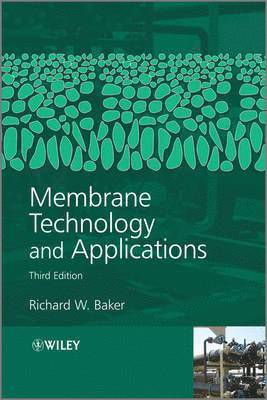
    Membrane Technology and Applications

    AvRichard W. Baker

    Inbunden, Engelska, 2023

    1 337 kr

    Beställningsvara. Skickas inom 5-8 vardagar. Fri frakt över 249 kr.

    Fler format och utgåvor

    Inbunden

    1 184 kr

    E-bok

    1 357 kr

    E-bok

    1 357 kr

    E-bok

    1 625 kr

    E-bok

    1 625 kr

    Beskrivning

    Membrane Technology and Applications Internationally acknowledged text on separation membrane technology, presenting current theory and practice, plus manufacturing and applications The 4th Edition of Membrane Technology and Applications presents an authoritative, up-to-date overview of separation membranes, their theoretical underpinnings, manufacture, and use, beginning with a series of general chapters on membrane preparation, transport theory, and concentration polarization, then surveying the major areas of membrane application in separate chapters. Written in a readily accessible style, each chapter offers a thorough treatment of its subject, from historical and theoretical backgrounds through to current and potential applications. Topics include reverse osmosis, ultrafiltration, microfiltration, gas separation, pervaporation, electrodialysis, coupled and facilitated transport, and medical applications of membranes. This new edition has been comprehensively updated, with substantial new material, figures, and references throughout to reflect the latest developments in the field. Major changes include: A new chapter on transport mechanisms in finely microporous membranes, with focus on gas transportA new chapter on membrane contactorsA substantially expanded section on hyperfiltration applications, including pharmaceutical applications, in the reverse osmosis chapterExpanded treatment of membrane bioreactors, plus a new section on biotechnology applications, in the ultrafiltration chapterA new section in the gas separation chapter devoted to carbon dioxide capture from industrial process emissions, including power plant emissionsResearch areas that the author would work on if he were, once again, a 21-year-old graduate student.Written by a leading expert with 50 years of experience, Membrane Technology and Applications provides balanced coverage of all aspects of the field, and is essential reading for all membrane enthusiasts, from neophyte graduate student to academic researcher to seasoned industry professional.

    Produktinformation

    • Utgivningsdatum:2023-12-15
    • Mått:178 x 252 x 31 mm
    • Vikt:1 270 g
    • Format:Inbunden
    • Språk:Engelska
    • Antal sidor:560
    • Upplaga:4
    • Förlag:John Wiley & Sons Inc
    • ISBN:9781119685982

    Utforska kategorier

    • Tillverkningsteknik inom Naturvetenskap och teknik

    Mer om författaren

    Dr. Richard W. Baker received his doctorate in physical chemistry in 1966 from Imperial College, London. In 1982, following industrial appointments at Amicon and Alza, and the co-founding of Bend Research, Dr. Baker founded his second company, MTR, where he served as president for 25 years. In 2007, Dr. Baker stepped aside as MTR’s president, but remains active as Chief Scientist and a member of the Board of Directors. He is heavily engaged in MTR’s ongoing development and commercialization of membrane-based carbon capture.

    Innehållsförteckning

    • Preface xiAcknowledgments xiii1 Overview of Membrane Science and Technology 11.1 Introduction 21.2 Historical Development of Membranes 21.3 Membrane Transport Theory 41.4 Types of Membranes 61.4.1 Isotropic Membranes 81.4.2 Anisotropic Membranes 81.4.3 Membranes with Special Features 91.5 Membrane Processes 91.5.1 Reverse Osmosis, Ultrafiltration, Microfiltration 101.5.2 Electrodialysis 111.5.3 Gas Separation 121.5.4 Pervaporation 131.5.5 Hyperfiltration 141.5.6 Membrane Contactors 141.5.7 Carrier Transport 151.5.8 Medical Applications 16References 172 Membrane Transport Theory – Solution-Diffusion 182.1 Introduction 182.2 The Solution-Diffusion Model 212.2.1 Molecular Dynamics Simulations 212.2.2 Concentration and Pressure Gradients in Membranes 252.2.3 Application of the Solution-Diffusion Model to Specific Processes 312.2.4 A Unified View 522.3 Structure–Permeability Relationships in Solution-Diffusion Membranes 562.3.1 Diffusion Coefficients 592.3.2 Sorption Coefficients in Polymers 682.4 Conclusions 74References 753 Microporous Membranes – Characteristics and Transport Mechanisms 793.1 Introduction 803.2 Gas Separation in Microporous Membranes 813.2.1 Membrane Categories 813.2.2 Crystalline Finely Microporous Membranes 823.2.3 Amorphous Microporous Membranes 903.3 Gas Separation: Transport Mechanisms 953.3.1 Surface Adsorption and Diffusion 953.3.2 Knudsen Diffusion 983.3.3 Molecular Sieving 1003.3.4 Pore Blocking 1013.3.5 Summary 1043.4 Liquid Permeation in Microporous Membranes 1053.4.1 Screen Filters 1053.4.2 Depth Filters 1093.5 Conclusions and Future Directions 110References 1114 Membranes and Modules 1154.1 Introduction 1164.2 Isotropic Membranes 1164.2.1 Isotropic Nonporous Membranes 1164.2.2 Isotropic Microporous Membranes 1184.3 Anisotropic Membranes 1224.3.1 Phase Separation Membranes 1234.3.2 Interfacial Polymerization Membranes 1384.3.3 Solution-Coated Composite Membranes 1434.3.4 Repairing Membrane Defects 1474.4 Ceramic and Glass Membranes 1494.4.1 Ceramic Membranes 1494.4.2 Microporous Glass Membranes 1524.5 Other Membranes 1524.6 Hollow Fiber Membranes 1534.7 Membrane Modules 1564.7.1 Plate-and-Frame Modules 1584.7.2 Tubular Modules 1594.7.3 Spiral-Wound Modules 1624.7.4 Hollow Fiber Modules 1654.7.5 Other Module Types 1674.8 Module Selection 1684.9 Conclusions and Future Directions 170References 1715 Concentration Polarization 1775.1 Introduction 1775.2 Boundary Layer Film Model 1805.2.1 Determination of the Peclet Number 1875.3 Concentration Polarization in Liquid Separation Processes 1895.4 Concentration Polarization in Gas Separation Processes 1935.5 Concentration Polarization in Membrane Contactors and Related Processes 1945.6 Conclusions and Future Directions 196References 1966 Reverse Osmosis (Hyperfiltration) 1986.1 Introduction and History 1996.2 Theoretical Background 2016.3 Membrane Materials 2046.3.1 Cellulosic Membranes 2046.3.2 Noncellulosic Loeb–Sourirajan Membranes 2066.3.3 Interfacial Composite Membranes 2076.4 Membrane Performance 2106.5 Reverse Osmosis Membrane Categories 2116.5.1 Seawater Desalination Membranes 2116.5.2 Brackish Water Desalination Membranes 2136.5.3 Nanofiltration Membranes 2136.5.4 Organic Solvent Separating Membranes 2156.6 Membrane Modules 2186.7 Membrane Fouling and Control 2196.7.1 Silt 2206.7.2 Scale 2206.7.3 Biofouling 2236.7.4 Organic Fouling 2236.7.5 Pretreatment 2236.7.6 Membrane Cleaning 2246.8 Applications 2256.8.1 Seawater Desalination 2266.8.2 Brackish Water Desalination 2286.8.3 Industrial Applications 2296.8.4 Organic Solvent Separations 2326.8.5 Conclusions and Future Directions 236References 2387 Ultrafiltration 2417.1 Introduction and History 2427.2 Characterization of Ultrafiltration Membranes 2447.3 Membrane Fouling 2467.3.1 Constant Pressure and Constant Flux Operation 2467.3.2 Concentration Polarization 2517.3.3 Fouling Control 2597.4 Membranes 2607.5 Tangential-Flow Modules and Process Designs 2617.5.1 Modules 2627.5.2 Process Design 2647.6 Applications 2667.6.1 Industrial Applications 2687.6.2 Municipal Water Treatment/Membrane Bioreactors (MBRs) 2747.6.3 Biotechnology 2807.7 Conclusions and Future Directions 282References 2848 Microfiltration 2878.1 Introduction and History 2878.2 Background 2888.2.1 Types of Membrane 2888.2.2 Membrane Characterization 2918.2.3 Microfiltration Membranes and Modules 2978.2.4 Process Design 3008.3 Applications 3018.3.1 Sterile Filtration of Pharmaceuticals 3028.3.2 Microfiltration in the Electronics Industry 3038.3.3 Sterilization of Wine and Beer 3048.4 Conclusions and Future Directions 304References 3049 Gas Separation 3059.1 Introduction and History 3069.2 Dense Polymeric Membranes 3089.2.1 Theoretical Background 3089.2.2 Structural Features and Considerations 3159.3 Microporous Membranes 3179.4 Membrane Modules 3199.5 Process Design 3209.5.1 Pressure Ratio 3219.5.2 Stage-Cut 3259.5.3 Multistep and Multistage System Designs 3279.5.4 Recycle Designs 3299.6 Applications 3309.6.1 Hydrogen Separation 3309.6.2 Air Separation 3339.6.3 Natural Gas Separations 3389.6.4 Organic Vapor/Gas Separations 3479.6.5 To-Be-Developed Applications 3489.7 Conclusions and Future Directions 353References 35510 Pervaporation/Vapor Permeation 35910.1 Introduction and History 35910.2 Theoretical Background 36210.3 Membrane Materials and Modules 37010.3.1 Membrane Characterization 37010.3.2 Membrane Materials 37010.3.3 Membrane Modules 37510.4 Process Design 37710.4.1 Basic Principles 37710.4.2 Hybrid Distillation/Membrane Processes 38010.5 Applications 38210.5.1 Bioethanol and Solvent Dehydration 38310.5.2 VOC/Water Separations 38410.5.3 Separation of Organic Mixtures 38510.6 Conclusions and Future Directions 390References 39011 Ion Exchange Membrane Processes 39411.1 Introduction and History 39511.2 Theoretical Background 39611.2.1 Transport Through Ion Exchange Membranes 39711.3 Chemistry of Ion Exchange Membranes 40011.3.1 Homogeneous Membranes 40211.3.2 Heterogeneous Membranes 40411.4 Electrodialysis 40511.4.1 Concentration Polarization and Limiting Current Density 40511.4.2 Current Efficiency and Power Consumption 41011.4.3 System Design 41111.5 Electrodialysis Applications 41411.5.1 Water Desalination 41411.5.2 Continuous Electrodeionization and Ultrapure Water 41411.5.3 Salt Recovery from Seawater 41611.5.4 Other Electrodialysis Applications 41611.6 Fuel Cells 41711.7 Chlor-Alkali Processes 42111.8 Other Electrochemical Processes 42311.8.1 Water Splitting Using Bipolar Membranes 42311.8.2 Redox Flow Batteries 42411.8.3 Reverse Electrodialysis 42711.9 Conclusions and Future Directions 428References 42812 Carrier Facilitated Transport 43112.1 Introduction 43112.2 Facilitated Transport 43512.2.1 Membrane and Process Development 43512.2.2 Theory 43712.2.3 Membranes 44012.2.4 Applications 44212.3 Coupled Transport 44612.3.1 Membrane and Process Development 44612.3.2 Theory 45112.3.3 Coupled Transport Membrane Characteristics 45412.3.4 Applications 45912.4 Conclusions and Future Directions 459References 46013 Membrane Contactors 46413.1 Introduction 46413.2 Contactor Modules 46613.3 Applications of Membrane Contactors 46813.3.1 Liquid/Liquid Contactor Applications 46913.3.2 Liquid/Gas and Gas/Liquid Contactors 47813.3.3 Gas/Gas Membrane Contactors 48213.4 Conclusions and Future Directions 486References 48614 Medical Applications of Membranes 49014.1 Introduction 49014.2 Hemodialysis 49114.3 Plasma Fractionation 49514.4 Blood Oxygenators 49614.5 Controlled Drug Delivery 49714.5.1 Membrane Diffusion-Controlled Systems 49914.5.2 Monolithic Systems 50214.5.3 Biodegradable Systems 50214.5.4 Osmotic Systems 503References 50915 Other Membrane Processes 51215.1 Introduction 51215.2 Metal Membranes 51215.3 Ion-Conducting Membranes 51615.4 Charge Mosaic Membranes and Piezodialysis 520References 523Appendix 525Index 536