• Fri frakt över 249 kr
  • •
  • Snabba leveranser
  • •
  • Billiga böcker
Kundservice

Du är på sajten för privatpersoner.

Företag, bibliotek eller offentlig verksamhet?

Du handlar på classic.bokus.com, där alla dina funktioner finns intakta.
Till classic.bokus.com
Bokus logotyp. Gå till startsidan.
  • Erbjudanden
  • Nyheter
  • Student
  • Topplistor
  • Barn & ungdom
  • Bokus Play
  • E-böcker
  • Pocketböcker
  • Spel & pussel

10% rabatt på allt med kod NYSTART10 →

Sidfot

Mina sidor

    Hjälp

    • Kundservice
    • Vanliga frågor och svar
    • Frakt och leverans
    • Retur vid ångerrätt
    • Reklamera vara
    • Betalning
    • Köpvillkor
    • Allmänna villkor
    • Information om webbplatsens tillgänglighet

    Om Bokus

    • Om oss
    • Pressrum
    • För studenter
    • För företag
    • För bibliotek och offentlig verksamhet
    • För leverantörer
    • Hållbarhet

    Populärt

    • Aktuella erbjudanden
    • Presentkort
    • Studentlitteratur
    • Nya böcker
    • Topplistor
    • Signerade böcker
    • Engelska böcker

    Inspiration

    • Boktips
    • BookTok
    • Populära bokserier
    • Barnbokskaraktärer
    • Populära författare
    Logotyp för Bokus
    Följ oss på Facebook (extern länk)Följ oss på Instagram (extern länk)Följ oss på YouTube (extern länk)Följ oss på TikTok (extern länk)
    bokus @ CookiesAnpassa cookiesIntegritetspolicyKöpvillkor
    Till Citymail hemsida (extern länk)Till Budbee hemsida (extern länk)Till Postnord hemsida (extern länk)Till Schenker hemsida (extern länk)Till Early Bird hemsida (extern länk)Till Walleys hemsida (extern länk)
    1. Naturvetenskap och teknik
    2. Matematik och naturvetenskap
    3. Kemi

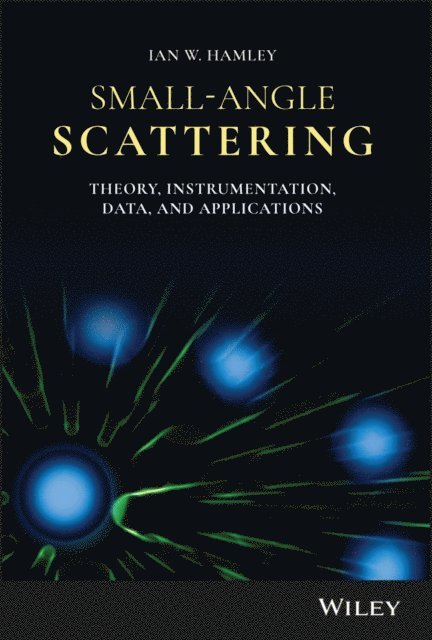
    Small-Angle Scattering

    Theory, Instrumentation, Data, and Applications

    AvIan W. Hamley

    Inbunden, Engelska, 2021

    1 619 kr

    Beställningsvara. Skickas inom 5-8 vardagar. Fri frakt över 249 kr.

    Fler format och utgåvor

    E-bok

    1 877 kr

    E-bok

    1 877 kr

    Beskrivning

    SMALL-ANGLE SCATTERING A comprehensive and timely volume covering contemporary research, practical techniques, and theoretical approaches to SAXS and SANSSmall-Angle Scattering: Theory, Instrumentation, Data, and Applications provides authoritative coverage of both small-angle X-ray scattering (SAXS), small-angle neutron scattering (SANS) and grazing incidence small-angle scattering (GISAS) including GISAXS and GISANS. This single-volume resource offers readers an up-to-date view of the state of the field, including the theoretical foundations, experimental methods, and practical applications of small-angle scattering (SAS) techniques including laboratory and synchrotron SAXS and reactor/spallation SANS.Organized into six chapters, the text first describes basic theory, instrumentation, and data analysis. The following chapters contain in-depth discussion on various applications of SAXS and SANS and GISAXS and GISANS, and on specific techniques for investigating structure and order in soft materials, biomolecules, and inorganic and magnetic materials. Author Ian Hamley draws from his more than thirty years’ experience working with many systems, instruments, and types of small-angle scattering experiments across most European facilities to present the most complete introduction to the field available. This book:Presents uniquely broad coverage of practical and theoretical approaches to SAXS and SANSIncludes practical information on instrumentation and data analysisOffers useful examples and an accessible and concise presentation of topicsCovers new developments in the techniques of SAXS and SANS, including GISAXS and GISANSSmall-Angle Scattering: Theory, Instrumentation, Data, and Applications is a valuable source of detailed information for researchers and postgraduate students in the field, as well as other researchers using X-ray and neutron scattering to investigate soft materials, other nanostructured materials and biomolecules such as proteins.

    Produktinformation

    • Utgivningsdatum:2021-04-22
    • Mått:155 x 229 x 18 mm
    • Vikt:590 g
    • Format:Inbunden
    • Språk:Engelska
    • Antal sidor:288
    • Förlag:John Wiley & Sons Inc
    • ISBN:9781119768302

    Utforska kategorier

    • Kemi inom Naturvetenskap och teknik
    • Maskinteknik och material inom Naturvetenskap och teknik

    Mer om författaren

    Ian W. Hamley, PhD, is Diamond Professor of Physical Chemistry at the University of Reading, UK. He has more than 30 years of experience in using both SAXS and SANS, with more than 400 papers, many including SAXS and SANS data from a range of systems with diverse applications. Professor Hamley is the author of several books including Introduction to Peptide Science, Block Copolymers in Solution, and Introduction to Soft Matter, and is the editor of Developments in Block Copolymer Science and Technology, and co-editor of Nanoscale Science and Technology.

    Innehållsförteckning

    • Preface ix1 Basic Theory 11.1 Introduction 11.2 Wavenumber and Scattering Amplitude 21.3 Intensity for Anisotropic and Isotropic Systems and Relationships to Pair Distance Distribution and Autocorrelation Functions 31.4 Guinier Approximation 71.5 Form and Structure Factors 81.6 Structure Factors 111.7 Form Factors 261.8 Form and Structure Factors for Polymers 36References 412 Data Analysis 452.1 Introduction 452.2 Pre-Measurement Sample Concentration and Polydispersity Measurements 462.3 Overview: Data Reduction Pipeline 462.4 Corrections for Sample Transmission and Others 482.5 Background Corrections 492.6 Detector Corrections, Mask Files, and Integration 512.7 Anisotropic Data 542.8 Calibration of q Scale 542.9 Absolute Intensity Calibration 562.10 Absorption 582.11 Smearing Effects 592.12 Solution SAXS Data Checks 602.13 Porod Regime 672.14 Kratky Plots 682.15 Zimm Plots 702.16 Invariant and Related Information Content From SAS Measurements 722.17 Form Factor Fitting 732.18 SAS Software 80References 803 Instrumentation for SAXS and SANS 873.1 Introduction 873.2 Synchrotron Facilities 883.3 Neutron Scattering Facilities 883.4 Synchrotron SAXS Instrumentation 913.5 Laboratory SAXS Instrumentation 993.6 SANS Instrumentation 1013.7 Ultra-Small-Angle Scattering Instruments 1043.8 Standard Sample Environments – SAXS 1063.9 Standard Sample Environments – SANS 1093.10 Standard Sample Environments – GISAS 1093.11 Microfocus SAXS and WAXS 1103.12 Specialized Sample Environments 111References 1274 Applications and Specifics of SAXS 1374.1 Introduction 1374.2 Production of X-Rays 1394.3 Scattering Processes for X-Rays 1424.4 Atomic Scattering Factors 1444.5 Anomalous SAXS and SAXS Contrast Variation 1454.6 BioSAXS: Solution SAXS from Biomacromolecules, Especially Proteins 1474.7 Solution SAXS from Multi-Domain and Flexible Macromolecules 1544.8 Solution SAXS from Multi-Component Systems – Biomolecular Assemblies 1604.9 Protein Structure Factor SAXS 1614.10 SAXS (and WAXS) Studies of Soft Matter Systems 1634.11 SAXS and WAXS From Semicrystalline Polymers 1644.12 Lipid Phases: Electron Density Profile Reconstruction 1684.13 SAXS Studies of Peptide and Lipopeptide Assemblies 1714.14 SAXS Studies of the Structure Factor of Colloids 1734.15 SAXS and SAXS/WAXS Studies of Biomaterials 1774.16 Fast Time-Resolved SAXS 182References 1875 Applications and Specifics of SANS 1975.1 Introduction 1975.2 Production of Neutrons 1985.3 Differential Scattering Cross-Section 1995.4 Scattering Lengths 2005.5 SANS Data Reduction Considerations 2025.6 Contrast Variation 2035.7 Single Molecule Scattering from Mixtures of Protonated and Deuterated Molecules 2155.8 SANS from Labelled Polymers 2175.9 Kinetic SANS Using Labelled Mixtures 2225.10 Ultra-Small-Angle Sans (USANS) 2235.11 SANS and USANS (AND SAXS and USAXS) Studies on Porous Structures 2245.12 SANS on Magnetic Materials 2275.13 Spin-Echo SANS (SESANS) 2325.14 Complementary SAXS AND SANS 233References 2336 Grazing-Incidence Small-Angle Scattering 2416.1 Introduction 2416.2 Basic Quantities: Definition of Angles, Refractive Index, and Scattering Length Density 2426.3 Characteristic Scans 2456.4 The Distorted Wave Born Approximation 2526.5 Data Analysis 2566.6 Experimental Examples of GISAS Data 2576.7 Experimental Examples of GIWAXS/GIXD Data 265References 269Index 273