• Fri frakt över 249 kr
  • •
  • Snabba leveranser
  • •
  • Billiga böcker
Kundservice

Du är på sajten för privatpersoner.

Företag, bibliotek eller offentlig verksamhet?

Du handlar på classic.bokus.com, där alla dina funktioner finns intakta.
Till classic.bokus.com
Bokus logotyp. Gå till startsidan.
  • Erbjudanden
  • Student
  • Topplistor
  • Barn & ungdom
  • Bokus Play
  • E-böcker
  • Ljudböcker
  • Pocketböcker
  • Spel & pussel

10% rabatt på allt med kod NYSTART10 →

Sidfot

Mina sidor

    Hjälp

    • Kundservice
    • Vanliga frågor och svar
    • Frakt och leverans
    • Retur vid ångerrätt
    • Reklamera vara
    • Betalning
    • Köpvillkor
    • Allmänna villkor
    • Information om webbplatsens tillgänglighet

    Om Bokus

    • Om oss
    • Pressrum
    • För studenter
    • För företag
    • För bibliotek och offentlig verksamhet
    • För leverantörer
    • Hållbarhet

    Populärt

    • Aktuella erbjudanden
    • Presentkort
    • Studentlitteratur
    • Nya böcker
    • Topplistor
    • Signerade böcker
    • Engelska böcker

    Inspiration

    • Boktips
    • BookTok
    • Populära bokserier
    • Barnbokskaraktärer
    • Populära författare
    Logotyp för Bokus
    Följ oss på Facebook (extern länk)Följ oss på Instagram (extern länk)Följ oss på YouTube (extern länk)Följ oss på TikTok (extern länk)
    bokus @ CookiesAnpassa cookiesIntegritetspolicyKöpvillkor
    Till Citymail hemsida (extern länk)Till Budbee hemsida (extern länk)Till Postnord hemsida (extern länk)Till Schenker hemsida (extern länk)Till Early Bird hemsida (extern länk)Till Walleys hemsida (extern länk)
    1. Naturvetenskap och teknik
    2. Teknik och industri
    3. Elektronik och kommunikationer

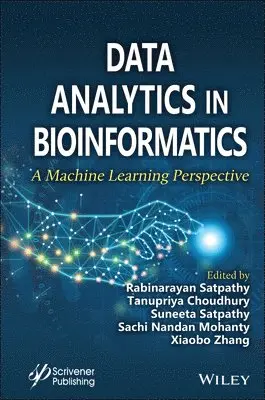
    Data Analytics in Bioinformatics

    A Machine Learning Perspective

    AvRabinarayan Satpathy,Tanupriya Choudhury

    Inbunden, Engelska, 2021

    2 507 kr

    Beställningsvara. Skickas inom 5-8 vardagar. Fri frakt över 249 kr.

    Beskrivning

    Machine learning techniques are increasingly being used to address problems in computational biology and bioinformatics. Novel machine learning computational techniques to analyze high throughput data in the form of sequences, gene and protein expressions, pathways, and images are becoming vital for understanding diseases and future drug discovery. Machine learning techniques such as Markov models, support vector machines, neural networks, and graphical models have been successful in analyzing life science data because of their capabilities in handling randomness and uncertainty of data noise and in generalization. Machine Learning in Bioinformatics compiles recent approaches in machine learning methods and their applications in addressing contemporary problems in bioinformatics approximating classification and prediction of disease, feature selection, dimensionality reduction, gene selection and classification of microarray data and many more.

    Produktinformation

    • Utgivningsdatum:2021-03-05
    • Mått:10 x 10 x 10 mm
    • Vikt:454 g
    • Format:Inbunden
    • Språk:Engelska
    • Antal sidor:544
    • Förlag:John Wiley & Sons Inc
    • ISBN:9781119785538

    Utforska kategorier

    • Elektronik och kommunikationer inom Naturvetenskap och teknik
    • Systemvetenskap och AI inom Data och IT

    Mer om författaren

    Rabinarayan Satpathy graduated from the National Institute of Technology – Rourkela. He has received 2 PhDs, one in Computational Mathematics from Utkal University and other in Computer Science Engineering from Fakir Mohan University, as well as a DSc in Computational Fluid Dynamics. Tanupriya Choudhury earned his PhD in 2016. He has filed 14 patents and received 16 copyrights from MHRD for his own software. He has authored more than 85 research papers. He is also Technical Adviser of Deetya Soft Pvt. Ltd. Noida, IVRGURU Mydigital360, etc. Suneeta Satpathy, received her PhD from Utkal University, Bhubaneswar, Odisha, in 2015 with Directorate of Forensic Sciences, Her research interests include computer forensics, cyber security, data fusion, data mining, big data analysis, and decision mining. She has edited several books. Sachi Nandan Mohanty, received his PhD from IIT Kharagpur in 2015. His research areas include data mining, big data analysis, cognitive science, fuzzy decision making, brain-computer interface, and computational intelligence. He has authored 3 books as well as edited four, of which several are with the Wiley-Scrivener imprint. Xiaobo Zhang received his Master of Computer Science, Doctor of Engineering (Control Theory and Control Engineering) and works in the Department of Automation, Guangdong University of Technology, China. He has published more than 30 papers in academic journals as well as edited three books. He has applied for more than 40 invention patents and obtained 6 software copyrights.

    Innehållsförteckning

    • Preface xixAcknowledgement xxiPart 1 The Commencement of Machine Learning Solicitation to Bioinformatics 11 Introduction to Supervised Learning 3Rajat Verma, Vishal Nagar and Satyasundara Mahapatra1.1 Introduction 41.2 Learning Process & its Methodologies 51.3 Classification and its Types 101.4 Regression 121.5 Random Forest 181.6 K-Nearest Neighbor 201.7 Decision Trees 211.8 Support Vector Machines 221.9 Neural Networks 241.10 Comparison of Numerical Interpretation 261.11 Conclusion & Future Scope 27References 282 Introduction to Unsupervised Learning in Bioinformatics 35Nancy Anurag Parasa, Jaya Vinay Namgiri, Sachi Nandan Mohanty and Jatindra Kumar Dash2.1 Introduction 362.2 Clustering in Unsupervised Learning 372.3 Clustering in Bioinformatics—Genetic Data 382.4 Conclusion 46References 473 A Critical Review on the Application of Artificial Neural Network in Bioinformatics 51Vrs Jhalia and Tripti Swarnkar3.1 Introduction 523.2 Biological Datasets 573.3 Building Computational Model 583.4 Literature Review 643.5 Critical Analysis 723.6 Conclusion 73References 73Part 2 Machine Learning and Genomic Technology, Feature Selection and Dimensionality Reduction 774 Dimensionality Reduction Techniques: Principles, Benefits, and Limitations 79Hemanta Kumar Palo, Santanu Sahoo and Asit Kumar Subudhi4.1 Introduction 804.2 The Benefits and Limitations of Dimension Reduction Methods 814.3 Components of Dimension Reduction 834.4 Methods of Dimensionality Reduction 864.5 Conclusion 104References 1055 Plant Disease Detection Using Machine Learning Tools With an Overview on Dimensionality Reduction 109Saurav Roy, Ratula Ray, Satya Ranjan Dash and Mrunmay Kumar Giri5.1 Introduction 1105.2 Flowchart 1125.3 Machine Learning (ML) in Rapid Stress Phenotyping 1135.4 Dimensionality Reduction 1145.5 Literature Survey 1165.6 Types of Plant Stress 1285.7 Implementation I: Numerical Dataset 1305.8 Implementation II: Image Dataset 1345.9 Conclusion 140References 1416 Gene Selection Using Integrative Analysis of Multi-Level Omics Data: A Systematic Review 145S. Mahapatra and T. Swarnkar6.1 Introduction 1466.2 Approaches for Gene Selection 1476.3 Multi-Level Omics Data Integration 1526.4 Machine Learning Approaches for Multi-Level Data Integration 1536.5 Critical Observation 1656.6 Conclusion 166References 1667 Random Forest Algorithm in Imbalance Genomics Classification 173Sudhansu Shekhar Patra, Om Praksah Jena, Gaurav Kumar, Sreyashi Pramanik, Chinmaya Misra and Kamakhya Narain Singh7.1 Introduction 1737.2 Methodological Issues 1757.3 Biological Terminologies 1817.4 Proposed Model 1837.5 Experimental Analysis 1867.6 Current and Future Scope of ML in Genomics 1887.7 Conclusion 189References 1898 Feature Selection and Random Forest Classification for Breast Cancer Disease 191Shubham Raj, Swati Singh, Avinash Kumar, Sobhangi Sarkar and Chittaranjan Pradhan8.1 Introduction 1928.2 Literature Survey 1928.3 Machine Learning 1968.4 Feature Engineering 2028.5 Methodology 2048.6 Result Analysis 2098.7 Conclusion 210References 2109 A Comprehensive Study on the Application of Grey Wolf Optimization for Microarray Data 211Swati Sucharita, Barnali Sahu and Tripti Swarnkar9.1 Introduction 2129.2 Microarray Data 2139.3 Grey Wolf Optimization (GWO) Algorithm 2149.4 Studies on GWO Variants 2209.5 Application of GWO in Medical Domain 2329.6 Application of GWO in Microarray Data 2329.7 Conclusion and Future Work 232References 24310 The Cluster Analysis and Feature Selection: Perspective of Machine Learning and Image Processing 249Aradhana Behura10.1 Introduction 25110.2 Various Image Segmentation Techniques 25410.3 How to Deal With Image Dataset 25610.4 Class Imbalance Problem 26410.5 Optimization of Hyperparameter 26710.6 Case Study 27010.7 Using AI to Detect Coronavirus 27310.8 Using Artificial Intelligence (AI), CT Scan and X-Ray 27410.9 Conclusion 276References 276Part 3 Machine Learning and Healthcare Applications 28111 Artificial Intelligence and Machine Learning for Healthcare Solutions 283Ashok Sharma, Parveen Singh and Gowhar Dar11.1 Introduction 28411.2 Using Machine Learning Approaches for Different Purposes 28411.3 Various Resources of Medical Data Set for Research 28611.4 Deep Learning in Healthcare 28711.5 Various Projects in Medical Imaging and Diagnostics 28811.6 Conclusion 289References 29012 Forecasting of Novel Corona Virus Disease (Covid-19) Using LSTM and XG Boosting Algorithms 293V. Aakash, S. Sridevi, G. Ananthi and S. Rajaram12.1 Introduction 29412.2 Machine Learning Algorithms for Forecasting 29612.3 Proposed Method 30012.4 Implementation 30412.5 Results and Discussion 30712.6 Conclusion and Future Work 310References 31013 An Innovative Machine Learning Approach to Diagnose Cancer at Early Stage 313Poongodi, P., Udayakumar, E., Srihari, K. and Sachi Nandan Mohanty13.1 Introduction 31413.2 Related Work 31713.3 Materials and Methods 32013.4 System Design 32213.5 Results and Discussion 33113.6 Conclusion 335References 33514 A Study of Human Sleep Staging Behavior Based on Polysomnography Using Machine Learning Techniques 339Santosh Kumar Satapathy and D. Loganathan14.1 Introduction 34014.2 Polysomnography Signal Analysis 34114.3 Case Study on Automated Sleep Stage Scoring 34914.4 Summary and Conclusion 356References 35715 Detection of Schizophrenia Using EEG Signals 359Shalini Mahato, Laxmi Kumari Pathak and Kajal Kumari15.1 Introduction 36015.2 Methodology 36715.3 Literature Review 37215.4 Discussion 37215.5 Conclusion 388References 38816 Performance Analysis of Signal Processing Techniques in Bioinformatics for Medical Applications Using Machine Learning Concepts 391G. Aparna, G. Anitha Mary and G. Sumana16.1 Introduction 39216.2 Basic Definition of Anatomy and Cell at Micro Level 39716.3 Signal Processing—Genome Signal Processing 40316.4 Hotspots Identification Algorithm 41416.5 Results—Experimental Investigations 41616.6 Analysis Using Machine Learning Metrics 41816.7 Conclusion 424Appendix 424A.1 Hotspot Identification Code 424A.2 Performance Metrics Code 425References 42717 Survey of Various Statistical Numerical and Machine Learning Ontological Models on Infectious Disease Ontology 431Yuvaraj Natarajan, Srihari Kannan and Sachi Nandan Mohanty17.1 Introduction 43217.2 Disease Ontology 43217.3 Infectious Disease Ontology 43317.4 Biomedical Ontologies on IDO 43417.5 Various Methods on IDO 43517.6 Machine Learning-Based Ontology for IDO 43617.7 Recommendation or Suggestions for Future Study 43717.8 Conclusions 438References 43818 An Efficient Model for Predicting Liver Disease Using Machine Learning 443Ritesh Choudhary, T. Gopalakrishnan, D. Ruby, A. Gayathri, Vishnu Srinivasa Murthy and Rishabh Shekhar18.1 Introduction 44418.2 Related Works 44518.3 Proposed Model 44618.4 Results and Analysis 45418.5 Conclusion 456References 456Part 4 Bioinformatics and Market Analysis 45919 A Novel Approach for Prediction of Stock Market Behavior Using Bioinformatics Techniques 461Prakash Kumar Sarangi, Birendra Kumar Nayak and Sachidananda Dehuri19.1 Introduction 46219.2 Literature Review 46319.3 Proposed Work 46619.4 Experimental Study 47019.5 Conclusion and Future Work 482References 48420 Stock Market Price Behavior Prediction Using Markov Models: A Bioinformatics Approach 485Prakash Kumar Sarangi, Birendra Kumar Nayak and Sachidananda Dehuri20.1 Introduction 48620.2 Literature Survey 48720.3 Proposed Work 48820.4 Experimental Work 49720.5 Conclusions and Future Work 504References 505Index 507