Sachi Nandan Mohanty – författare
2 215 kr
Skickas inom 10-15 vardagar
862 kr
Skickas inom 10-15 vardagar
1 645 kr
Skickas inom 10-15 vardagar
677 kr
Skickas inom 10-15 vardagar
2 255 kr
Läs direkt efter köp
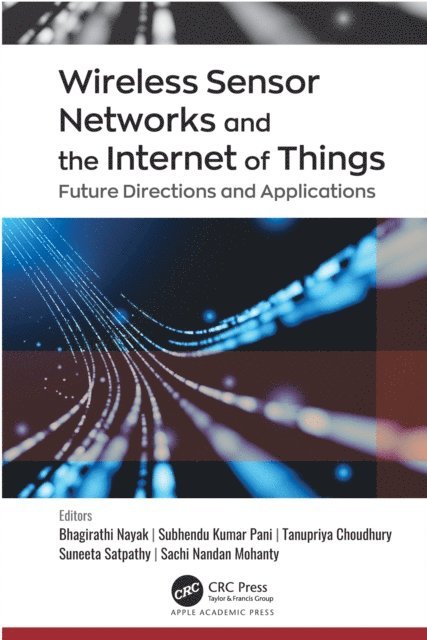
Wireless Sensor Networks and the Internet of Things: Future Directions and Applications explores a wide range of important and real-time issues and applications in this ever-advancing field. Different types of WSN and IoT technologies are discussed in order to provide a strong framework of reference, and the volume places an emphasis on solutions to the challenges of protection, conservation, evaluation, and implementation of WSN and IoT that lead to low-cost products, energy savings, low carbon usage, higher quality, and global competitiveness.
The volume is divided into four sections that cover:
Wireless sensor networks and their relevant applications Smart monitoring and control systems with the Internet of Things Attacks, threats, vulnerabilities, and defensive measures for smart systems Research challenges and opportunitiesThis collection of chapters on an important and diverse range of issues presents case studies and applications of cutting-edge technologies of WSN and IoT that will be valuable for academic communities in computer science, information technology, and electronics, including cyber security, monitoring, and data collection. The informative material presented here can be applied to many sectors, including agriculture, energy and power, resource management, biomedical and health care, business management, and others.
2 255 kr
Läs direkt efter köp
Wireless Sensor Networks and the Internet of Things: Future Directions and Applications explores a wide range of important and real-time issues and applications in this ever-advancing field. Different types of WSN and IoT technologies are discussed in order to provide a strong framework of reference, and the volume places an emphasis on solutions to the challenges of protection, conservation, evaluation, and implementation of WSN and IoT that lead to low-cost products, energy savings, low carbon usage, higher quality, and global competitiveness.
The volume is divided into four sections that cover:
Wireless sensor networks and their relevant applications Smart monitoring and control systems with the Internet of Things Attacks, threats, vulnerabilities, and defensive measures for smart systems Research challenges and opportunitiesThis collection of chapters on an important and diverse range of issues presents case studies and applications of cutting-edge technologies of WSN and IoT that will be valuable for academic communities in computer science, information technology, and electronics, including cyber security, monitoring, and data collection. The informative material presented here can be applied to many sectors, including agriculture, energy and power, resource management, biomedical and health care, business management, and others.
785 kr
Läs direkt efter köp
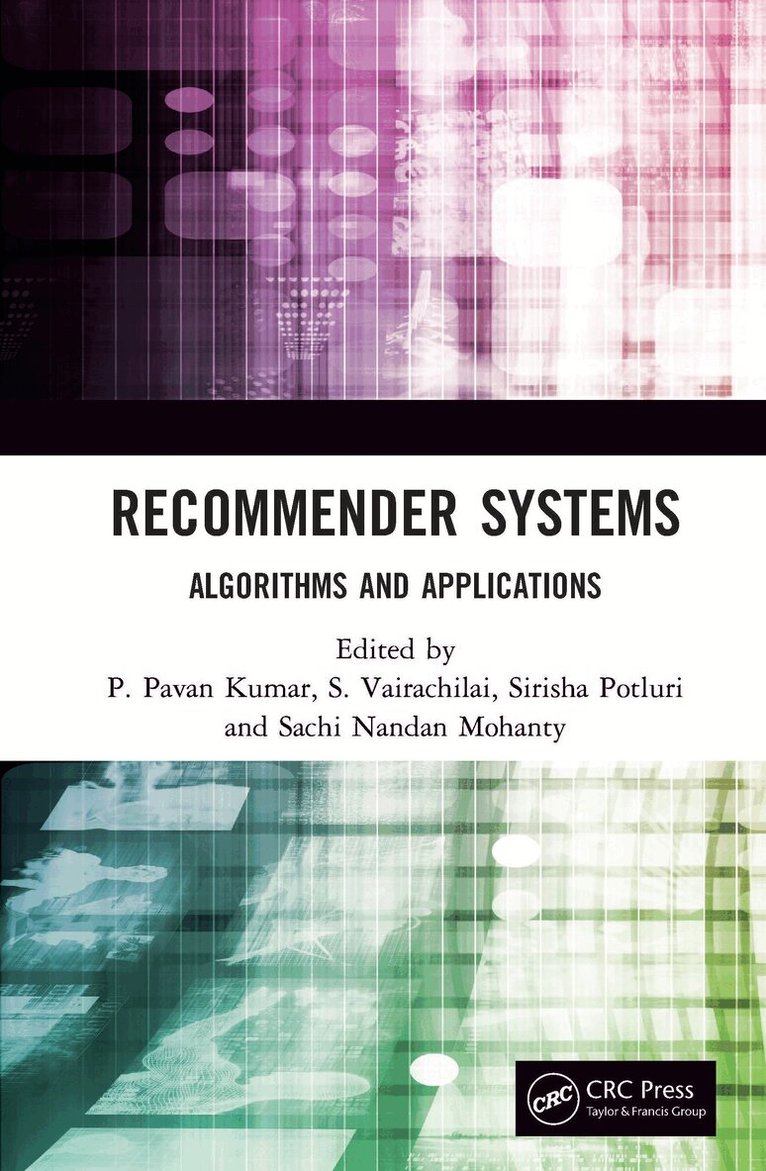
Recommender systems use information filtering to predict user preferences. They are becoming a vital part of e-business and are used in a wide variety of industries, ranging from entertainment and social networking to information technology, tourism, education, agriculture, healthcare, manufacturing, and retail. Recommender Systems: Algorithms and Applications dives into the theoretical underpinnings of these systems and looks at how this theory is applied and implemented in actual systems.
The book examines several classes of recommendation algorithms, including
Machine learning algorithms
Community detection algorithms
Filtering algorithms
Various efficient and robust product recommender systems using machine learning algorithms are helpful in filtering and exploring unseen data by users for better prediction and extrapolation of decisions. These are providing a wider range of solutions to such challenges as imbalanced data set problems, cold-start problems, and long tail problems. This book also looks at fundamental ontological positions that form the foundations of recommender systems and explain why certain recommendations are predicted over others.
Techniques and approaches for developing recommender systems are also investigated. These can help with implementing algorithms as systems and include
A latent-factor technique for model-based filtering systems
Collaborative filtering approaches
Content-based approaches
Finally, this book examines actual systems for social networking, recommending consumer products, and predicting risk in software engineering projects.
785 kr
Läs direkt efter köp
Recommender systems use information filtering to predict user preferences. They are becoming a vital part of e-business and are used in a wide variety of industries, ranging from entertainment and social networking to information technology, tourism, education, agriculture, healthcare, manufacturing, and retail. Recommender Systems: Algorithms and Applications dives into the theoretical underpinnings of these systems and looks at how this theory is applied and implemented in actual systems.
The book examines several classes of recommendation algorithms, including
Machine learning algorithms
Community detection algorithms
Filtering algorithms
Various efficient and robust product recommender systems using machine learning algorithms are helpful in filtering and exploring unseen data by users for better prediction and extrapolation of decisions. These are providing a wider range of solutions to such challenges as imbalanced data set problems, cold-start problems, and long tail problems. This book also looks at fundamental ontological positions that form the foundations of recommender systems and explain why certain recommendations are predicted over others.
Techniques and approaches for developing recommender systems are also investigated. These can help with implementing algorithms as systems and include
A latent-factor technique for model-based filtering systems
Collaborative filtering approaches
Content-based approaches
Finally, this book examines actual systems for social networking, recommending consumer products, and predicting risk in software engineering projects.
1 003 kr
Läs direkt efter köp
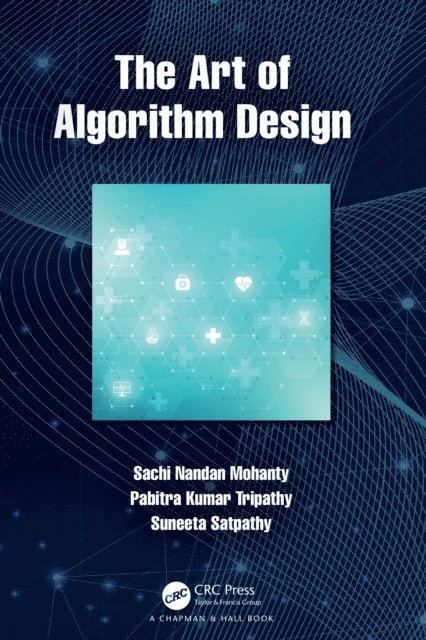
The Art of Algorithm Design is a complementary perception of all books on algorithm design and is a roadmap for all levels of learners as well as professionals dealing with algorithmic problems. Further, the book provides a comprehensive introduction to algorithms and covers them in considerable depth, yet makes their design and analysis accessible to all levels of readers. All algorithms are described and designed with a "pseudo-code" to be readable by anyone with little knowledge of programming.
This book comprises of a comprehensive set of problems and their solutions against each algorithm to demonstrate its executional assessment and complexity, with an objective to:
Understand the introductory concepts and design principles of algorithms and their complexities
Demonstrate the programming implementations of all the algorithms using C-Language
Be an excellent handbook on algorithms with self-explanatory chapters enriched with problems and solutions
While other books may also cover some of the same topics, this book is designed to be both versatile and complete as it traverses through step-by-step concepts and methods for analyzing each algorithmic complexity with pseudo-code examples. Moreover, the book provides an enjoyable primer to the field of algorithms.
This book is designed for undergraduates and postgraduates studying algorithm design.
1 003 kr
Läs direkt efter köp
The Art of Algorithm Design is a complementary perception of all books on algorithm design and is a roadmap for all levels of learners as well as professionals dealing with algorithmic problems. Further, the book provides a comprehensive introduction to algorithms and covers them in considerable depth, yet makes their design and analysis accessible to all levels of readers. All algorithms are described and designed with a "pseudo-code" to be readable by anyone with little knowledge of programming.
This book comprises of a comprehensive set of problems and their solutions against each algorithm to demonstrate its executional assessment and complexity, with an objective to:
Understand the introductory concepts and design principles of algorithms and their complexities
Demonstrate the programming implementations of all the algorithms using C-Language
Be an excellent handbook on algorithms with self-explanatory chapters enriched with problems and solutions
While other books may also cover some of the same topics, this book is designed to be both versatile and complete as it traverses through step-by-step concepts and methods for analyzing each algorithmic complexity with pseudo-code examples. Moreover, the book provides an enjoyable primer to the field of algorithms.
This book is designed for undergraduates and postgraduates studying algorithm design.
2 406 kr
Läs direkt efter köp
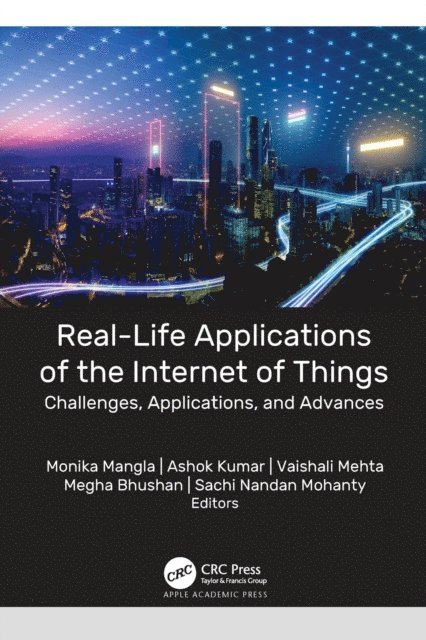
This new volume provides an overview of the Internet of Things along with its architectures, its vital technologies, and their uses in our daily life. The book explores the integration of IoT with other emerging technologies, such as blockchain and cloud. Topics in the volume cover the many powerful features and applications of IoT, such as for weather forecasting, in agriculture, in medical science, in surveillance systems, and much more.
The first section of the book covers many of the issues and challenges that arise from the Internet of Things (IoT), exploring security challenges, such as attack detection and prevention systems, as well as energy efficiency and resource management in IoT. The volume also introduces the use of IoT and smart technology in agricultural management, in healthcare diagnosis and monitoring, and in the financial industry. Chapters also focus on surveillance network technology, the technology shift from television to video streaming apps, using IoT–fog computing for smart healthcare, detection of anomalies in climate conditions, and even detection of illegal wood logging activity.
3 131 kr
Läs direkt efter köp
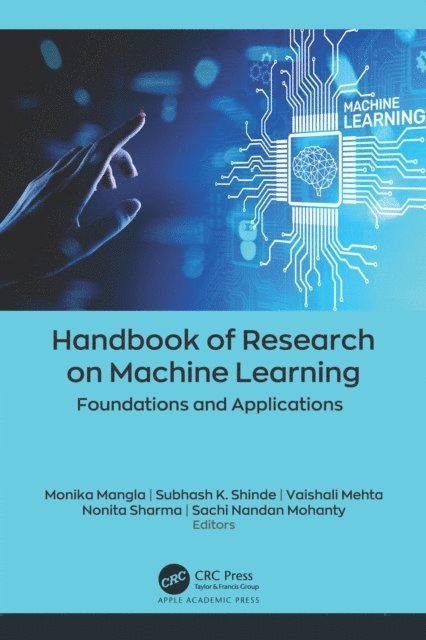
This volume takes the reader on a technological voyage of machine learning advancements, highlighting the systematic changes in algorithms, challenges, and constraints. The technological advancements in the ML arena have transformed and revolutionized several fields, including transportation, agriculture, finance, weather monitoring, and others. This book brings together researchers, authors, industrialists, and academicians to cover a vast selection of topics in ML, starting with the rudiments of machine learning approaches and going on to specific applications in healthcare and industrial automation.
The book begins with an overview of the ethics, security and privacy issues, future directions, and challenges in machine learning as well as a systematic review of deep learning techniques and provides an understanding of building generative adversarial networks. Chapters explore predictive data analytics for health issues. The book also adds a macro dimension by highlighting the industrial applications of machine learning, such as in the steel industry, for urban information retrieval, in garbage detection, in measuring air pollution, for stock market predictions, for underwater fish detection, as a fake news predictor, and more.
2 385 kr
Läs direkt efter köp
This new volume provides an overview of the Internet of Things along with its architectures, its vital technologies, and their uses in our daily life. The book explores the integration of IoT with other emerging technologies, such as blockchain and cloud. Topics in the volume cover the many powerful features and applications of IoT, such as for weather forecasting, in agriculture, in medical science, in surveillance systems, and much more.
The first section of the book covers many of the issues and challenges that arise from the Internet of Things (IoT), exploring security challenges, such as attack detection and prevention systems, as well as energy efficiency and resource management in IoT. The volume also introduces the use of IoT and smart technology in agricultural management, in healthcare diagnosis and monitoring, and in the financial industry. Chapters also focus on surveillance network technology, the technology shift from television to video streaming apps, using IoT–fog computing for smart healthcare, detection of anomalies in climate conditions, and even detection of illegal wood logging activity.
3 131 kr
Läs direkt efter köp
This volume takes the reader on a technological voyage of machine learning advancements, highlighting the systematic changes in algorithms, challenges, and constraints. The technological advancements in the ML arena have transformed and revolutionized several fields, including transportation, agriculture, finance, weather monitoring, and others. This book brings together researchers, authors, industrialists, and academicians to cover a vast selection of topics in ML, starting with the rudiments of machine learning approaches and going on to specific applications in healthcare and industrial automation.
The book begins with an overview of the ethics, security and privacy issues, future directions, and challenges in machine learning as well as a systematic review of deep learning techniques and provides an understanding of building generative adversarial networks. Chapters explore predictive data analytics for health issues. The book also adds a macro dimension by highlighting the industrial applications of machine learning, such as in the steel industry, for urban information retrieval, in garbage detection, in measuring air pollution, for stock market predictions, for underwater fish detection, as a fake news predictor, and more.
2 189 kr
Läs direkt efter köp
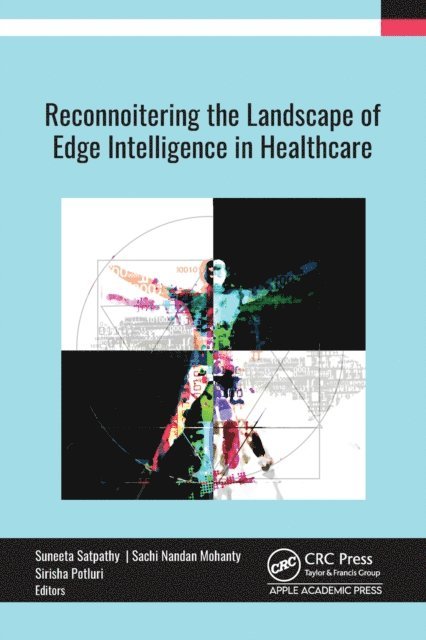
The revolution in healthcare as well as demand for efficient real-time healthcare services are driving the progression of edge computing, AI-mediated techniques, deep learning, and IoT applications for healthcare industries and cloud computing. Edge computing helps to meet the demand for newer and more sophisticated healthcare systems that are more personalized and that match the speed of modern life. With applications of edge computing, automated intelligence and intuitions are incorporated into existing healthcare analysis tools for identifying, forecasting, and preventing high-risk diseases.
Reconnoitering the Landscape of Edge Intelligence in Healthcare provides comprehensive research on edge intelligence technology with the emphasis on application in the healthcare industry. It covers all the various areas of edge intelligence for data analysis in healthcare, looking at the emerging technologies such as AI-based techniques, machine learning, IoT, cloud computing, and deep learning with illustrations of the design, implementation, and management of smart and intelligent healthcare systems.
Chapters showcase the advantages and highlights of the adoption of the intelligent edge models toward smart healthcare infrastructure. The book also addresses the increased need for a high level of medical data security while transferring real-time data to cloud-based architecture, a matter of prime concern for both patient and doctor. Topics include edge intelligence for wearable sensor technologies and their applications for health monitoring, the various edge computing techniques for disease prediction, e-health services and e-security solutions through IoT devices that aim to improve the quality of care for transgender patients, smart technology in ambient assisted living, the role of edge intelligence in limiting virus spread during pandemics, neuroscience in decoding and analysis of visual perception from the neural patterns and visual image reconstruction, and more.
The technology addressed include energy aware cross-layer routing protocol (ECRP), OMKELM-IDS technique, graphical user interface (GUI), IOST (an ultra-fast, decentralized blockchain platform), etc.
This volume will be helpful to engineering students, research scholars, and manufacturing industry professionals in the fields of engineering applications initiatives on AI, machine learning, and deep learning techniques for edge computing.
2 189 kr
Läs direkt efter köp
The revolution in healthcare as well as demand for efficient real-time healthcare services are driving the progression of edge computing, AI-mediated techniques, deep learning, and IoT applications for healthcare industries and cloud computing. Edge computing helps to meet the demand for newer and more sophisticated healthcare systems that are more personalized and that match the speed of modern life. With applications of edge computing, automated intelligence and intuitions are incorporated into existing healthcare analysis tools for identifying, forecasting, and preventing high-risk diseases.
Reconnoitering the Landscape of Edge Intelligence in Healthcare provides comprehensive research on edge intelligence technology with the emphasis on application in the healthcare industry. It covers all the various areas of edge intelligence for data analysis in healthcare, looking at the emerging technologies such as AI-based techniques, machine learning, IoT, cloud computing, and deep learning with illustrations of the design, implementation, and management of smart and intelligent healthcare systems.
Chapters showcase the advantages and highlights of the adoption of the intelligent edge models toward smart healthcare infrastructure. The book also addresses the increased need for a high level of medical data security while transferring real-time data to cloud-based architecture, a matter of prime concern for both patient and doctor. Topics include edge intelligence for wearable sensor technologies and their applications for health monitoring, the various edge computing techniques for disease prediction, e-health services and e-security solutions through IoT devices that aim to improve the quality of care for transgender patients, smart technology in ambient assisted living, the role of edge intelligence in limiting virus spread during pandemics, neuroscience in decoding and analysis of visual perception from the neural patterns and visual image reconstruction, and more.
The technology addressed include energy aware cross-layer routing protocol (ECRP), OMKELM-IDS technique, graphical user interface (GUI), IOST (an ultra-fast, decentralized blockchain platform), etc.
This volume will be helpful to engineering students, research scholars, and manufacturing industry professionals in the fields of engineering applications initiatives on AI, machine learning, and deep learning techniques for edge computing.
1 754 kr
Läs direkt efter köp
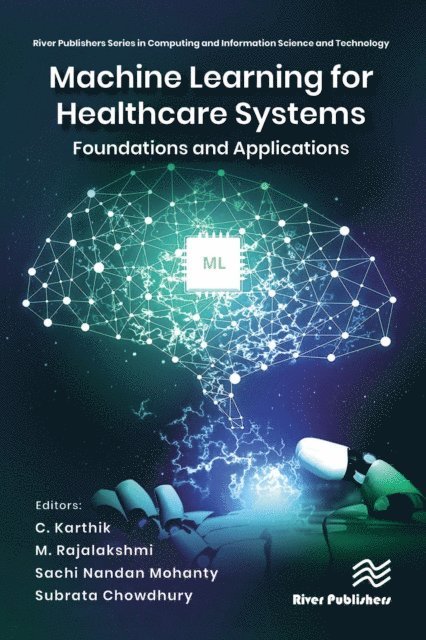
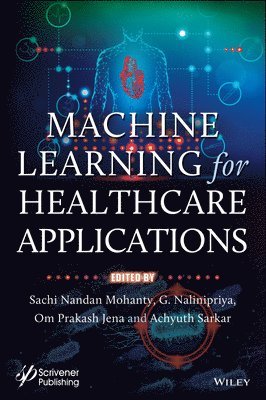
The introduction of digital technology in the healthcare industry is marked by ongoing difficulties with implementation and use. Slow progress has been made in unifying different healthcare systems, and much of the world still lacks a fully integrated healthcare system. The intrinsic complexity and development of human biology, as well as the differences across patients, have repeatedly demonstrated the significance of the human element in the diagnosis and treatment of illnesses. But as digital technology develops, healthcare providers will undoubtedly need to use it more and more to give patients the best treatment possible.
The extensive use of machine learning in numerous industries, including healthcare, has been made possible by advancements in data technologies, including storage capacity, processing capability, and data transit speeds. The need for a personalized medicine or "precision medicine" approach to healthcare has been highlighted by current trends in medicine due to the complexity of providing effective healthcare to each individual. Personalized medicine aims to identify, forecast, and analyze diagnostic decisions using vast volumes of healthcare data so that doctors may then apply them to each unique patient. These data may include, but are not limited to, information on a person’s genes or family history, medical imaging data, drug combinations, patient health outcomes at the community level, and natural language processing of pre-existing medical documentation.
This book provides various insights into machine learning techniques in healthcare system data and its analysis. Recent technological advancements in the healthcare system represent cutting-edge innovations and global research successes in performance modelling, analysis, and applications.
1 770 kr
Läs direkt efter köp
The introduction of digital technology in the healthcare industry is marked by ongoing difficulties with implementation and use. Slow progress has been made in unifying different healthcare systems, and much of the world still lacks a fully integrated healthcare system. The intrinsic complexity and development of human biology, as well as the differences across patients, have repeatedly demonstrated the significance of the human element in the diagnosis and treatment of illnesses. But as digital technology develops, healthcare providers will undoubtedly need to use it more and more to give patients the best treatment possible.
The extensive use of machine learning in numerous industries, including healthcare, has been made possible by advancements in data technologies, including storage capacity, processing capability, and data transit speeds. The need for a personalized medicine or "precision medicine" approach to healthcare has been highlighted by current trends in medicine due to the complexity of providing effective healthcare to each individual. Personalized medicine aims to identify, forecast, and analyze diagnostic decisions using vast volumes of healthcare data so that doctors may then apply them to each unique patient. These data may include, but are not limited to, information on a person’s genes or family history, medical imaging data, drug combinations, patient health outcomes at the community level, and natural language processing of pre-existing medical documentation.
This book provides various insights into machine learning techniques in healthcare system data and its analysis. Recent technological advancements in the healthcare system represent cutting-edge innovations and global research successes in performance modelling, analysis, and applications.
2 151 kr
Skickas inom 10-15 vardagar
795 kr
Skickas inom 10-15 vardagar
1 736 kr
Skickas inom 10-15 vardagar
766 kr
Kommande
1 944 kr
Skickas inom 10-15 vardagar
766 kr
Kommande
2 254 kr
Kommande
917 kr
Läs direkt efter köp
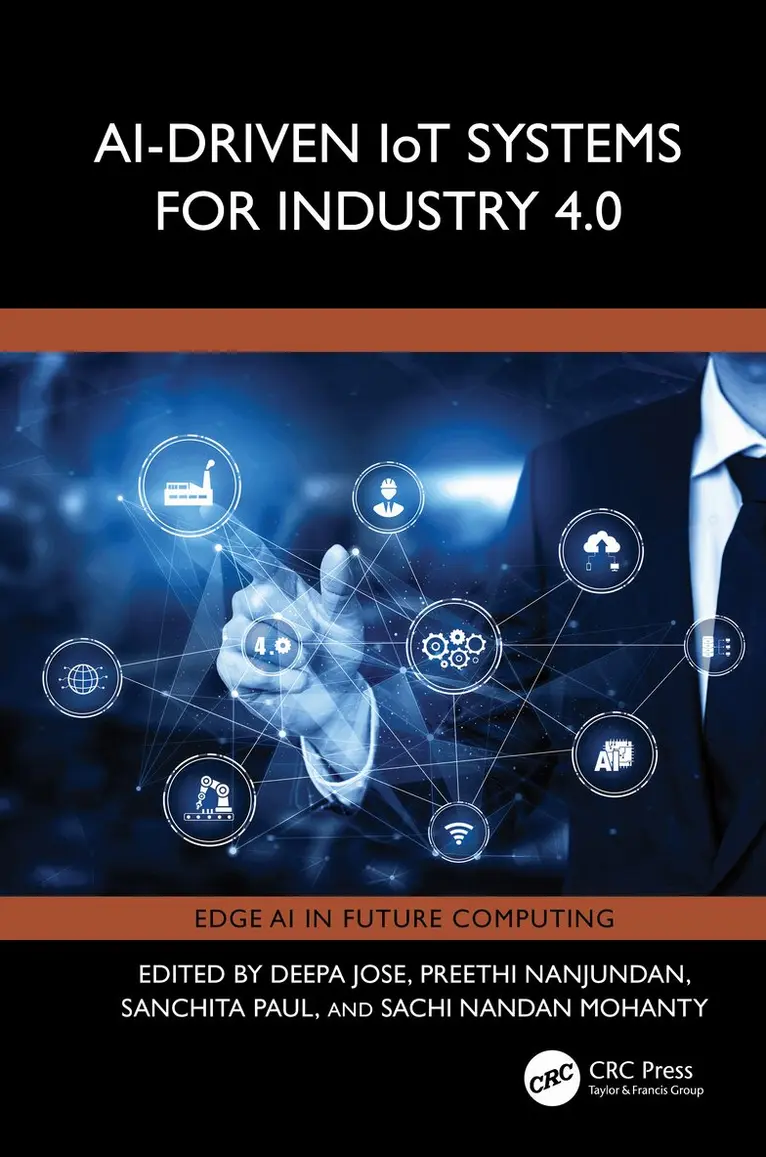
The purpose of this book is to discuss the trends and key drivers of Internet of Things (IoT) and artificial intelligence (AI) for automation in Industry 4.0. IoT and AI are transforming the industry thus accelerating efficiency and forging a more reliable automated enterprise. AI-driven IoT systems for Industry 4.0 explore current research to be carried out in the cutting-edge areas of AI for advanced analytics, integration of industrial IoT (IIoT) solutions and Edge components, automation in cyber-physical systems, world leading Industry 4.0 frameworks and adaptive supply chains, etc.
A thorough exploration of Industry 4.0 is provided, focusing on the challenges of digital transformation and automation. It covers digital connectivity, sensors, and the integration of intelligent thinking and data science. Emphasizing the significance of AI, the chapter delves into optimal decision-making in Industry 4.0. It extensively examines automation and hybrid edge computing architecture, highlighting their applications. The narrative then shifts to IIoT and edge AI, exploring their convergence and the use of edge AI for visual insights in smart factories. The book concludes by discussing the role of AI in constructing digital twins, speeding up product development lifecycles, and offering insights for decision-making in smart factories. Throughout, the emphasis remains on the transformative impact of deep learning and AI in automating and accelerating manufacturing processes within the context of Industry 4.0.
This book is intended for undergraduates, postgraduates, academicians, researchers, and industry professionals in industrial and computer engineering.
909 kr
Läs direkt efter köp
The purpose of this book is to discuss the trends and key drivers of Internet of Things (IoT) and artificial intelligence (AI) for automation in Industry 4.0. IoT and AI are transforming the industry thus accelerating efficiency and forging a more reliable automated enterprise. AI-driven IoT systems for Industry 4.0 explore current research to be carried out in the cutting-edge areas of AI for advanced analytics, integration of industrial IoT (IIoT) solutions and Edge components, automation in cyber-physical systems, world leading Industry 4.0 frameworks and adaptive supply chains, etc.
A thorough exploration of Industry 4.0 is provided, focusing on the challenges of digital transformation and automation. It covers digital connectivity, sensors, and the integration of intelligent thinking and data science. Emphasizing the significance of AI, the chapter delves into optimal decision-making in Industry 4.0. It extensively examines automation and hybrid edge computing architecture, highlighting their applications. The narrative then shifts to IIoT and edge AI, exploring their convergence and the use of edge AI for visual insights in smart factories. The book concludes by discussing the role of AI in constructing digital twins, speeding up product development lifecycles, and offering insights for decision-making in smart factories. Throughout, the emphasis remains on the transformative impact of deep learning and AI in automating and accelerating manufacturing processes within the context of Industry 4.0.
This book is intended for undergraduates, postgraduates, academicians, researchers, and industry professionals in industrial and computer engineering.
909 kr
Läs direkt efter köp
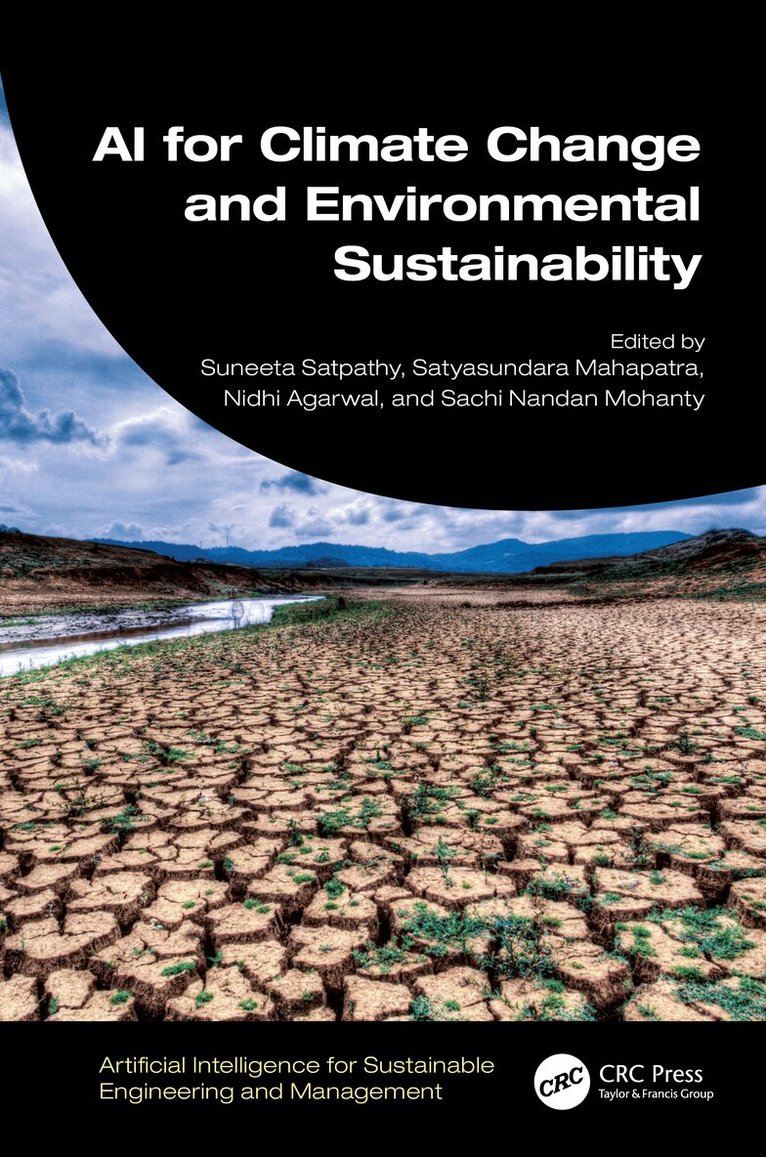
This book discusses the adverse effects of climatic changes on our planet. It examines AI-based tools and technologies and how they can assist in identifying energy emission reductions, CO2 removal, and support the development of greener transportation networks, monitoring deforestation, and forecasting extreme weather events.
AI for Climate Change and Environmental Sustainability identifies and discusses in detail the importance of environmental sustainability based on accomplishment of the UN''s 17 Sustainable Developmental Goals (SDGs). It presents the various AI-based possibilities for accelerating international efforts to safeguard the environment and conserve natural resources. The authors offer a comprehensive analysis of the emerging field of climate change in relation to Internet of Things, artificial intelligence, machine learning, and deep learning. The book discusses AI developments, applications, and best practices that will help us transition to a low-carbon future on both a regional and global scale. It provides case studies with analytical results pertinent to climate change and weather prediction and includes chapters with a research-oriented approach, which can encourage new developments in the field of sustainable climate and green environment.
The book can be used as a primary textbook for graduate and postgraduate students in technology and science, as well as a reference for researchers, academics, and IT professionals working on climate change and sustainability initiatives.
909 kr
Läs direkt efter köp
This book discusses the adverse effects of climatic changes on our planet. It examines AI-based tools and technologies and how they can assist in identifying energy emission reductions, CO2 removal, and support the development of greener transportation networks, monitoring deforestation, and forecasting extreme weather events.
AI for Climate Change and Environmental Sustainability identifies and discusses in detail the importance of environmental sustainability based on accomplishment of the UN''s 17 Sustainable Developmental Goals (SDGs). It presents the various AI-based possibilities for accelerating international efforts to safeguard the environment and conserve natural resources. The authors offer a comprehensive analysis of the emerging field of climate change in relation to Internet of Things, artificial intelligence, machine learning, and deep learning. The book discusses AI developments, applications, and best practices that will help us transition to a low-carbon future on both a regional and global scale. It provides case studies with analytical results pertinent to climate change and weather prediction and includes chapters with a research-oriented approach, which can encourage new developments in the field of sustainable climate and green environment.
The book can be used as a primary textbook for graduate and postgraduate students in technology and science, as well as a reference for researchers, academics, and IT professionals working on climate change and sustainability initiatives.
2 172 kr
Läs direkt efter köp