• Fri frakt över 249 kr
  • •
  • Snabba leveranser
  • •
  • Billiga böcker
Kundservice

Du är på sajten för privatpersoner.

Företag, bibliotek eller offentlig verksamhet?

Du handlar på classic.bokus.com, där alla dina funktioner finns intakta.
Till classic.bokus.com
Bokus logotyp. Gå till startsidan.
  • Erbjudanden
  • Nyheter
  • Student
  • Topplistor
  • Barn & ungdom
  • Bokus Play
  • E-böcker
  • Pocketböcker
  • Spel & pussel

10% rabatt på allt med kod: NYSTART10 →

Sidfot

Mina sidor

    Hjälp

    • Kundservice
    • Vanliga frågor och svar
    • Frakt och leverans
    • Retur vid ångerrätt
    • Reklamera vara
    • Betalning
    • Köpvillkor
    • Allmänna villkor
    • Information om webbplatsens tillgänglighet

    Om Bokus

    • Om oss
    • Pressrum
    • För studenter
    • För företag
    • För bibliotek och offentlig verksamhet
    • För leverantörer
    • Hållbarhet

    Populärt

    • Aktuella erbjudanden
    • Presentkort
    • Studentlitteratur
    • Nya böcker
    • Topplistor
    • Signerade böcker
    • Engelska böcker

    Inspiration

    • Boktips
    • BookTok
    • Populära bokserier
    • Barnbokskaraktärer
    • Populära författare
    Logotyp för Bokus
    Följ oss på Facebook (extern länk)Följ oss på Instagram (extern länk)Följ oss på YouTube (extern länk)Följ oss på TikTok (extern länk)
    bokus @ CookiesAnpassa cookiesIntegritetspolicyKöpvillkor
    Till Citymail hemsida (extern länk)Till Budbee hemsida (extern länk)Till Postnord hemsida (extern länk)Till Schenker hemsida (extern länk)Till Early Bird hemsida (extern länk)Till Walleys hemsida (extern länk)
    1. Naturvetenskap och teknik
    2. Teknik och industri
    3. Övrig teknik och tillämpad vetenskap

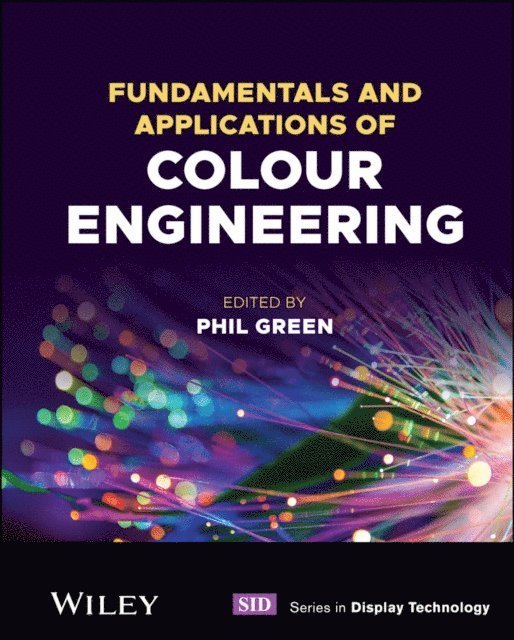
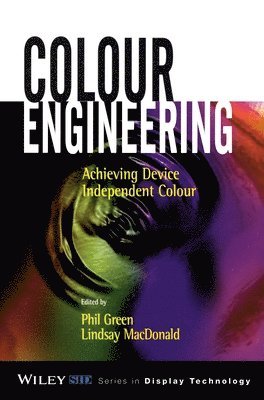
    Fundamentals and Applications of Colour Engineering

    AvPhil Green

    Inbunden, Engelska, 2023

    Del i serien Wiley Series in Display Technology

    1 431 kr

    Beställningsvara. Skickas inom 5-8 vardagar. Fri frakt över 249 kr.

    Beskrivning

    FUNDAMENTALS AND APPLICATIONS OF COLOUR ENGINEERING EXPERT OVERVIEW OF THE WORLD OF COLOUR ENGINEERING IN THE 21ST CENTURY, WITH NEW, UPDATED TECHNOLOGIES AND A MATLAB TOOLBOX Fundamentals and Applications of Colour Engineering provides important coverage on topics that hold the power to extend our knowledge of colour reproduction, such as colour measurement and appearance and the methods used, with additional discussion of the technologies responsible for reproducing colour across a wide range of devices, together with the colour management systems that are used to connect devices and exchange information. Composed of 20 chapters, the Editor and his team of expert contributors consider the new ICC.2 architecture, an approach that introduces an evolutionary step in colour engineering, ensuring wider possibilities for technology. The text also considers the emerging applications for advanced colour management, such as processing spectral data, handling HDR images, and the capture and reproduction of material appearance. The text is supported by a MATLAB toolbox of relevant functions and data. Fundamentals and Applications of Colour Engineering is a useful reference for anyone involved in the reproduction of colour and a strong supplementary course potential for master???s degrees with a colour science component. Fundamentals and Applications of Colour Engineering includes information on: Instruments and methods of colour measurement, colorimetry, and colour difference, and colour appearanceColour spaces and colour encodings, and characterizing input devices, displays and printersColour gamut communication and imaging standards, high dynamic range imaging, and HDRSensor adjustment in colour management, open source tools for colour engineering, and colour transform evaluationSupporting active learning with the inclusion of a toolbox of relevant functions and data, Fundamentals and Applications of Colour Engineering is an essential resource for students in relevant programs of study, and for professionals within colour engineering and reproduction looking to maximize their skill set and keep their skills updated.

    Produktinformation

    • Utgivningsdatum:2023-11-24
    • Mått:170 x 244 x 25 mm
    • Vikt:1 021 g
    • Format:Inbunden
    • Språk:Engelska
    • Serie:Wiley Series in Display Technology
    • Antal sidor:400
    • Förlag:John Wiley & Sons Inc
    • ISBN:9781119827184

    Utforska kategorier

    • Övrig teknik och tillämpad vetenskap inom Naturvetenskap och teknik
    • Systemvetenskap och AI inom Data och IT
    • Grafik och bildbehandling inom Data och IT

    Mer om författaren

    PHIL GREEN is currently Professor of Colour Imaging in the Department of Computer Science at NTNU, Gjøvik, Norway, where he currently teaches cross-media colour reproduction, colour in interface design, colour appearance, advanced colour management, and colour science. Phil received his MSc from the University of Surrey, UK, and his PhD in Gamut Mapping and Colour Appearance from the Colour & Imaging Institute, University of Derby, UK. He is also Technical Secretary of the International Colour Consortium.

    Innehållsförteckning

    • Series Editor's Foreword xviiPreface xixIntroductory Notes xxi1 Instruments and Methods for the Colour Measurements Required in Colour Engineering 1Danny Rich1.1 Introduction 11.2 Visual Colorimetry 31.3 Analogue Simulation of Visual Colorimetry 71.4 Digital Simulation of Visual Colorimetry 121.5 Selecting and Using Colorimeters and Spectrocolorimeters 151.6 Geometric Requirements for Colour Measurements 181.7 Conclusions and Expectations 222 Colorimetry and Colour Difference 27Phil Green2.1 Introduction 272.2 Colorimetry 272.3 Normalization 282.4 Colour Matching Functions 292.5 Illuminants 292.6 Data for Observers and Illuminants 302.7 Range and Interval 302.8 Calculation of Chromaticity 312.9 Calculation of CIE 1976 Uniform Colour Spaces 312.10 Inversion of CIELAB Equations 342.11 Colour Difference 342.12 Problems with Using UCS Colour Difference 352.13 Uniformity of the Components of Colour Difference 352.14 Viewing Conditions 362.15 Surface Characteristics 372.16 Acceptability of Colour Differences 372.17 Overcoming the Limitations of UCS Colour Difference with Advanced Colour Difference Metrics 372.18 CIE94 372.19 CIEDE2000 392.20 Progress on Colour Difference Metrics since CIEDE2000 412.21 3D Colour Difference 412.22 Colour Difference in High Luminance Conditions 412.23 Colour Difference Formulas Based on Colour Appearance Models 412.24 Limitations in the Use of Advanced Colour Difference Metrics in Colour Imaging 422.25 Basis Conditions 422.26 Colour Difference in Complex Images 432.27 Acceptability and Perceptibility 442.28 Large vs Small Differences 442.29 Deriving Colour Difference Tolerances 442.30 Sample Preparation 452.31 Psychophysical Experiments 452.32 Colour Difference Judgements by Observers with a Colour Vision Deficiency 462.33 Calculating Colour Tolerances from Experimental Data 462.34 Calculation of Discrimination Ellipsoids and Tolerance Distributions 462.34.1 Calculation of Parametric Constants in Weightings Functions 472.35 Calculation of Acceptability Thresholds 482.36 Evaluating Colour Difference Metrics 482.37 Conclusion 483 Fundamentals of Device Characterization 53Phil Green3.1 Introduction 533.2 Characterization Methods 543.3 Numerical Models 573.4 Look-Up Tables with Interpolation 633.5 Evaluating Accuracy -- Training and Test Data 674 Characterization of Input Devices 71Phil Green4.1 Input Channels 714.2 Characterization Goals 724.3 Transform Encoding 734.4 Dynamic Range 734.5 Input Characterization Methods 744.5.1 Scanners 744.6 Targets 744.7 Modelling 744.7.1 Digital Cameras 754.8 Target-Based Characterization 754.9 Targets 754.10 Modelling 765 Color Processing for Digital Cameras 81Michael S. Brown5.1 Introduction 815.2 Basics of a Camera Sensor 825.3 The Camera Pipeline 835.4 Multi-Frame Processing 935.5 Towards the Neural ISP 945.6 Concluding Remarks 956 Display Calibration 99Catherine Meininger, Tom Lianza, and Grace Annese6.1 Introduction 996.2 From CRT to Contemporary Display Technologies 996.3 The Display Never Sleeps... Merging Television and Computer Display Standards 1026.4 The Evolution of Display Calibration Capabilities 1036.5 Measurement Set Requirements 1116.6 Calibration Validation Methodologies 1136.7 Low Blue Light Developments 1146.8 Conclusions 1177 Characterizing Hard Copy Printers 119Phil Green7.1 Introduction 1197.2 Properties of Hard Copy Printers 1207.3 Substrates and Inks 1207.4 Colour Gamut 1207.5 Halftoning 1217.6 Mechanical Printing Systems 1227.7 Printing Conditions 1227.8 Digital Systems 1227.9 RGB Printers 1227.10 Test Charts 1237.11 Printer Models 1247.12 Block Dye Model 1257.13 Physical Models 1267.14 Numerical Models and Look-up Tables 1347.15 Inverting the Model 1377.16 Multi-Colour and Spot Colour Characterization 1377.17 Spectral Characterization 1377.18 White Ink 1387.19 Reducing the Frequency of Characterization 1387.20 Conclusions 1388 Colour Encodings 143Phil Green8.1 Introduction 1438.2 Colour Encoding Components 1438.3 Colour Spaces 1448.4 Device and Colour Space Encodings 1448.5 Colorimetric Interpretation 1448.6 Image State 1458.7 Standard 3-Component Colour Space Encodings 1468.8 Colour Gamut 1468.8.1 Extended Colour Gamut 1478.9 Precision and Range 1478.9.1 High Dynamic Range 1488.9.2 Negative Values 1498.10 Luminance/Chrominance Encodings 1498.11 Conversion to Colorimetry 1508.12 Implementation Issues 1508.13 File Formats 1529 Colour Gamut Communication 155Kiran Deshpande9.1 Introduction 1559.2 How to Describe Colour Gamuts 1579.3 How to Obtain a Colour Gamut of a Printing System 1629.4 How to Obtain a Colour Gamut of a Display 1639.5 How to Calculate Gamut Volume 1639.6 How to Analyse Colour Gamuts 1649.7 How to Visualize Colour Gamuts 1679.8 How to Communicate Colour Gamuts 1719.9 Summary 17310 The ICC Colour Management Architecture 177Phil Green10.1 Origins of the ICC 17710.2 Fundamentals of the ICC Architecture: The PCS, the ICC Profile, Transforms and the CMM 17810.3 Other CMM Operations 18510.4 Workflows 18710.5 Current Status of ICC.1 18810.6 ICC.2 18911 iccMAX Color Management -- Philosophy, Overview, and Basics 193Max Derhak11.1 Background and Philosophy Leading to iccMAX 19311.2 Overview 19411.3 Creating Transforms 20711.4 Specification Subsets via ICSs 20911.5 Domain Specific Examples 21011.6 Getting Started with iccMAX (Where Color Engineering Comes to Play) 21211.7 Conclusion 21312 Sensor Adjustment 215Phil Green12.1 Introduction 21512.2 Aims of Sensor Adjustment 21512.3 Luminance Adjustment 21612.4 Chromatic Adaptation 21812.5 Material-Equivalent Adjustment 22012.6 Local Adaptation 22112.7 Incomplete Adaptation 22213 Evaluating Colour Transforms 227Phil Green13.1 Introduction 22713.2 Accuracy 22713.3 Cost 23213.4 Subjective Preference 23314 Appearance Beyond Colour: Gloss and Translucency Perception 239Davit Gigilashvili and Jean-Baptiste Thomas14.1 Introduction 23914.2 Gloss Perception 24014.3 Translucency Perception 24414.4 Interaction among Appearance Attributes 24814.5 Impact on Colour Technologies 25014.6 Conclusion 25215 Colour Management of Material Appearance 259Tanzima Habib15.1 Introduction 25915.2 Material Appearance Modelling 26015.3 Appearance Support in Colour Management 26315.4 A Colour Management Workflow for Material Appearance 26415.5 Conclusion 26916 Color on the Web 271Chris Lilley16.1 Early History 27116.2 Color on the Legacy Web 27216.3 Wide Color Gamut (WCG) Comes to the Web 27716.4 Color on the Wide Gamut Web 28116.5 HDR Comes to the Web 28617 High Dynamic Range Imaging 293Mekides Assefa Abebe17.1 Introduction and Background 29317.2 High Dynamic Range Imaging 29617.3 Conclusion 30818 HDR and Wide Color Gamut Display Technologies and Considerations 311Timo Kunkel and Ajit Ninan18.1 Introduction 31118.2 Early HDR Display Systems 31218.3 Transmissive Displays 31318.4 Emissive Displays 31718.5 Projection Systems 31918.6 Reflective Displays 32018.7 Achieving Wide Color Gamuts 32118.8 Spatial Display Properties 32618.9 Temporal Display Properties 32718.10 Signaling 32818.11 Characterization and Calibration 33018.12 Ambient Effects 33018.13 Conclusion 33219 Colour in AR and VR 335Michael J. Murdoch19.1 Introduction 33519.2 Colour Synthesis in AR and VR Displays 33719.3 Colour Appearance in AR and VR 34219.4 Colour Imaging and Graphics in AR and VR 35019.5 Conclusion 35120 Colour Engineering Toolbox and Other Open Source Tools 355Phil Green20.1 Colour Engineering Toolbox 2.0 35520.2 Polar Calculations 35720.3 Media-Relative and PCS Scaling 35720.4 DemoIccMax 36020.5 Color.js 36020.6 Little CMS 36020.7 Argyll 36120.8 Colour 361References 361Index 363