• Fri frakt över 249 kr
  • •
  • Snabba leveranser
  • •
  • Billiga böcker
Kundservice

Du är på sajten för privatpersoner.

Företag, bibliotek eller offentlig verksamhet?

Du handlar på classic.bokus.com, där alla dina funktioner finns intakta.
Till classic.bokus.com
Bokus logotyp. Gå till startsidan.
  • Erbjudanden
  • Nyheter
  • Student
  • Topplistor
  • Barn & ungdom
  • Bokus Play
  • E-böcker
  • Pocketböcker
  • Spel & pussel

10% studentrabatt med kod TERM26

Sidfot

Mina sidor

    Hjälp

    • Kundservice
    • Vanliga frågor och svar
    • Frakt och leverans
    • Retur vid ångerrätt
    • Reklamera vara
    • Betalning
    • Köpvillkor
    • Allmänna villkor
    • Information om webbplatsens tillgänglighet

    Om Bokus

    • Om oss
    • Pressrum
    • För studenter
    • För företag
    • För bibliotek och offentlig verksamhet
    • För leverantörer
    • Hållbarhet

    Populärt

    • Aktuella erbjudanden
    • Presentkort
    • Studentlitteratur
    • Nya böcker
    • Topplistor
    • Signerade böcker
    • Engelska böcker

    Inspiration

    • Boktips
    • BookTok
    • Populära bokserier
    • Barnbokskaraktärer
    • Populära författare
    Logotyp för Bokus
    Följ oss på Facebook (extern länk)Följ oss på Instagram (extern länk)Följ oss på YouTube (extern länk)Följ oss på TikTok (extern länk)
    bokus @ CookiesAnpassa cookiesIntegritetspolicyKöpvillkor
    Till Citymail hemsida (extern länk)Till Budbee hemsida (extern länk)Till Postnord hemsida (extern länk)Till Schenker hemsida (extern länk)Till Early Bird hemsida (extern länk)Till Walleys hemsida (extern länk)
    1. Naturvetenskap och teknik
    2. Teknik och industri
    3. Tillverkningsteknik

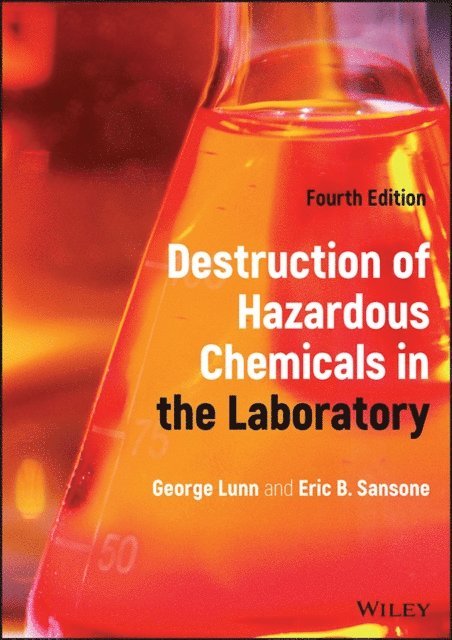
    Destruction of Hazardous Chemicals in the Laboratory

    AvGeorge Lunn,Eric B. Sansone

    Inbunden, Engelska, 2023

    2 046 kr

    Beställningsvara. Skickas inom 5-8 vardagar. Fri frakt över 249 kr.

    Beskrivning

    Destruction of Hazardous Chemicals in the Laboratory Single volume reference providing procedural information for the destruction of a wide variety of hazardous chemicals Destruction of Hazardous Chemicals in the Laboratory is a practical reference that describes procedures for the destruction of a comprehensive list of hazardous chemicals and provides general methods for the destruction of hazardous chemicals in the laboratory without the need for exotic reagents and equipment. Unlike most other sources on this subject, detailed reaction parameters are provided to readers. These details will help the reader decide if a procedure will be appropriate. To further aid in reader comprehension, numerous tables throughout the book allow for ready comparison of procedures. Destruction of Hazardous Chemicals in the Laboratory also describes the critical aspects of various protocols (e.g., UV lamp type and rate of ozone flow). The updated fourth edition Includes an updated survey of the literature from 2012-2021 and features data mined from 1,500 papers. It also describes recent examples of methods that are generally applicable to organic compounds and greatly expands the section on methods for the destruction of pharmaceuticals in the laboratory. In this book, readers can expect to find detailed information on: Specific methods for the destruction of hazardous chemicals in the laboratory, such as aflatoxins, butyllithium, complex metal hydrides, ethidium bromide, MPTP, nitrosamines, and polycyclic aromatic hydrocarbonsMethods for the destruction of pharmaceuticals in the laboratory, such as those using ozone, persulfate, and potassium permanganate as well as photolytic degradation proceduresProcedures for drying organic solvents A discussion of the issues concerning nitrosamine formation during the destruction process, particularly when sodium hypochlorite is usedA variety of indexes, including a general index, cross index of pharmaceuticals and destruction procedures, cross index of dyes and destruction procedures, and cross index of names for dyes and biological stainsDestruction of Hazardous Chemicals in the Laboratory is of immense value to researchers in the laboratory by enabling them to quickly and efficiently get rid of residual amounts of hazardous chemicals when a series of experiments has ended. The procedures in the text can also be incorporated into laboratory protocols.

    Produktinformation

    • Utgivningsdatum:2023-01-09
    • Mått:263 x 185 x 56 mm
    • Vikt:1 855 g
    • Format:Inbunden
    • Språk:Engelska
    • Antal sidor:880
    • Upplaga:4
    • Förlag:John Wiley & Sons Inc
    • ISBN:9781119848806

    Utforska kategorier

    • Tillverkningsteknik inom Naturvetenskap och teknik

    Mer om författaren

    George Lunn, Ph.D., has been working as a review chemist for the FDA’s Office of Pharmaceutical Quality since 1996. Previously he was a senior research scientist in the Environmental Control and Research Program at the NCI-Frederick Cancer Research and Development Center. Eric B. Sansone, Ph.D., was the director of the Environmental Control and Research Program at the NCI-Frederick Cancer Research and Development Center until his retirement.

    Innehållsförteckning

    • Preface xiAcknowledgments xiiiIntroduction 1Safety considerations 9Nitrosamine Formation 12Sodium Hypochlorite 15Nickel–Aluminum Alloy 18Potassium Permanganate 19Specific Methods for the Destruction of Hazardous Chemicals in the Laboratory 25Acetonitrile 27Acid Halides and Anhydrides 31Aflatoxins 35Alkali and Alkaline Earth Metals 43Alkali Metal Alkoxides 47Anatoxin-A 49Aromatic Amines 53Arsenic 61Azides 65Azo and Azoxy Compounds and Tetrazenes 73Boron Trifluoride and Inorganic Fluorides 79Botulinum Toxins 83Brevetoxins 87Butyllithium 91Calcium Carbide 95Carbamic Acid Esters 97Carbofuran 101Chloromethylsilanes and Silicon Tetrachloride 103N-Chlorosuccinimide and Chloramine-T 105Chlorosulfonic Acid 107Chromium(VI) 109Citrinin 115Complex Metal Hydrides 123Cyanides and Cyanogen Bromide 129Cylindrospermopsin 137Diisopropyl Fluorophosphate 141Dimethyl Sulfate and Related Compounds 149Dyes and Biological Stains 161Ethidium Bromide 195Haloethers 203Halogenated Compounds 207Halogens 223Heavy Metals 227Hexamethylphosphoramide 233Hydrazines 235Hypochlorites 247Mercury 2512-Methylaziridine 2571-Methyl-4-phenyl-1,2,3,6-tetrahydropyridine (MPTP) 261Microcystins 2654-Nitrobiphenyl 2753-Nitrofluoranthene and 3-Aminofluoranthene 277Nitrogen Tetroxide 281N-Nitroso Compounds: Nitrosamides 283N-Nitroso Compounds: Nitrosamines 295Ochratoxin A 307Okadaic Acid 315Organic nitriles 319Osmium tetroxide 321Palytoxin 323Patulin 327Peracids 333Perchlorates 335Peroxides and Hydroperoxides 339Phenol 343Phosgene 347Phosphorus and Phosphorus Pentoxide 351Picric Acid 355Polycyclic Aromatic Hydrocarbons 357Polycyclic Heterocyclic Hydrocarbons 367Potassium Permanganate 381β-Propiolactone 383Protease Inhibitors 385Ricin 389Saxitoxin 393Selenium Compounds 397Sodium Amide 399Sterigmatocystin 401Sulfonyl Fluoride Enzyme Inhibitors 407Sulfur-Containing Compounds 413T-2 Toxin and Other Tricothecenes 419Tetrodotoxin 425Triacetone Triperoxide 429Uranyl Compounds 433Destruction of Pharmaceuticals 437General Considerations 439Potassium Permanganate 451Nickel–Aluminum Alloy Reduction 467Fenton Reaction 473Hydrogen Peroxide 479Ozone 481Ferrate 497Persulfate 505Hydrogen Peroxide and Horseradish Peroxidase 513Specific Degradation Procedures for ß-Lactams 515Decontamination of Aqueous Solutions 517Miscellaneous Chemical Degradation Procedures 523General Considerations for Photolytic Procedures 535Photolysis Without Added Reactants (UV Only) 537Photolysis with Hydrogen Peroxide (UV/H2O2) 555Photo-Fenton Reaction 573Photolysis with Titanium Dioxide (UV/TiO2) 589Photolysis with Zinc Oxide (UV/ZnO) 605Photolysis with Ozone (UV/O3) 609Photolysis with Persulfate (UV/Persulfate) 615Photolysis with Chlorine (UV/Cl2) 631Miscellaneous Photolytic Procedures (UV/Miscellaneous) 643Procedures Classified by Method 649General Considerations 651Potassium Permanganate 655Fenton Reaction 659Ozone 667Persulfate 677Miscellaneous Procedures 683Photolysis Without Added Reactants (UV only) 691Photolysis with Hydrogen Peroxide (UV/H2O2) 697Photo-Fenton Reaction 707Photolysis with Titanium Dioxide (UV/TiO2) 715Photolysis with Zinc Oxide (UV/ZnO) 727Photolysis with Ozone (UV/O3) 735Photolysis with Persulfate (UV/Persulfate) 741Photolysis with Chlorine (UV/Cl2) 747Biologicals 751Appendixes 777Appendix I: Procedures for Drying Organic Solvents 779Appendix II: Safety Considerations With Potassium Permanganate 783Cross-Index of Names for Dyes and Biological Stains 791Cross-Index of Methods Used for Specific Dyes and Biological Stains 813Cross-Index of Methods Used for Pharmaceuticals 817Name Index 837