• Fri frakt över 249 kr
  • •
  • Snabba leveranser
  • •
  • Billiga böcker
Kundservice

Du är på sajten för privatpersoner.

Företag, bibliotek eller offentlig verksamhet?

Du handlar på classic.bokus.com, där alla dina funktioner finns intakta.
Till classic.bokus.com
Bokus logotyp. Gå till startsidan.
  • Erbjudanden
  • Nyheter
  • Student
  • Topplistor
  • Barn & ungdom
  • Bokus Play
  • E-böcker
  • Pocketböcker
  • Spel & pussel

10% studentrabatt med kod TERM26

Sidfot

Mina sidor

    Hjälp

    • Kundservice
    • Vanliga frågor och svar
    • Frakt och leverans
    • Retur vid ångerrätt
    • Reklamera vara
    • Betalning
    • Köpvillkor
    • Allmänna villkor
    • Information om webbplatsens tillgänglighet

    Om Bokus

    • Om oss
    • Pressrum
    • För studenter
    • För företag
    • För bibliotek och offentlig verksamhet
    • För leverantörer
    • Hållbarhet

    Populärt

    • Aktuella erbjudanden
    • Presentkort
    • Studentlitteratur
    • Nya böcker
    • Topplistor
    • Signerade böcker
    • Engelska böcker

    Inspiration

    • Boktips
    • BookTok
    • Populära bokserier
    • Barnbokskaraktärer
    • Populära författare

    Mina sidor

      Hjälp

      • Kundservice
      • Vanliga frågor och svar
      • Frakt och leverans
      • Retur vid ångerrätt
      • Reklamera vara
      • Betalning
      • Köpvillkor
      • Allmänna villkor
      • Information om webbplatsens tillgänglighet

      Om Bokus

      • Om oss
      • Pressrum
      • För studenter
      • För företag
      • För bibliotek och offentlig verksamhet
      • För leverantörer
      • Hållbarhet

      Populärt

      • Aktuella erbjudanden
      • Presentkort
      • Studentlitteratur
      • Nya böcker
      • Topplistor
      • Signerade böcker
      • Engelska böcker

      Inspiration

      • Boktips
      • BookTok
      • Populära bokserier
      • Barnbokskaraktärer
      • Populära författare
      Logotyp för Bokus
      Följ oss på Facebook (extern länk)Följ oss på Instagram (extern länk)Följ oss på YouTube (extern länk)Följ oss på TikTok (extern länk)
      bokus @ CookiesAnpassa cookiesIntegritetspolicyKöpvillkor
      Till Citymail hemsida (extern länk)Till Budbee hemsida (extern länk)Till Postnord hemsida (extern länk)Till Schenker hemsida (extern länk)Till Early Bird hemsida (extern länk)Till Walleys hemsida (extern länk)
      1. Kultur
      2. Arkitektur

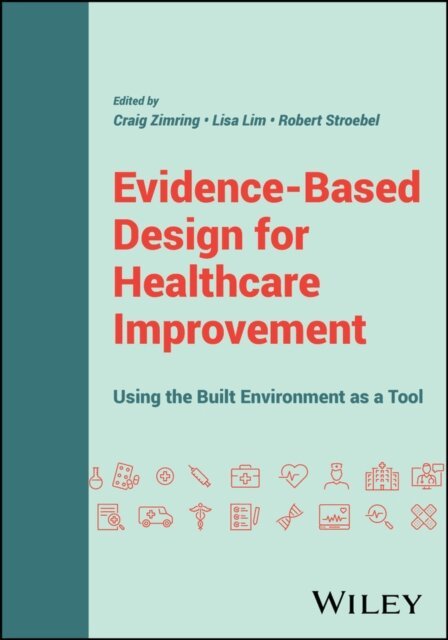
      Evidence-Based Design for Healthcare Improvement

      Using the Built Environment as a Tool

      AvCraig Zimring,Lisa Lim

      Häftad, Engelska, 2026

      866 kr

      Beställningsvara. Skickas inom 5-8 vardagar. Fri frakt över 249 kr.

      Beskrivning

      Evidence-Based Design for Healthcare ImprovementA practical and timely guide to using Evidence-Based Design (EBD) to transform healthcare.Evidence-Based Design for Healthcare Improvement shows how the built environment can be a powerful tool for advancing healthcare outcomes. With accessible, well-illustrated chapters written by leading experts in EBD in collaboration with clinicians, this book bridges the gap between research and practice.Focusing on areas where design has the greatest impact—teamwork, safety and infection prevention, patient experience, lighting, wayfinding, and inpatient room design—each chapter offers a concise introduction, key studies, successful project examples, and actionable design strategies.Inside, readers will find: How EBD addresses core challenges in U.S. healthcare—directly and indirectlyWays that design can drive, not just reflect, change in healthcare systemsResearch-based strategies to improve outcomes for patients, families, staff, and organizationsSpecific examples where EBD has measurably improved healthcare environmentsPractical guidance for designers, health system leaders, and researchers—plus a look at what’s nextWhether you’re a healthcare executive, architect, researcher, or student, Evidence-Based Design for Healthcare Improvement is an essential resource for harnessing the built environment to deliver better care.Foreword by Dr. Hamilto. List of Contributors:David Allison, Clemson UniversitySheila J. Bosch, University of FloridaMark Burnett, Scott County HospitalIlene Busch-Vishniac, BeoGrin ConsultingHui Cai, Georgia Institute of TechnologyJoshua D. Crews, Crews + Co.Jennifer DuBose, Georgia State UniversityHeather Fellows, Crews + Co.Mohammadhossein Ghasempourabadi, University of AlaskaLindsey B. Gottlieb, Emory University School of MedicineSaif Haq, Kennesaw State UniversityJesse T. Jacob, Emory University School of MedicineAnjali Joseph, Clemson UniversityLisa Lim, Korea Advanced Institute of Science and Technology (KAIST)Lesa N. Lorusso, Baptist HealthKari L. Love, Emory UniversityLorissa MacAllister, EnviahHerminia Machry, University of KansasZorana Mati´c, Northeastern UniversityMarc Matthews, Mayo ClinicMaureen Ann McHale Burke, Emory Goizueta Brain Health InstituteRaha Motamed Rastegar, Georgia Institute of TechnologyJoel Mumma, Emory University School of MedicineTatiana Orozco, Gresham SmithJennifer Pecina, Mayo ClinicScott Reeves, Medical University of South CarolinaDagmar Rittenbacher, Gresham SmithErica Ryherd, University of Nebraska – LincolnBonnie Sakallaris, GeorgeWashington UniversityChris P. Schieffer, Mayo ClinicBrock Slabach, National Rural Health AssociationKent Spreckelmeyer, University of KansasRobert Stroebel, Mayo ClinicShabboo Valipoor, University of FloridaEunhwa Yang, Georgia Institute of TechnologyChristina Ying Ying Chen, Mayo ClinicCraig Zimring, Georgia Institute of Technology


      Produktinformation

      • Utgivningsdatum:2026-04-07
      • Mått:178 x 252 x 18 mm
      • Vikt:544 g
      • Format:Häftad
      • Språk:Engelska
      • Antal sidor:272
      • Upplaga:26001
      • Förlag:John Wiley & Sons Inc
      • ISBN:9781119867982

      Utforska kategorier

      • Arkitektur inom Kultur
      • Inredningsarkitektur inom Kultur

      Mer om författaren

      About the Editors Craig Zimring, Ph.D., is an environmental psychologist and professor of architecture at Georgia Tech, where he directed the SimTigrate Design Lab. He has authored more than 150 professional publications. Lisa Lim, Ph.D., is a researcher, designer, and educator at KAIST (Korea Advanced Institute of Science and Technology), focused on improving health and wellness through design. Robert Stroebel, M.D., is an emeritus primary care general internist in the Division of Community Internal Medicine, Geriatrics, and Palliative Care at Mayo Clinic Rochester and an emeritus Associate Professor of Medicine, Mayo Clinic College of Medicine.

      Innehållsförteckning

      • List of Contributors xiiiForeword xviiAbout the Editors xixPreface xxiAcknowledgments xxiiiSection I The Context of Healthcare: Problems, Opportunities, and Disruptors 11.1 Evidence-Based Design: Addressing the Challenges and Changes in Healthcare 3Craig Zimring, Lisa Lim, and Robert StroebelReferences 91.2 Chasing Value: Exploring How the Built Environment Can Contribute to Healthcare Value 11Lorissa MacAllister and Robert Stroebel1.2.1 Introduction 111.2.2 Defining VALUE 121.2.3 Examples: Designing VALUE 141.2.3.1 Industry-Value-Based Healthcare Buildings – Building the Connection to the Component 141.2.3.2 Industry-Value-Based Buildings – Building the Connection to the Perspective 151.2.4 Designed to Improve Value: Illustration of Practice 161.2.5 Conclusions 17References 171.3 Evidence-Based Design: History, Issues, and Opportunities 19Craig Zimring, Lisa Lim, and Robert Stroebel1.3.1 Introduction 191.3.2 The Context of EBD and Its Rapid Adoption 191.3.2.1 Rapid Adoption of EBD 191.3.2.2 Examples of EBD Impact 201.3.3 Disciplinary and Methodological Roots of EBD 201.3.3.1 Architectural Research and Systems Engineering 201.3.3.2 Environmental Psychology and Environment-and-Behavior Studies 211.3.3.3 Space Syntax and Network Analysis 211.3.3.4 Human-Centered Design and Co-Design 211.3.4 Key EBD Findings 221.3.4.1 Single-Patient Rooms: Multiple Mechanisms, Strong Evidence 221.3.4.2 Environmental Quality: Stress Reduction Through Sensory Mechanisms 231.3.4.3 Strategic Facility Features: High-Impact, Cost-Effective Interventions 241.3.4.4 Population-Specific Applications 241.3.5 Challenges in EBD Research and Implementation 241.3.6 Implementation Barriers and the Need for Systematic Approaches 251.3.6.1 Financial and Organizational Constraints 251.3.6.2 Institutional Resistance and Cultural Inertia 251.3.6.3 Limited Stakeholder Engagement 251.3.6.4 Inadequate Change Management and Transition Support 261.3.6.5 Challenges in Translating Evidence into Actionable Guidance 261.3.6.6 Gaps in Post-Occupancy Evaluation and Continuous Learning 261.3.7 A Framework for Embedding EBD in Practice 261.3.7.1 Consolidated Framework for Implementation Research (CFIR) 261.3.7.2 Five-Phase Framework for EBD Implementation: Linking Design, Innovation, and Evidence 271.3.8 Future Challenges and Opportunities 291.3.8.1 Building an Effective Evidence Base 291.3.8.2 Strategies for Collaborative Evidence-Building 301.3.8.3 Emerging Technologies 301.3.9 Conclusion 311.3.9.1 Broadening EBD Practice Through Diverse Evidence Methods 311.3.9.2 Taking Action: Next Steps for Key Stakeholders 32References 33Section II Providing and Receiving Care More Effectively and Safely 392.1 Designing Safer and More Human-Centered Operating Rooms 41Anjali Joseph, David Allison, and Scott Reeves2.1.1 Introduction 412.1.2 Key Trends, Opportunities, and Problems in OR Design 412.1.3 The Evidence-Base for OR Design 422.1.3.1 OR Size 422.1.3.2 OR Configuration 432.1.3.3 OR Door Design and Location 432.1.3.4 Workspace Design and Ergonomics 442.1.3.5 Sightlines and Visibility in the OR 442.1.3.6 Ventilation and Air Quality 442.1.3.7 Noise 442.1.3.8 Lighting 452.1.3.9 OR Surfaces and Materials 452.1.4 Designing a Human-Centered OR 452.1.4.1 Systems Engineering Approach 452.1.4.2 Evidence-Based OR Design Prototype 462.1.5 Actions for Designers, Researchers, and Health Systems 522.1.6 Future Trends 53References 542.2 Harm Reduction by Design: Optimizing Patient Rooms to Reduce Infection 59Lindsey B. Gottlieb, Craig Zimring, and Kari L. Love2.2.1 Introduction 592.2.2 Background 592.2.2.1 Contact Pathogen Considerations 592.2.2.2 Waterborne Pathogen Considerations 602.2.2.3 Airborne Pathogen Considerations 602.2.2.4 General Infection Prevention Considerations 612.2.3 Design Attributes that Support Infection Prevention 622.2.3.1 Reducing Contact Pathogen Exposure 622.2.3.2 Reducing Waterborne Pathogen Exposure 642.2.3.3 Reducing Airborne Pathogen Exposure 642.2.3.4 Examples of Projects that Incorporate IPC-Minded Design 652.2.4 Actions for Designers, Researchers, and Health Systems 662.2.4.1 Designers 662.2.4.2 Researchers 672.2.4.3 Healthcare Systems 672.2.5 Future Trends 672.2.6 Conclusions 68References 692.3 Architecture Can Keep Healthcare Workers Safe: Doffing Area Design to Improve Safety and Workflow in Caring for Patients with Serious Communicable Diseases 73Zorana Matić , Herminia Machry, Jesse T. Jacob, and Joel Mumma2.3.1 Introduction 732.3.2 The Environmental Context of PPE Doffing Risks 742.3.3 Types and Layouts of PPE Doffing Spaces 752.3.4 Design Strategies for Safe PPE Doffing 752.3.4.1 Location, Size, and Configuration of PPE Doffing Area 792.3.4.2 Environmental Cues and Doffing Area Design 822.3.4.3 Design of Patient Room Doors, Windows, and Adjacent Areas 822.3.4.4 Location and Design of PPE Disposal and PPE Supply 822.3.5 Actions for Designers, Researchers, and Health Systems 832.3.6 Future Trends 842.3.6.1 Human-Centered Design and Focusing on Patient’s Experience During Isolation 842.3.6.2 Staff Health and Wellness During a Pandemic 842.3.6.3 Integration of Technology to Support Patient Experience and Staff Safety 842.3.6.4 Increased Focus on Sustainable Solutions for Use of PPE 852.3.7 Conclusions 85References 862.4 Improving Primary Care Teamwork and Communication by Team-Based Clinic Design 91Lisa Lim, Craig Zimring, and Robert Stroebel2.4.1 Introduction 912.4.2 Physical Space and Teamwork 932.4.3 Clinic Design Attributes that Improve Teamwork 932.4.3.1 Colocation of Staff Members and Especially Staff Visual Connections Predict Higher Teamwork Perceptions 932.4.3.2 Workstation Proximity Predicted More Frequent Observed Communication 952.4.3.3 Visual Connections Between Spaces, Team Room and Exam Rooms, Enable Flexible Use of Spaces with Awareness of the Spaces 962.4.4 Actions for Designers, Researchers, and Health Systems 972.4.5 Future Trends 98References 99Section III Improving the Experience of Care for Patients and Staff 1033.1 Environmental Design to Enhance Well-Being and Experience for Healthcare Workers 105Lesa N. Lorusso, Sheila J. Bosch, Shabboo Valipoor, Dagmar Rittenbacher, and Tatiana Orozco3.1.1 Introduction 1053.1.2 Supporting Staff Well-Being Through Environmental Design – A Review of the Literature 1063.1.2.1 Resilience 1063.1.2.2 Safety 1103.1.2.3 Teamwork 1113.1.2.4 Autonomy 1143.1.3 Actions for Designers, Researchers and Health Systems 1153.1.4 Future Trends 1173.1.5 Conclusion 117References 1183.2 Experience Design for the Immersed Moving Visitor: Introducing “Diachronic Experiences” and Layout as Critical Research and Design Considerations 125Saif Haq and Chris P. Schieffer3.2.1 Introduction 1253.2.2 Experience Design for the Immersed Moving Observer 1273.2.2.1 Types of Experiences 1283.2.3 Background Concepts and Theories Regarding Experience of the Moving Observer 1293.2.3.1 Theories of Experience 1293.2.3.2 Layout and its Analysis 1313.2.4 Evidence from Literature 1313.2.4.1 “Closeness” and Cognition 1333.2.5 Actions for Designers, Researchers, and Health Systems 1333.2.6 Future Trends 135Acknowledgments 135References 1353.3 Inpatient Room Design to Meet the Challenge of Patient Expectations 139Lorissa MacAllister and Bonnie Sakallaris3.3.1 Introduction – The Multiple Roles and Complexities of the Acute Inpatient Room 1393.3.2 Background – Influencers of Patient Satisfaction and Experience of Care 1413.3.3 Review of the Literature – Design Attributes that Improve Patient Satisfaction and Experience of Care 1423.3.3.1 Unit Configuration 1423.3.3.2 Room Handedness 1423.3.3.3 Bathroom Design 1433.3.3.4 Windows 1443.3.3.5 Family Zones 1443.3.4 Actions for Designers, Researchers, and Health Systems 1453.3.5 Future Trends 1473.3.6 Conclusion 148References 1483.4 A Light Touch: How to Use Light to Improve Patient Experience 153Jennifer Du Bose and Mohammadhossein Ghasempourabadi3.4.1 Introduction 1533.4.2 History of Hospital Lighting Design 1543.4.3 Health Outcomes and Other Nonvisual Impacts of Light 1543.4.3.1 Sleep 1553.4.3.2 Alertness and Cognition 1563.4.3.3 Mood and Depression 1563.4.4 Actions for Designers, Researchers, and Health Systems 1573.4.4.1 Guidelines for the Design Phase 1573.4.4.2 Guidelines for Everyday Practice 1593.4.5 Best Practice Example: The University of Kentucky Children’s Hospital 1603.4.6 Future Trends 1613.4.6.1 Better Quality Light 1623.4.6.2 Better Controls 1623.4.6.3 Better Metrics 1623.4.7 Conclusion 162References 1633.5 Shhhh. I am Trying to Heal: Designing Healthy Soundscapes to Support Patients and Staff 167Erica Ryherd, Ilene Busch-Vishniac, and Christina Ying Ying Chen3.5.1 Introduction 1673.5.2 Unique Challenges of Healthcare Soundscapes 1673.5.3 Impacts of Healthcare Soundscapes 1683.5.3.1 Potential Impacts on Patients 1683.5.3.2 Potential Impacts on Staff 1703.5.3.3 Overarching Impacts 1703.5.4 Actions for Designers, Researchers, and Health Systems 1713.5.5 Future Trends: Positive and Holistic Approaches to Soundscape Design 1743.5.5.1 Team Collaborations 1763.5.6 Conclusion 177References 177Section IV Care Outside Traditional Hospitals 1874.1 Using Design to Empower People Facing Cognitive Decline in the Community and Healthcare Facilities 189Eunhwa Yang, Christina Ying Ying Chen, Craig Zimring, Herminia Machry, Raha Motamed Rastegar, Heather Fellows, Joshua D. Crews, and Maureen Ann McHale Burke4.1.1 Introduction 1894.1.2 Background 1904.1.2.1 Environmental Needs for Aging in Place and Social Activities 1904.1.2.2 Environmental Needs for Dementia Care 1914.1.3 CAIP: An Exploratory Agenda to Improve Home for Progressive Cognitive Decline 1924.1.3.1 CAIP: Research Focus and Framework 1924.1.3.2 CAIP: Methods and Key Findings 1934.1.4 A Living Laboratory for the CEP 1944.1.4.1 Cognitive Empowerment Program 1944.1.4.2 Purpose, Design Process, and Principles of the Cognitive Empowerment Center 1944.1.4.3 Design and Current Use of the CEC 1964.1.5 Experience Room – Case Example from Mayo Clinic 1974.1.6 Actions for Designers, Researchers, and Health Systems 1984.1.7 Future Trends 1994.1.8 Conclusion 199References 2004.2 Evidence-Based Innovative Rural Hospital Design 203Hui Cai, Kent Spreckelmeyer, Brock Slabach, and Mark Burnett4.2.1 Introduction 2034.2.2 Background 2034.2.2.1 Rural-Urban Health Disparities 2034.2.2.2 Historical Development of CAHs 2044.2.2.3 Rural Hospital Closures 2054.2.2.4 Innovative Rural Healthcare Delivery Models and Facility Design 2064.2.2.5 Strengthen the Community Tie: Provide and Collaborate on the Community Focus that Provides Services Outside The Hospital Setting 2064.2.2.6 Alternative Emergency and Ambulatory Care-Based Rural Health Delivery Systems 2064.2.2.7 Focus on Addressing the Root Cause of Community Health Issues in Rural Communities and Providing a Continuum of Care 2074.2.3 CAH Postoccupancy Research Case Study 2074.2.3.1 Research Methods 2094.2.3.2 Standardized Patient Room POE 2094.2.3.3 Medical Workflow and Departmental Adjacencies 2104.2.3.4 Financial and Patient Performance 2104.2.3.5 Rural Hospital Design Prototype: Reviving Main Street 2124.2.4 Actions for Designers, Researchers, and Health Systems 2144.2.5 Future Trends 2154.2.5.1 Community-Based Integrated Care 2154.2.5.2 Expand Telemedicine and Electronic Medical Records in Rural Communities 2154.2.5.3 Shift Focus to Outpatient Care and Alternative Models of Care 2164.2.5.4 Address Root Conditions for Improving Community Health 2164.2.6 Conclusions 216References 2174.3 All In: Clinic Design for Connected Care and Communication 221Lisa Lim, Marc Matthews, and Jennifer Pecina4.3.1 Introduction 2214.3.2 Background 2224.3.3 Design Considerations for Hybrid Care 2234.3.3.1 Spaces for Telehealth 2234.3.3.2 Flexibility of Spaces for Different Modes of Care 2244.3.3.3 Awareness for Both On- and Off-Site Staff Members 2244.3.3.4 On-Stage Physical and Virtual Spaces 2254.3.3.5 Patient Support Areas 2264.3.4 Actions for Designers, Researchers, and Health Systems 2274.3.5 Future Trends 228References 229Afterword: Call to Action-Transform Healthcare Through Evidence-Based Design 233Craig Zimring, Robert Stroebel, and Lisa LimIndex 237
      Hoppa över listan

      Du kanske också är intresserad av

      Robert Stroebel, Lisa Lim, Craig Zimring - Evidence-Based Design for Healthcare Improvement, E-bok

      Evidence-Based Design for Healthcare Improvement

      Robert Stroebel, Lisa Lim, Craig Zimring

      E-bok
      2026

      1 023 kr

      Robert Stroebel, Lisa Lim, Craig Zimring - Evidence-Based Design for Healthcare Improvement, E-bok

      Evidence-Based Design for Healthcare Improvement

      Robert Stroebel, Lisa Lim, Craig Zimring

      E-bok
      2026

      1 057 kr

      Arnold Friedmann, Craig Zimring, Ervin Zube - Environmental Design Evaluation, Häftad

      Environmental Design Evaluation

      Arnold Friedmann, Craig Zimring, Ervin Zube

      Häftad, 2013

      550 kr

      Ervin Zube, Craig Zimring, Arnold Friedmann - Environmental Design Evaluation, E-bok

      Environmental Design Evaluation

      Ervin Zube, Craig Zimring, Arnold Friedmann

      E-bok
      2013

      710 kr

      Lisa Lim, Umberto Ansaldo - Languages in Contact, Häftad

      Languages in Contact

      Lisa Lim, Umberto Ansaldo

      Häftad, 2015

      394 kr

      Lisa Lim, Christopher Stroud - The Multilingual Citizen : Towards a Politics of Language for Agency and Change, Övrigt

      The Multilingual Citizen : Towards a Politics of Language for Agency and Change

      Lisa Lim, Christopher Stroud

      2 478 kr

      Lisa Lim, Anne Pakir, Lionel Wee, Lisa Lim, Anne Pakir - English in Singapore – Modernity and Management, Häftad

      English in Singapore – Modernity and Management

      Lisa Lim, Anne Pakir, Lionel Wee, Lisa Lim, Anne Pakir

      Häftad, 2010

      424 kr

      Lisa Lim, Christopher Stroud, Lionel Wee - Multilingual Citizen, Häftad
      Del 11

      Multilingual Citizen

      Lisa Lim, Christopher Stroud, Lionel Wee

      Häftad, 2018

      654 kr

      Umberto Ansaldo, Lisa Lim - Languages in Contact, E-bok

      Languages in Contact

      Umberto Ansaldo, Lisa Lim

      E-bok
      2015

      472 kr

      Lisa Lim - Confessions of a Call Center Gal, Häftad

      Confessions of a Call Center Gal

      Lisa Lim

      Häftad

      260 kr