• Fri frakt över 249 kr
  • •
  • Snabba leveranser
  • •
  • Billiga böcker
Kundservice

Du är på sajten för privatpersoner.

Företag, bibliotek eller offentlig verksamhet?

Du handlar på classic.bokus.com, där alla dina funktioner finns intakta.
Till classic.bokus.com
Bokus logotyp. Gå till startsidan.
  • Erbjudanden
  • Nyheter
  • Student
  • Topplistor
  • Barn & ungdom
  • Bokus Play
  • E-böcker
  • Pocketböcker
  • Spel & pussel

10% rabatt på allt med kod NYSTART10 →

Sidfot

Mina sidor

    Hjälp

    • Kundservice
    • Vanliga frågor och svar
    • Frakt och leverans
    • Retur vid ångerrätt
    • Reklamera vara
    • Betalning
    • Köpvillkor
    • Allmänna villkor
    • Information om webbplatsens tillgänglighet

    Om Bokus

    • Om oss
    • Pressrum
    • För studenter
    • För företag
    • För bibliotek och offentlig verksamhet
    • För leverantörer
    • Hållbarhet

    Populärt

    • Aktuella erbjudanden
    • Presentkort
    • Studentlitteratur
    • Nya böcker
    • Topplistor
    • Signerade böcker
    • Engelska böcker

    Inspiration

    • Boktips
    • BookTok
    • Populära bokserier
    • Barnbokskaraktärer
    • Populära författare
    Logotyp för Bokus
    Följ oss på Facebook (extern länk)Följ oss på Instagram (extern länk)Följ oss på YouTube (extern länk)Följ oss på TikTok (extern länk)
    bokus @ CookiesAnpassa cookiesIntegritetspolicyKöpvillkor
    Till Citymail hemsida (extern länk)Till Budbee hemsida (extern länk)Till Postnord hemsida (extern länk)Till Schenker hemsida (extern länk)Till Early Bird hemsida (extern länk)Till Walleys hemsida (extern länk)
    1. Data och IT
    2. Systemvetenskap och AI
    3. Artificiell intelligens

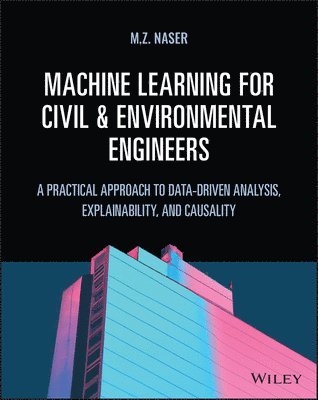
    Machine Learning for Civil and Environmental Engineers

    A Practical Approach to Data-Driven Analysis, Explainability, and Causality

    AvM. Z. Naser

    Inbunden, Engelska, 2023

    905 kr

    Skickas . Fri frakt över 249 kr.

    Fler format och utgåvor

    E-bok

    994 kr

    E-bok

    994 kr

    Beskrivning

    Accessible and practical framework for machine learning applications and solutions for civil and environmental engineers This textbook introduces engineers and engineering students to the applications of artificial intelligence (AI), machine learning (ML), and machine intelligence (MI) in relation to civil and environmental engineering projects and problems, presenting state-of-the-art methodologies and techniques to develop and implement algorithms in the engineering domain. Through real-world projects like analysis and design of structural members, optimizing concrete mixtures for site applications, examining concrete cracking via computer vision, evaluating the response of bridges to hazards, and predicating water quality and energy expenditure in buildings, this textbook offers readers in-depth case studies with solved problems that are commonly faced by civil and environmental engineers. The approaches presented range from simplified to advanced methods, incorporating coding-based and coding-free techniques. Professional engineers and engineering students will find value in the step-by-step examples that are accompanied by sample databases and codes for readers to practice with. Written by a highly qualified professional with significant experience in the field, Machine Learning includes valuable information on: The current state of machine learning and causality in civil and environmental engineering as viewed through a scientometrics analysis, plus a historical perspectiveSupervised vs. unsupervised learning for regression, classification, and clustering problemsExplainable and causal methods for practical engineering problemsDatabase development, outlining how an engineer can effectively collect and verify appropriate data to be used in machine intelligence analysisA framework for machine learning adoption and application, covering key questions commonly faced by practitionersThis textbook is a must-have reference for undergraduate/graduate students to learn concepts on the use of machine learning, for scientists/researchers to learn how to integrate machine learning into civil and environmental engineering, and for design/engineering professionals as a reference guide for undertaking MI design, simulation, and optimization for infrastructure.

    Produktinformation

    • Utgivningsdatum:2023-10-26
    • Mått:224 x 279 x 43 mm
    • Vikt:1 542 g
    • Format:Inbunden
    • Språk:Engelska
    • Antal sidor:608
    • Förlag:John Wiley & Sons Inc
    • ISBN:9781119897606

    Utforska kategorier

    • Artificiell intelligens inom Data och IT
    • Byggnadsteknik inom Naturvetenskap och teknik

    Mer om författaren

    M. Z. Naser is a tenure-track faculty member at the School of Civil and Environmental Engineering & Earth Sciences and a member of the Artificial Intelligence Research Institute for Science and Engineering (AIRISE) at Clemson University, USA. Dr. Naser has co-authored over 100 publications and has 10 years of experience in structural engineering and AI. His research interest spans causal & explainable AI methodologies to discover new knowledge hidden within the domains of structural & fire engineering and materials science to realize functional, sustainable, and resilient infrastructure. He is a registered professional engineer and a member of various international editorial boards and building committees.

    Innehållsförteckning

    • Preface xiiiAbout the Companion Website xix1 Teaching Methods for This Textbook 1 Synopsis 11.1 Education in Civil and Environmental Engineering 11.2 Machine Learning as an Educational Material 21.3 Possible Pathways for Course/Material Delivery 31.4 Typical Outline for Possible Means of Delivery 7Chapter Blueprint 8Questions and Problems 8References 82 Introduction to Machine Learning 11Synopsis 112.1 A Brief History of Machine Learning 112.2 Types of Learning 122.3 A Look into ML from the Lens of Civil and Environmental Engineering 152.4 Let Us Talk a Bit More about ML 172.5 ML Pipeline 182.6 Conclusions 27Definitions 27Chapter Blueprint 29Questions and Problems 29References 303 Data and Statistics 33 Synopsis 333.1 Data and Data Science 333.2 Types of Data 343.3 Dataset Development 373.4 Diagnosing and Handling Data 373.5 Visualizing Data 383.6 Exploring Data 593.7 Manipulating Data 663.8 Manipulation for Computer Vision 683.9 A Brief Review of Statistics 683.10 Conclusions 764 Machine Learning Algorithms 81Synopsis 814.1 An Overview of Algorithms 814.2 Conclusions 1275 Performance Fitness Indicators and Error Metrics 133Synopsis 1335.1 Introduction 1335.2 The Need for Metrics and Indicators 1345.3 Regression Metrics and Indicators 1355.4 Classification Metrics and Indicators 1425.5 Clustering Metrics and Indicators 1425.6 Functional Metrics and Indicators* 1515.7 Other Techniques (Beyond Metrics and Indicators) 1545.8 Conclusions 1596 Coding-free and Coding-based Approaches to Machine Learning 169Synopsis 1696.1 Coding-free Approach to ML 1696.2 Coding-based Approach to ML 2806.3 Conclusions 3227 Explainability and Interpretability 3277 Synopsis 3277.1 The Need for Explainability 3277.2 Explainability from a Philosophical Engineering Perspective* 3297.3 Methods for Explainability and Interpretability 3317.4 Examples 3357.5 Conclusions 4288 Causal Discovery and Causal Inference 433Synopsis 4338.1 Big Ideas Behind This Chapter 4338.2 Re-visiting Experiments 4348.3 Re-visiting Statistics and ML 4358.4 Causality 4368.5 Examples 4518.6 A Note on Causality and ML 4758.7 Conclusions 4759 Advanced Topics (Synthetic and Augmented Data, Green ML, Symbolic Regression, Mapping Functions, Ensembles, and AutoML) 481Synopsis 4819.1 Synthetic and Augmented Data 4819.2 Green ML 4889.3 Symbolic Regression 4989.4 Mapping Functions 5299.5 Ensembles 5399.6 AutoML 5489.7 Conclusions 55210 Recommendations, Suggestions, and Best Practices 559Synopsis 55910.1 Recommendations 55910.2 Suggestions 56410.3 Best Practices 56611 Final Thoughts and Future Directions 573Synopsis 57311.1 Now 57311.2 Tomorrow 57311.3 Possible Ideas to Tackle 57511.4 Conclusions 576References 576Index 577