• Fri frakt över 249 kr
  • •
  • Snabba leveranser
  • •
  • Billiga böcker
Kundservice

Du är på sajten för privatpersoner.

Företag, bibliotek eller offentlig verksamhet?

Du handlar på classic.bokus.com, där alla dina funktioner finns intakta.
Till classic.bokus.com
Bokus logotyp. Gå till startsidan.
  • Erbjudanden
  • Nyheter
  • Student
  • Topplistor
  • Barn & ungdom
  • Bokus Play
  • E-böcker
  • Pocketböcker
  • Spel & pussel

10% rabatt på allt med kod: NYSTART10 →

Sidfot

Mina sidor

    Hjälp

    • Kundservice
    • Vanliga frågor och svar
    • Frakt och leverans
    • Retur vid ångerrätt
    • Reklamera vara
    • Betalning
    • Köpvillkor
    • Allmänna villkor
    • Information om webbplatsens tillgänglighet

    Om Bokus

    • Om oss
    • Pressrum
    • För studenter
    • För företag
    • För bibliotek och offentlig verksamhet
    • För leverantörer
    • Hållbarhet

    Populärt

    • Aktuella erbjudanden
    • Presentkort
    • Studentlitteratur
    • Nya böcker
    • Topplistor
    • Signerade böcker
    • Engelska böcker

    Inspiration

    • Boktips
    • BookTok
    • Populära bokserier
    • Barnbokskaraktärer
    • Populära författare
    Logotyp för Bokus
    Följ oss på Facebook (extern länk)Följ oss på Instagram (extern länk)Följ oss på YouTube (extern länk)Följ oss på TikTok (extern länk)
    bokus @ CookiesAnpassa cookiesIntegritetspolicyKöpvillkor
    Till Citymail hemsida (extern länk)Till Budbee hemsida (extern länk)Till Postnord hemsida (extern länk)Till Schenker hemsida (extern länk)Till Early Bird hemsida (extern länk)Till Walleys hemsida (extern länk)
    1. Naturvetenskap och teknik
    2. Teknik och industri
    3. Elektronik och kommunikationer

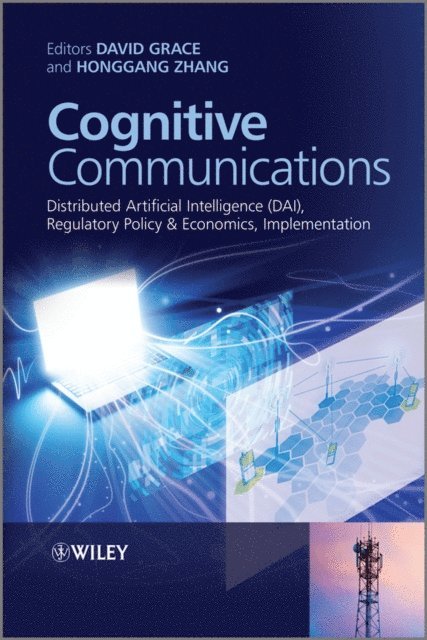
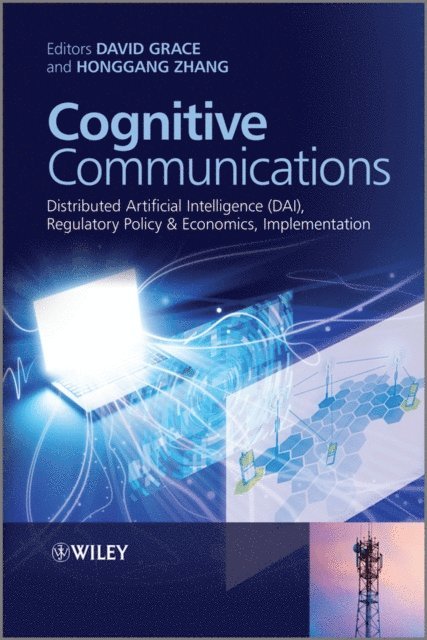
    Cognitive Communications

    Distributed Artificial Intelligence (DAI), Regulatory Policy and Economics, Implementation

    AvDavid Grace,Honggang Zhang

    Inbunden, Engelska, 2012

    1 718 kr

    Beställningsvara. Skickas inom 11-20 vardagar. Fri frakt över 249 kr.

    Beskrivning

    This book discusses in-depth the concept of distributed artificial intelligence (DAI) and its application to cognitive communications In this book, the authors present an overview of cognitive communications, encompassing both cognitive radio and cognitive networks, and also other application areas such as cognitive acoustics. The book also explains the specific rationale for the integration of different forms of distributed artificial intelligence into cognitive communications, something which is often neglected in many forms of technical contributions available today. Furthermore, the chapters are divided into four disciplines: wireless communications, distributed artificial intelligence, regulatory policy and economics and implementation. The book contains contributions from leading experts (academia and industry) in the field.Key Features: Covers the broader field of cognitive communications as a whole, addressing application to communication systems in general (e.g. cognitive acoustics and Distributed Artificial Intelligence (DAI)Illustrates how different DAI based techniques can be used to self-organise the radio spectrumExplores the regulatory, policy and economic issues of cognitive communications in the context of secondary spectrum accessDiscusses application and implementation of cognitive communications techniques in different application areas (e.g. Cognitive Femtocell Networks (CFN)Written by experts in the field from both academia and industryCognitive Communications will be an invaluable guide for research community (PhD students, researchers) in the areas of wireless communications, and development engineers involved in the design and development of mobile, portable and fixed wireless systems., wireless network design engineer. Undergraduate and postgraduate students on elective courses in electronic engineering or computer science, and the research and engineering community will also find this book of interest.
    Produktinformation

    • Utgivningsdatum:2012-08-31
    • Mått:173 x 252 x 28 mm
    • Vikt:898 g
    • Format:Inbunden
    • Språk:Engelska
    • Antal sidor:500
    • Förlag:John Wiley & Sons Inc
    • ISBN:9781119951506

    Utforska kategorier

    • Elektronik och kommunikationer inom Naturvetenskap och teknik
    • Artificiell intelligens inom Data och IT

    Mer om författaren

    Dr. David Grace, University of York, UKDavid Grace is Head of Communications Research Group and Co-Director of York-Zhejiang Lab for Cognitive Radio and Green Communications. He received his MEng and DPhil degrees from York in 1993 and 1999 respectively. David's current research interests include cognitive radio and green communications, specifically spectrum assignment aspects, and cognitive networking. Dr. Honggang Zhang, Zhejiang University, ChinaHonggang Zhang is a Full Professor at the Department of Information Science and Electronic Engineering, Zhejiang University, China. He received the Ph.D. degree in Electrical Engineering from Kagoshima University, Japan, in March 1999. Prior to that, he received the Bachelor of Engineering and Master of Engineering degrees, both in Electrical Engineering, from Huazhong University of Science & Technology (HUST), China, in 1989, and Lanzhou University of Technology, China, in 1992, respectively.

    Innehållsförteckning

    • List of Figures xiiiList of Tables xxvAbout the Editors xxviiPreface xxixPART I INTRODUCTION1 Introduction to Cognitive Communications 3David Grace1.1 Introduction 31.2 A NewWay of Thinking 41.3 History of Cognitive Communications 61.4 Key Components of Cognitive Communications 81.5 Overview of the Rest of the Book 91.5.1 Part 2: Wireless Communications 101.5.2 Part 3: Application of Distributed Artificial Intelligence 111.5.3 Part 4: Regulatory Policy and Economics 121.5.4 Part 5: Implementation 131.6 Summary and Conclusion 14References 14PART II WIRELESS COMMUNICATIONS2 Cognitive Radio and Networks for Heterogeneous Networking 19Haesik Kim and Aarne M€ammel€a2.1 Introduction 192.1.1 Historical Sketch 192.1.2 Cognitive Radio and Networks 212.1.3 Heterogeneous Networks 222.2 Cognitive Radio for Heterogeneous Networks 262.2.1 Channel Sensing and Network Sensing 262.2.2 Interference Mitigation 272.2.3 Power Control 312.3 Applying Cognitive Networks to Heterogeneous Networks 372.3.1 Network Policy for Coexistence of Different Networks 372.3.2 Cooperation Mechanisms 392.3.3 Network Resource Allocation 412.3.4 Self-Organization Mechanisms 442.3.5 Handover Mechanisms 452.4 Performance Evaluation 472.5 Conclusion 50References 503 Channel Assignment and Power Allocation Algorithms in Multi-Carrier-Based Cognitive Radio Environments 53Musbah Shaat and Faouzi Bader3.1 Introduction 533.2 The Orthogonal Frequency-Division Multiplexing (OFDM) Transmission Scheme 543.2.1 Why OFDM is Appropriate for CR 553.3 Resource Management in Non-Cognitive OFDM Environments 563.3.1 Single User OFDM Systems 563.3.2 Multiple User OFDM Systems (OFDMA) 573.3.3 Resource Allocation Algorithms in Non-Cognitive OFDM Systems 583.4 Resource Management in OFDM-Based Cognitive Radio Systems 583.4.1 Algorithms Dealing with In-Band Interference 593.4.2 Algorithms Dealing with Mutual Interference 603.4.3 System Model 613.4.4 Problem Formulation 633.4.5 Resource Management in Downlink OFDM-Based CR Systems 643.4.6 Resource Management in Uplink OFDM-Based CR Systems 763.5 Conclusions 88References 894 Filter Bank Techniques for Multi-Carrier Cognitive Radio Systems 93Yun Cui, Zhifeng Zhao, Rongpeng Li, Guangchao Zhang and Honggang Zhang4.1 Introduction 934.2 Basic Features of Filter Banks-Based Multi-Carrier Techniques 944.2.1 Introduction to the Filter Bank System 954.2.2 The Polyphase Structure of Filter Banks 964.2.3 Basic Structure of Filter Banks-Based Multi-Carrier Systems 974.3 Adaptive Threshold Enhanced Filter Bank for Spectrum Detection in IEEE 802.22 984.3.1 Multi-Stage Analysis Filter Banks for Spectrum Detection 994.3.2 Complexity and Detection Precision Analysis 1014.3.3 Spectrum Detection in IEEE 802.22 1034.3.4 Power Estimation with Adaptive Threshold 1064.4 Transform Decomposition for Spectrum Interleaving in Multi-Carrier Cognitive Radio Systems 1084.4.1 FFT Pruning in Cognitive Radio Systems 1084.4.2 Transform Decomposition for General DFT 1104.4.3 Improved Transform Decomposition Method for DFT with Sparse Input Points 1114.4.4 Numerical Results and Computational Complexity Analysis 1144.5 Remaining Problems in Filter Banks-Based Multi-Carrier Systems 1154.6 Summary and Conclusion 117References 1175 Distributed Clustering of Cognitive Radio Networks: A Message-Passing Approach 119Kareem E. Baddour, Oktay Ureten and Tricia J. Willink5.1 Introduction 1195.1.1 Inter-Node Collaboration in Decentralized Cognitive Networks 1195.1.2 Scalability Issues and Overhead Costs 1205.1.3 Self-Organization Based on Distributed Clustering 1205.2 Clustering Techniques for Cognitive Radio Networks 1225.3 A Message-Passing Clustering Approach Based on Affinity Propagation 1245.4 Case Studies 1265.4.1 Clustering Based on Local Spectrum Availability 1275.4.2 Sensor Selection for Cooperative Spectrum Sensing 1325.5 Implementation Challenges 1385.6 Conclusions 140References 140PART III APPLICATION OF DISTRIBUTED ARTIFICIAL INTELLIGENCE6 Machine Learning Applied to Cognitive Communications 145Aimilia Bantouna, Kostas Tsagkaris, Vera Stavroulaki, Panagiotis Demestichas and Giorgos Poulios6.1 Introduction 1456.2 State of the Art 1466.3 Learning Techniques 1486.3.1 Bayesian Statistics 1486.3.2 Supervised Neural Networks (NNs) 1506.3.3 Self-Organizing Maps (SOMs): An Unsupervised Neural Network 1536.3.4 Reinforcement Learning 1576.4 Advantages and Disadvantages of Applying Machine Learning to Cognitive Radio Networks 1586.5 Conclusions 159Acknowledgement 160References 1607 Reinforcement Learning for Distributed Power Control and Channel Access in Cognitive Wireless Mesh Networks 163Xianfu Chen, Zhifeng Zhao and Honggang Zhang7.1 Introduction 1637.2 Applying Reinforcement Learning to Distributed Power Control and Channel Access 1657.2.1 Conjecture-Based Multi-Agent Q-Learning for Distributed Power Control in CogMesh 1657.2.2 Learning with Dynamic Conjectures for Opportunistic Spectrum Access in CogMesh 1767.3 Future Challenges 1917.4 Conclusions 192References 1928 Reinforcement Learning-Based Cognitive Radio for Open Spectrum Access 195Tao Jiang and David Grace8.1 Open Spectrum Access 1958.2 Reinforcement Learning-Based Spectrum Sharing in Open Spectrum Bands 1968.2.1 Learning Model 1968.2.2 Basic Algorithms 2008.2.3 Performance 2008.3 Exploration Control and Efficient Exploration for Reinforcement Learning-Based Cognitive Radio 2088.3.1 Exploration Control Techniques for Cognitive Radios 2088.3.2 Efficient Exploration Techniques and Learning Efficiency for Cognitive Radios 2188.4 Conclusion 229References 2309 Learning Techniques for Context Diagnosis and Prediction in Cognitive Communications 231Aimilia Bantouna, Kostas Tsagkaris, Vera Stavroulaki, Giorgos Poulios and Panagiotis Demestichas9.1 Introduction 2319.2 Prediction 2329.2.1 Building Knowledge: Learning Network Capabilities and User Preferences/ Behaviours 2329.2.2 Application to Context Diagnosis and Prediction: The Case of Congestion 2489.3 Future Problems 2539.4 Conclusions 254References 25510 Social Behaviour in Cognitive Radio 257Husheng Li10.1 Introduction 25710.2 Social Behaviour in Cognitive Radio 25810.2.1 Cooperation Formation 25810.2.2 Channel Recommendations 26110.3 Social Network Analysis 26710.3.1 Model of Recommendation Mechanism 26710.3.2 Interacting Particles 26810.3.3 Epidemic Propagation 27310.4 Conclusions 281References 281PART IV REGULATORY POLICY AND ECONOMICS11 Regulatory Policy and Economics of Cognitive Radio for Secondary Spectrum Access 285Maziar Nekovee and Peter Anker11.1 Introduction 28511.2 Spectrum Regulations: Why and How? 28611.3 Overview of Regulatory Bodies and Their Inter-Relation 28711.3.1 ITU 28711.3.2 CEPT/ECC 28811.3.3 European Union 28911.3.4 ETSI 29011.3.5 National Spectrum Management Authority 29111.4 Why Secondary Spectrum Access? 29111.5 Candidate Bands for Secondary Access 29311.5.1 Terrestrial Broadcasting Bands 29411.5.2 Radar Bands 29411.5.3 IMT Bands 29511.5.4 Military Bands 29611.6 Regulatory and Policy Issues 29611.6.1 UK Regulatory Environment 30011.6.2 US Regulatory Environment 30111.6.3 European Regulatory Environment 30211.6.4 Regulatory Environments Elsewhere 30311.7 Technology Enablers and Options for Secondary Sharing 30411.7.1 Cognitive Radio 30411.7.2 Technology Options for Secondary Access 30611.8 Economic Impact and Business Opportunities of SSA 30811.8.1 Stakeholders and Economic of SSA 30911.8.2 Use Cases and Business Models 31011.9 Outlook 31311.10 Conclusions 314Acknowledgements 315References 315PART V IMPLEMENTATION12 Cognitive Radio Networks in TV White Spaces 321Maziar Nekovee and Dave Wisely12.1 Introduction 32112.2 Research and Development Challenges 32412.2.1 Geolocation Databases 32412.2.2 Sensing 32712.2.3 Beacons 33012.2.4 Physical Layer 33012.2.5 System Issues 33112.2.6 Devices 33512.3 Regulation and Standardization 33512.3.1 Regulation 33512.3.2 Standardization 33812.4 Quantifying Spectrum Opportunities 34312.5 Commercial Use Cases 34612.6 Conclusions 354Acknowledgement 355References 35513 Cognitive Femtocell Networks 359Faisal Tariq and Laurence S. Dooley13.1 Introduction 35913.2 Femtocell Network Architecture 36113.2.1 Underlay and Overlay Architectures for Femtocell Networks 36213.2.2 Home Femtocell and Enterprise Femtocell 36613.2.3 Access Mechanism: Closed, Open and Hybrid Access 36913.2.4 Possible Operating Spectrum 37113.3 Interference Management Strategies 37213.3.1 Cross-Tier Interference Management 37313.3.2 Intra-Tier Interference Management 37613.4 Self Organized Femtocell Networks (SOFN) 38113.4.1 Self-Configuration 38313.4.2 Self-Optimization 38313.4.3 Self-Healing and Self-Protection 38813.5 Future Research Directions 38813.5.1 Green Femtocell Networks 38813.5.2 Communication Hub for Smart Homes 38913.5.3 MIMO-Based Interference Alignment for Femtocell Networks 38913.5.4 Enhanced FFR 39013.5.5 CoMP-Based Femtocell Network 39113.5.6 Holistic Approach to SOFN 39113.6 Conclusion 391References 39114 Cognitive Acoustics: A Way to Extend the Lifetime of Underwater Acoustic Sensor Networks 395Lu Jin, Defeng (David) Huang, Lin Zou and Angela Ying Jun Zhang14.1 The Concept of Cognitive Acoustics 39514.2 Underwater Acoustic Communication Channel 39714.2.1 Propagation Delay 39714.2.2 Severe Attenuation 39714.2.3 Ambient Noise 39814.3 Some Distinct Features of Cognitive Acoustics 40114.3.1 Purposes of Deployment 40114.3.2 Grey Space 40214.3.3 Cost of Field Measurement and System Deployment 40214.4 Fundamentals of Reinforcement Learning 40214.4.1 Markov Decision Process 40214.4.2 Reinforcement Learning 40314.4.3 Q-Learning 40314.5 An Application Scenario: Underwater Acoustic Sensor Networks 40414.5.1 System Description 40414.5.2 State Space, Action Set and Transition Probabilities 40614.5.3 Reward Function 40714.5.4 Routing Protocol Discussion 40914.6 Numerical Results 41014.7 Conclusion 414Acknowledgements 414References 41415 CMOS RF Transceiver Considerations for DSA 417Mark S. Oude Alink, Eric A.M. Klumperink, Andre B.J. Kokkeler, Gerard J.M. Smit and Bram Nauta15.1 Introduction 41715.1.1 Terminology 41815.1.2 Transceivers for DSA: More than an ADC and DAC 42015.1.3 Flexible Software-Defined Transceiver 42115.1.4 Why CMOS Transceivers? 42115.2 DSATransceiver Requirements 42115.3 Mathematical Abstraction 42315.4 Filters 42615.4.1 Integrated Filters 42615.4.2 External Filters 42715.5 Receiver Considerations and Implementation 42815.5.1 Sub-Sampling Receiver 42915.5.2 Heterodyne Receivers 43015.5.3 Direct-Conversion Receivers 43215.6 Cognitive Radio Receivers 43615.6.1 Wideband RF-Section 43615.6.2 No External RF-Filterbank 43715.6.3 Wideband Frequency Generation 44715.7 Transmitter Considerations and Implementation 44915.8 Cognitive Radio Transmitters 45115.8.1 Improving Transmitter Linearity 45115.8.2 Reducing Harmonic Components 45215.8.3 The Polyphase Multipath Technique 45315.9 Spectrum Sensing 45615.9.1 Analogue Windowing 45815.9.2 Channelized Receiver 45915.9.3 Crosscorrelation Spectrum Sensing 45915.9.4 Improved Image and Harmonic Rejection Using Crosscorrelation 46115.10 Summary and Conclusions 462References 462Index 465