• Fri frakt över 249 kr
  • •
  • Snabba leveranser
  • •
  • Billiga böcker
Kundservice

Du är på sajten för privatpersoner.

Företag, bibliotek eller offentlig verksamhet?

Du handlar på classic.bokus.com, där alla dina funktioner finns intakta.
Till classic.bokus.com
Bokus logotyp. Gå till startsidan.
  • Erbjudanden
  • Student
  • Topplistor
  • Barn & ungdom
  • Bokus Play
  • E-böcker
  • Ljudböcker
  • Pocketböcker
  • Spel och pussel

Skapa nya rutiner – hälsoböcker upp till 50% →

Sidfot

Mina sidor

    Hjälp

    • Kundservice
    • Vanliga frågor och svar
    • Frakt och leverans
    • Retur vid ångerrätt
    • Reklamera vara
    • Betalning
    • Köpvillkor
    • Allmänna villkor
    • Information om webbplatsens tillgänglighet

    Om Bokus

    • Om oss
    • Pressrum
    • För studenter
    • För företag
    • För bibliotek och offentlig verksamhet
    • För leverantörer
    • Hållbarhet

    Populärt

    • Aktuella erbjudanden
    • Presentkort
    • Studentlitteratur
    • Nya böcker
    • Topplistor
    • Signerade böcker
    • Engelska böcker

    Inspiration

    • Boktips
    • BookTok
    • Barnbokskaraktärer
    • Populära författare
    Logotyp för Bokus
    Följ oss på Facebook (extern länk)Följ oss på Instagram (extern länk)Följ oss på YouTube (extern länk)Följ oss på TikTok (extern länk)
    bokus @ CookiesAnpassa cookiesIntegritetspolicyKöpvillkor
    Till Citymail hemsida (extern länk)Till Budbee hemsida (extern länk)Till Postnord hemsida (extern länk)Till Schenker hemsida (extern länk)Till Early Bird hemsida (extern länk)Till Walleys hemsida (extern länk)
    1. Ekonomi och Ledarskap
    2. Ledarskapsböcker
    3. Projektledning

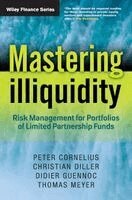
    Mastering Illiquidity

    Risk management for portfolios of limited partnership funds

    AvThomas Meyer,Peter Cornelius

    Inbunden, Engelska, 2013

    Del i serien Wiley Finance Series

    757 kr

    Beställningsvara. Skickas inom 5-8 vardagar. Fri frakt över 249 kr.

    Beskrivning

    Arms investors with powerful new tools for measuring and managing the risks associated with the various illiquid asset classes With risk-free interest rates and risk premiums at record lows, many investors are turning to illiquid assets, such as real estate, private equity, infrastructure and timber, in search of superior returns and greater portfolio diversity. But as many analysts, investors and wealth managers are discovering, such investments bring with them a unique set of risks that cannot be measured by standard asset allocation models. Written by a dream team of globally renowned experts in the field, this book provides a clear, accessible overview of illiquid fund investments, focusing on what the main risks of these asset classes are and how to measure those risks in today's regulatory environment. Provides solutions for institutional investors in need of guidance in today's regulatory environmentOffers detailed descriptions of risk measurement in illiquid asset classes, illustrated with real life case studiesHelps you to develop reliable risk management tools while complying with the regulations designed to contain the individual and systemic risks arising from illiquid investmentsFeatures real-life case studies that capture an array of risk management scenarios you are likely to encounter

    Produktinformation

    • Utgivningsdatum:2013-05-10
    • Mått:175 x 249 x 23 mm
    • Vikt:680 g
    • Format:Inbunden
    • Språk:Engelska
    • Serie:Wiley Finance Series
    • Antal sidor:304
    • Förlag:John Wiley & Sons Inc
    • ISBN:9781119952428

    Utforska kategorier

    • Projektledning inom Ekonomi och Ledarskap

    Mer om författaren

    Dr PETER CORNELIUS is heading AlpInvest Partners’ economic and strategic research. Prior to his current position, he was the Group Chief Economist of Royal Dutch Shell, chief economist and Director of the World Economic Forum’s Global Competitiveness Program, Head of International Economic Research of Deutsche Bank, a senior economist with the International Monetary Fund, and a staff economist of the German Council of Economic Advisors. He is the chairman of EVCA’s ‘Risk Measurement Guidelines’ working group. He has been an adjunct professor at Brandeis University and a Visiting Scholar at Harvard University and has published widely in leading academic and trade journals and (co)authored several books, including International Investments in Private Equity (Elsevier/Academic Press).Dr CHRISTIAN DILLER is co-founder of Montana Capital Partners, focused on secondary liquidity in private equity through its own innovative investment product, sophisticated securitizations and risk management services for institutional investors. Previously, he was Head of Solutions at Capital Dynamics leading the structuring and portfolio and risk management activities. Christian advised some of the world’s largest investors on portfolio rebalancing and structuring, cash flow planning and risk management in private equity. Prior to that, he worked for Allianz Group and Pioneer Investments. Christian is a member of the EVCA’s ‘Risk Measurement Guidelines’ working group, co-chairman of the ‘Technical Working Group on Solvency II & IORP’ and lecturer at the CIPEI course held by the Oxford Said Business School. He is author of several articles for practitioners and academics and holds a Dr. rer. pol. in finance specializing on risk-/return characteristics of private equity funds.Dr DIDIER GUENNOC is co-founder of LDS Partners, specialised in decision systems, program structuring, corporate governance and risk management solutions for institutional investors in private equity. He also acts as the secretary of the International Private Equity and Venture Capital Valuation Board (IPEV Board). Previously he worked for Origo Management and advised EVCA, the European Private Equity and Venture Capital Association on public affairs, statistics and professional standards. He started his career at Xerfi, the leading French market research company. Didier was a member of the advisory board of the Centre for Entrepreneurial and Financial Studies (Technische Universität München – Germany) and of the private equity subcommittee of the Chartered Alternative Investment Analyst® Program. Didier holds a PhD in Business Administration from the University Robert Schuman, Strasbourg (France).Dr THOMAS MEYER is co-founder of LDS Partners, specialised in decision systems, program structuring, corporate governance and risk management solutions for institutional investors in private equity. Previously he was with EVCA, the European Investment Fund and Allianz Asia Pacific. He is a member of the EVCA’s ‘Risk Measurement Guidelines’ working group and of the Chartered Alternative Investment Analyst Association's (CAIA©) private equity sub-committee and a Shimomura Fellow of the Development Bank of Japan’s Research Institute of Capital Formation. Thomas is co-directing the Certificate in Institutional Private Equity Investing (CIPEI) course held by the Oxford Said Business School’s Private Equity Institute and co-authored several books including Beyond the J-Curve and J-Curve Exposure.

    Innehållsförteckning

    • Foreword xiAcknowledgements xiv1 Introduction 11.1 Alternative investing and the need to upgrade risk management systems 11.2 Scope of the book 41.3 Organization of the book 61.3.1 Illiquid investments as an asset class 61.3.2 Risk measurement and modelling 81.3.3 Risk management and its governance 12Part I Illiquid Investments as An Asset Class2 Illiquid Assets, Market Size and the Investor Base 172.1 Defining illiquid assets 172.2 Market size 202.3 The investor base 232.3.1 Current investors in illiquid assets and their exposure 232.3.2 Recent trends 262.4 Conclusions 323 Prudent Investing and Alternative Assets 333.1 Historical background 343.1.1 The importance of asset protection 343.1.2 The prudent man rule 343.1.3 The impact of modern portfolio theory 353.2 Prudent investor rule 363.2.1 Main differences 363.2.2 Importance of investment process 373.3 The OECD guidelines on pension fund asset management 383.4 Prudence and uncertainty 383.4.1 May prudence lead to herding? 393.4.2 May prudence lead to a bias against uncertainty? 393.4.3 Process as a benchmark for prudence? 403.4.4 Size matters 403.5 Conclusion 414 Investing in Illiquid Assets through Limited Partnership Funds 434.1 Limited partnership funds 434.1.1 Basic setup 434.1.2 The limited partnership structure 454.1.3 Is “defaulting” an option for limited partners? 474.2 Limited partnerships as structures to address uncertainty and ensure control 474.2.1 Addressing uncertainty 484.2.2 Control from the limited partner perspective 484.3 The limited partnership fund’s illiquidity 494.3.1 Illiquidity as the source of the expected upside 494.3.2 The market for lemons 504.3.3 Contractual illiquidity 514.3.4 Inability to value properly 514.3.5 Endowment effect 514.4 Criticisms of the limited partnership structure 524.5 Competing approaches to investing in private equity and real assets 524.5.1 Listed vehicles 534.5.2 Direct investments 534.5.3 Deal-by-deal 544.5.4 Co-investments 544.6 A time-proven structure 554.7 Conclusion 575 Returns, Risk Premiums and Risk Factor Allocation 595.1 Returns and risk in private equity 595.1.1 Comparing private equity with public equity returns 605.1.2 Market risk and the CAPM 645.1.3 Stale pricing and the optimal allocation to private equity 675.1.4 Informed judgments and ad hoc adjustments to the mean–variance framework 685.1.5 Extensions of the CAPM and liquidity risk 695.1.6 Liability-driven investing and risk factor allocation 705.2 Conclusions 736 The Secondary Market 756.1 The structure of the secondary market 766.1.1 Sellers and their motivations to sell 766.1.2 Buyers and their motivations to buy 796.1.3 Intermediation in the secondary market 826.2 Market size 836.2.1 Transaction volume 836.2.2 Fundraising 866.3 Price formation and returns 876.3.1 Pricing secondary transactions 876.3.2 Returns from secondary investments 906.4 Conclusions 93Part II Risk Measurement and Modelling7 Illiquid Assets and Risk 977.1 Risk, uncertainty and their relationship with returns 987.1.1 Risk and uncertainty 987.1.2 How objective are probabilities anyway? 997.1.3 How useful are benchmark approximations? 1007.1.4 Subjective probabilities and emerging assets 1017.2 Risk management, due diligence and monitoring 1027.2.1 Hedging and financial vs. non-financial risks 1027.2.2 Distinguishing risk management and due diligence 1037.3 Conclusions 1058 Limited Partnership Fund Exposure to Financial Risks 1078.1 Exposure and risk components 1088.1.1 Defining exposure and identifying financial risks 1088.1.2 Capital risk 1108.1.3 Liquidity risk 1118.1.4 Market risk and illiquidity 1128.2 Funding test 1138.3 Cross-border transactions and foreign exchange risk 1178.3.1 Limited partner exposure to foreign exchange risk 1178.3.2 Dimensions of foreign exchange risk 1188.3.3 Impact on fund returns 1198.3.4 Hedging against foreign exchange risk? 1208.3.5 Foreign exchange exposure as a potential portfolio diversifier 1208.4 Conclusions 1219 Value-at-Risk 1239.1 Definition 1239.2 Value-at-risk based on NAV time series 1249.2.1 Calculation 1259.2.2 Problems and limitations 1279.3 Cash flow volatility-based value-at-risk 1299.3.1 Time series calculation 1319.3.2 Fund growth calculation 1339.3.3 Underlying data 1359.4 Diversification 1369.5 Factoring in opportunity costs 1419.6 Cash-flow-at-risk 1439.7 Conclusions 14410 The Impact of Undrawn Commitments 14910.1 Do overcommitments represent leverage? 15010.2 How should undrawn commitments be valued? 15110.3 A possible way forward 15310.3.1 Reconciling fund valuations with accounting view 15310.3.2 Modelling undrawn commitments as debt 15410.3.3 The “virtual fund” as a basis for valuations 15510.4 Conclusions 15911 Cash Flow Modelling 16111.1 Projections and forecasts 16211.2 What is a model? 16311.2.1 Model requirements 16411.2.2 Model classification 16411.3 Non-probabilistic models 16711.3.1 Characteristics of the Yale model 16811.3.2 Extensions of the Yale model 16911.3.3 Limitations of the Yale model 17111.4 Probabilistic models 17111.4.1 Cash flow libraries 17211.4.2 Projecting a fund’s lifetime 17311.4.3 Scaling operations 17611.5 Scenarios 17811.6 Blending of projections generated by various models 17911.7 Stress testing 18011.7.1 Accelerated contributions 18111.7.2 Decelerated distributions 18211.7.3 Increasing volatility 18311.8 Back-testing 18411.9 Conclusions 18712 Distribution Waterfall 18912.1 Importance as incentive 19012.1.1 Waterfall components 19012.1.2 Profit and loss 19112.1.3 Distribution provisions 19112.1.4 Deal-by-deal vs. aggregated returns 19112.2 Fund hurdles 19112.2.1 Hurdle definitions 19212.2.2 Option character and screening of fund managers 19212.3 Basic waterfall structure 19312.3.1 Soft hurdle 19312.4 Examples for carried interest calculation 19512.4.1 Soft hurdle for compounded interest-based carried interest allocation 19612.4.2 Hard hurdle for compounded interest-based carried interest allocation 19812.4.3 Soft hurdle for multiple-based carried interest allocation 20012.4.4 Hard hurdle for multiple-based carried interest allocation 20012.5 Conclusions 20213 Modelling Qualitative Data 20713.1 Quantitative vs. qualitative approaches 20713.1.1 Relevance of qualitative approaches 20713.1.2 Determining classifications 20813.2 Fund rating/grading 20813.2.1 Academic work on fund rating 20913.2.2 Techniques 20913.2.3 Practical considerations 21013.3 Approaches to fund ratings 21113.3.1 Rating by external agencies 211                   13.3.2 Internal fund assessment approaches 21513.4 Use of rating/grading as input for models 21613.4.1 Assessing downside risk 21613.4.2 Assessing upside potential 21713.4.3 Is success repeatable? 21713.5 Assessing the degree of similarity with comparable funds 21813.5.1 The AMH framework 21913.5.2 Strategic groups in alternative assets 21913.5.3 Linking grading to quantification 22013.6 Conclusions 22014 Translating Fund Grades into Quantification 22114.1 Expected performance grades 22114.1.1 Determine quantitative score 22214.1.2 Determine qualitative score 22314.1.3 Combine the two scores, review and adjust 22414.2 Linking grades with quantifications 22514.2.1 Estimate likely TVPIs 22514.2.2 Practical considerations 22814.3 Operational status grades 22814.4 Conclusions 229Part III Risk Management and Its Governance15 Securitization 23315.1 Definition of securitization 23315.1.1 Size, quality and maturity 23615.1.2 Treatment of other types of assets 23715.2 Financial structure 23715.2.1 Senior notes of a securitization 23715.2.2 Junior notes/mezzanine tranche of a securitization 23815.2.3 Equity of a securitization 23815.3 Risk modelling and rating of senior notes 23915.3.1 Payment waterfall 23915.3.2 Modelling of default risk and rating on notes 24015.4 Transformation of non-tradable risk factors into tradable financial securities 24415.4.1 CFOs as good example for risk and liquidity management practices 24515.4.2 Risk of coupon bonds as one part of the risk of illiquid asset classes 24615.4.3 Market risk as second part of the risk of illiquid asset classes 24715.5 Conclusions 24816 Role of the Risk Manager 24916.1 Setting the risk management agenda 24916.1.1 What risk taking is rewarded? 25016.1.2 Risk management: financial risk, operational risk or compliance? 25016.1.3 A gap of perceptions? 25116.2 Risk management as part of a firm’s corporate governance 25116.2.1 “Democratic” approach 25116.2.2 “Hierarchic” approach 25216.3 Built-in tensions 25316.3.1 Risk managers as “goal keepers” 25316.3.2 Different perspectives – internal vs. external 25316.3.3 Analysing and modelling risks 25316.3.4 Remuneration 25416.4 Conclusions 25517 Risk Management Policy 25717.1 Rules or principles? 25817.1.1 “Trust me – I know what I’m doing” 25817.1.2 “Trust but verify” 25817.2 Risk management policy context 25817.2.1 Investment strategy 25917.2.2 Business plan 26017.2.3 Organizational setting 26117.2.4 System environment 26117.3 Developing a risk management policy 26217.3.1 Design considerations 26217.3.2 Risk limits 26417.4 Conclusions 264References 267Abbreviations 277Index 279
    Hoppa över listan

    Mer från samma författare

    Thomas Meyer - Hannah Arendt, Häftad
    Del 2963

    Hannah Arendt

    Thomas Meyer

    Häftad, 2025

    156 kr

    Thomas Meyer - Hannah Arendt: A Life of the Mind, Inbunden
    • Nyhet

    Hannah Arendt: A Life of the Mind

    Thomas Meyer

    Inbunden, 2026

    265 kr

    Thomas Meyer - Hannah Arendt, Inbunden

    Hannah Arendt

    Thomas Meyer

    Inbunden, 2026

    312 kr

    Thomas Meyer, Philippe Goossens - Little Christmas Tree, Inbunden

    Little Christmas Tree

    Thomas Meyer, Philippe Goossens

    Inbunden, 2024

    179 kr

    José Luís de Sales Marques, Thomas Meyer, Mario Telò - Cultures, Nationalism and Populism, Inbunden

    Cultures, Nationalism and Populism

    José Luís de Sales Marques, Thomas Meyer, Mario Telò

    Inbunden, 2019

    2 412 kr

    José Luís de Sales Marques, Thomas Meyer, Mario Telò - Cultures, Nationalism and Populism, Häftad

    Cultures, Nationalism and Populism

    José Luís de Sales Marques, Thomas Meyer, Mario Telò

    Häftad, 2019

    78 kr

    Thomas Meyer, José Luís de Sales Marques, Mario Telò - Towards a New Multilateralism, Häftad

    Towards a New Multilateralism

    Thomas Meyer, José Luís de Sales Marques, Mario Telò

    Häftad, 2021

    573 kr

    Thomas Meyer, José Luís de Sales Marques, Mario Telò - Towards a New Multilateralism, Inbunden

    Towards a New Multilateralism

    Thomas Meyer, José Luís de Sales Marques, Mario Telò

    Inbunden, 2021

    2 220 kr

    Thomas Meyer, José Luís de Sales Marques, Mario Telò - Regionalism and Multilateralism, Häftad

    Regionalism and Multilateralism

    Thomas Meyer, José Luís de Sales Marques, Mario Telò

    Häftad, 2020

    573 kr

    Thomas Meyer, José Luís de Sales Marques, Mario Telò - Regionalism and Multilateralism, Inbunden

    Regionalism and Multilateralism

    Thomas Meyer, José Luís de Sales Marques, Mario Telò

    Inbunden, 2020

    2 220 kr

    Hoppa över listan

    Mer från samma serie

    Antti Ilmanen - Expected Returns, Inbunden
    Del 535

    Expected Returns

    Antti Ilmanen

    Inbunden, 2011

    740 kr

    Helyette Geman - Commodities and Commodity Derivatives, Inbunden
    Del 302

    Commodities and Commodity Derivatives

    Helyette Geman

    Inbunden, 2005

    1 281 kr

    Mohamed Bouzoubaa, Adel Osseiran - Exotic Options and Hybrids, Inbunden
    Del 471

    Exotic Options and Hybrids

    Mohamed Bouzoubaa, Adel Osseiran

    Inbunden, 2010

    1 011 kr

    Paul Wilmott - Paul Wilmott Introduces Quantitative Finance, Övrigt

    Paul Wilmott Introduces Quantitative Finance

    Paul Wilmott

    969 kr

    Guy Fraser-Sampson - Private Equity as an Asset Class, Inbunden
    Del 509

    Private Equity as an Asset Class

    Guy Fraser-Sampson

    Inbunden, 2010

    612 kr

    Uwe Wystup - FX Options and Structured Products, Övrigt
    Del 331

    FX Options and Structured Products

    Uwe Wystup

    1 317 kr

    Chris Harris - Electricity Markets, Inbunden
    Del 328

    Electricity Markets

    Chris Harris

    Inbunden, 2006

    1 352 kr

    Andrew Colin - Fixed Income Attribution, Inbunden
    Del 317

    Fixed Income Attribution

    Andrew Colin

    Inbunden, 2005

    1 081 kr

    Chris Russell - Trustee Investment Strategy for Endowments and Foundations, Inbunden
    Del 375

    Trustee Investment Strategy for Endowments and Foundations

    Chris Russell

    Inbunden, 2006

    726 kr

    Thomas Meyer, Pierre-Yves Mathonet - Beyond the J Curve, Inbunden
    Del 313

    Beyond the J Curve

    Thomas Meyer, Pierre-Yves Mathonet

    Inbunden, 2005

    840 kr

    Hoppa över listan

    Du kanske också är intresserad av

    Didier Guennoc, Christian Diller, Peter Cornelius, Thomas Meyer - Mastering Illiquidity, E-bok

    Mastering Illiquidity

    Didier Guennoc, Christian Diller, Peter Cornelius, Thomas Meyer

    E-bok
    2013

    671 kr

    Didier Guennoc, Christian Diller, Peter Cornelius, Thomas Meyer - Mastering Illiquidity, E-bok

    Mastering Illiquidity

    Didier Guennoc, Christian Diller, Peter Cornelius, Thomas Meyer

    E-bok
    2013

    671 kr

    Christian Diller - Zwischen Netzwerk und Institution, E-bok

    Zwischen Netzwerk und Institution

    Christian Diller

    E-bok
    2013

    449 kr

    Christian Diller - Lehrbuch der raumbezogenen Evaluationsforschung, Häftad

    Lehrbuch der raumbezogenen Evaluationsforschung

    Christian Diller

    Häftad, 2023

    367 kr

    Christian Diller - Zwischen Netzwerk und Institution, Häftad

    Zwischen Netzwerk und Institution

    Christian Diller

    Häftad, 2002

    607 kr

    Peter Cornelius - Barbier von Bagdad, Häftad

    Barbier von Bagdad

    Peter Cornelius

    Häftad, 2017

    136 kr

    Peter Cornelius - Führung von Beratern in der öffentlichen Verwaltung, E-bok

    Führung von Beratern in der öffentlichen Verwaltung

    Peter Cornelius

    E-bok
    2013

    585 kr

    Peter Cornelius, Christian Xeller, Mareike Hennig - Die Taunusreise, Inbunden
    Del 12

    Die Taunusreise

    Peter Cornelius, Christian Xeller, Mareike Hennig

    Inbunden, 2023

    241 kr

    Peter Cornelius - Triumph 1925-1927, Models P, Q and QA-1, Häftad
    Del 9

    Triumph 1925-1927, Models P, Q and QA-1

    Peter Cornelius

    Häftad, 2022

    265 kr

    Peter Cornelius - Barbier von Bagdad, Inbunden

    Barbier von Bagdad

    Peter Cornelius

    Inbunden, 2017

    317 kr