• Fri frakt över 249 kr
  • •
  • Snabba leveranser
  • •
  • Billiga böcker
Kundservice

Du är på sajten för privatpersoner.

Företag, bibliotek eller offentlig verksamhet?

Du handlar på classic.bokus.com, där alla dina funktioner finns intakta.
Till classic.bokus.com
Bokus logotyp. Gå till startsidan.
  • Erbjudanden
  • Nyheter
  • Student
  • Topplistor
  • Barn & ungdom
  • Bokus Play
  • E-böcker
  • Pocketböcker
  • Spel & pussel

10% rabatt på allt med kod: NYSTART10 →

Sidfot

Mina sidor

    Hjälp

    • Kundservice
    • Vanliga frågor och svar
    • Frakt och leverans
    • Retur vid ångerrätt
    • Reklamera vara
    • Betalning
    • Köpvillkor
    • Allmänna villkor
    • Information om webbplatsens tillgänglighet

    Om Bokus

    • Om oss
    • Pressrum
    • För studenter
    • För företag
    • För bibliotek och offentlig verksamhet
    • För leverantörer
    • Hållbarhet

    Populärt

    • Aktuella erbjudanden
    • Presentkort
    • Studentlitteratur
    • Nya böcker
    • Topplistor
    • Signerade böcker
    • Engelska böcker

    Inspiration

    • Boktips
    • BookTok
    • Populära bokserier
    • Barnbokskaraktärer
    • Populära författare
    Logotyp för Bokus
    Följ oss på Facebook (extern länk)Följ oss på Instagram (extern länk)Följ oss på YouTube (extern länk)Följ oss på TikTok (extern länk)
    bokus @ CookiesAnpassa cookiesIntegritetspolicyKöpvillkor
    Till Citymail hemsida (extern länk)Till Budbee hemsida (extern länk)Till Postnord hemsida (extern länk)Till Schenker hemsida (extern länk)Till Early Bird hemsida (extern länk)Till Walleys hemsida (extern länk)
    1. Naturvetenskap och teknik
    2. Teknik och industri
    3. Elektronik och kommunikationer

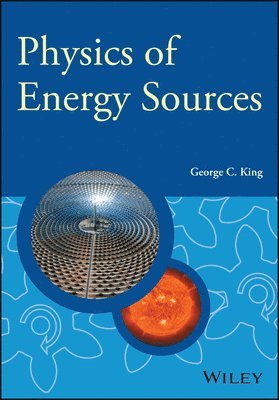
    Physics of Energy Sources

    AvGeorge C. King

    Häftad, Engelska, 2017

    Del i serien Manchester Physics Series

    731 kr

    Beställningsvara. Skickas inom 5-8 vardagar. Fri frakt över 249 kr.

    Fler format och utgåvor

    E-bok

    838 kr

    E-bok

    2 429 kr

    Inbunden

    2 036 kr

    Beskrivning

    Physics of Energy Sourcesprovides readers with a balanced presentation of the fundamental physics needed to understand and analyze conventional and renewable energy sources including nuclear, solar, wind and water power. It also presents various ways in which energy can be stored for future use. The book is an informative and authoritative text for students in the physical sciences and engineering and is based on a lecture course given regularly by the author. With the ever increasing demand for sustainable, environmentally-friendly and reliable sources of energy, the need for scientists and engineers equipped to tackle the challenges of developing and improving upon commercially viable energy sources has never been more urgent. By focusing on the physical principles governing energy production, storage, and transmission, this book provides readers with a solid foundation in the science and technology of energy sources.Physics of Energy Sources features include: Analyses of conventional and renewable energy sources in terms of underlying physical principlesIntegrated application of a wide range of physics, from classical to quantum physicsCoverage of nuclear, wind, wave, tidal, hydroelectric, geothermal and solar power, including many practical systemsConsideration of efficiency for power production as well as energy storage and transportationConsideration of key environmental issues Worked examples in text, and problems & solutions to encourage understandingDerivation of formulae with a minimum of mathematical complexity

    Produktinformation

    • Utgivningsdatum:2017-06-02
    • Mått:188 x 244 x 23 mm
    • Vikt:930 g
    • Format:Häftad
    • Språk:Engelska
    • Serie:Manchester Physics Series
    • Antal sidor:432
    • Förlag:John Wiley & Sons Inc
    • ISBN:9781119961680

    Utforska kategorier

    • Elektronik och kommunikationer inom Naturvetenskap och teknik
    • Fysik inom Naturvetenskap och teknik
    • Maskinteknik och material inom Naturvetenskap och teknik

    Mer om författaren

    George King is Emeritus Professor of Physics at the University of Manchester where he is a member of the Photon Physics Research Group. His area of research is Atomic and Molecular physics and he has published more than 200 papers in the scientific literature. He has taught a number of lecture courses in the School of Physics and Astronomy including the course Physics of Energy Sources. Professor King is author of Vibrations and Waves, which is also in the Manchester Physics Series. He has acted as External Examiner in Physics at a number of universities in both the UK and Ireland and as a scientific consultant to industry. He is married to Dr Michele Siggel-King who works in cancer research and his hobbies include playing and listening to music.

    Innehållsförteckning

    • Editors’ preface to the Manchester Physics Series xiAuthor’s preface xiii1 Introduction 11.1 Energy consumption 11.2 Energy sources 31.3 Renewable and non-renewable energy sources 51.4 The form and conversion of energy 61.4.1 Thermal energy sources 71.4.2 Mechanical energy sources 71.4.3 Photovoltaic sources 71.4.4 Energy storage 8Problems 1 92 The atomic nucleus 112.1 The composition and properties of nuclei 122.1.1 The composition of nuclei 122.1.2 The size of a nucleus 142.1.3 The distributions of nuclear matter and charge 192.1.4 The mass of a nucleus 212.1.5 The charge of a nucleus 242.1.6 Nuclear binding energy 272.1.7 Binding energy curve of the nuclides 302.1.8 The semi-empirical mass formula 322.2 Nuclear forces and energies 352.2.1 Characteristics of the nuclear force 352.2.2 Nuclear energies 362.2.3 Quantum mechanical description of a particle in a potential well 392.3 Radioactivity and nuclear stability 472.3.1 Segré chart of the stable nuclides 482.3.2 Decay laws of radioactivity 492.3.3 α, β and γ decay 57Problems 2 673 Nuclear power 713.1 How to get energy from the nucleus 713.2 Nuclear reactions 733.2.1 Nuclear reactions 733.2.2 Q-value of a nuclear reaction 743.2.3 Reaction cross-sections and reaction rates 763.3 Nuclear fission 823.3.1 Liquid-drop model of nuclear fission 833.3.2 Induced nuclear fission 863.3.3 Fission cross-sections 873.3.4 Fission reactions and products 883.3.5 Energy in fission 903.3.6 Moderation of fast neutrons 923.3.7 Uranium enrichment 933.4 Controlled fission reactions 973.4.1 Chain reactions 973.4.2 Control of fission reactions 1013.4.3 Fission reactors 1033.4.4 Commercial nuclear reactors 1053.4.5 Nuclear waste 1073.5 Nuclear fusion 1093.5.1 Fusion reactions 1103.5.2 Energy in fusion 1113.5.3 Coulomb barrier for nuclear fusion 1133.5.4 Fusion reaction rates 1133.5.5 Performance criteria 1153.5.6 Controlled thermonuclear fusion 117Problems 3 1234 Solar power 1274.1 Stellar fusion 1284.1.1 Star formation and evolution 1284.1.2 Thermonuclear fusion in the Sun: the proton–proton cycle 1314.1.3 Solar radiation 1324.2 Blackbody radiation 1344.2.1 Laws of blackbody radiation 1354.2.2 Emissivity 1374.2.3 Birth of the photon 1414.3 Solar radiation and its interaction with the Earth 1454.3.1 Characteristics of solar radiation 1454.3.2 Interaction of solar radiation with Earth and its atmosphere 1474.3.3 Penetration of solar energy into the ground 1554.4 Geothermal energy 1594.4.1 Shallow geothermal energy 1604.4.2 Deep geothermal energy 1614.5 Solar heaters 1624.5.1 Solar water heaters 1624.5.2 Heat transfer processes 1654.5.3 Solar thermal power systems 1724.6 Heat engines: converting heat into work 1744.6.1 Equation of state of an ideal gas 1754.6.2 Internal energy, work and heat: the first law of thermodynamics 1774.6.3 Specific heats of gases 1814.6.4 Isothermal and adiabatic expansion 1834.6.5 Heat engines and the second law of thermodynamics 185Problems 4 1965 Semiconductor solar cells 2015.1 Introduction 2015.2 Semiconductors 2045.2.1 The band structure of crystalline solids 2045.2.2 Intrinsic and extrinsic semiconductors 2085.3 The p–n junction 2145.3.1 The p–n junction in equilibrium 2145.3.2 The biased p–n junction 2175.3.3 The current–voltage characteristic of a p–n junction 2195.3.4 Electron and hole concentrations in a semiconductor 2225.3.5 The Fermi energy in a p–n junction 2275.4 Semiconductor solar cells 2295.4.1 Photon absorption at a p–n junction 2295.4.2 Power generation by a solar cell 2315.4.3 Maximum power delivery from a solar cell 2355.4.4 The Shockley–Queisser limit 2385.4.5 Solar cell construction 2405.4.6 Increasing the efficiency of solar cells and alternative solar cell materials 243Problems 5 2486 Wind power 2516.1 A brief history of wind power 2516.2 Origin and directions of the wind 2536.2.1 The Coriolis force 2536.3 The flow of ideal fluids 2566.3.1 The continuity equation 2576.3.2 Bernoulli’s equation 2586.4 Extraction of wind power by a turbine 2636.4.1 The Betz criterion 2656.4.2 Action of wind turbine blades 2686.5 Wind turbine design and operation 2716.6 Siting of a wind turbine 277Problems 6 2807 Water power 2837.1 Hydroelectric power 2847.1.1 The hydroelectric plant and its principles of operation 2847.1.2 Flow of a viscous fluid in a pipe 2867.1.3 Hydroelectric turbines 2887.2 Wave power 2917.2.1 Wave motion 2927.2.2 Water waves 3067.2.3 Wave energy converters 3197.3 Tidal power 3247.3.1 Origin of the tides 3257.3.2 Variation and enhancement of tidal range 3357.3.3 Harnessing tidal power 341Problems 7 3468 Energy storage 3498.1 Types of energy storage 3508.2 Chemical energy storage 3518.2.1 Biological energy storage 3518.2.2 Hydrogen energy storage 3518.3 Thermal energy storage 3528.4 Mechanical energy storage 3558.4.1 Pumped hydroelectric energy storage 3558.4.2 Compressed air energy storage 3578.4.3 Flywheel energy storage 3618.5 Electrical energy storage 3648.5.1 Capacitors and super-capacitors 3658.5.2 Superconducting magnetic storage 3678.5.3 Rechargeable batteries 3688.5.4 Fuel cells 3708.6 Distribution of electrical power 372Problems 8 374Solutions to problems 377Index 397