• Fri frakt över 249 kr
  • •
  • Snabba leveranser
  • •
  • Billiga böcker
Kundservice

Du är på sajten för privatpersoner.

Företag, bibliotek eller offentlig verksamhet?

Du handlar på classic.bokus.com, där alla dina funktioner finns intakta.
Till classic.bokus.com
Bokus logotyp. Gå till startsidan.
  • Erbjudanden
  • Nyheter
  • Student
  • Topplistor
  • Barn & ungdom
  • Bokus Play
  • E-böcker
  • Pocketböcker
  • Spel & pussel

10% rabatt på allt med kod: NYSTART10 →

Sidfot

Mina sidor

    Hjälp

    • Kundservice
    • Vanliga frågor och svar
    • Frakt och leverans
    • Retur vid ångerrätt
    • Reklamera vara
    • Betalning
    • Köpvillkor
    • Allmänna villkor
    • Information om webbplatsens tillgänglighet

    Om Bokus

    • Om oss
    • Pressrum
    • För studenter
    • För företag
    • För bibliotek och offentlig verksamhet
    • För leverantörer
    • Hållbarhet

    Populärt

    • Aktuella erbjudanden
    • Presentkort
    • Studentlitteratur
    • Nya böcker
    • Topplistor
    • Signerade böcker
    • Engelska böcker

    Inspiration

    • Boktips
    • BookTok
    • Populära bokserier
    • Barnbokskaraktärer
    • Populära författare
    Logotyp för Bokus
    Följ oss på Facebook (extern länk)Följ oss på Instagram (extern länk)Följ oss på YouTube (extern länk)Följ oss på TikTok (extern länk)
    bokus @ CookiesAnpassa cookiesIntegritetspolicyKöpvillkor
    Till Citymail hemsida (extern länk)Till Budbee hemsida (extern länk)Till Postnord hemsida (extern länk)Till Schenker hemsida (extern länk)Till Early Bird hemsida (extern länk)Till Walleys hemsida (extern länk)
    1. Ekonomi och Ledarskap
    2. Nationalekonomi
    3. Mikroekonomi

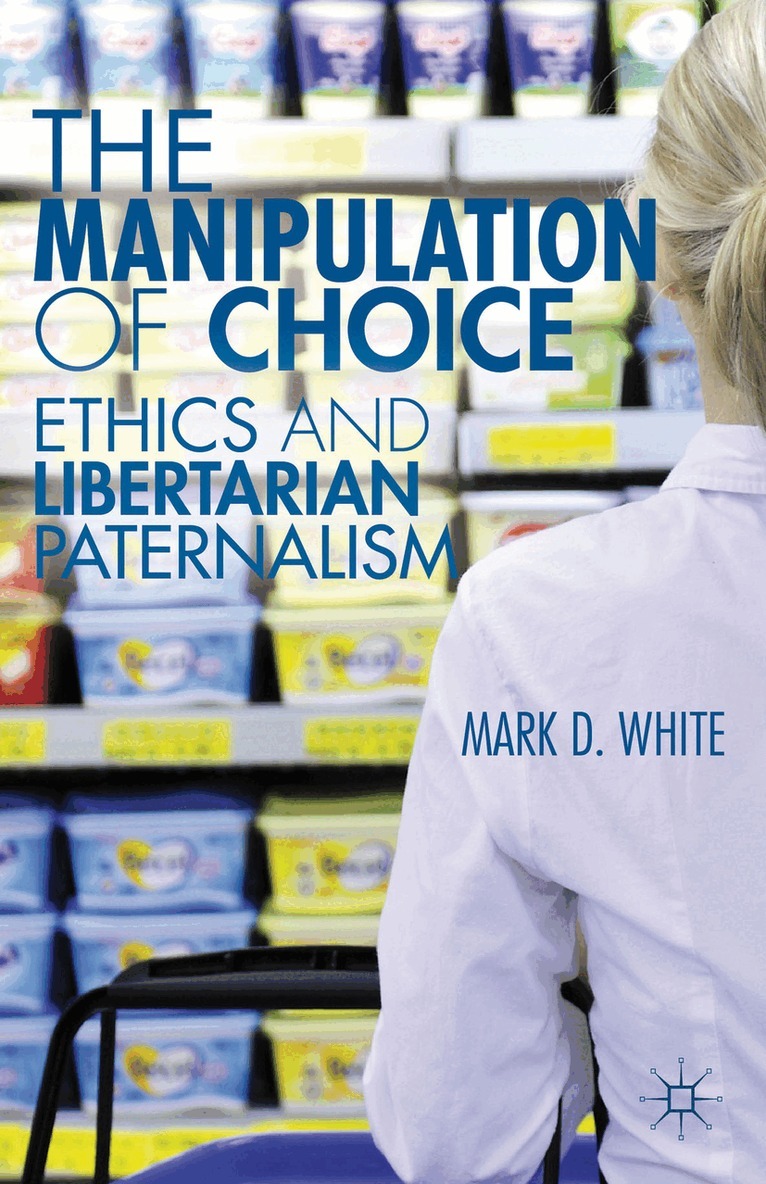
    Manipulation of Choice

    Ethics and Libertarian Paternalism

    AvM. White

    Häftad, Engelska, 2013

    1 119 kr

    Beställningsvara. Skickas inom 10-15 vardagar. Fri frakt över 249 kr.

    Fler format och utgåvor

    Inbunden

    1 119 kr

    E-bok

    1 546 kr

    Beskrivning

    This timely book makes a forceful argument that the analyses from behavioral economists are incomplete, the policies advocated by libertarian paternalists are misguided and unethical, and both actually reinforce the cognitive biases and dysfunctions that motivate 'nudges' in the first place. In a lighthearted manner, the author points out critical flaws in the way economists model decision-making, how behavioral economics failed to correct them, and how they led to the problems with libertarian paternalism and nudges. Sprinkled throughout with anecdotes, examples, and references to a wide range of scholarly literature, this new volume argues against the use of paternalistic nudges by the government and makes a positive case for individual choice and autonomy.This book is part of White's triptych on individualism and society, which includes The Illusion of Well-Being and The Decline of the Individual.

    Produktinformation

    • Utgivningsdatum:2013-02-04
    • Mått:140 x 216 x 11 mm
    • Vikt:260 g
    • Format:Häftad
    • Språk:Engelska
    • Antal sidor:185
    • Upplaga:2013
    • Förlag:Palgrave Macmillan
    • ISBN:9781137287762

    Utforska kategorier

    • Mikroekonomi inom Ekonomi och Ledarskap

    Mer om författaren

    Mark D. White is Chair of the Department of Philosophy at the College of Staten Island, City University of New York, USA, where he teaches courses in philosophy, economics, and law. He is the author of four books, including The Illusion of Well-Being (2014) and The Manipulation of Choice (2013), plus over forty journal articles and book chapters in the intersections between his three fields. He has also edited or co-edited a number of books, including Retributivism (2011), The Thief of Time (with Chrisoula Andreou, 2010), and Theoretical Foundations of Law and Economics (2009), and he is the editor of the Perspectives from Social Economics series at Palgrave Macmillan.

    Recensioner i media

    "The 'libertarian paternalism' theory promises to use the state to help correct citizens' wrong decisions without asking their consent, yet also without truly entering the realm of coercion. Too good to be true? Indeed it is, as this book helps to show. Mark White gives us the sort of analysis we need to nudge back." - Walter Olson, Senior Fellow, Cato Institute, USA "The Manipulation of Choice states that paternalists impose their own values and goals onto hapless consumers and citizens. Hence, public policies designed to correct the imperfections of behavioral irrationality are coercive. This is an important point and one that needs to be debated." - Jonathan B. Wight, Professor of Economics and International Studies, University of Richmond, USA "An important book on a timely topic. The Manipulation of Choice is an accessible book that is especially well suited for students. But it is also a welcome challenge to a currently fashionable theory that libertarians and paternalists alike should read with pleasure. Mark White ... challenges the moral foundations of the entire research program." - The Independent Review "The work is a solid, compelling read for anyone interested in a concise but comprehensive account of the case against libertarian paternalism and its theoretical foundations. In the course of battling libertarian paternalism and its underlying theories, White simultaneously builds a positive case for individual freedom in defence of more traditional, non-paternalistic paradigms of libertarian philosophy and economics." - Erasmus Journal for Philosophy and Economics "White addresses our increasing faith in quantification ... The more relentlessly you measure people's behavior, the greater the temptation to steer that behavior in subtle and sometimes not-so-subtle ways ... A quantified state optimizes outcomes by narrowing possibilities - and establishing 'efficiency and uplift for all' as the new national mandate. You don't need a sophisticated sensor network to register that as a step backward." - Greg Beato, Reason, on The Manipulation of Choice and The Illusion of Well-Being

    Innehållsförteckning

    • The Problem with Economic Models of Choice How Behavioral Economists Make These Problems Worse, Not Better How Behavioral Economics Met Law-and-Economics and Begat Nudge Why Nudge Can't Work Why Nudge Is Unethical Why Nudge Will Backfire in the Long Run Why Nudge is Paternalistic (and Hardly Libertarian) - and Why Paternalism Is Wrong Why Choice is Valuable and Should Be Yours to Make