• Fri frakt över 249 kr
  • •
  • Snabba leveranser
  • •
  • Billiga böcker
Kundservice

Du är på sajten för privatpersoner.

Företag, bibliotek eller offentlig verksamhet?

Du handlar på classic.bokus.com, där alla dina funktioner finns intakta.
Till classic.bokus.com
Bokus logotyp. Gå till startsidan.
  • Erbjudanden
  • Nyheter
  • Student
  • Topplistor
  • Barn & ungdom
  • Bokus Play
  • E-böcker
  • Pocketböcker
  • Spel & pussel

10% rabatt på allt med kod: NYSTART10 →

Sidfot

Mina sidor

    Hjälp

    • Kundservice
    • Vanliga frågor och svar
    • Frakt och leverans
    • Retur vid ångerrätt
    • Reklamera vara
    • Betalning
    • Köpvillkor
    • Allmänna villkor
    • Information om webbplatsens tillgänglighet

    Om Bokus

    • Om oss
    • Pressrum
    • För studenter
    • För företag
    • För bibliotek och offentlig verksamhet
    • För leverantörer
    • Hållbarhet

    Populärt

    • Aktuella erbjudanden
    • Presentkort
    • Studentlitteratur
    • Nya böcker
    • Topplistor
    • Signerade böcker
    • Engelska böcker

    Inspiration

    • Boktips
    • BookTok
    • Populära bokserier
    • Barnbokskaraktärer
    • Populära författare
    Logotyp för Bokus
    Följ oss på Facebook (extern länk)Följ oss på Instagram (extern länk)Följ oss på YouTube (extern länk)Följ oss på TikTok (extern länk)
    bokus @ CookiesAnpassa cookiesIntegritetspolicyKöpvillkor
    Till Citymail hemsida (extern länk)Till Budbee hemsida (extern länk)Till Postnord hemsida (extern länk)Till Schenker hemsida (extern länk)Till Early Bird hemsida (extern länk)Till Walleys hemsida (extern länk)
    1. Samhälle och politik
    2. Sociologi och antropologi
    3. Sociologi

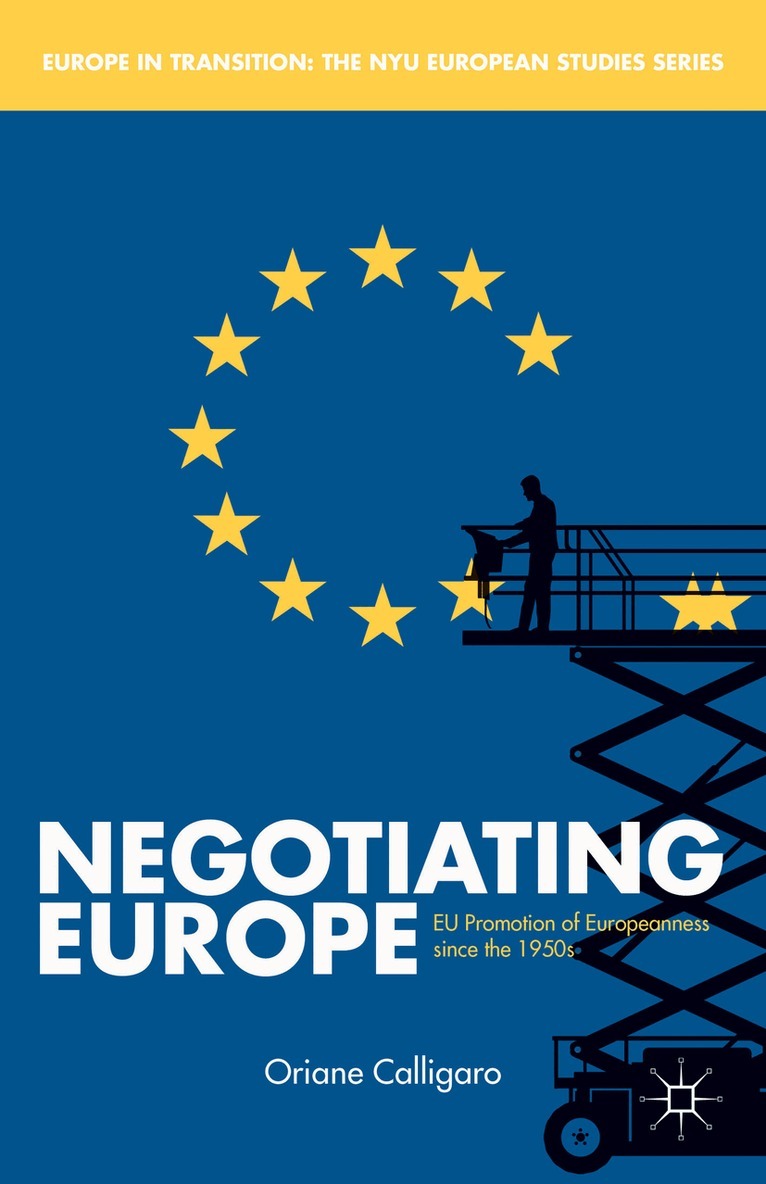
    Negotiating Europe

    EU Promotion of Europeanness since the 1950s

    AvO. Calligaro

    Inbunden, Engelska, 2013

    Del i serien Europe in Transition: The NYU European Studies Series

    547 kr

    Beställningsvara. Skickas inom 10-15 vardagar. Fri frakt över 249 kr.

    Fler format och utgåvor

    E-bok

    838 kr

    Häftad

    601 kr

    Beskrivning

    The book explores the promotion of Europeanness, which aims to arouse feelings of belonging to the European Union. It demonstrates that the promotion of Europeanness at the EU level does not constitute an overarching identity policy that imposes a homogenous interpretation of European identity. Rather, it is a process of negotiation in which various entrepreneurs of Europeanness within and outside the EU institutions invent and communicate representations of Europe. Both the negotiation and the multilayered representations of Europe that it produces are investigated through three case studies: the academia and the historians, European heritage, and the iconography of the euro.

    Produktinformation

    • Utgivningsdatum:2013-12-18
    • Mått:140 x 216 x 18 mm
    • Vikt:431 g
    • Format:Inbunden
    • Språk:Engelska
    • Serie:Europe in Transition: The NYU European Studies Series
    • Antal sidor:252
    • Upplaga:2013
    • Förlag:Palgrave Macmillan
    • ISBN:9781137369895

    Utforska kategorier

    • Sociologi inom Samhälle och politik
    • Politik och statsskick inom Samhälle och politik
    • Internationella relationer inom Samhälle och politik

    Mer om författaren

    PhD (2007-2011) European University Institute (Italy), Department of History and Civilization, defended on 8 July 2011. - Thesis: Negotiating Europe: EU Promotion of Europeanness and Non-Institutional Actors since the 1950s - Supervisor: Prof. Kiran K. Patel - Examining board: Juan Díez Medrano (Universidad de Barcelona/Universidad Carlos III de Madrid), François Foret (Université Libre de Bruxelles), Rainer Bauböck (European University Institute), Kiran K. Patel (European University Institute/Maastricht University);

    Recensioner i media

    "Calligaro's book is persuasively argued and thoroughly researched. The three thematic case studies have added up to a challenging, but admirably well mastered research deign. ... Oriane Calligaro has ... wisely kept her focus tight and invested in the high quality of the empirical research and on conceptual innovation. Scholars of the EU from various disciplines, but also anyone interested in the uses of history, culture and symbols in European politics will find this book very valuable." (Juhana Aunesluoma, European Review of International Studies, Vol. 2 (3), 2015)

    Innehållsförteckning

    • Tintroduction 1. Identity, Culture And Political Symbolism In The European Integration Process: A Brief Account Of The Literature 2. Negotiating The Representation Of Europe: The EU And The Non-Institutional Actors 3. Chronology, Method And Sources 4. Structure Of The Book The European Commission's Action In The Academic And Historical Fields I. The Jean Monnet Action: 'Europe In The University Programs' 1. Background: Birth Of The University Information Policy 1.1. The Universities: A Specific Target Of European Information 1.2. The First Initiatives In The Academic Milieu 1.3. The Promotion Of European Studies: The French Case And The Role Of Emile Noël 2. The Jean Monnet Action: An Initiative Of The University Information Unit Of The DG X In Partnership With The Academic Actors 2.1. European Chairs: An Old Concept Re-Launched In 1987 2.2. The Project Of European Chairs: An Initiative Of The Commission… 2.3. …Which Involved At An Early Stage University Actors 3. Launching The Jean Monnet Action: The Institutional Process 3.1. Presenting The Project To The European Commission 3.2. The EP: A Reliable Ally 3.3. The Approval Of The Council And The Battle Of The Budget 4. The Development Of The Jean Monnet Action 4.1. A Mediator Between The European Commission And The Universities: The European University Council For The Jean Monnet Action 4.2. The Success Of The Jean Monnet Action: A 'Punctual Action' Which Became A Large Scale Program 4.3. The Reform Of The Commission And The End Of The 'University Information' Concept II. The European Commission And Historians: The Failed Utopia Of A Militant Approach To European History? 1. The Promotion Of A New Field Of Research: European Integration History 1.1. A First Tentative Measure: European Integration History At The European University Institute 1.2. A New Attempt: The Symposium Of Professors Of Contemporary History In 1982 2. The Liaison Committee Of Historians, An Ambiguous Creation Of The European Commission 2.1. WhoSets The Agenda Of The Liaison Committee Of Historians? 2.2. The Specific Case Of Oral History 2.3. The Project 'European Identity And Consciousness In The 20th Century' 3. A European History Of Europe: The Duroselle/Delouche Project 3.1. Competing Projects On History Of Europe 3.2. The Delouche/Duroselle Project: A Teleological Vision Of European History 3.3. The European Commission's Support 3.4. The Greek Protests And The Commission's Disengagement 4. The Reconfiguration Of Relations Between The European Commission And Historians 4.1. The Failed Project 'Europe's Image' 4.2. The Supplanting Of The Liaison Committee By The Jean Monnet Network: The Example Of The Project Of Oral History 4.3. The Discontent Of The Commission Concerning The Liaison Committee 4.4. The History Of The European Commission: The Ultimate Achievement Of The Liaison Committee? Conclusion Using And Negotiating European Cultural Heritage, 1973-2007 I. From The Introduction Of The Concept Of Cultural Heritage To The Slow Institutionalization Of EU Action In The Field 1. How Cultural Heritage Was Introduced In The European Agenda 1.1. International Background And Council Of Europe Initiatives In Favor Of Heritage 1.2. The European Community In The Middle 1970s: Search For A 'Human' Dimension Of The Integration Process And First Reflection On A Cultural Action 1.3. A Determining Actor Behind The Scenes: Robert Grégoire 2. The Concept Of Heritage: An Instrument For The Promotion Of A Community Action In The Cultural Sector 2.1. The EC In Search Of A More Human Identity 2.2. The Long Process Of Institutionalization Of The Community Action In The Field Of Heritage II. Which European Heritage And For What Purpose? Instrumentalization Of The Concept Of European Heritage And Diversification Of Its Interpretation 1. An Instrumentalization Of Culture? Definition And Use Of The Concept Of European Heritage 1.1. A Conceptual Background: The Problematic Definition Of A European Culture 1.2. What Is EuropeanCultural Heritage? 1.3. The Europeanization Of Heritage 2. European Heritage As A Political Resource: The Decentralized Use Of Heritage 2.1. An Extensive Conception Of Cultural Heritage: The Example Of Industrial Heritage 2.2. The Minority Cultures And Languages As An Integral Part Of European Heritage 3. A Recent Major Evolution: The Recognition Of A Negative Dimension Of The European Heritage 3.1. The Impulse Given By The EP 3.2. The Inclusion Of A Negative Heritage In EU Programs: The First Steps Towards A Reflection On The Dark Sides Of Europe's Past? Conclusion Designing Europeanness: Euro Banknotes And Coins I. Historical And Theoretical Context Of The Euro Iconography 1. The Principal Steps Of The EMU And The Main Actors Responsible For The Selection Of The Iconography Of The Euro 1.1. Origins And Principal Steps Of The EMU 1.2. The Main Actors Of The Selection Process Of The Euro Iconography 2. An Introduction To The Role Of Currency In Identity-Building Process 2.1. The EMU,European Integration And The Significance Of The National Model 2.2. Money As Medium Of Social Communication And Marker Of National Identity 2.3. The Issue Of Trust 3. The Difficult Choice Of The Name Of The European Single Currency 3.1. The Omnipresence Of The Historical References 3.2. Historical Neutrality Prevails II. Imagining The European Currency Before The Euro: Private And Public Iconographic Experimentations As Representations Of European Integration 1. European Coins Before The Euro: From Federalist Dreams To Advertising Devices 1.1. The Federalist Tokens: Symbols Of A Desired European Currency And Instruments Of Propaganda 1.2. The Experimentations Of The National Mints: Blueprints For The Euro Coins 1.3. The European Currency From A Local Perspective 2. The 'Graphic Ecu Competition', A 'Citizen's Initiative' 2.1. The Central Bankers' Defiance 2.2. The Support Of The EU Institutions 2.3. The Competition 2.4. The 'Graphic Ecu Competition' In The Press: The Defeat Of A More Democratic Europe? III. A Meaningful Abstraction: The Iconography Of The Euro Banknotes 1. How The EMI Tried To Square The Circle: A European Cultural Heritage With No Trace Of The Nation-State 1.1. The Bankers And The Euro: Between Economic Efficiency, National Interests And European Identity 1.2. The Design And Heritage 'Experts': How Is European Heritage Negotiated At The European Level? 2. The Choice Of Robert Kalina's 'Abstract' Design 2.1. The Competition 2.2. The Central Bankers' Final Decision 3. The Interpretation Of Kalina's Iconography 3.1. The Euro Banknotes: Faceless Money Or Aesthetic Revolution? 3.2. A Vision Of Europe's Time And Space IV. A Double-Faced European Identity? The Iconography Of The Euro Coins 1. Mapping The Boundaries Of Europe: The Common Face Of The Euro Coins 1.1. The Member States' Choice: A Two-Sided Euro Coin 1.2. The Design Of The Common European Side Of The Euro Coin 1.3. The Euro Coins' Political Geography 2. The National Sides Of Euro Coins 2.1. Processes Of Selection 2.2. The Main Characteristics Of The National Iconographies 2.3. Symbolic Dialogue Between The Different Levels Of The Euro Iconography 2.4. National Identity And Sovereignty Conclusion Abbreviations Sources Bibliography