• Fri frakt över 249 kr
  • •
  • Snabba leveranser
  • •
  • Billiga böcker
Kundservice

Du är på sajten för privatpersoner.

Företag, bibliotek eller offentlig verksamhet?

Du handlar på classic.bokus.com, där alla dina funktioner finns intakta.
Till classic.bokus.com
Bokus logotyp. Gå till startsidan.
  • Erbjudanden
  • Nyheter
  • Student
  • Topplistor
  • Barn & ungdom
  • Bokus Play
  • E-böcker
  • Pocketböcker
  • Spel & pussel

10% rabatt på allt med kod NYSTART10 →

Sidfot

Mina sidor

    Hjälp

    • Kundservice
    • Vanliga frågor och svar
    • Frakt och leverans
    • Retur vid ångerrätt
    • Reklamera vara
    • Betalning
    • Köpvillkor
    • Allmänna villkor
    • Information om webbplatsens tillgänglighet

    Om Bokus

    • Om oss
    • Pressrum
    • För studenter
    • För företag
    • För bibliotek och offentlig verksamhet
    • För leverantörer
    • Hållbarhet

    Populärt

    • Aktuella erbjudanden
    • Presentkort
    • Studentlitteratur
    • Nya böcker
    • Topplistor
    • Signerade böcker
    • Engelska böcker

    Inspiration

    • Boktips
    • BookTok
    • Populära bokserier
    • Barnbokskaraktärer
    • Populära författare
    Logotyp för Bokus
    Följ oss på Facebook (extern länk)Följ oss på Instagram (extern länk)Följ oss på YouTube (extern länk)Följ oss på TikTok (extern länk)
    bokus @ CookiesAnpassa cookiesIntegritetspolicyKöpvillkor
    Till Citymail hemsida (extern länk)Till Budbee hemsida (extern länk)Till Postnord hemsida (extern länk)Till Schenker hemsida (extern länk)Till Early Bird hemsida (extern länk)Till Walleys hemsida (extern länk)
    1. Samhälle och politik
    2. Krig och försvar

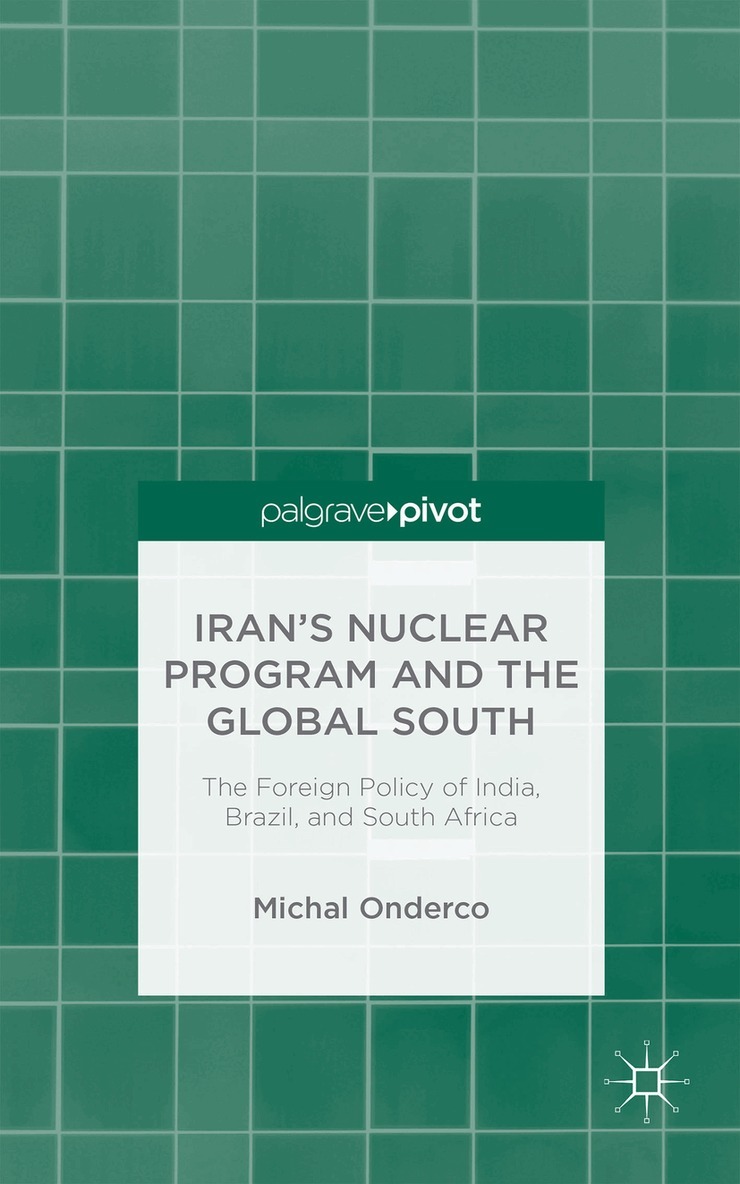
    Iran's Nuclear Program and the Global South

    The Foreign Policy of India, Brazil, and South Africa

    AvM. Onderco

    Inbunden, Engelska, 2015

    546 kr

    Beställningsvara. Skickas inom 10-15 vardagar. Fri frakt över 249 kr.

    Fler format och utgåvor

    E-bok

    755 kr

    Beskrivning

    This book studies the reactions of India, Brazil, and South Africa the three main non-proliferation actors of the Global South to Iran's nuclear program. Their responses are explained and situated in wider foreign policy context.

    Produktinformation

    • Utgivningsdatum:2015-07-07
    • Mått:140 x 216 x 11 mm
    • Vikt:299 g
    • Format:Inbunden
    • Språk:Engelska
    • Antal sidor:107
    • Upplaga:2015
    • Förlag:Palgrave Macmillan
    • ISBN:9781137499066

    Utforska kategorier

    • Krig och försvar inom Samhälle och politik
    • Statsvetenskap och politisk teori inom Samhälle och politik
    • Internationella relationer inom Samhälle och politik

    Mer om författaren

    Michal Onderco is Max Weber Fellow at the European University Institute, Florence, Italy. He received his PhD in political science from Vrije Universiteit Amsterdam, The Netherlands. He was previously a Fulbright Visiting Researcher at Columbia University, New York, USA. His research is focused on the politics of international institutions, the Global South, and nuclear proliferation.

    Recensioner i media

    "Why do some states that claim to support non-proliferation nonetheless refuse to support non-proliferation measures, such as sanctions against Iran? Michal Onderco's book provides an insightful window into this question, arguing that ideational considerations shape state foreign policy responses just as much as material factors. Onderco's book is an important work that informs the fields of nuclear politics and comparative foreign policy more generally." - Maria Rost Rublee, Australian National University, Australia "Michal Onderco's illuminating book describes the similarities and differences between the foreign policies of Brazil, India, and South Africa vis-a-vis the Iranian nuclear program. The reader learns a lot on how these rising powers view themselves in the future constellation of world politics." - Tom Sauer, University of Antwerp, Belgium

    Innehållsförteckning

    • 1. Introduction 2. The Global South, Nuclear Politics and Iran 3. India 4. Brazil 5. South Africa 6. Conclusion