• Fri frakt över 249 kr
  • •
  • Snabba leveranser
  • •
  • Billiga böcker
Kundservice

Du är på sajten för privatpersoner.

Företag, bibliotek eller offentlig verksamhet?

Du handlar på classic.bokus.com, där alla dina funktioner finns intakta.
Till classic.bokus.com
Bokus logotyp. Gå till startsidan.
  • Erbjudanden
  • Nyheter
  • Student
  • Topplistor
  • Barn & ungdom
  • Bokus Play
  • E-böcker
  • Pocketböcker
  • Spel & pussel

10% rabatt på allt med kod: NYSTART10 →

Sidfot

Mina sidor

    Hjälp

    • Kundservice
    • Vanliga frågor och svar
    • Frakt och leverans
    • Retur vid ångerrätt
    • Reklamera vara
    • Betalning
    • Köpvillkor
    • Allmänna villkor
    • Information om webbplatsens tillgänglighet

    Om Bokus

    • Om oss
    • Pressrum
    • För studenter
    • För företag
    • För bibliotek och offentlig verksamhet
    • För leverantörer
    • Hållbarhet

    Populärt

    • Aktuella erbjudanden
    • Presentkort
    • Studentlitteratur
    • Nya böcker
    • Topplistor
    • Signerade böcker
    • Engelska böcker

    Inspiration

    • Boktips
    • BookTok
    • Populära bokserier
    • Barnbokskaraktärer
    • Populära författare
    Logotyp för Bokus
    Följ oss på Facebook (extern länk)Följ oss på Instagram (extern länk)Följ oss på YouTube (extern länk)Följ oss på TikTok (extern länk)
    bokus @ CookiesAnpassa cookiesIntegritetspolicyKöpvillkor
    Till Citymail hemsida (extern länk)Till Budbee hemsida (extern länk)Till Postnord hemsida (extern länk)Till Schenker hemsida (extern länk)Till Early Bird hemsida (extern länk)Till Walleys hemsida (extern länk)
    1. Ekonomi och Ledarskap
    2. Industrier och branscher
    3. Byggnadsindustri och tung industri

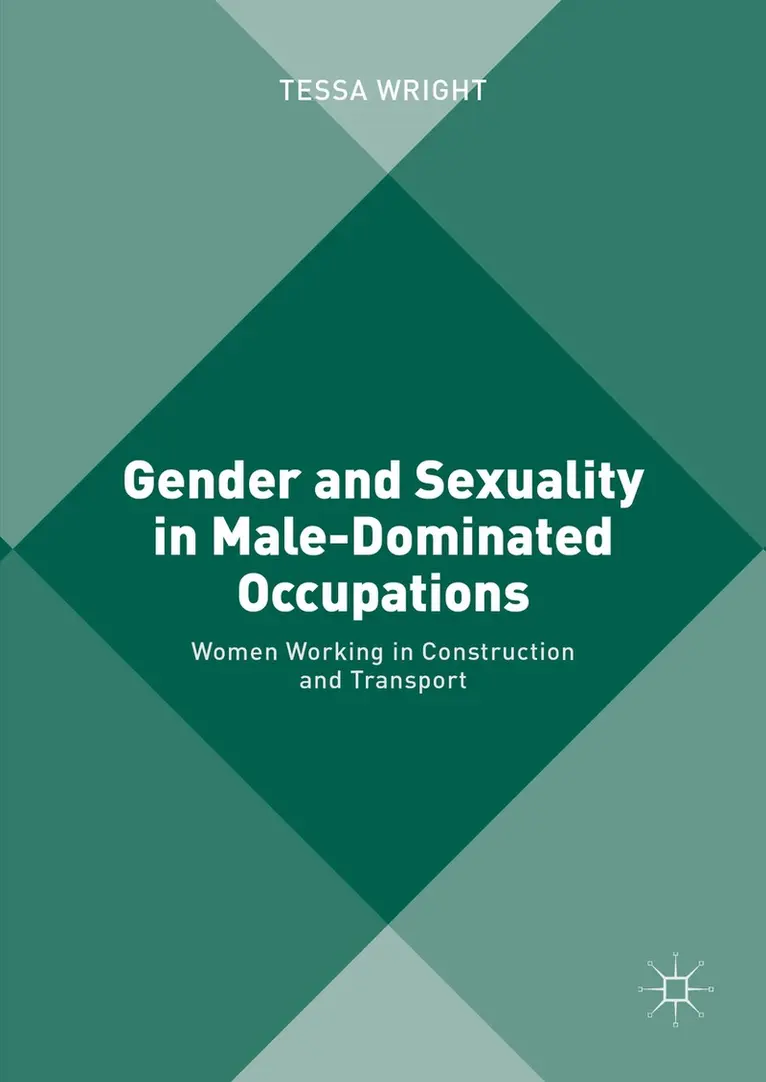
    Gender and Sexuality in Male-Dominated Occupations

    Women Working in Construction and Transport

    AvTessa Wright

    Inbunden, Engelska, 2016

    1 119 kr

    Beställningsvara. Skickas inom 10-15 vardagar. Fri frakt över 249 kr.

    Fler format och utgåvor

    E-bok

    1 501 kr

    Beskrivning

    Examining women’s diverse experiences of male-dominated work, this ground-breaking book explores what sexuality and gender means to women working in the construction and transport industries. Using accounts from heterosexual women and lesbians working in professional, manual and operational roles, Gender and Sexuality in Male-Dominated Occupations adopts an intersectional approach to examine advantage and disadvantage on the basis of gender, sexuality and occupational class in these sectors. Drawing on interviews and focus groups, the author examines why women choose to enter male-dominated industries, their experiences of workplace relations, their use of women’s support networks and trade unions, and the interface between home and work lives. Presenting international and UK-based examples of effective interventions to increase women’s participation in male-dominated work, this important book highlights the need for political will to tackle women’s underrepresentation, and suggests directions for the future.

    Produktinformation

    • Utgivningsdatum:2016-07-08
    • Mått:148 x 210 x 21 mm
    • Vikt:508 g
    • Format:Inbunden
    • Språk:Engelska
    • Antal sidor:287
    • Upplaga:16001
    • Förlag:Palgrave Macmillan
    • ISBN:9781137501349

    Utforska kategorier

    • Byggnadsindustri och tung industri inom Ekonomi och Ledarskap

    Mer om författaren

    Tessa Wright is a senior lecturer in Human Resource Management at the Centre for Research in Equality and Diversity, Queen Mary University of London, UK. Her research covers equality and discrimination at work, with an interest in strategies for advancing equality, including through trade unions.

    Innehållsförteckning

    • 1 Introduction.- 1.1 The policy context for addressing gender inequality at work.- 1.2 Progress on LGBT rights.- 1.3 The research.- 1.4 Outline of the book.- 2 Understanding gender, sexuality and occupation in male-dominated work.- 2.1 Occupational gender segregation.- 2.1.1 The effects of occupational gender segregation.- 2.1.2 Theories of occupational gender segregation.- 2.2 Women in non-traditional work.- 2.2.1 ‘One of the boys’.- 2.2.2 Sexuality and embodiment.- 2.2.3 Where are the lesbians?.- 2.3 LGBT experience at work.- 2.3.1 Disclosure of minority sexuality.- 2.3.2 Class and sexuality at work.- 2.3.3 The fluidity of sexual identities.- 2.4 Theories of sexuality.- 2.5 Intersectionality.- 2.6 Conclusion.- 3 Gender segregation in the construction and transport sectors.- 3.1 Women’s participation in construction and transport work.- 3.1.1 Women in UK construction and transport.- 3.1.2 International comparisons.- 3.2 Education, training and career choice.- 3.3 Working in construction and transport occupations.- 3.3.1 Working in construction.- 3.3.2 Working in transport.- 3.3.3 Work patterns and hours.- 3.4 Conclusion.- 4 Occupational choice, gender and sexual identity.- 4.1 Choosing non-traditional occupations.- 4.1.1 Occupational trajectories.- 4.1.2 Choice and material realities.- 4.1.3 Work choice and identity.- 4.2 Identities at work.- 4.2.1 Gendered bodies at work.- 4.2.2 Minority sexual identity at work.- 4.2.3 Empowerment, work and gender identity.- 4.3 Conclusion.- 5 Workplace interactions in male-dominated organisations.- 5.1 (Hetero)sexualised interactions.- 5.2 Minority sexuality in the workplace: reducing sexual tension?.- 5.3 Sexual and homophobic harassment.- 5.3.1 Heterosexual women’s experience.- 5.3.2 Lesbians’ experience.- 5.4 Managing men.- 5.5 Supportive workplace relations.- 5.6 Conclusion.- 6 Support and solidarity: networks and trade unions.- 6.1 Relations with female colleagues.- 6.2 Industry and professional networks for women.- 6.3 Staff networks.- 6.4 Trade unions.- 6.4.1 Union membership.- 6.4.2 Trade unions as sources of support.- 6.4.3 Attitudes towards women’s and LGBT separate organising.- 6.4.4 Challenging inequality within unions.- 6.5 Conclusion.- 7 Managing working hours and domestic life.- 7.1 Gender, sexuality and the division of labour.- 7.2 Working hours and flexibility.- 7.3 Negotiating work and domestic circumstances.- 7.4 The significance of earnings.- 7.5 An alternative division of labour?.- 7.6 Conclusion.- 8 Effective interventions for change.- 8.1 Attracting and recruiting women into non-traditional occupations.- 8.2 Retaining women in non-traditional work.- 8.2.1 Workpatterns and flexible working.- 8.2.2 Support.- 8.3 Setting employment equality objectives.- 8.4 The role of the law.- 8.4.1 Great Britain.- 8.4.2 South Africa.- 8.4.3 The United States.- 8.5 Conclusion.- 9 Conclusions.- 9.1 The value of an intersectional approach.- 9.1.1 Identities and occupational choice.- 9.1.2 Interactions at work.- 9.1.3 Use of support and networks.- 9.1.4 Managing work and home.- 9.2 The challenges of an intersectional approach.- 9.3 Prospects for the future.- Appendix: Table of women worker interviewees.- Bibliography