• Fri frakt över 249 kr
  • •
  • Snabba leveranser
  • •
  • Billiga böcker
Kundservice

Du är på sajten för privatpersoner.

Företag, bibliotek eller offentlig verksamhet?

Du handlar på classic.bokus.com, där alla dina funktioner finns intakta.
Till classic.bokus.com
Bokus logotyp. Gå till startsidan.
  • Erbjudanden
  • Nyheter
  • Student
  • Topplistor
  • Barn & ungdom
  • Bokus Play
  • E-böcker
  • Pocketböcker
  • Spel & pussel

10% rabatt på allt med kod: NYSTART10 →

Sidfot

Mina sidor

    Hjälp

    • Kundservice
    • Vanliga frågor och svar
    • Frakt och leverans
    • Retur vid ångerrätt
    • Reklamera vara
    • Betalning
    • Köpvillkor
    • Allmänna villkor
    • Information om webbplatsens tillgänglighet

    Om Bokus

    • Om oss
    • Pressrum
    • För studenter
    • För företag
    • För bibliotek och offentlig verksamhet
    • För leverantörer
    • Hållbarhet

    Populärt

    • Aktuella erbjudanden
    • Presentkort
    • Studentlitteratur
    • Nya böcker
    • Topplistor
    • Signerade böcker
    • Engelska böcker

    Inspiration

    • Boktips
    • BookTok
    • Populära bokserier
    • Barnbokskaraktärer
    • Populära författare
    Logotyp för Bokus
    Följ oss på Facebook (extern länk)Följ oss på Instagram (extern länk)Följ oss på YouTube (extern länk)Följ oss på TikTok (extern länk)
    bokus @ CookiesAnpassa cookiesIntegritetspolicyKöpvillkor
    Till Citymail hemsida (extern länk)Till Budbee hemsida (extern länk)Till Postnord hemsida (extern länk)Till Schenker hemsida (extern länk)Till Early Bird hemsida (extern länk)Till Walleys hemsida (extern länk)
    1. Ekonomi och Ledarskap
    2. Nationalekonomi
    3. Ekonomisk historia

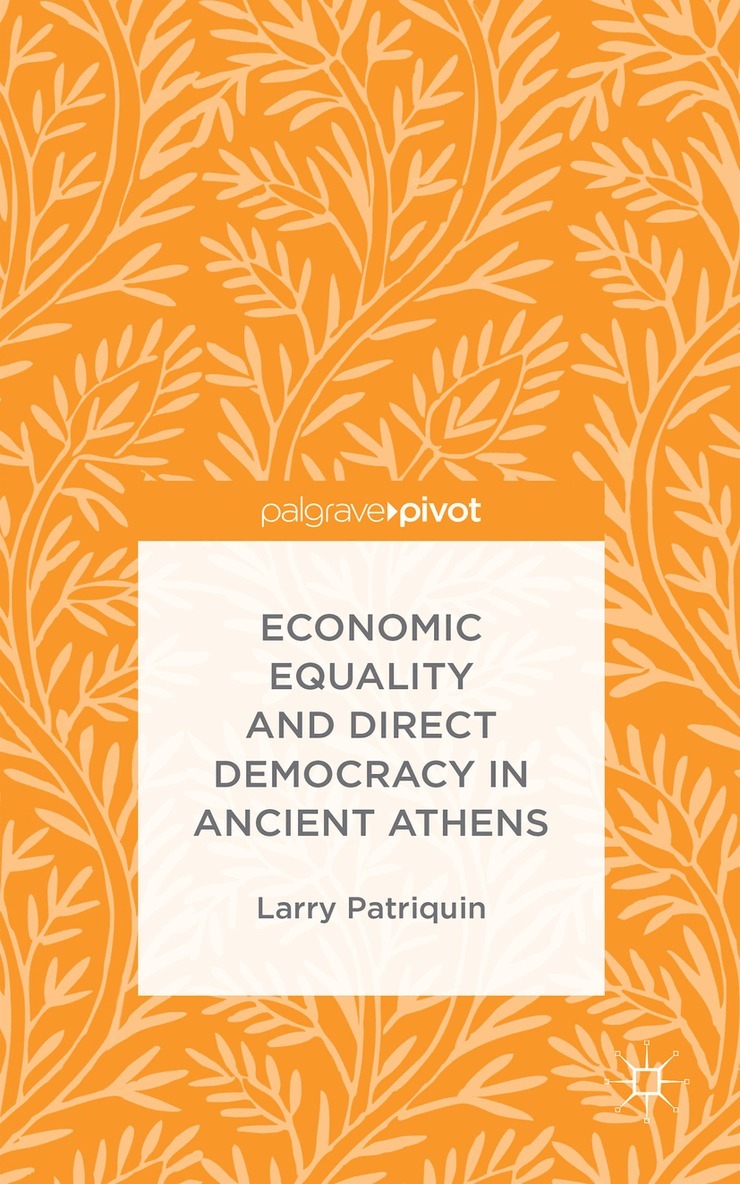
    Economic Equality and Direct Democracy in Ancient Athens

    AvLarry Patriquin

    Inbunden, Engelska, 2015

    563 kr

    Beställningsvara. Skickas inom 10-15 vardagar. Fri frakt över 249 kr.

    Beskrivning

    This book argues that ancient democracy did not stop at the door of economic democracy, and that ancient Athens has much to tell us about the relationship between political equality and economic equality. Athenian democracy rested on a foundation of general economic equality, which enabled citizens to challenge their exclusion from politics.

    Produktinformation

    • Utgivningsdatum:2015-01-09
    • Mått:140 x 216 x 10 mm
    • Vikt:288 g
    • Format:Inbunden
    • Språk:Engelska
    • Antal sidor:100
    • Upplaga:2015
    • Förlag:Palgrave Macmillan
    • ISBN:9781137503473

    Utforska kategorier

    • Ekonomisk historia inom Ekonomi och Ledarskap
    • Forntidens historia inom Historia och arkeologi

    Mer om författaren

    Larry Patriquin is Professor of Social Welfare and Social Development at Nipissing University, Canada. He is the author of Agrarian Capitalism and Poor Relief in England, 1500-1860: Rethinking the Origins of the Welfare State and the editor of The Ellen Meiksins Wood Reader.

    Recensioner i media

    "The book is an extremely valuable addition to the social science literature on democracy and will be appreciated by scholars in political economy, political science and sociology as well as ancient history. ... P. has offered a book whose arguments will fascinate and intrigue the scholar and the uninitiated alike." (George Tridimas, The Classical Review, Vol. 65 (2), October, 2015) "This book offers a most useful and an original contribution to the field the field being the very broad one of the interrelationship between 'ancient (Greek)' and 'modern' democracy, and the possible benefits for modern of studying ancient. It both engages with and takes forward the modern scholarly discussion, principally by redefining and refining the nature of 'equality' in the economic as opposed to the political sphere of ancient Athenian democracy." - Paul Cartledge, A.G. Leventis Senior Research Fellow, Clare College, Cambridge, UK

    Innehållsförteckning

    • 1. Introduction: The Importance of Athens 2. Origins of the Polis 3. How Athenian Democracy Worked 4. Equality and Inequality 5. Elite Critics of Popular Rule 6. The End of Direct Democracy 7. Conclusion: The Key Lesson for Contemporary Democracy