• Fri frakt över 249 kr
  • •
  • Snabba leveranser
  • •
  • Billiga böcker
Kundservice

Du är på sajten för privatpersoner.

Företag, bibliotek eller offentlig verksamhet?

Du handlar på classic.bokus.com, där alla dina funktioner finns intakta.
Till classic.bokus.com
Bokus logotyp. Gå till startsidan.
  • Erbjudanden
  • Nyheter
  • Student
  • Topplistor
  • Barn & ungdom
  • Bokus Play
  • E-böcker
  • Pocketböcker
  • Spel & pussel

Må bättre, för mindre! Upp till 50% rabatt på hälsoböcker

Sidfot

Mina sidor

    Hjälp

    • Kundservice
    • Vanliga frågor och svar
    • Frakt och leverans
    • Retur vid ångerrätt
    • Reklamera vara
    • Betalning
    • Köpvillkor
    • Allmänna villkor
    • Information om webbplatsens tillgänglighet

    Om Bokus

    • Om oss
    • Pressrum
    • För studenter
    • För företag
    • För bibliotek och offentlig verksamhet
    • För leverantörer
    • Hållbarhet

    Populärt

    • Aktuella erbjudanden
    • Presentkort
    • Studentlitteratur
    • Nya böcker
    • Topplistor
    • Signerade böcker
    • Engelska böcker

    Inspiration

    • Boktips
    • BookTok
    • Populära bokserier
    • Barnbokskaraktärer
    • Populära författare
    Logotyp för Bokus
    Följ oss på Facebook (extern länk)Följ oss på Instagram (extern länk)Följ oss på YouTube (extern länk)Följ oss på TikTok (extern länk)
    bokus @ CookiesAnpassa cookiesIntegritetspolicyKöpvillkor
    Till Citymail hemsida (extern länk)Till Budbee hemsida (extern länk)Till Postnord hemsida (extern länk)Till Schenker hemsida (extern länk)Till Early Bird hemsida (extern länk)Till Walleys hemsida (extern länk)
    1. Språk och ordböcker
    2. Språkvetenskap och lingvistik

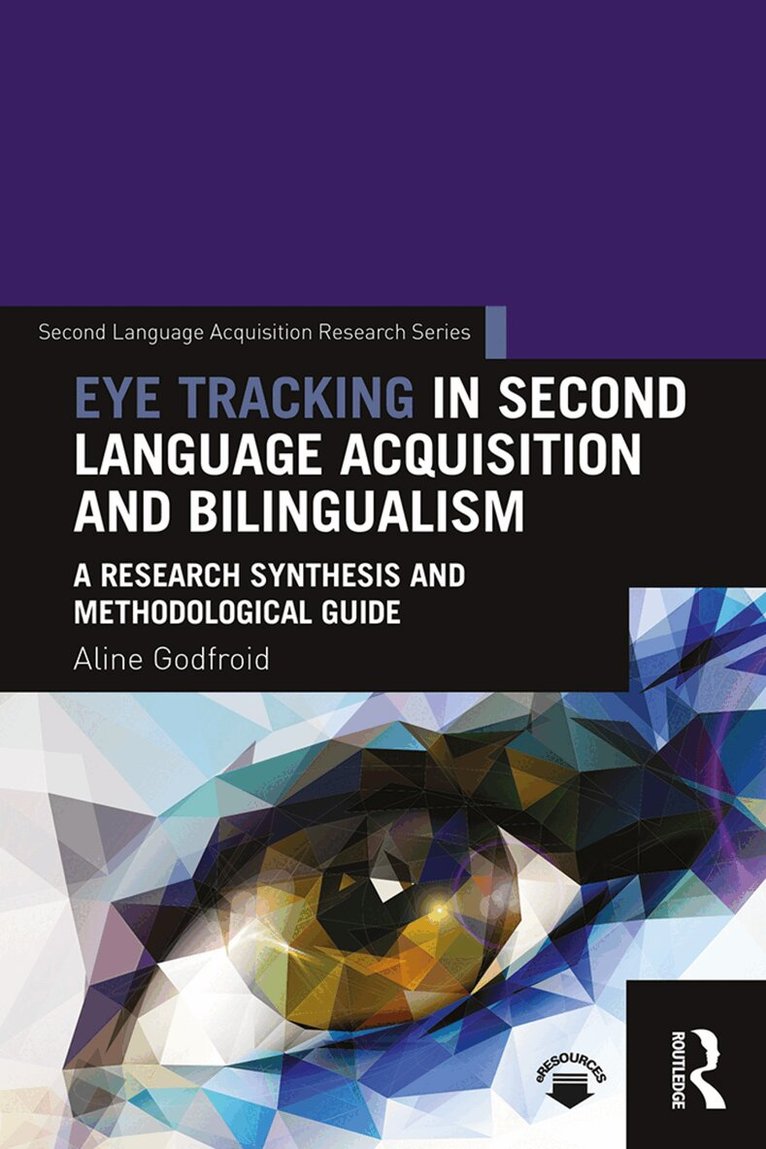
    Eye Tracking in Second Language Acquisition and Bilingualism

    A Research Synthesis and Methodological Guide

    AvAline Godfroid

    Häftad, Engelska, 2019

    Del i serien Second Language Acquisition Research Series

    1 016 kr

    Beställningsvara. Skickas inom 10-15 vardagar. Fri frakt över 249 kr.

    Fler format och utgåvor

    Inbunden

    2 724 kr

    E-bok

    1 278 kr

    E-bok

    1 278 kr

    Beskrivning

    Eye Tracking in Second Language Acquisition and Bilingualism provides foundational knowledge and hands-on advice for designing, conducting, and analysing eye-tracking research in applied linguistics. Godfroid’s research synthesis and methodological guide introduces the reader to fundamental facts about eye movements, eye-tracking paradigms for language scientists, data analysis, and the practicalities of building a lab. This indispensable book will appeal to undergraduate students learning principles of experimental design, graduate students developing their theoretical and statistical repertoires, experienced scholars looking to expand their own research, and eye-tracking professionals.

    Produktinformation

    • Utgivningsdatum:2019-11-20
    • Mått:152 x 229 x 28 mm
    • Vikt:589 g
    • Format:Häftad
    • Språk:Engelska
    • Serie:Second Language Acquisition Research Series
    • Antal sidor:415
    • Förlag:Taylor & Francis Ltd
    • ISBN:9781138024670

    Utforska kategorier

    • Språkvetenskap och lingvistik inom Språk och ordböcker
    • Kognitiv psykologi inom Psykologi och pedagogik

    Mer om författaren

    Aline Godfroid is an Associate Professor in Second Language Studies and TESOL at Michigan State University. Her primary research interests are in psycholinguistics, vocabulary, quantitative research methods, and eye-tracking methodology. Her research is situated at the intersection of cognitive psychology and second language acquisition and has appeared in numerous international, peer-reviewed journals. Aline Godfroid is Co-Director of the Second Language Studies Eye-Tracking Lab and the recipient of the 2019 TESOL Award for Distinguished Research.

    Recensioner i media

    "Navigating the choices and challenges inherent to conducting eye-tracking research is an incredibly complex and dauting task. Godfroid charts the territory for language researchers meticulously, balancing conceptual and practical guidance and providing an empirically-informed approach unlike anything the field has seen."Luke Plonsky, Northern Arizona University, USA."This nine-chapter volume provides an authoritative look into, and an integrated treatment of, the issues to be considered when conducting eye-tracking research to study language comprehension in speakers of more than one language. It is a must read for everyone new to the use of eye-tracking methodology in SLA and bilingualism, as well as an excellent go-to reference for those already familiar with the method."Paola Giuli Dussias, The Pennsylvania State University, USA.

    Innehållsförteckning

    • ContentsList of FiguresList of TablesPrefaceAcknowledgementsChapter 1: Introducing Eye-Tracking1.1. Online methodologies in language processing research1.1.1 Think-aloud protocols1.1.2 Self-paced reading1.1.3 Eye-tracking1.1.4 Event-related potentials1.1.5 Synthesis1.2 Why study eye movements?1.3 SummaryChapter 2: What Do I Need To Know About Eye Movements? 2.1 The observer and the visual field2.2 Types of eye movements2.3 The perceptual span2.4 Where the eyes move2.5 When the eyes move2.6 How tight is the eye-mind link? A look at two models of eye-movement control2.7 ConclusionChapter 3: What Topics Can Be Studied Using Text-Based Eye Tracking? A Synthetic Review3.1 Finding a research topic3.2 Research strands within text-based eye tracking3.2.1 Grammar3.2.2 Vocabulary and the bilingual lexicon3.2.3 Instructed second language acquisition3.2.4 Subtitles3.2.5 Assessment3.3 ConclusionChapter 4: What Topics Can Be Studied Using The Visual World Paradigm? A Synthetic Review4.1 Foundations of the visual world paradigm4.2 Research strands within visual world eye tracking4.2.1 Word recognition4.2.2 Prediction4.2.2.1 What is prediction?4.2.2.2 Semantic prediction4.2.2.3 Morphosyntactic prediction4.2.2.4 Prediction using multiple cues4.2.2.5 Effects of instruction4.2.3 Referential processing4.2.4 Production4.3 ConclusionChapter 5: General Principles of Experimental Design5.1 Doublets, triplets, and quadruplets5.2 Between- and within-subjects designs5.3 Trials: practice trials, critical trials, and filler trials5.4 Primary tasks and secondary tasks5.5 How many items do I need?5.6 ConclusionChapter 6: Designing an Eye-Tracking Study6.1 Defining areas of interest6.1.1 Word-based interest areas6.1.2 Larger areas of text6.1.3 Image-based interest areas6.1.3.1 Images in text-based research6.1.3.2 Images in the visual world paradigm6.1.4 Setting interest areas in your own research6.2 Guidelines for text-based eye-tracking research 6.2.1 Spatial constraints 6.2.2 Artistic factors 6.2.3 Linguistic constraints 6.3 Visual world research6.3.1 Selecting Images6.3.1.1 Experimental design 6.3.1.2 Visual properties of images 6.3.1.3 Naming consistency and normed databases 6.3.1.4 Should I have a preview? 6.3.1.5 Should my experiment have a fixation cross?6.3.2 Preparing audio materials6.3.2.1 Creating audio materials6.3.2.2 Defining time periods6.4 ConclusionChapter 7: Eye-Tracking Measures7.1 Eye-tracking measures in text-based and visual world research7.2 Eye-movement measures7.2.1 Fixations and Skips7.2.1.1 Counts, probabilities and proportions7.2.1.2 Fixation duration7.2.1.2.1 Early versus late eye-movement measures7.2.1.2.2 Overview of durational measures7.2.1.2.2.1 Early measures7.2.1.2.2.2 Late measures7.2.1.3 Fixation latency7.2.1.4 Fixation location7.2.2 Regressions 7.2.3 Integrated eye-tracking measures7.2.3.1 Heatmaps, luminance maps, and gaze plots7.2.3.2 Scanpaths7.3 Conclusion: What measures should I use?Chapter 8: Data Cleaning and Analysis8.1 Data cleaning8.1.1 Data cleaning software8.1.2 Inspecting individual participant records and trials8.1.3 Correcting for drift 8.2 Dealing with outliers8.2.1 Dealing with overly short and long fixations8.2.2 Data transformation8.2.3 Accounting for outliers: Model criticism or aggressive a-priori screening?8.3 Overview of statistical practices in current eye-tracking research8.4 Linear Mixed-Effects Models8.4.1 What’s wrong with repeated-measures ANOVA?8.4.2 Introducing linear mixed-effects models8.4.3 Data-driven versus top-down approaches to selecting a random effects structure8.4.4 Worked example8.4.5 Reporting the results8.5 Analyzing time course data8.5.1 Analyzing separate time windows8.5.2 Growth curve analysis8.5.2.1 Data preprocessing8.5.2.2 Data visualization8.5.2.3 Logistic or quasi-logistic regression8.5.2.4 Choosing time terms8.5.2.5 Worked example8.5.2.6 Reporting the results8.6 Synthesis: Which analysis should I use?Chapter 9: Setting Up An Eye-Tracking Lab9.1 Choosing an eye tracker9.1.1 Types of eye trackers and their precursors9.1.2 Video-based eye trackers9.1.3 How does an eye-tracker work? Speed, accuracy, and precision9.2 The eye-tracking lab9.2.1 Practical considerations9.2.2 Spatial and technical requirements for a lab9.2.3 Managing an eye tracking lab9.3 Getting started9.3.1 Ideas for research9.3.2 Tips for beginners9.3.2.1 About the equipment9.3.2.2 About data collection9.3.2.2.1 Organizing the data collection and logistics9.3.2.2.2 Camera set-up and calibration9.3.2.3 About data analysisReferencesIndex