• Fri frakt över 249 kr
  • •
  • Snabba leveranser
  • •
  • Billiga böcker
Kundservice

Du är på sajten för privatpersoner.

Företag, bibliotek eller offentlig verksamhet?

Du handlar på classic.bokus.com, där alla dina funktioner finns intakta.
Till classic.bokus.com
Bokus logotyp. Gå till startsidan.
  • Erbjudanden
  • Nyheter
  • Student
  • Topplistor
  • Barn & ungdom
  • Bokus Play
  • E-böcker
  • Pocketböcker
  • Spel & pussel

10% rabatt på allt med kod NYSTART10 →

Sidfot

Mina sidor

    Hjälp

    • Kundservice
    • Vanliga frågor och svar
    • Frakt och leverans
    • Retur vid ångerrätt
    • Reklamera vara
    • Betalning
    • Köpvillkor
    • Allmänna villkor
    • Information om webbplatsens tillgänglighet

    Om Bokus

    • Om oss
    • Pressrum
    • För studenter
    • För företag
    • För bibliotek och offentlig verksamhet
    • För leverantörer
    • Hållbarhet

    Populärt

    • Aktuella erbjudanden
    • Presentkort
    • Studentlitteratur
    • Nya böcker
    • Topplistor
    • Signerade böcker
    • Engelska böcker

    Inspiration

    • Boktips
    • BookTok
    • Populära bokserier
    • Barnbokskaraktärer
    • Populära författare
    Logotyp för Bokus
    Följ oss på Facebook (extern länk)Följ oss på Instagram (extern länk)Följ oss på YouTube (extern länk)Följ oss på TikTok (extern länk)
    bokus @ CookiesAnpassa cookiesIntegritetspolicyKöpvillkor
    Till Citymail hemsida (extern länk)Till Budbee hemsida (extern länk)Till Postnord hemsida (extern länk)Till Schenker hemsida (extern länk)Till Early Bird hemsida (extern länk)Till Walleys hemsida (extern länk)
    1. Psykologi och pedagogik
    2. Pedagogik
    3. Pedagogisk psykologi

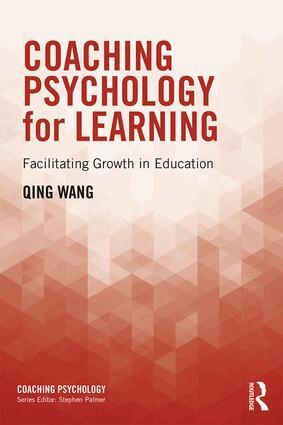
    Coaching Psychology for Learning

    Facilitating Growth in Education

    AvQing Wang

    Häftad, Engelska, 2018

    Del i serien Coaching Psychology

    512 kr

    Beställningsvara. Skickas inom 10-15 vardagar. Fri frakt över 249 kr.

    Fler format och utgåvor

    Inbunden

    1 999 kr

    E-bok

    605 kr

    E-bok

    603 kr

    Beskrivning

    The contribution of coaching psychology to educational fields is increasingly recognised. This timely book introduces coaching psychology as a facilitative method to support learning in different educational contexts.Coaching Psychology for Learning: Facilitating Growth in Education is conveniently organised into three parts: Part One begins with a detailed account of educational paradigms, learning theories, and coaching psychology theories; it then reviews important studies of coaching applied to the educational field and identifies a number of gaps to which coaching psychology for learning can contribute; Part Two presents two empirical participatory studies of coaching psychology for learning, which draw from both doctoral research conducted in the UK and educational work in Mainland China; two original and evidence-based coaching models are also illustrated; Part Three consolidates the empirical evidence and original coaching models by exploring the nature of educational coaching, including the context, purpose, processes, and people and their interrelations. The review of learning theories and coaching psychology theories in Part One enables the reader to gain a quick understanding of coaching psychology and its role in education, while the empirical studies in Part Two are particularly useful for undergraduate and postgraduate students, providing practical examples of how to conduct coaching psychology research in the field of education, in both the West and the East. The book also offers advice on design and implementation issues, which will benefit educational psychologists and coaching psychologists who wish to focus their professional practice in education.Coaching Psychology for Learning is essential reading for any teacher, student or practitioner who wishes to become an educational coach to facilitate learning. It will appeal to coaches and coaching psychologists, including those in training and at postgraduate level, as well as professionals in educational settings, such as school leaders, counsellors and coaches, and educational psychologists.

    Produktinformation

    • Utgivningsdatum:2018-04-20
    • Mått:156 x 234 x 12 mm
    • Vikt:352 g
    • Format:Häftad
    • Språk:Engelska
    • Serie:Coaching Psychology
    • Antal sidor:208
    • Förlag:Taylor & Francis Ltd
    • ISBN:9781138047945

    Utforska kategorier

    • Pedagogisk psykologi inom Psykologi och pedagogik
    • Socialt arbete och välfärd inom Samhälle och politik

    Mer om författaren

    Qing Wang is an educational psychologist, chartered psychologist, an ISCP accredited coaching psychologist and a passionate lecturer. She is currently Associate Professor in Educational Psychology at the School of Psychology and Cognitive Science of East China Normal University. She has 10 years’ experience in coaching psychology in the field of education. With a genuine interest in coaching psychology for learning, she explores, designs, delivers, and evaluates coaching models and approaches with teachers and students in secondary schools, medical schools, vocational schools, universities and in parents’ education. She uses ideas from CBT, mindfulness, narratives, motivational interviewing, solution-focused and positive psychology approaches to provide a comprehensive service that encompasses professional and personal issues.

    Innehållsförteckning

    • Chapter 1: Introduction; Part 1: An enquiry of educational paradigms, learning and coaching; Chapter 2: Philosophy and educational paradigms examined; Chapter 3: What is learning?; Chapter 4: The place of coaching psychology in learning; Part 2: Empirical case studies of coaching psychology for learning; Chapter 5: Coaching psychology for enquiry-based learning in secondary education; Chapter 6: Towards a systems model of Coaching for Learning; Chapter 7: Coaching psychology for problem-based learning in medical education; Chapter 8: PBL coaching: Towards an integrative model of CPBL; Part 3: Towards a systems approach of educational coaching; Chapter 9: The relational and discursive aspects of educational coaching; Chapter 10: Reflections and concluding remarks