• Fri frakt över 249 kr
  • •
  • Snabba leveranser
  • •
  • Billiga böcker
Kundservice

Du är på sajten för privatpersoner.

Företag, bibliotek eller offentlig verksamhet?

Du handlar på classic.bokus.com, där alla dina funktioner finns intakta.
Till classic.bokus.com
Bokus logotyp. Gå till startsidan.
  • Erbjudanden
  • Nyheter
  • Student
  • Topplistor
  • Barn & ungdom
  • Bokus Play
  • E-böcker
  • Pocketböcker
  • Spel & pussel

10% rabatt på allt med kod: NYSTART10 →

Sidfot

Mina sidor

    Hjälp

    • Kundservice
    • Vanliga frågor och svar
    • Frakt och leverans
    • Retur vid ångerrätt
    • Reklamera vara
    • Betalning
    • Köpvillkor
    • Allmänna villkor
    • Information om webbplatsens tillgänglighet

    Om Bokus

    • Om oss
    • Pressrum
    • För studenter
    • För företag
    • För bibliotek och offentlig verksamhet
    • För leverantörer
    • Hållbarhet

    Populärt

    • Aktuella erbjudanden
    • Presentkort
    • Studentlitteratur
    • Nya böcker
    • Topplistor
    • Signerade böcker
    • Engelska böcker

    Inspiration

    • Boktips
    • BookTok
    • Populära bokserier
    • Barnbokskaraktärer
    • Populära författare
    Logotyp för Bokus
    Följ oss på Facebook (extern länk)Följ oss på Instagram (extern länk)Följ oss på YouTube (extern länk)Följ oss på TikTok (extern länk)
    bokus @ CookiesAnpassa cookiesIntegritetspolicyKöpvillkor
    Till Citymail hemsida (extern länk)Till Budbee hemsida (extern länk)Till Postnord hemsida (extern länk)Till Schenker hemsida (extern länk)Till Early Bird hemsida (extern länk)Till Walleys hemsida (extern länk)
    1. Språk och ordböcker
    2. Språk: referensverk och allmänt

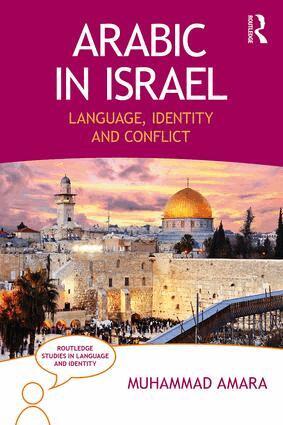
    Arabic in Israel

    Language, Identity and Conflict

    AvMuhammad Amara

    Häftad, Engelska, 2017

    Del i serien Routledge Studies in Language and Identity

    624 kr

    Beställningsvara. Skickas inom 10-15 vardagar. Fri frakt över 249 kr.

    Fler format och utgåvor

    Inbunden

    2 421 kr

    E-bok

    717 kr

    E-bok

    719 kr

    Beskrivning

    In Arabic in Israel, Muhammad Amara analyses the status of Arabic following the creation of the State of Israel and documents its impact on the individual and collective identity of Israel’s Palestinian Arab citizens. The interplay of language and identity in conflict situations is also examined. This work represents the culmination of many years of research on Arabic linguistic repertoire and educational policy regarding the language of the Palestinian citizens of Israel. It draws all of these factors together while linking them to local, regional and global developments. Its perspective is interdisciplinary and, as such, examines the topic from a number of angles including linguistic, social, cultural and political.

    Produktinformation

    • Utgivningsdatum:2017-09-13
    • Mått:156 x 234 x 23 mm
    • Vikt:362 g
    • Format:Häftad
    • Språk:Engelska
    • Serie:Routledge Studies in Language and Identity
    • Antal sidor:208
    • Förlag:Taylor & Francis Ltd
    • ISBN:9781138063556

    Utforska kategorier

    • Språk: referensverk och allmänt inom Språk och ordböcker
    • Språkvetenskap och lingvistik inom Språk och ordböcker
    • Politik och statsskick inom Samhälle och politik

    Mer om författaren

    Muhammad Amara is the head of Graduate Studies at Beit Berl College, Israel,a lecturer at Al-Qasemi College, and president of the Israeli Society for the Study of Language and Society.

    Innehållsförteckning

    • List of tables, figure, pictures and mapsPrefaceAcknowledgementsChapter 1 Language, identity and conflict1.1 Introduction1.1 Identity and identities1.1.1 Conflicting identities: Palestinian-Jewish relationships inside Israel1.2 Language and social identity1.2.1 The Arabic language and social identity1.2.2 Language and identity in Israel1.3 The vitality of Arabic in Israel1.4 Language and conflict1.4.1 The role of language in the Arab-Israeli conflict1.5 ConclusionChapter 2 Internal and external challenges of the Arabic language2. Introduction2.1 Internal challenges2.1.1 Diglossia: old and new challenges2.1.2 Modernization and the Arabic language2.2 External challenges2.2.1 Colonialism, globalization and the Arabic language2.3 Policy towards Arabic in the Arab world: .encountering challenges 2.4 ConclusionChapter 3 Internal and regional contexts and the Arabic language in Israel 3. Introduction 3.1 Internal contexts 3.2 Regional contexts 3.3 ConclusionChapter 4 The status of the Arabic language in Israel 4.1 The linguistic situation in Israel4.2 The status of Arabic in Israel 4.3 ConclusionChapter 5 Features of the Arabic language in Israel5.1 Introduction 5.2 Arabic in Israel5.2.1 Is there a unique variety of Arabic in Israel? 5.2.2 Influences from other Arabic varieties5.3 ConclusionChapter 6 Arabic in the shadow of Hebraization6.1 Hebrew is the dominant language in Israel6.1.1 Building the new Jewish Israeli identity6.1.2 Putting Hebrew on the national agenda6.1.3 Teaching Hebrew6.1.4 Hebraization consequences6.2 Ideologized Hebrew and its teaching to Palestinian pupils in Israel6.2.1 Attitudes towards teaching Hebrew to Palestinian Arabs6.2.2 The Policy of teaching Hebrew: goals and curricula6.2.3 A new curriculum6.2.4 Textbooks and contents6.2.5 Consequences of Hebraization for teaching6.3 The penetration of Hebrew into the ‘heart of Arabic’: borrowing6.3.1 Introduction6.3.2 Culture contact and its linguistic reflections6.3.3 The importance of the study of Hebrew6.3.4 The knowledge and use of Hebrew6.3.5 Borrowing lexical items from Hebrew: integration and diffusion6.3.6 Borrowing and its linguistic characteristics6.3.7 The consequences of Hebraization on borrowingChapter 7 English in the Palestinian linguistic repertoire in Israel7.1 Introduction7.2 English teaching in the Palestinian schools in Israel7.2.1 The current English curriculum7.2.2 Textbooks7.2.3 Achievements7.3 Borrowing from English7.4 Globalization and English7.5 Writing with Latin and Hebrew letters7.6 ConclusionChapter 8 Hebraization of Arabic place names8.1 Introduction8.2 Hebraizing names: the translation of ideological orientation and political thinking8.3 ConclusionChapter 9 The current linguistic landscape in the Palestinian Arab localities in Israel9.1 Linguistic landscape: a brief background9.1.1 Studies on linguistic landscape in Israel9.2 The Palestinian Arab linguistic landscape in Israel9.2.1 Hebrew and Hebraization9.2.2 Palestinian Arab uniqueness9.2.3 Conclusion9.3 The linguistic landscape from a different perspective: Umm-el-Fahm as a case study9.3.1 Umm-el-Fahm: background9.3.2 The linguistic landscape in the city9.3.3 ConclusionChapter 10 The Arabic language in the Palestinian Arab education system10.1 Introduction10.2 The effect of the Arabic curricula on the Palestinian Arab identity10.3 The hurdles blocking the achievement of high competence in Standard Arabic10.4 What is the role of the Arabic language in the Palestinian Arab education system?10.5 ConclusionChapter 11 Teaching Arabic in Jewish schools: language of the neighbour or the enemy?11.1 Introduction11.2 Teaching the Arabic language11.3 Jewish attitudes towards the Arabic language11.4 Goals of teaching Arabic11.5 Bilingual schools: the Hand-in-Hand schools11.6 ConclusionChapter 12 Language ideology and attitudes: Arabic language academies and future vision documents12.1 Language ideology and attitudes towards Arabic12.1.1 The Communist party and the Democratic Front12.1.2 Balad 12.1.3 The Islamic Movement12.1.4 Civil organizations12.2 Survey12.3 Conclusion12.4 Arabic language academies in the Israeli context: between the research role and nationalist aspirations12.4.1Arabic language academies12.4.2 Arabic language academies in Israel12.4.3 Conclusion12.5 The role of Arabic according to future vision documents12.5.1 Introduction12.5.2 Arabic in the future vision documents12.5.3 ConclusionChapter 13 Epilogue: facing the challenges 13.1 Challenges of the Arabic language13.2 Facing the challenges 13.2.1 Arabic as a strategic choice for building an Arab knowledge society 13.2.2 Meeting the challenges: building a framework13.3 Practical proposals13.4 ConclusionIndex