Häftad, Engelska, 2017
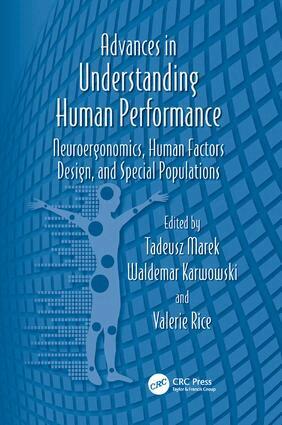
Advances in Understanding Human Performance
Av Tadeusz Marek, Waldemar Karwowski, Valerie Rice
1212 kr
Beställningsvara. Skickas inom 10-15 vardagar. Fri frakt över 249 kr.
Beskrivning
Combining emerging concepts, theories, and applications of human factors knowledge, this volume focuses on discovery and understanding of human performance issues in complex systems, including recent advances in neural basis of human behavior at work (i.e. neuroergonomics), training, and universal design. The book is organized into ten sections that focus on the following subject matters: I: Neuroergonomics: Workload Assessment II: Models and Measurement in Neuroergonomics III: Neuroergonomics and Human Performance IV: Neuroergonomics and Training Issues V: Trainees: Designing for Those in Training VI: Military Human Factors: Designing for Those in the Armed Forces VII: New Programs/New Places: Designing for Those Unfamiliar with Human Factors VIII: Universal Design: Designing to Include Everyone IX: Designing for People with Disabilities X: Children and Elderly: Designing for Those of Different Ages Sections I through IV of this book focus on neuroscience of human performance in complex systems, with emphasis on the assessment and modeling of cognitive workload, fatigue, and training effectiveness. Sections V through X concentrate on applying human factors to special populations, with the caveat that the design information may not generalize to (or be of interest to) other populations. This broadens the conventional definition which limits special populations to those who have limitations in their functional abilities, i.e. those with chronic disabilities due to illness, injury, or aging. Thus, special populations can incorporate certain investigations and designs focused on military, students, or even developing countries and those naïve to the field of human factors, as well as those who are affected by disabilities and aging (both young and old). Many chapters of this book focus on analysis, design, and evaluation of challenges affecting students, trainees, members of the military, persons with disabilities, and universal design. In general, the chapters are organized to move from a more general, to a more specialized application. For example, the subtopics for those with disabilities include designing websites, workstations, housing, entrepreneur training, communication strategies, products, environments, public transportation systems, and communities.This book is of special value to a large variety of professionals, researchers and students in the broad field of human performance who are interested in neuroergonomics, training effectiveness, and universal design and operation of products and processes, as well as management of work systems in contemporary society. We hope this book is informative, but even more - that it is thought provoking. We hope it inspires, leading the reader to contemplate other questions, applications, and potential solutions in creating designs that improve function, efficiency, and ease-of-use for all.Seven other titles in the Advances in Human Factors and Ergonomics Series are:Advances in Human Factors and Ergonomics in Healthcare Advances in Applied Digital Human Modeling Advances in Cross-Cultural Decision Making Advances in Cognitive Ergonomics Advances in Occupational, Social and Organizational Ergonomics Advances in Human Factors, Ergonomics and Safety in Manufacturing and Service Industries Advances in Ergonomics Modeling & Usability Evaluation
Produktinformation
- Utgivningsdatum: 2017-05-31
- Mått: 156 x 234 x 48 mm
- Vikt: 1 680 g
- Format: Häftad
- Språk: Engelska
- Serie: Advances in Human Factors and Ergonomics Series
- Antal sidor: 910
- Förlag: Taylor & Francis Ltd
- ISBN: 9781138111813
Utforska kategorier
Betyg & recensioner
0 recensioner
Inga recensioner tillgängliga.