
Cognitive Science
A Developmental Approach to the Simulation of the Mind
593 kr
Beställningsvara. Skickas inom 10-15 vardagar. Fri frakt över 249 kr.
Fler format och utgåvor
Beskrivning
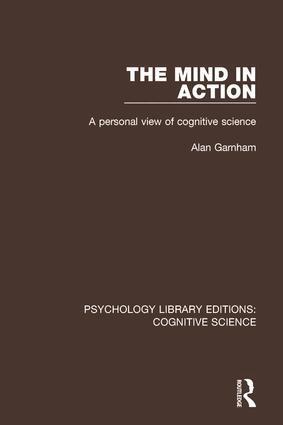
Originally published in 1995, this book is about the conduct of cognitive science rather than what cognitive science is. It has three main objectives. First, it describes the birth of cognitive science. Second, it outlines the method of enquiry which characterises and defines cognitive science. This method uses the techniques of artificial intelligence based on the assumption that mental activity can, in principle, be reproduced by a computer program. Third, the book describes the state of the art in relevant areas, with particular attention to application fields such as pedagogics, human–machine interaction, and psychotherapy. The developmental approach is emphasised and highlights the fact that developmental aspects are essential in order to comprehend the steady mode of functioning achieved once a person has reached total maturity. Cognitive science is not presented as a definitive method for the analysis of the mind, though the author’s conclusion is that it is the best of all possible methods today.At the time of publication this book would have been useful as an advanced textbook for students on courses specialising in cognitive science, and as a source of further information for those working in related areas such as cognitive psychology, linguistics, and computer science. It will still be of interest to experts and students in the field of cognitive science.
Produktinformation
Utforska kategorier
Innehållsförteckning
Hoppa över listan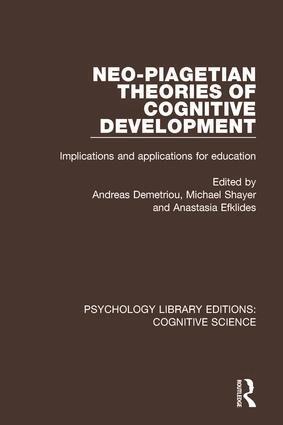
Mer från samma serie
Neo-Piagetian Theories of Cognitive Development
Andreas Demetriou, Michael Shayer, Anastasia Efklides
Inbunden, 2016
2 407 kr
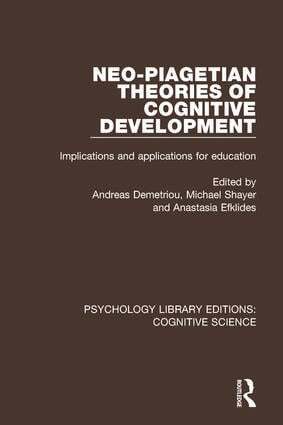
Neo-Piagetian Theories of Cognitive Development
Andreas Demetriou, Michael Shayer, Anastasia Efklides
Häftad, 2018
593 kr
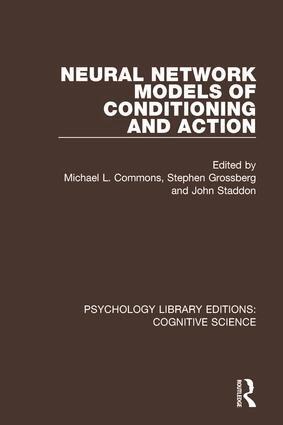
Neural Network Models of Conditioning and Action
Michael L. Commons, Stephen Grossberg, John Staddon
Inbunden, 2016
2 476 kr
Neural Network Models of Conditioning and Action
Michael L. Commons, Stephen Grossberg, John Staddon
Häftad, 2018
610 kr
Hoppa över listan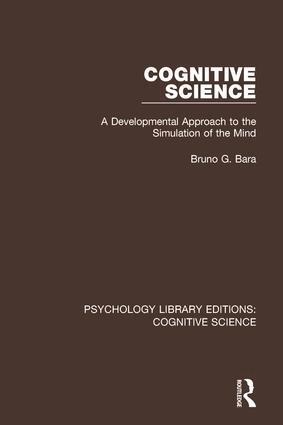
Du kanske också är intresserad av
Neural Network Models of Conditioning and Action
Michael L. Commons, Stephen Grossberg, John Staddon
Inbunden, 2016
2 476 kr