• Fri frakt över 249 kr
  • •
  • Snabba leveranser
  • •
  • Billiga böcker
Kundservice

Du är på sajten för privatpersoner.

Företag, bibliotek eller offentlig verksamhet?

Du handlar på classic.bokus.com, där alla dina funktioner finns intakta.
Till classic.bokus.com
Bokus logotyp. Gå till startsidan.
  • Erbjudanden
  • Nyheter
  • Student
  • Topplistor
  • Barn & ungdom
  • Bokus Play
  • E-böcker
  • Pocketböcker
  • Spel & pussel

10% rabatt på allt med kod: NYSTART10 →

Sidfot

Mina sidor

    Hjälp

    • Kundservice
    • Vanliga frågor och svar
    • Frakt och leverans
    • Retur vid ångerrätt
    • Reklamera vara
    • Betalning
    • Köpvillkor
    • Allmänna villkor
    • Information om webbplatsens tillgänglighet

    Om Bokus

    • Om oss
    • Pressrum
    • För studenter
    • För företag
    • För bibliotek och offentlig verksamhet
    • För leverantörer
    • Hållbarhet

    Populärt

    • Aktuella erbjudanden
    • Presentkort
    • Studentlitteratur
    • Nya böcker
    • Topplistor
    • Signerade böcker
    • Engelska böcker

    Inspiration

    • Boktips
    • BookTok
    • Populära bokserier
    • Barnbokskaraktärer
    • Populära författare
    Logotyp för Bokus
    Följ oss på Facebook (extern länk)Följ oss på Instagram (extern länk)Följ oss på YouTube (extern länk)Följ oss på TikTok (extern länk)
    bokus @ CookiesAnpassa cookiesIntegritetspolicyKöpvillkor
    Till Citymail hemsida (extern länk)Till Budbee hemsida (extern länk)Till Postnord hemsida (extern länk)Till Schenker hemsida (extern länk)Till Early Bird hemsida (extern länk)Till Walleys hemsida (extern länk)
    1. Kultur
    2. Konstböcker
    3. Konsthistoria

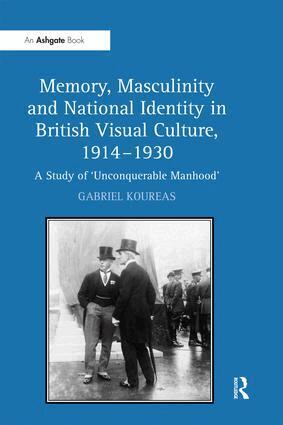
    Memory, Masculinity and National Identity in British Visual Culture, 1914–1930

    A Study of 'Unconquerable Manhood'

    AvGabriel Koureas

    Häftad, Engelska, 2016

    860 kr

    Beställningsvara. Skickas inom 10-15 vardagar. Fri frakt över 249 kr.

    Fler format och utgåvor

    Inbunden

    2 493 kr

    Beskrivning

    With its specific focus on British representations of masculinity in relation to the trauma of the First World War and notions of national identity, class and sexuality, this book provides a much needed addition to the historiography of visual culture during the period. The study interrogates the complications arising out of issues of trauma, cultural expressions of sexuality and affect, as well as the ways in which these are encoded in diverse forms in visual culture and commemorative objects. Concentrating on masculinity and cultural memory, it investigates the ways in which these and the web of power relations that they entail worked during the interwar years in order to reconstruct the post-First World War British society. In the course of the narrative, the author looks at Bolshevism and the Returning Ex-Servicemen, the 1919 NUR Strike, the Central Labour College in conjunction with banners and revolution, as well as the Imperial War Graves, the Cenotaph, the London and North Western Railway memorial, the Machine Gun Corps Memorial and the establishment of the Imperial War Museum. He also excavates new archival material, particularly case studies of shell shock sufferers and film footage of male hysteria.

    Produktinformation

    • Utgivningsdatum:2016-11-11
    • Mått:156 x 234 x 19 mm
    • Vikt:430 g
    • Format:Häftad
    • Språk:Engelska
    • Antal sidor:232
    • Förlag:Taylor & Francis Ltd
    • ISBN:9781138257283

    Utforska kategorier

    • Konsthistoria inom Kultur
    • Konstteori inom Kultur

    Mer om författaren

    Gabriel Koureas is Associate Lecturer at Birkbeck College, University of London, UK. His research interests are in the construction of gender and national identities in relation to conflict. He is currently working on the role of visual culture in reconciling ethnic conflict.

    Recensioner i media

    ’... the great value of this well-illustrated study is the methodology it devises to capture the elusive: the juxtaposition of collective sites of remembrance with individual memory. As such, it is a valuable addition to the library of any individual interested in commemoration, memory, and masculinity in the wake of war.’ Journal of British Studies ’The strength of this book lies in the broad range of material that traces the history of commemoration, the origins of the Cenotaph and other memorials, as well as the class roots and dominance of these initiatives. This material enables us to inquire into the intentions behind such initiatives.’ National Identities ’What is really admirable about this book is its deployment of an ambitious range of themes and sources. Many of these themes have of course been written about before, but there is a lot of fascinating new material here, and it is the weaving together in a consistent web of argument which makes them fresh and interesting, not to mention the many intriguing digressions found on the way.’ Gender and History

    Innehållsförteckning

    • Contents: Chapter One: Ritual, Ceremonial, Order And The Aesthetics Of Simplicity: Defining the Ideal Memorial; Bolshevism and the Returning Ex-Servicemen; Ceremonial, Ritual and Simplicity; Silence; The Cenotaph; Simplicity and Uniformity: The Imperial War Graves. Chapter Two: Class Conflict, The New Man And The Picturesque Soldier: The 1919 NUR Strike; The New Man; The Central Labour College; Banners and Revolution; The London and North Western Railway Memorial; The Picturesque Soldier; Unconquerable manhood; Fear, Attention and Discipline; Silence, Stillness and Discipline. Chapter Three: Abjection, Idealisation, Trauma And Acting Out Of Masculinitites In The Inter-War Years: Controversy: The Man Constructed - The Gun, Gunner and the Ideal Man; The Symbiosis of Gun and Gunner; The Abjected Inside; Trauma and Class; Trauma and Sexuality; Acting Out - The Case of Lieut. Col.; Graham Seton Hutchison; Reconstructing the Man. Chapter Four: Unveiling Polished Guns / Veiling Fragile Masculinities: Establishing the Imperial War Museum; Personal / Public. Collecting Souvenirs for the IWM; Collecting mammals; Collecting , Authenticating, and Containing the Trauma of War; The War Photographic Album; Recycling Guns; Exhibiting Guns; The Memorial to the Fallen; Conclusion. Bibliography. Archival Sources. Newspapers and Periodicals. Primary Sources; Index.