• Fri frakt över 249 kr
  • •
  • Snabba leveranser
  • •
  • Billiga böcker
Kundservice

Du är på sajten för privatpersoner.

Företag, bibliotek eller offentlig verksamhet?

Du handlar på classic.bokus.com, där alla dina funktioner finns intakta.
Till classic.bokus.com
Bokus logotyp. Gå till startsidan.
  • Erbjudanden
  • Nyheter
  • Student
  • Topplistor
  • Barn & ungdom
  • Bokus Play
  • E-böcker
  • Pocketböcker
  • Spel & pussel

10% rabatt på allt med kod: NYSTART10 →

Sidfot

Mina sidor

    Hjälp

    • Kundservice
    • Vanliga frågor och svar
    • Frakt och leverans
    • Retur vid ångerrätt
    • Reklamera vara
    • Betalning
    • Köpvillkor
    • Allmänna villkor
    • Information om webbplatsens tillgänglighet

    Om Bokus

    • Om oss
    • Pressrum
    • För studenter
    • För företag
    • För bibliotek och offentlig verksamhet
    • För leverantörer
    • Hållbarhet

    Populärt

    • Aktuella erbjudanden
    • Presentkort
    • Studentlitteratur
    • Nya böcker
    • Topplistor
    • Signerade böcker
    • Engelska böcker

    Inspiration

    • Boktips
    • BookTok
    • Populära bokserier
    • Barnbokskaraktärer
    • Populära författare
    Logotyp för Bokus
    Följ oss på Facebook (extern länk)Följ oss på Instagram (extern länk)Följ oss på YouTube (extern länk)Följ oss på TikTok (extern länk)
    bokus @ CookiesAnpassa cookiesIntegritetspolicyKöpvillkor
    Till Citymail hemsida (extern länk)Till Budbee hemsida (extern länk)Till Postnord hemsida (extern länk)Till Schenker hemsida (extern länk)Till Early Bird hemsida (extern länk)Till Walleys hemsida (extern länk)
    1. Samhälle och politik
    2. Samhälle och kultur
    3. Sociala grupper och identitet
    4. Etnicitet

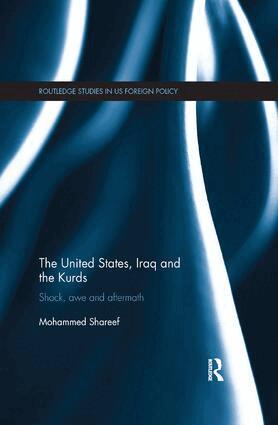
    United States, Iraq and the Kurds

    Shock, Awe and Aftermath

    AvMohammed Shareef

    Häftad, Engelska, 2018

    Del i serien Routledge Studies in US Foreign Policy

    596 kr

    Beställningsvara. Skickas inom 10-15 vardagar. Fri frakt över 249 kr.

    Fler format och utgåvor

    Inbunden

    2 421 kr

    E-bok

    725 kr

    E-bok

    725 kr

    Beskrivning

    This book provides a descriptive and analytical narrative of the evolution of US foreign policy towards Iraq at the supra-national (global), national (Arab Iraq) and sub-national (Iraqi Kurdistan) levels. The book is unique in that it presents a sophisticated insight into the two major components of US Iraq policy. To achieve this, it addresses US foreign policy towards both Arab Iraq and an entirely original analysis on US policy towards the Iraqi Kurds as components of a larger US Iraq policy, dictated by the supreme US Grand Strategy. The book also examines whether US foreign policy towards Iraq has been one of continuity or change – a dimension that has not been illustrated in any other publication. The book deals intelligently and at great length with the events surrounding US Iraq policy in three distinct phases, going back to, 1979 with regard to Arab Iraq, and 1961 in respect to the Kurdish liberation movement, covering all subsequent US administrations including the Obama presidency. It provides a thorough examination of US interests in Iraq and reasons for the 2003 invasion and its aftermath. It also engages with the intellectual roots of US foreign policy, presenting an intricate reaction of views, objectives and agendas. This work will be of interest to students and scholars of Middle East studies, US Foreign Policy and Security studies.

    Produktinformation

    • Utgivningsdatum:2018-08-14
    • Mått:156 x 234 x 22 mm
    • Vikt:470 g
    • Format:Häftad
    • Språk:Engelska
    • Serie:Routledge Studies in US Foreign Policy
    • Antal sidor:234
    • Förlag:Taylor & Francis Ltd
    • ISBN:9781138359321

    Utforska kategorier

    • Etnicitet inom Samhälle och politik

    Mer om författaren

    Mohammed Shareef: completed his PhD in International Relations at the University of Durham and an MSc in International Relations from the University of Bristol in the United Kingdom. He is a fellow of the Royal Asiatic Society (London), he has worked for the UN and is a visiting lecturer in Politics at the University of Exeter in the United Kingdom and a lecturer in International Relations at the University of Sulaimani in the Kurdistan Region of Iraq. He is also a founding member of the London Kurdish Institute and a member of its board of directors. His research interests range from US foreign policy towards Iraq and the Kurds to US policy towards the Middle East in general.

    Recensioner i media

    "There have been few winners following the war to depose Saddam Hussein in Iraq in 2003: the Iraqi Kurds may however be one of them as Mohammed Shareef explains in this lucid volume. We shall now have to wait and see whether a fully independent Kurdistan can become what many thought it never could in the past – a source of stability in a region that continues to be plagued by tensions and conflicts. A must read book on a crucial geostrategic issue." Michael Cox, Professor of International Relations, London School of Economics, UK"The value of Dr Shareef’s excellent new book on Iraq is not just in its discussion of the roots of the crisis, the extraordinary level of detail therein and the enlightening interviews, not only for its rich insights and extensive data collection, not simply for the valuable and textured commentary that it provides on American policy making, but equally importantly for the crisp analysis that it provides of the aftermath of the 2003 war on the body politics of Iraq, particularly on its substantial and often oppressed Kurdish communities. This is one for the reference collection!" Anoushiravan Ehteshami, Professor of International Relations, University of Durham, UK"Shareef’s study is a welcome and timely in-depth study of US foreign policy developments in Arab Iraq and Kurdistan Iraq especially after the US invasion of Kuwait in 1991 and invasion and occupation of Iraq in 2003. He embeds his study in three Grand Strategies: one, 1979-1990 influenced by the Cold War; two, 1991-2001, stresses the liberal international strategy and three, the War on Terror from 2002-2013. Diplomatic scholars will be particularly interested in phase three which analyses the role of the Kurds of Iraq in the formation of US policies toward the wider Middle East; a hitherto topic largely ignored by scholars. During phase three Shareef argues that for geopolitical and geostrategic interests the US pursued (and still does) policies of maintaining a unified Iraq even as developments in Kurdistan Iraq were/are moving toward self-determination. The eventuation of an independent Kurdistan would of course seriously affect US foreign policies toward Turkey, Iran and Syria all of whom oppose an independent Kurdish state in Iraq. This will result in the Kurdish question becoming even a more salient factor in the making of US foreign policies not just toward the Middle East but internationally. Shareef’s study is one of only a few that uses Arab and Kurdish based source. I recommend it highly to scholars and policy makers." Robert Olson, Professor of Middle East History and Politics, University of Kentucky, USA"This book effectively addresses the different actors at different levels that have played a role in shaping today’s Iraq. Overall, it represents a useful tool for those, students and scholars alike, interested in US foreign policy towards the Middle East, especially Iraq and the Iraqi Kurds."Sofia Zavagli, The Internation SpectatorThe central purpose of the book is "to address change and continuity in US Iraq policy" (p. 2) and it aims to fill the gap in studies addressing US Iraq policy. Yet, US Iraqi foreign policy is part of the broader US Middle Eastern foreign policy and Iraq, as the US administration’s focus from 1991 onwards, has been extensively researched. Marianna Charountaki, Reading University, UK

    Innehållsförteckning

    • Chapter 1: INTRODUCTION, Chapter 2: US IRAQ POLICY Pre September 11: Reconising a Failing STRATEGY, Chapter 3: Intellectual Roots of the Bush Foreign Policy: The Power of Ideas, Chapter 4: Invading Iraq: One Decision, VARIOUS Reasons, Chapter 5: The War In Iraq: A Planned War, An Unplanned Occupation, Chapter 6: THE IRAQI KURDS IN US FOREIGN POLICY: from Kennedy to OBAMAChapter 7: CONCLUSION