• Fri frakt över 249 kr
  • •
  • Snabba leveranser
  • •
  • Billiga böcker
Kundservice

Du är på sajten för privatpersoner.

Företag, bibliotek eller offentlig verksamhet?

Du handlar på classic.bokus.com, där alla dina funktioner finns intakta.
Till classic.bokus.com
Bokus logotyp. Gå till startsidan.
  • Erbjudanden
  • Nyheter
  • Student
  • Topplistor
  • Barn & ungdom
  • Bokus Play
  • E-böcker
  • Pocketböcker
  • Spel & pussel

10% rabatt på allt med kod: NYSTART10 →

Sidfot

Mina sidor

    Hjälp

    • Kundservice
    • Vanliga frågor och svar
    • Frakt och leverans
    • Retur vid ångerrätt
    • Reklamera vara
    • Betalning
    • Köpvillkor
    • Allmänna villkor
    • Information om webbplatsens tillgänglighet

    Om Bokus

    • Om oss
    • Pressrum
    • För studenter
    • För företag
    • För bibliotek och offentlig verksamhet
    • För leverantörer
    • Hållbarhet

    Populärt

    • Aktuella erbjudanden
    • Presentkort
    • Studentlitteratur
    • Nya böcker
    • Topplistor
    • Signerade böcker
    • Engelska böcker

    Inspiration

    • Boktips
    • BookTok
    • Populära bokserier
    • Barnbokskaraktärer
    • Populära författare
    Logotyp för Bokus
    Följ oss på Facebook (extern länk)Följ oss på Instagram (extern länk)Följ oss på YouTube (extern länk)Följ oss på TikTok (extern länk)
    bokus @ CookiesAnpassa cookiesIntegritetspolicyKöpvillkor
    Till Citymail hemsida (extern länk)Till Budbee hemsida (extern länk)Till Postnord hemsida (extern länk)Till Schenker hemsida (extern länk)Till Early Bird hemsida (extern länk)Till Walleys hemsida (extern länk)
    1. Naturvetenskap och teknik
    2. Geovetenskap
    3. Geovetenskap
    4. Hydrologi

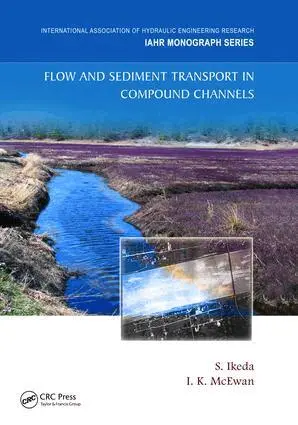
    Flow and Sediment Transport in Compound Channels

    The Experience of Japanese and UK Research

    AvS. Ikeda,I.K. McEwan

    Inbunden, Engelska, 2017

    Del i serien IAHR Monographs

    2 058 kr

    Beställningsvara. Skickas inom 10-15 vardagar. Fri frakt över 249 kr.

    Beskrivning

    This monograph provides a comprehensive state-of-the-art description of the work carried out in the UK and Japan on "Flow and Sediment Transport in Compound Channels". It therefore describes research which has been conducted, primarily over the last two decades, and which has yielded a fairly detailed picture of the important behaviours of compound channels and produced a number of engineering prediction methods which ought to be widely adopted in practice. The text will inevitably highlight areas where our knowledge is sparse and it will spur others on in the task of filling in such gaps.The concept of bi-national groups of researchers meeting together intermittently over period of some years, though not new, has drawn both inspiration and experience and the interaction has produced tangible outcomes in the form of this useful publication.

    Produktinformation

    • Utgivningsdatum:2017-10-02
    • Mått:178 x 254 x undefined mm
    • Vikt:453 g
    • Format:Inbunden
    • Språk:Engelska
    • Serie:IAHR Monographs
    • Antal sidor:342
    • Förlag:Taylor & Francis Ltd
    • ISBN:9781138475243

    Utforska kategorier

    • Hydrologi inom Naturvetenskap och teknik

    Recensioner i media

    Flood modelling is challenging to the hydraulic engineering community: the human, social and environmental impact of flooding rivers is considerable; while the flow complexity and related uncertainties makes it hard to model accurately. Significant progress has been made on this complex topic during the last two decades, with major contributions by research teams from Japan and UK. The present monograph on "Flow and Sediment Transport in Compound Channels" offers a state-of-the-art review based on this experience. The authors deserve acknowledgement, as their work will help new researchers approaching this fascinating problem, but also facilitate improved engineering approaches to inundations.Dr. D. BousmarCoordinator of IAHR Working Group on Compound Channels

    Innehållsförteckning

    • 1. Introduction 2. Flow Structure 3. Sediment Process 4. Computer Simulation 5. Design Considerations 6. Conclusions and Recommendations