• Fri frakt över 249 kr
  • •
  • Snabba leveranser
  • •
  • Billiga böcker
Kundservice

Du är på sajten för privatpersoner.

Företag, bibliotek eller offentlig verksamhet?

Du handlar på classic.bokus.com, där alla dina funktioner finns intakta.
Till classic.bokus.com
Bokus logotyp. Gå till startsidan.
  • Erbjudanden
  • Nyheter
  • Student
  • Topplistor
  • Barn & ungdom
  • Bokus Play
  • E-böcker
  • Pocketböcker
  • Spel & pussel

10% rabatt på allt med kod: NYSTART10 →

Sidfot

Mina sidor

    Hjälp

    • Kundservice
    • Vanliga frågor och svar
    • Frakt och leverans
    • Retur vid ångerrätt
    • Reklamera vara
    • Betalning
    • Köpvillkor
    • Allmänna villkor
    • Information om webbplatsens tillgänglighet

    Om Bokus

    • Om oss
    • Pressrum
    • För studenter
    • För företag
    • För bibliotek och offentlig verksamhet
    • För leverantörer
    • Hållbarhet

    Populärt

    • Aktuella erbjudanden
    • Presentkort
    • Studentlitteratur
    • Nya böcker
    • Topplistor
    • Signerade böcker
    • Engelska böcker

    Inspiration

    • Boktips
    • BookTok
    • Populära bokserier
    • Barnbokskaraktärer
    • Populära författare
    Logotyp för Bokus
    Följ oss på Facebook (extern länk)Följ oss på Instagram (extern länk)Följ oss på YouTube (extern länk)Följ oss på TikTok (extern länk)
    bokus @ CookiesAnpassa cookiesIntegritetspolicyKöpvillkor
    Till Citymail hemsida (extern länk)Till Budbee hemsida (extern länk)Till Postnord hemsida (extern länk)Till Schenker hemsida (extern länk)Till Early Bird hemsida (extern länk)Till Walleys hemsida (extern länk)
    1. Medicin
    2. Andra medicinska specialiteter
    3. Klinisk psykologi
    4. Psykoterapi som behandlingsmetod

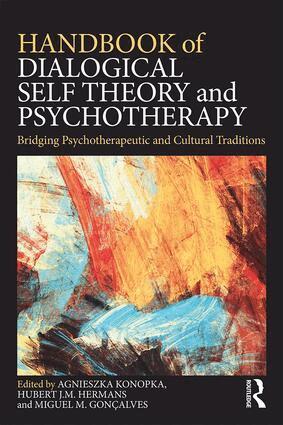
    Handbook of Dialogical Self Theory and Psychotherapy

    Bridging Psychotherapeutic and Cultural Traditions

    AvAgnieszka Konopka,Hubert Hermans

    Häftad, Engelska, 2018

    556 kr

    Beställningsvara. Skickas inom 10-15 vardagar. Fri frakt över 249 kr.

    Beskrivning

    In the Handbook of Dialogical Self Theory and Psychotherapy: Bridging Psychotherapeutic and Cultural Traditions, the editors bring together a wide variety of therapeutic approaches in order to demonstrate how Dialogical Self Theory functions as a bridging framework crossing boundaries between countries and cultures.The basic message is to facilitate a theory-informed dialogue between different perspectives: cognitive therapy, psychoanalytic therapy, gestalt therapy, emotion-focused therapy, Eastern, Indian-American and transpersonal approaches. The chapters present the theoretical notions, qualitative methods, and practical implications of the presented projects with attention to their common dialogical foundation.With its bridging approach and interdisciplinary aims, the Handbook of Dialogical Self Theory and Psychotherapy will be essential reading for psychotherapists and counsellors in practice and training and for those who are interested in the common factors underlying a wide variety of psychotherapeutic schools and traditions.

    Produktinformation

    • Utgivningsdatum:2018-11-16
    • Mått:156 x 234 x 17 mm
    • Vikt:418 g
    • Format:Häftad
    • Språk:Engelska
    • Antal sidor:260
    • Förlag:Taylor & Francis Ltd
    • ISBN:9781138503977

    Utforska kategorier

    • Psykoterapi som behandlingsmetod inom Medicin

    Mer om författaren

    Agnieszka Konopka holds PhD in the psychology of emotions, is a practicing coach and therapist and author of a contemplative art-therapy/coaching method ‘Compositionwork’.Hubert J. M. Hermans is an emeritus professor of psychology at the Radboud University, The Netherlands, and creator of Dialogical Self Theory.Miguel M. Gonçalves is professor at the School of Psychology, University of Minho, Portugal. His main interests are research and clinical practice in dialogical and narrative perspectives.

    Recensioner i media

    'This book provides a tour de force of the development of dialogical theory and its contribution to psychotherapy theory, practice and research. It enables the reader to connect different therapeutic traditions and schools in a theory-guided way like no book has done before. This work launches the application of the view that the self has many voices in dynamic interaction into new territory and provides a significant contribution to the study of the self in psychotherapy.' - Leslie S. Greenberg, Distinguished Research Professor Emeritus, York University, Canada'Dialogical self theory spreads its wings in this finely-honed Handbook, as its potential for integration and catalytic creativity stimulates dialogue across a broad spectrum of therapeutic orientations. As food for thought, this is a rich banquet indeed, as its contributors open conceptual doors and explore the implications for therapeutic practice.' - Kenneth J. Gergen, author of Relational Being: Beyond Individual and Community‘"How do I silence the self-critical voices in my head?" "What can I do about my vulnerable side?" The idea that human beings consist of many different "selves" is integral to a diverse array of psychotherapy and counselling practices. This unique and much-needed collection of chapters looks at how therapists can work with the "dialogical self": helping clients to overcome internal conflicts and find more cooperative, dialogical, and satisfying internal relationships. Written by leading international experts in the field, the chapters provide a wealth of guidance, illustrated throughout with vivid and compelling case studies and narratives. A very valuable resource for therapists of all orientations.' - Mick Cooper, Professor of Counselling Psychology, University of Roehampton

    Innehållsförteckning

    • Introduction. Miguel M. Gonçalves, Agnieszka Konopka & Hubert J.M. HermansPart I.Theoretical ExtensionsChapter 2. The dialogical self as a landscape of mind populated by a society of I-positions.Agnieszka Konopka, Hubert J.M. Hermans & Miguel M. Gonçalves Chapter 3. Gestalt therapy, Dialogical Self Theory and the "empty chair". Frank-M. StaemmlerChapter 4. Emotion-focused therapy: Embodied dialogue between parts of the self. William J. Whelton & Robert ElliottChapter 5. Assimilation of problematic voices and the historicity of signs: How culture enters psychotherapy. William B. StilesChapter 6. I-positions and the unconscious. John RowanChapter 7. Disturbances in the dialogical self in psychosis: Contributions from the study of metacognitive disturbances. Paul H. Lysaker, Jay A. Hamm, Bethany L. Leonhardt, and John T. LysakerPart II. Methodological InnovationsChapter 8. The dialogical self in grief therapy: Reconstructing identity in the wake of loss. Robert A. Neimeyer & Agnieszka KonopkaChapter 9. Innovation and ambivalence: A narrative-dialogical perspective on therapeutic change. Miguel M. Gonçalves, António P. Ribeiro, Catarina Rosa, Joana Silva, Cátia Braga, Carina Magalhães, & João Tiago OliveiraChapter 10. Metacognitive interpersonal therapy as a dialogical practice: Experiential work with personality disorders. Giancarlo Dimaggio, Paolo Ottavi, Raffaele Popolo & Giampaolo SalvatoreChapter 11. Developing a dialogical approach to analysing psychotherapyEugenie Georgaca & Evrinomy AvdiChapter 12. From dissociation to dialogical reorganization of subjectivity in psychotherapy. Claudio Martínez & Alemka TomicicPart III. Bridging culturesChapter 13. Compositionwork: Working with the dialogical self in psychotherapy. Agnieszka Konopka & Wim van BeersChapter 14. On the constitution of self-experience in the psychotherapeutic dialogue.Masayoshi MoriokaChapter 15. North American indigenous concepts of the dialogical self. Lewis Mehl-Madrona & Barbara Mainguy Chapter 16. Mindfulness-based interventions de-reify self: DST clarifies a new therapeutic voice. Michelle H. Mamberg & Donald McCownChapter 17. Epilogue: Looking back and forward. Hubert Hermans, Agnieszka Konopka & Miguel M. Gonçalves