• Fri frakt över 249 kr
  • •
  • Snabba leveranser
  • •
  • Billiga böcker
Kundservice

Du är på sajten för privatpersoner.

Företag, bibliotek eller offentlig verksamhet?

Du handlar på classic.bokus.com, där alla dina funktioner finns intakta.
Till classic.bokus.com
Bokus logotyp. Gå till startsidan.
  • Erbjudanden
  • Nyheter
  • Student
  • Topplistor
  • Barn & ungdom
  • Bokus Play
  • E-böcker
  • Pocketböcker
  • Spel & pussel

10% rabatt på allt med kod: NYSTART10 →

Sidfot

Mina sidor

    Hjälp

    • Kundservice
    • Vanliga frågor och svar
    • Frakt och leverans
    • Retur vid ångerrätt
    • Reklamera vara
    • Betalning
    • Köpvillkor
    • Allmänna villkor
    • Information om webbplatsens tillgänglighet

    Om Bokus

    • Om oss
    • Pressrum
    • För studenter
    • För företag
    • För bibliotek och offentlig verksamhet
    • För leverantörer
    • Hållbarhet

    Populärt

    • Aktuella erbjudanden
    • Presentkort
    • Studentlitteratur
    • Nya böcker
    • Topplistor
    • Signerade böcker
    • Engelska böcker

    Inspiration

    • Boktips
    • BookTok
    • Populära bokserier
    • Barnbokskaraktärer
    • Populära författare
    Logotyp för Bokus
    Följ oss på Facebook (extern länk)Följ oss på Instagram (extern länk)Följ oss på YouTube (extern länk)Följ oss på TikTok (extern länk)
    bokus @ CookiesAnpassa cookiesIntegritetspolicyKöpvillkor
    Till Citymail hemsida (extern länk)Till Budbee hemsida (extern länk)Till Postnord hemsida (extern länk)Till Schenker hemsida (extern länk)Till Early Bird hemsida (extern länk)Till Walleys hemsida (extern länk)
    1. Samhälle och politik
    2. Sociologi och antropologi
    3. Sociologi

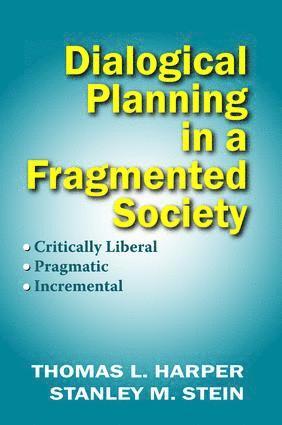
    Dialogical Planning in a Fragmented Society

    Critically Liberal, Pragmatic, Incremental

    AvThomas L. Harper,Stanley Stein

    Inbunden, Engelska, 2017

    2 423 kr

    Beställningsvara. Skickas inom 10-15 vardagar. Fri frakt över 249 kr.

    Fler format och utgåvor

    Häftad

    471 kr

    Beskrivning

    The culmination of a critical study of neo-pragmatism philosophy and its application to planning, Dialogical Planning in a Fragmented Society begins with philosopher Stanley M. Stein's examination of neo-pragmatism and his thoughts on how it can be useful in the field of environmental design-specifically, how it can be applied to planning procedures and problems. Neo-pragmatism is an approach that has been, in the past, best expressed or implied in the writing of Hilary Putnam, Richard Rorty, and, in particular, Donald Davidson, John Rawls, and Ludwig Wittgenstein. Thomas L. Harper furthers this tradition by providing the context for this theoretical application from his academic background in economics and management as well as his practical experience with political decision-making processes, community planning, and economic development. The result is a fresh synthesis of ideas-a new approach to thinking about planning theory and its implications for, and relationship with, practice. Philosopher Michael Walzer has asserted that "philosophy reflects and articulates the political culture of its time, and politics presents and enacts the arguments of philosophy." Similarly, the authors view planning theory as planning reflected upon in tranquility, away from the tumult of battle, and planning practice as planning theory acted out in the confusion of the trenches. Each changes the other in a dynamic way, and the authors demonstrate the intimate and inextricable link between them.

    Produktinformation

    • Utgivningsdatum:2017-10-12
    • Mått:152 x 229 x undefined mm
    • Vikt:453 g
    • Format:Inbunden
    • Språk:Engelska
    • Antal sidor:374
    • Förlag:Taylor & Francis Ltd
    • ISBN:9781138522312

    Utforska kategorier

    • Sociologi inom Samhälle och politik

    Mer om författaren

    Thomas L. Harper (Edited by) ,  Stanley M. Stein (Edited by)

    Innehållsförteckning

    • Introduction I PLANNING SHOULD GIVE UP THE MODERNIST PARADIGM 1 The Crisis in Modernist Planning 2 Modernistic ("Rational") Planning, PLANNING SHOULD BE PRAGMATIC 3 Two Responses to Modernism: Postmodernism or Neopragmatism 4 Out of the Postmodern Abyss: Postmodernist Themes III PLANNING SHOULD BE CRI'TICALLY LIBERAL 5 Classical Liberalism and Planning 6 A Critical Liberal Perspective DIALOGICAL PLANNING IN A FRAGMENTED SOCIETY 7 Pragmatic Incrementalist Planning IV PLANNING SHOULD RECOGNIZE AN EMERGING WAY 8 A Dialogical Planning Approach 9 A Dialogical Planning Approach: Critiques and Questions 10 Dialogical Planning in Practice V PLANNING SHOULD AvOID MODERNIST AND POSTMODERNIST TRAPS VI The Search for Clear Categories and Universal Principles 12 The Radical Paradigm Shift 13 The Multicultural Trap (Relativism) 14 The Rejection of Theory 15 Power, Trust, and Planning 16 Conclusion: Key Strengths of Dialogical Planning