• Fri frakt över 249 kr
  • •
  • Snabba leveranser
  • •
  • Billiga böcker
Kundservice

Du är på sajten för privatpersoner.

Företag, bibliotek eller offentlig verksamhet?

Du handlar på classic.bokus.com, där alla dina funktioner finns intakta.
Till classic.bokus.com
Bokus logotyp. Gå till startsidan.
  • Erbjudanden
  • Nyheter
  • Student
  • Topplistor
  • Barn & ungdom
  • Bokus Play
  • E-böcker
  • Pocketböcker
  • Spel & pussel

10% rabatt på allt med kod: NYSTART10 →

Sidfot

Mina sidor

    Hjälp

    • Kundservice
    • Vanliga frågor och svar
    • Frakt och leverans
    • Retur vid ångerrätt
    • Reklamera vara
    • Betalning
    • Köpvillkor
    • Allmänna villkor
    • Information om webbplatsens tillgänglighet

    Om Bokus

    • Om oss
    • Pressrum
    • För studenter
    • För företag
    • För bibliotek och offentlig verksamhet
    • För leverantörer
    • Hållbarhet

    Populärt

    • Aktuella erbjudanden
    • Presentkort
    • Studentlitteratur
    • Nya böcker
    • Topplistor
    • Signerade böcker
    • Engelska böcker

    Inspiration

    • Boktips
    • BookTok
    • Populära bokserier
    • Barnbokskaraktärer
    • Populära författare
    Logotyp för Bokus
    Följ oss på Facebook (extern länk)Följ oss på Instagram (extern länk)Följ oss på YouTube (extern länk)Följ oss på TikTok (extern länk)
    bokus @ CookiesAnpassa cookiesIntegritetspolicyKöpvillkor
    Till Citymail hemsida (extern länk)Till Budbee hemsida (extern länk)Till Postnord hemsida (extern länk)Till Schenker hemsida (extern länk)Till Early Bird hemsida (extern länk)Till Walleys hemsida (extern länk)
    1. Historia och arkeologi
    2. Historia
    3. Historia: särskilda händelser och ämnen
    4. Socialhistoria och kulturhistoria

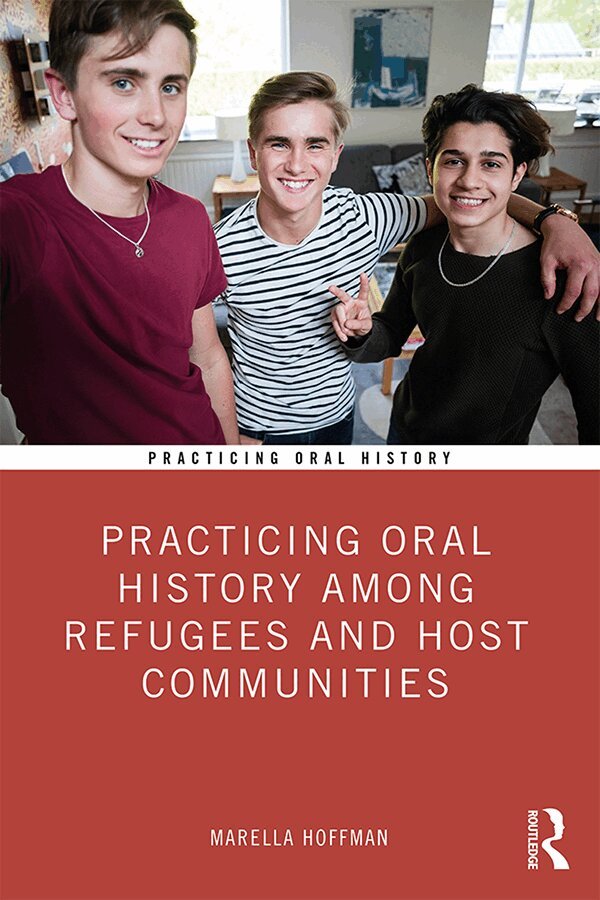
    Practicing Oral History Among Refugees and Host Communities

    AvMarella Hoffman

    Häftad, Engelska, 2019

    Del i serien Practicing Oral History

    643 kr

    Beställningsvara. Skickas inom 10-15 vardagar. Fri frakt över 249 kr.

    Fler format och utgåvor

    Inbunden

    2 493 kr

    E-bok

    738 kr

    E-bok

    740 kr

    Beskrivning

    Practicing Oral History among Refugees and Host Communities provides a comprehensive and practical guide to applied oral history with refugees, teaching the reader how to use applied, contemporary oral history to help provide solutions to the ‘mega-problem’ that is the worldwide refugee crisis.The book surveys the history of the practice and explains its successful applications in fields from journalism, law and psychiatry to technology, the prevention of terrorism and the design of public services. It defines applied oral history with refugees as a field, teaching rigorous, accessible methodologies for doing it, as well as outlining the importance of doing the same work with host communities. The book examines important legal and ethical parameters around this complex, sensitive field, and highlights the cost-effective, sustainable benefits that are being drawn from this work at all levels. It outlines the sociopolitical and theoretical frameworks around such oral histories, and the benefits for practitioners’ future careers. Both in scope and approach, it thoroughly equips readers for doing their own oral history projects with refugees or host communities, wherever they are. Using innovative case studies from seven continents and from the author’s own work, this manual is the ideal guide for oral historians and those working with refugees or host communities.

    Produktinformation

    • Utgivningsdatum:2019-12-02
    • Mått:156 x 234 x 26 mm
    • Vikt:372 g
    • Format:Häftad
    • Språk:Engelska
    • Serie:Practicing Oral History
    • Antal sidor:214
    • Förlag:Taylor & Francis Ltd
    • ISBN:9781138541313

    Utforska kategorier

    • Socialhistoria och kulturhistoria inom Historia och arkeologi
    • Allmän historia och världshistoria inom Historia och arkeologi

    Mer om författaren

    Marella Hoffman is a Fellow of the Royal Anthropological Institute and has held positions at Cambridge University as well as at universities in France, Switzerland and Ireland. A former chief editor of a public policy magazine, her projects with communities have been taught as positive practice by government. Her other books include Practicing Oral History to Improve Public Policies and Programs (2018), Asylum under Dreaming Spires: Refugees’ Lives in Cambridge Today (2017), and Savoir-Faire of the Elders: Green Knowledge in the French Mediterranean Hills (2016). She runs a Writers’ Retreat Centre in southern France; visit www.marellahoffman.com.

    Recensioner i media

    "Hoffman’s applied oral history books are marvelously accessible and adaptable to a wide variety of audiences and uses. In an oral history theory and methods course, my students used Practicing Oral History to Improve Public Policies and Programs with great success to collect interviews about the history of homelessness advocacy in the state of Minnesota. I look forward to using Hoffman’s volume on refugees and host communities with colleagues and students alike."Amy Sullivan, Macalester College, USA"Marella Hoffman’s book is an invaluable resource and a must read for anyone interested in applied oral history and/or refugee studies. It offers an excellent series of case studies of oral history refugee projects reflecting the different stages of the refugee journey flooded up with an extremely useful ‘how to’ design and conduct an applied oral history project with refugee and host communities. Hoffman gives an insightful overview of the numbers and distribution of the world’s displaced communities, pointing out that, despite prevalent messages in the western media, 85% of displaced peoples live in developing countries and that a third of all displaced peoples are Palestinian. Moreover, she highlights that the biggest threat of future refugee crises will come from climate change and the displacement of peoples as a result of rising sea levels. Hoffman uses the term ‘applied oral history’ to refer to a more strategic approach to the collection of oral histories in which refugees take a lead role and in which there are clear goals relating to improved service delivery, awareness raising, improving relations with host communities are used to drive the project. These objectives have implications for the design and development of the project which are discussed towards the end of the book. The choice of narrators (the author is at pains to stress the importance of working with host communities, including those opposed to refugee settlement, as well as refugee communities), the types of questions to ask, the fraught ethical issues associated with such projects and the potentially innovative forms of dissemination (including theatre, comedy, graphic novels, music as well as more traditional reports/publications) are all discussed and are shown to follow from the intended purpose of the project. The book provides examples of oral histories that will be of interest to lawyers seeking legal prosecution for war crimes, health professionals, geographers interested in mapping refugee journeys, therapists and social scientists. Equally importantly, it is aimed at individuals who feel overwhelmed by current global developments but are hoping to make a difference at a local level. The book concludes with an excellent set of templates which will be of use to those thinking of undertaking an oral history project with refugees and/or host communities and a very useful bibliography for those who wish to learn more about the projects and ideas summarized in Marella Hoffman’s highly recommended book."Professor John Gabriel, London Metropolitan University, Chair Oral History Society, UK

    Innehållsförteckning

    • Part I – What is being done around the world 1. How oral history can improve outcomes for refugees and host communities 2. The importance of listening to host communities 3. The tradition of oral history with refugees, and how it’s radically changing 4. Case studies of oral histories with refugees: Transforming lives and outcomes 5. Case studies of oral histories with host communities: Letting discontent be heard Part II – Doing your own oral histories to improve outcomes for refugees or host communities – The step by step guide 6. The ethics, risks and legalities of doing oral history with refugees or host communities 7. Strategically planning an oral history project that will improve outcomes for refugees or host communities. 8. Doing interviews that will make a difference 9. Editing and publicizing narrators’ interviews in ways that help improve outcomes for communities 10. Soaring refugee numbers, a twenty-first century ‘mega-problem’: Applied oral history skills as part of the solution Appendices Glossary – some key concepts used in this book