• Fri frakt över 249 kr
  • •
  • Snabba leveranser
  • •
  • Billiga böcker
Kundservice

Du är på sajten för privatpersoner.

Företag, bibliotek eller offentlig verksamhet?

Du handlar på classic.bokus.com, där alla dina funktioner finns intakta.
Till classic.bokus.com
Bokus logotyp. Gå till startsidan.
  • Erbjudanden
  • Nyheter
  • Student
  • Topplistor
  • Barn & ungdom
  • Bokus Play
  • E-böcker
  • Pocketböcker
  • Spel & pussel

10% rabatt på allt med kod NYSTART10 →

Sidfot

Mina sidor

    Hjälp

    • Kundservice
    • Vanliga frågor och svar
    • Frakt och leverans
    • Retur vid ångerrätt
    • Reklamera vara
    • Betalning
    • Köpvillkor
    • Allmänna villkor
    • Information om webbplatsens tillgänglighet

    Om Bokus

    • Om oss
    • Pressrum
    • För studenter
    • För företag
    • För bibliotek och offentlig verksamhet
    • För leverantörer
    • Hållbarhet

    Populärt

    • Aktuella erbjudanden
    • Presentkort
    • Studentlitteratur
    • Nya böcker
    • Topplistor
    • Signerade böcker
    • Engelska böcker

    Inspiration

    • Boktips
    • BookTok
    • Populära bokserier
    • Barnbokskaraktärer
    • Populära författare
    Logotyp för Bokus
    Följ oss på Facebook (extern länk)Följ oss på Instagram (extern länk)Följ oss på YouTube (extern länk)Följ oss på TikTok (extern länk)
    bokus @ CookiesAnpassa cookiesIntegritetspolicyKöpvillkor
    Till Citymail hemsida (extern länk)Till Budbee hemsida (extern länk)Till Postnord hemsida (extern länk)Till Schenker hemsida (extern länk)Till Early Bird hemsida (extern länk)Till Walleys hemsida (extern länk)
    1. Kultur
    2. Konstböcker
    3. Konsthistoria

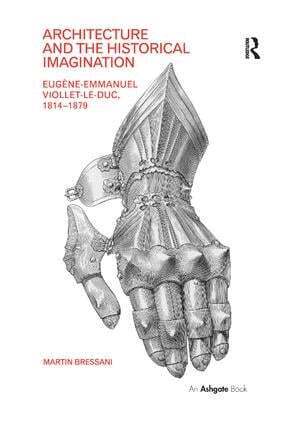
    Architecture and the Historical Imagination

    Eugène-Emmanuel Viollet-le-Duc, 1814–1879

    AvMartin Bressani

    Häftad, Engelska, 2017

    803 kr

    Beställningsvara. Skickas inom 10-15 vardagar. Fri frakt över 249 kr.

    Fler format och utgåvor

    Inbunden

    2 495 kr

    E-bok

    950 kr

    E-bok

    950 kr

    Beskrivning

    Hailed as one of the key theoreticians of modernism, Eugène-Emmanuel Viollet-le-Duc was also the most renowned restoration architect of his age, a celebrated medieval archaeologist and a fervent champion of Gothic revivalism. He published some of the most influential texts in the history of modern architecture such as the Dictionnaire raisonné de l’architecture française du XIe au XVIe siècle and Entretiens sur l’architecture, but also studies on warfare, geology and racial history. Martin Bressani expertly traces Viollet-le-Duc’s complex intellectual development, mapping the attitudes he adopted toward the past, showing how restoration, in all its layered meaning, shaped his outlook. Through his life journey, we follow the route by which the technological subject was born out of nineteenth-century historicism.

    Produktinformation

    • Utgivningsdatum:2017-10-12
    • Mått:174 x 246 x 39 mm
    • Vikt:1 360 g
    • Format:Häftad
    • Språk:Engelska
    • Antal sidor:624
    • Förlag:Taylor & Francis Ltd
    • ISBN:9781138563193

    Utforska kategorier

    • Konsthistoria inom Kultur

    Mer om författaren

    Martin Bressani is Associate Professor and Graduate Program Director at the School of Architecture, McGill University, Canada.

    Recensioner i media

    'This is a magnum opus, in more than one sense of the term. An important work, the product of vast research and dedicated scholarship, Bressani’s biographical study is a timely contribution not only to architectural studies but also to the field of historical culture in general. Through tracing Viollet-le-Duc’s achievement in relation to the broad transition from Romanticism to Modernity, Bressani succeeds in bringing out his wider significance as an artist and thinker, and as a major figure in French Romanticism.’ Stephen Bann, Bristol University, UK 'This ambitious book is unprecedented ... Not only the author but the publisher should be commended for this stimulating, illuminating study, which will become a standard work of reference.' Burlington Magazine 'Somme toute, cet ouvrage biographique et empirique retrace d'une manière rarement approfondie, contextualisée et sourcée la vie et l'oeuvre du "maitre" du néogothique, l'appui d'une belle iconographie couleur pleinement au service du propos. La mise en perspective systématique avec l'histoire de l'architecture, de la société, de la pensée contemporaine, permet de situer d'autant mieux les motivations de son appel au médiévisme archéologique et la place singulière de son anti-académisme au sein de la communauté artistique de son temps ... le lecteur anglophone de France et d'ailleurs ne pourra que s'enrichir de cette somme qui nourrit amplement l'histoire de l'architecture - et de sa pensée - au XIXe siècle.' Sehepunkte 'A thoughtful and comprehensive account ... Bressani's discussion of [the Dictionnaire Raisonné de l'Architecture]. His perceptive thoroughnes extends to a careful discussion of the technique of the engraved illustrations.' Victorian'The product of Bressani’s extraordinary specialized knowledge and deep research, [the book] makes extensive use of primary sources, including Viollet-le-Duc’s correspondence, and appropriate recent secondary sources in English and French. The book provides intriguing publication histories, perceptive analysis of Viollet-le-Duc’s texts and drawings, and fascinating accounts of nineteenth-century architectural debates, all of which historians will find useful.' CAA Reviews

    Innehållsförteckning

    • Introduction: the architectural topography of historical imagination Part I: Contingency in the historiographies of the English reformation, French revolution and era of the industrial revolution in England 1. Contingency and artifice 2. Encounter and utterance 3. Milieu and movement 4. Figure and event Part II: Writing history as a city 5. Proximity and distance 6. The revolutionary encounter field: Paris c.1789-94 and other stories 7. Recollection and re-enactment 8. Morphologies of feeling Appendix A: A notation for the architectural topographic sequencing of texts Appendix B: Synopsis of Cinderella Appendix C: Additional architectural topographic sequences from Cinderella Appendix D: Search terms and categories used in toponemic analysis references index