• Fri frakt över 249 kr
  • •
  • Snabba leveranser
  • •
  • Billiga böcker
Kundservice

Du är på sajten för privatpersoner.

Företag, bibliotek eller offentlig verksamhet?

Du handlar på classic.bokus.com, där alla dina funktioner finns intakta.
Till classic.bokus.com
Bokus logotyp. Gå till startsidan.
  • Erbjudanden
  • Nyheter
  • Student
  • Topplistor
  • Barn & ungdom
  • Bokus Play
  • E-böcker
  • Pocketböcker
  • Spel & pussel

10% rabatt på allt med kod NYSTART10 →

Sidfot

Mina sidor

    Hjälp

    • Kundservice
    • Vanliga frågor och svar
    • Frakt och leverans
    • Retur vid ångerrätt
    • Reklamera vara
    • Betalning
    • Köpvillkor
    • Allmänna villkor
    • Information om webbplatsens tillgänglighet

    Om Bokus

    • Om oss
    • Pressrum
    • För studenter
    • För företag
    • För bibliotek och offentlig verksamhet
    • För leverantörer
    • Hållbarhet

    Populärt

    • Aktuella erbjudanden
    • Presentkort
    • Studentlitteratur
    • Nya böcker
    • Topplistor
    • Signerade böcker
    • Engelska böcker

    Inspiration

    • Boktips
    • BookTok
    • Populära bokserier
    • Barnbokskaraktärer
    • Populära författare
    Logotyp för Bokus
    Följ oss på Facebook (extern länk)Följ oss på Instagram (extern länk)Följ oss på YouTube (extern länk)Följ oss på TikTok (extern länk)
    bokus @ CookiesAnpassa cookiesIntegritetspolicyKöpvillkor
    Till Citymail hemsida (extern länk)Till Budbee hemsida (extern länk)Till Postnord hemsida (extern länk)Till Schenker hemsida (extern länk)Till Early Bird hemsida (extern länk)Till Walleys hemsida (extern länk)
    1. Språk och ordböcker
    2. Språkundervisning och språkinlärning

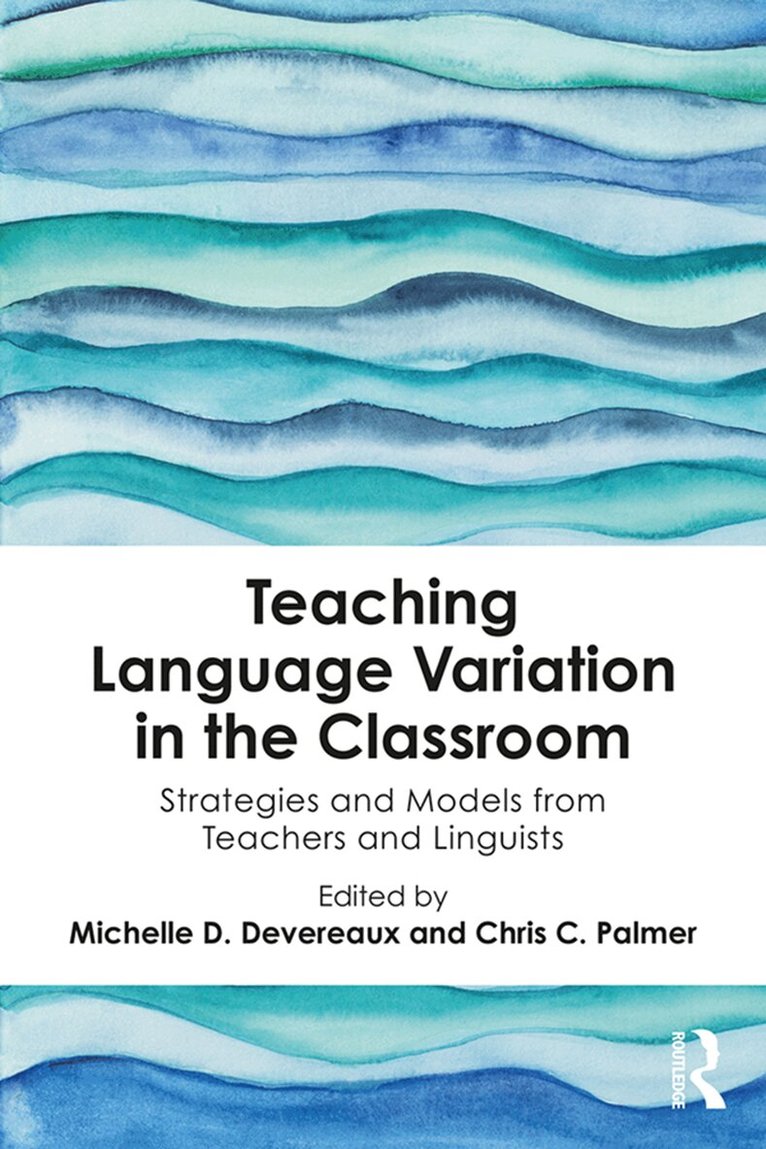
    Teaching Language Variation in the Classroom

    Strategies and Models from Teachers and Linguists

    AvMichelle D. Devereaux,Chris C. Palmer

    Inbunden, Engelska, 2019

    2 354 kr

    Beställningsvara. Skickas inom 10-15 vardagar. Fri frakt över 249 kr.

    Beskrivning

    Bringing together the varied and multifaceted expertise of teachers and linguists in one accessible volume, this book presents practical tools, grounded in cutting-edge research, for teaching about language and language diversity in the ELA classroom. By demonstrating practical ways teachers can implement research-driven linguistic concepts in their own teaching environment, each chapter offers real-world lessons as well as clear methods for instructing students on the diversity of language. Written for pre-service and in-service teachers, this book includes easy-to-use lesson plans, pedagogical strategies and activities, as well as a wealth of resources carefully designed to optimize student comprehension of language variation.

    Produktinformation

    • Utgivningsdatum:2019-01-21
    • Mått:152 x 229 x 14 mm
    • Vikt:412 g
    • Format:Inbunden
    • Språk:Engelska
    • Antal sidor:170
    • Förlag:Taylor & Francis Ltd
    • ISBN:9781138597945

    Utforska kategorier

    • Språkundervisning och språkinlärning inom Språk och ordböcker
    • Språkvetenskap och lingvistik inom Språk och ordböcker
    • Undervisning i specifika ämnen inom Psykologi och pedagogik

    Mer om författaren

    Michelle D. Devereaux is Associate Professor of English Education at Kennesaw State University, USA.Chris C. Palmer is Associate Professor of English at Kennesaw State University, USA.

    Recensioner i media

    "One of the things I love about this volume is that the classroom approaches and activities engage students’ curiosity about the language they see and hear around them, as well as the language they encounter in literature…This volume is a gem because it has experienced secondary teachers and linguists in conversation about how to teach in a linguistically informed and engaging way… Linguists have much to learn from these essays about how to make linguistics more accessible for K-12 classrooms and how to design introductory linguistics courses to be more helpful for teachers in training. And secondary teachers (as well as teachers of younger students) can find information here that may inspire them to experiment with new approaches in their classrooms as early as tomorrow, because experienced teachers are laying out in detail how to do so—and why."- From the Foreword by Anne Curzan, University of Michigan, USA"The key words to describe the approach of this book for me are curiosity and exploration. For anyone who works with linguistically diverse learners, this book will help, with lesson plans tied to Common Core state standards, resources, and linguistic responses to a variety of issues. The varied chapter authors, who are teacher-linguists or linguist-teachers, show readers, rather than just telling us, how to encourage our own students to become linguistically curious and experts about their own language varieties and usage. And they do so in an accessible way. I am excited to have a new tool to help me better introduce to pre-service TESOL teachers the social hierarchy of language and the inherent value in linguistic diversity!"- Heather Linville, University of Wisconsin, USA"This long-needed and innovative text will serve as a springboard for educators seeking to incorporate instruction on language variation in their practice. Engaging as it is practical, this volume provides thought-provoking perspectives from experienced educators and linguists from a variety of backgrounds with a wealth of experience working with diverse audiences across the U.S. Importantly, the contributors to this volume provide concrete examples and lesson plans for other scholar-practitioners to adapt as we explore with our students how language works and implications in our daily lives. This text will most certainly become a well-referenced handbook for K-20 educators for years to come!"- Stephany Dunstan, NC State University, USA

    Innehållsförteckning

    • DedicationAcknowledgementsForewordAnne Curzan, University of Michigan, Ann Arbor, MichiganIntroductionTeaching Language Variation and Ideologies: Questions and StrategiesHow to Use This BookMichelle D. Devereaux and Chris C. Palmer, Kennesaw State University, GeorgiaPart One: Teachers’ Perspectives"Word Crimes" and Linguistic Ideology: Examining Student Ideas About Language in the English Language Arts ClassroomAmy L. Plackowski, Hudson High School, MassachusettsPrescriptive and Descriptive Lenses: How a Teacher Worked with Local Linguists to Develop a Language Ideologies UnitAndrew Bergdahl, New Hampton School, New HampshireProfiling, Prejudice, and Prestige: Language Ideologies Across ContextsStacy Ishigaki Arevalo, Eastside College Preparatory School, California"Working With" Instead of "Pushing Against": Meeting Testing Standards While Teaching Language IdeologiesMike Williams, Joseph Wheeler High School, Georgia, and Dundalk High School, Maryland"Mr. D, is this, like, a real word?": Stories of a Linguist in a High School English ClassroomJohn A. Damaso, Brophy College Preparatory, ArizonaLinguistics in an English Language Arts Class: Elevating Language AwarenessBeth Keyser, Superior High School, MontanaUsing Music to Bridge Language DiversityJillian Ratti, McMinn County High School, TennesseePower, Society, and Identity: Language and Life in a Ninth-Grade English ClassroomHolly Hoover, Kennesaw Mountain High School, GeorgiaLanguage Awareness in Education: A Linguist’s Response to TeachersWalt Wolfram, NC State, North CarolinaPart Two: Linguists’ PerspectivesPrinciples to Navigate the Challenges of Teaching English Language Variation: A Guide for Non-LinguistsMike Metz, University of Missouri, MissouriTeaching Linguistic Diversity as the Rule Rather Than the ExceptionAnne Lobeck, Western Washington University, WashingtonDARE(ing) Language Ideologies: Exploring Linguistic Diversity Through Audio Data and Literature in Secondary Language Arts CoursesKelly D. Abrams, University of Wisconsin-Madison, WisconsinTrini Stickle, Western Kentucky University, KentuckyBringing Critical Language Pedagogy to the Middle School Social Studies Classroom: Lessons for Standard English LearnersJessica Hatcher and Jeffrey Reaser, NC State, North CarolinaGrammar in the Spanish/English Bilingual Classroom: Three Methods for Teaching Academic LanguageMary Hudgens Henderson, Winona State University, MinnesotaAttitude Change is Not Enough: Changing Teacher Practice to Disrupt Dialect Prejudice in the ClassroomRebecca Wheeler, Christopher Newport University, VirginiaExtending the Conversation: Two Teachers’ Response to LinguistsSuzanne Loosen and Teaira McMurtry, Milwaukee Public Schools, WisconsinPart Three: Collaborations Between Teachers and LinguistsUsing Digital Resources to Teach Language Variation in the MidwestAmanda Sladek, University of Nebraska-Kearney, NebraskaMattie Lane, West High School, IowaHow Power Reveals and Directs Teacher Language Ideologies with High-Achieving African American Students in a Secondary English ClassroomTanji Reed Marshall, Virginia Polytechnic Institute and State University, VirginiaChrystal Seawood, Washington Leadership Academy, Washington D.C.Sustained Linguistic Inquiry as a Means of Confronting Language Ideology and PrejudiceKristin Denham, Western Washington University, WashingtonDavid Pippin, Friday Harbor Elementary School, Washington"Standard" English, "Classic" Literature: Examining Canonical and Linguistic Ideologies in Huck FinnJeanne Dyches, Iowa State University, IowaCameron Gale, West Des Moines Community Schools, IowaIndex