• Fri frakt över 249 kr
  • •
  • Snabba leveranser
  • •
  • Billiga böcker
Kundservice

Du är på sajten för privatpersoner.

Företag, bibliotek eller offentlig verksamhet?

Du handlar på classic.bokus.com, där alla dina funktioner finns intakta.
Till classic.bokus.com
Bokus logotyp. Gå till startsidan.
  • Erbjudanden
  • Nyheter
  • Student
  • Topplistor
  • Barn & ungdom
  • Bokus Play
  • E-böcker
  • Pocketböcker
  • Spel & pussel

10% rabatt på allt med kod NYSTART10 →

Sidfot

Mina sidor

    Hjälp

    • Kundservice
    • Vanliga frågor och svar
    • Frakt och leverans
    • Retur vid ångerrätt
    • Reklamera vara
    • Betalning
    • Köpvillkor
    • Allmänna villkor
    • Information om webbplatsens tillgänglighet

    Om Bokus

    • Om oss
    • Pressrum
    • För studenter
    • För företag
    • För bibliotek och offentlig verksamhet
    • För leverantörer
    • Hållbarhet

    Populärt

    • Aktuella erbjudanden
    • Presentkort
    • Studentlitteratur
    • Nya böcker
    • Topplistor
    • Signerade böcker
    • Engelska böcker

    Inspiration

    • Boktips
    • BookTok
    • Populära bokserier
    • Barnbokskaraktärer
    • Populära författare
    Logotyp för Bokus
    Följ oss på Facebook (extern länk)Följ oss på Instagram (extern länk)Följ oss på YouTube (extern länk)Följ oss på TikTok (extern länk)
    bokus @ CookiesAnpassa cookiesIntegritetspolicyKöpvillkor
    Till Citymail hemsida (extern länk)Till Budbee hemsida (extern länk)Till Postnord hemsida (extern länk)Till Schenker hemsida (extern länk)Till Early Bird hemsida (extern länk)Till Walleys hemsida (extern länk)
    1. Ekonomi och Ledarskap
    2. Nationalekonomi
    3. Ekonomisk historia

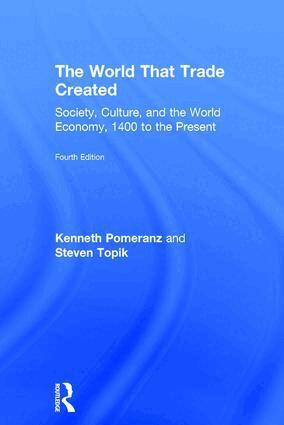
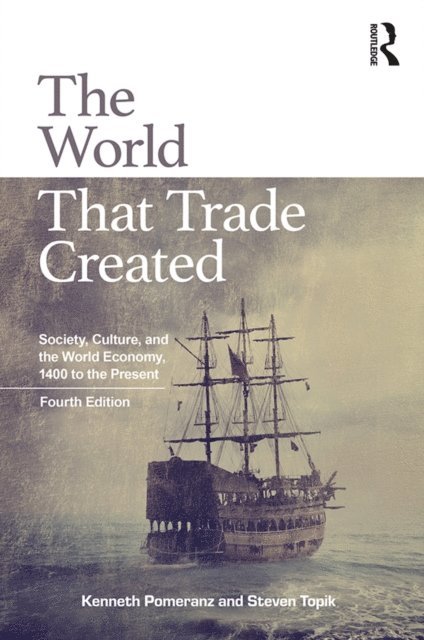
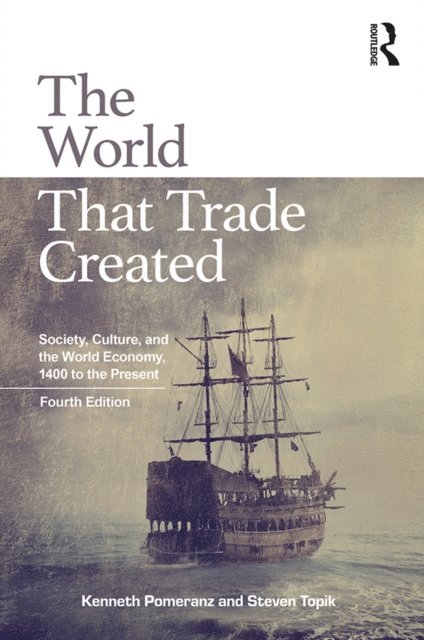
    World That Trade Created

    Society, Culture, and the World Economy, 1400 to the Present

    AvKenneth Pomeranz,Steven Topik

    Häftad, Engelska, 2017

    774 kr

    Beställningsvara. Skickas inom 10-15 vardagar. Fri frakt över 249 kr.

    Fler format och utgåvor

    Inbunden

    2 683 kr

    Beskrivning

    The World That Trade Created brings to life the history of trade and its actors. In a series of brief, highly readable vignettes, filled with insights and amazing facts about things we tend to take for granted, the authors uncover the deep historical roots of economic globalization. Covering over seven hundred years of history, this book, now in its fourth edition, takes the reader around the world from the history of the opium trade to pirates, to the building of corporations and migration to the New World. The chapters are grouped thematically, each featuring an introductory essay designed to synthesize and elaborate on key themes, both familiar and unfamiliar. It includes ten new essays, on topics ranging from the early modern ivory and slave trades across the Indian Ocean, to the ways in which the availability of new consumer goods helped change work habits in both Europe and East Asia, and from the history of chewing gum to that of rare earth metals. The introductory essays for each chapter, the overall introduction and epilogue, and several of the essays have also been revised and updated.The World That Trade Created continues to be a key resource for anyone teaching world history, world civilization, and the history of international trade.

    Produktinformation

    • Utgivningsdatum:2017-10-03
    • Mått:155 x 241 x 20 mm
    • Vikt:477 g
    • Format:Häftad
    • Språk:Engelska
    • Antal sidor:346
    • Upplaga:4
    • Förlag:Taylor & Francis Ltd
    • ISBN:9781138680746

    Utforska kategorier

    • Ekonomisk historia inom Ekonomi och Ledarskap
    • Internationell ekonomi inom Ekonomi och Ledarskap

    Mer om författaren

    Kenneth Pomeranz is University Professor in History at the University of Chicago, USA, and was President of the American Historical Association in 2013-14.  Steven Topik is Professor of History at UC Irvine, USA, where he has worked since 1984. Previously he taught at Brazil’ s Universidade  Federal Fluminense and Colgate University.

    Recensioner i media

    ‘In this collection of short essays, Pomeranz and Topik masterfully depict the story of the creation of the world economy. Without using academic jargon, they explain how trade with commodities, drugs, animals, people and ideas moved among continents and transformed the world.’ — Manel Ollé, associate tenure professor in Modern and contemporary Chinese history and culture, Director of the Master in Chinese Studies, Universitat Pompeu Fabra, Barcelona, Spain ‘How invisible networks of trade ultimately came to compel producers, merchants, and even whole societies to adapt to the networks' needs as they grew is a fascinating story, and one just as important for understanding the world as developments in politics or culture are. I know of no other book that introduces trade networks so well. It is an ideal text for survey courses.’ — Roland Spickermann - Chair, Dept. of History, University of Texas of the Permian Basin, USA

    Innehållsförteckning

    • IntroductionChapter 1 The Making of Market Conventions The Fujian Trade Diaspora The Chinese Tribute System Funny Money, Real Growth When Asia Was the World Economy Treating Good News as No News Pearls in the Rubble: Rediscovering the Golden Age of Quanzhou, ca. 1000–1400 Aztec Traders Primitive Accumulation: Brazilwood A British Merchant in the Tropics How the Other Half Traded Deals and Ordeals: World Trade and Early Modern Legal Culture Traveling Salesmen, Traveling Taxmen Indian Ocean Commodity Circuit: How to Turn Cotton into Ivory Going Non-native: Expense Accounts and the End of the Age of Merchant Courtiers Empire on a Shoestring: British Adventurers and Indian Financiers in Calcutta, 1750–1850 Chapter 2 Transport and Tactics2.1 Human Ingenuity: Adapting to Natural Barriers, and Creating New Ones2.2 Power-Driven Transport: New Time, New Space, Old Conflicts2.3 Woods, Winds, Shipbuilding, and Shipping: Why China Didn’t Rule the Waves2.4 Better to Be Lucky Than Smart2.5 Seats of Government and Their Stomachs: An Eighteenth-Century Tour2.6 Pioneers of Dusty Rooms: Warehouses, Transatlantic Trade, and the Opening of the North American Frontier2.7 People Patterns: Was the Real America Sichuan?2.8 Winning Raffles2.9 Trade, Disorder, and Progress: Creating Shanghai, 1840–19302.10 Out of One—Many2.11 Guaranteed Profits and Half-Fulfilled Hopes: Railroad Building in British India2.12 A Brief Trip Across the CenturiesChapter 3 The Economic Culture of Drugs3.1 Chocolate: From Coin to Commodity3.2 Brewing Up a Storm3.3 Mocha Is Not Chocolate3.4 The Brew of Business: Coffee’s Life Story3.5 America and the Coffee Bean3.6 Sweet Revolutions3.7 Paying for Power: "Sin Taxes" and the Rise of the Modern State3.8 How Opium Made the World Go ‘Round3.9 Tobacco: the Rise and Decline of a Magical Weed3.10 Making Smoking Modern: From Pipes to Cigarettes in Egypt and Elsewhere3.11 Chewing Is Good, Snorting Isn’t: How Chemistry Turned a Good Thing BadChapter 4 Transplanting4.1 Unnatural Resources4.2 Bouncing Around4.3 Golden Misfortune: John Sutter in the Wilds of California4.4 California Gold and the World4.5 El Dorado or Wild Coast? How a Remote Place was washed by the Tides of World History4.6 Beautiful Bugs4.7 How to Turn Nothing into Something: Guano’s Ephemeral Fortunes4.8 As American as Sugar and Pineapples4.9 How the Cows Ate the Cowboys4.10 The Tie That Bound4.11 The Good Earth?4.12 One Potato, Two Potato4.13 Cocoa and Coercion: Advances and Retreats for Free Labor in West African Agriculture4.14 Trying to Get a Grip: Natural Rubber’s Century of Ups and DownsChapter 5 The Economics of Violence5.1 The Logic of an Immoral Trade5.2 As Rich as Potosí5.3 The Freebooting Founders of England's Free Seas5.4 Adventure, Trade, Piracy: Anthony Shirley and Pedro Teixeira, Two Early Modern Travelers5.5 The Luxurious Life of Robinson Crusoe5.6 No Islands in the Storm: Or, How the Sino-British Tea Trade Deluged the Worlds of Pacific Islanders5.7 The Violent Birth of Corporations5.8 Buccaneers as Corporate Raiders5.9 Looking for the Next Worst Thing: Emancipation, Indentures, and Colonial Plantations After Slavery5.10 Bloody Ivory Tower5.11 How Africa Resisted Imperialism: Ethiopia and the World Economy5.12 Never Again: The Saga of the RosenfeldersChapter 6 Making Modern Markets6.1 Silver and Gold in Mexico and Brazil6.2 Weighing the World: The Metric Revolution6.3 From Court Bankers to Architects of the Modern World Market: The Rothschilds6.4 Growing Global: International Grain Markets6.5 How Time Got That Way6.6 How the United States Joined the Big Leagues6.7 Clubs, Casinos, and Collapses: Sovereign Debt and Risk Management Since 18206.8 Fresher Is Not Better6.9 Packaging6.10 Trademarks: What’s in a Name?6.11 Learning to Feel Unclean: A Global Marketing Tale6.12 Chewing on global History: Wrigley, Adams, and the Yucatan6.13 Things Go Better with Red, White, and Blue: How Coca-Cola Conquered Europe6.14 Survival of the First6.15 It Ain’t Necessarily So6.16 Location, Location, Location: How History Trumped Geography in Andorra and PanamaChapter 7 World Trade, Industrialization, and Deindustrialization7.1 Sweet Industry: The First Factories7.2 Why We Work So Hard: The Industrious Revolution and the Early Modern World7.3 Fiber of Fortune: How Cotton Became the Fabric of the Industrial Age7.4 Combing the World for Cotton7.5 Killing the Golden Goose7.6 Sweet Success7.7 No Mill Is an Island7.8 Feeding Silkworms, Spitting Out Growth7.9 From Rocks—and Restrictions—to Riches: How Disadvantages Helped New England Industrialize Early7.10 Sideways Breakthroughs and Stalled Transitions: Crooked Paths from Coal to Oil, 1859–20127.11 American Oil7.12 Running on Oil, Building on Sand7.13 Not So Rare, But Pretty Strange: How Rare Earth Metals Became a Chinese "Monopoly"7.14 Minding the Store and Forgetting the Factory: U.S. "Fair Trade" Laws and the Rise of Offshore Manufacturing Since World War IIEpilogue: The World Economy in the Twenty-First Century