• Fri frakt över 249 kr
  • •
  • Snabba leveranser
  • •
  • Billiga böcker
Kundservice

Du är på sajten för privatpersoner.

Företag, bibliotek eller offentlig verksamhet?

Du handlar på classic.bokus.com, där alla dina funktioner finns intakta.
Till classic.bokus.com
Bokus logotyp. Gå till startsidan.
  • Erbjudanden
  • Nyheter
  • Student
  • Topplistor
  • Barn & ungdom
  • Bokus Play
  • E-böcker
  • Pocketböcker
  • Spel & pussel

10% rabatt på allt med kod: NYSTART10 →

Sidfot

Mina sidor

    Hjälp

    • Kundservice
    • Vanliga frågor och svar
    • Frakt och leverans
    • Retur vid ångerrätt
    • Reklamera vara
    • Betalning
    • Köpvillkor
    • Allmänna villkor
    • Information om webbplatsens tillgänglighet

    Om Bokus

    • Om oss
    • Pressrum
    • För studenter
    • För företag
    • För bibliotek och offentlig verksamhet
    • För leverantörer
    • Hållbarhet

    Populärt

    • Aktuella erbjudanden
    • Presentkort
    • Studentlitteratur
    • Nya böcker
    • Topplistor
    • Signerade böcker
    • Engelska böcker

    Inspiration

    • Boktips
    • BookTok
    • Populära bokserier
    • Barnbokskaraktärer
    • Populära författare
    Logotyp för Bokus
    Följ oss på Facebook (extern länk)Följ oss på Instagram (extern länk)Följ oss på YouTube (extern länk)Följ oss på TikTok (extern länk)
    bokus @ CookiesAnpassa cookiesIntegritetspolicyKöpvillkor
    Till Citymail hemsida (extern länk)Till Budbee hemsida (extern länk)Till Postnord hemsida (extern länk)Till Schenker hemsida (extern länk)Till Early Bird hemsida (extern länk)Till Walleys hemsida (extern länk)
    1. Kultur
    2. Arkitektur

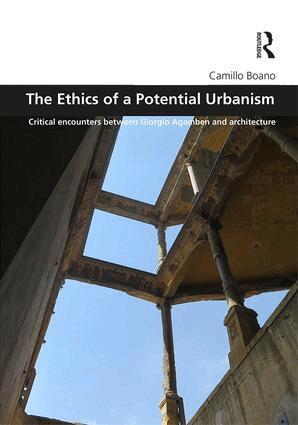
    Ethics of a Potential Urbanism

    Critical encounters between Giorgio Agamben and architecture

    AvCamillo Boano

    Inbunden, Engelska, 2016

    Del i serien Design and the Built Environment

    2 645 kr

    Beställningsvara. Skickas inom 10-15 vardagar. Fri frakt över 249 kr.

    Fler format och utgåvor

    E-bok

    881 kr

    E-bok

    883 kr

    Häftad

    723 kr

    Beskrivning

    The Ethics of a Potential Urbanism explores the possible and potential relevance of Giorgio Agamben’s political thoughts and writings for the theory and the practice of architecture and urban design. It sketches out the potentiality of Agamben’s politics, which can affect change in current architectural and design discourses. The book investigates the possibility of an inoperative architecture, as an ethical shift for a different practice, just a little bit different, but able to deactivate the sociospatial dispositive and mobilize a new theory and a new project for the urban now to come. This particular reading from Agamben’s oeuvre suggests a destituent mode of both thinking and practicing of architecture and urbanism that could possibly redeem them from their social emptiness, cultural irrelevance, economic reductionism and proto-avant-garde extravagance, contributing to a renewed critical ‘encounter’ with architecture’s aesthetic-political function.

    Produktinformation

    • Utgivningsdatum:2016-12-05
    • Mått:174 x 246 x 18 mm
    • Vikt:522 g
    • Format:Inbunden
    • Språk:Engelska
    • Serie:Design and the Built Environment
    • Antal sidor:188
    • Förlag:Taylor & Francis Ltd
    • ISBN:9781138687707

    Utforska kategorier

    • Arkitektur inom Kultur
    • Filosofiska discipliner inom Filosofi och religion

    Mer om författaren

    Camillo Boano is an architect and urbanist. He is Senior Lecturer at The Bartlett Development Planning Unit, University College of London (UCL), where he directs the MSc in Building and Urban Design in Development. He is also co-director of the UCL Urban Laboratory.

    Recensioner i media

    This book offers more than an original contribution to the field; it opens a true debate that can no longer be ignored.Francesco Careri, Roma Tre UniversityThis book examines the relevance of Giorgio Agamben’s political writings for architecture and urban design and carefully guides the reader through Agamben’s fascinating ethical and political vocabulary. The book rethinks notions such as use, productivity, and creation that are, in the design disciplines, often taken for granted. It recognises, perhaps provocatively but convincingly so, in ‘inoperative architecture’ a genuine route towards a political and ethical design practice. This book offers a timely contribution to the debates on the social responsibility of architectural and urban design, and a must-read for scholars interested in the emancipatory and transformative agency of design.Isabelle Doucet, The University of ManchesterFor all those of us concerned with a truly alternative project for architecture, Boano's work is not only enlightening but also timely. His reading of Agamben from an architectural point of view certainly goes beyond proposing the paradox of making philosophy operative by rendering architecture inoperative: it also sheds light on a possible way out of the anti-intellectual trend that pervades contemporary architecture. Instead of a new style or another slogan to feed the industry of architecture, Boano's proposal looks for a renewed ethics which, precisely in a discipline that forgot about this word, will surely open up unexpected and yet amazing new avenues for architectural debate.Francisco Díaz, Professor at the School of Architecture Universidad Católica de Chile and Editor in Chief of ARQ Magazine, Santiago, Chile.The Ethics of a Potential Urbanism is a fascinating attempt to invigorate politically engaged architectural discourse - both as a theory and as a practice. The aim of the book is to use Giorgio Agamben philosophical project focused on an idea of radically emancipatory 'being inoperative' as a project of a new (post-capitalist?) architecture. In a context of architecture and urbanism this perspective opens possibility of a (absolute?) freedom, allowing to reject hyper-pragmatic language of capitalism (but also dated state socialist model - based on Fordist model of production).The book is a promise of new model of community and relationships between language, rules and life.Krzysztof Nawratek, Senior Lecturer in Humanities and Architectural Design, The University of SheffieldHow can architecture deactivate its preoccupations with "the arrogant ego of creative power" and be of use for an urban life without a final destination? This is the question addressed in this most erudite and inventive mobilization of Agamben’s work. Boano takes a major step in rendering inoperative the prevailing suppositions and practices that keep urbanism from being something else, now.Abdoumalique Simone, Max Planck Institute for the Study of Religious and Ethnic DiversityGiorgio Agamben’s political thought has inspired architecture and planning theory over the last decade. Camillo Boano’s new book is a significant contribution to this debate, and a landmark in the growing literature that focuses on the relationships between architecture, urban design and planning and political philosophy. This original book takes the debate to a new level of erudition while also framing Agamben’s politics in relation to the material space and the contemporary landscape. This book is indeed ground-breaking work that provides an important source for scholars concerned with the encounters between spatial practices and Agamben’s politics.Haim Yacobi, Ben Gurion University

    Innehållsförteckning

    • 1. Introduction: An Architecture Inseparable from its Form, Part I: Agamben’s Burning House, 2. Paradigmatic Spaces: Agamben Spaces, Architecture and Arts, 3. Literal and Artistic Potential Common Grounds, 4. The Taking Place of Possible Inoperative Encounters, Part II: Giorgio Agamben’s Oeuvre, 5. Earlier Works: The Man Without Contents, Stanzas and Language and History, 6. The Coming Politics and Potentialities: The Coming Community, 7. The Homo Sacer project since its inception to Stasis, Part III: Towards an Inoperative Architecture, 8. Paradigms and Dispositifs, 9. Profanation, 10. Potentialities, 11. Inoperativity, 12. Use, 13. Abandoning the Project: The Possibility for a Whatever Architecture