• Fri frakt över 249 kr
  • •
  • Snabba leveranser
  • •
  • Billiga böcker
Kundservice

Du är på sajten för privatpersoner.

Företag, bibliotek eller offentlig verksamhet?

Du handlar på classic.bokus.com, där alla dina funktioner finns intakta.
Till classic.bokus.com
Bokus logotyp. Gå till startsidan.
  • Erbjudanden
  • Nyheter
  • Student
  • Topplistor
  • Barn & ungdom
  • Bokus Play
  • E-böcker
  • Pocketböcker
  • Spel & pussel

10% rabatt på allt med kod NYSTART10 →

Sidfot

Mina sidor

    Hjälp

    • Kundservice
    • Vanliga frågor och svar
    • Frakt och leverans
    • Retur vid ångerrätt
    • Reklamera vara
    • Betalning
    • Köpvillkor
    • Allmänna villkor
    • Information om webbplatsens tillgänglighet

    Om Bokus

    • Om oss
    • Pressrum
    • För studenter
    • För företag
    • För bibliotek och offentlig verksamhet
    • För leverantörer
    • Hållbarhet

    Populärt

    • Aktuella erbjudanden
    • Presentkort
    • Studentlitteratur
    • Nya böcker
    • Topplistor
    • Signerade böcker
    • Engelska böcker

    Inspiration

    • Boktips
    • BookTok
    • Populära bokserier
    • Barnbokskaraktärer
    • Populära författare
    Logotyp för Bokus
    Följ oss på Facebook (extern länk)Följ oss på Instagram (extern länk)Följ oss på YouTube (extern länk)Följ oss på TikTok (extern länk)
    bokus @ CookiesAnpassa cookiesIntegritetspolicyKöpvillkor
    Till Citymail hemsida (extern länk)Till Budbee hemsida (extern länk)Till Postnord hemsida (extern länk)Till Schenker hemsida (extern länk)Till Early Bird hemsida (extern länk)Till Walleys hemsida (extern länk)
    1. Kultur
    2. Arkitektur

    How Drawings Work

    A User-Friendly Theory

    AvSusan Piedmont-Palladino

    Inbunden, Engelska, 2019

    2 495 kr

    Beställningsvara. Skickas inom 10-15 vardagar. Fri frakt över 249 kr.

    Fler format och utgåvor

    Häftad

    817 kr

    E-bok

    967 kr

    E-bok

    967 kr

    Beskrivning

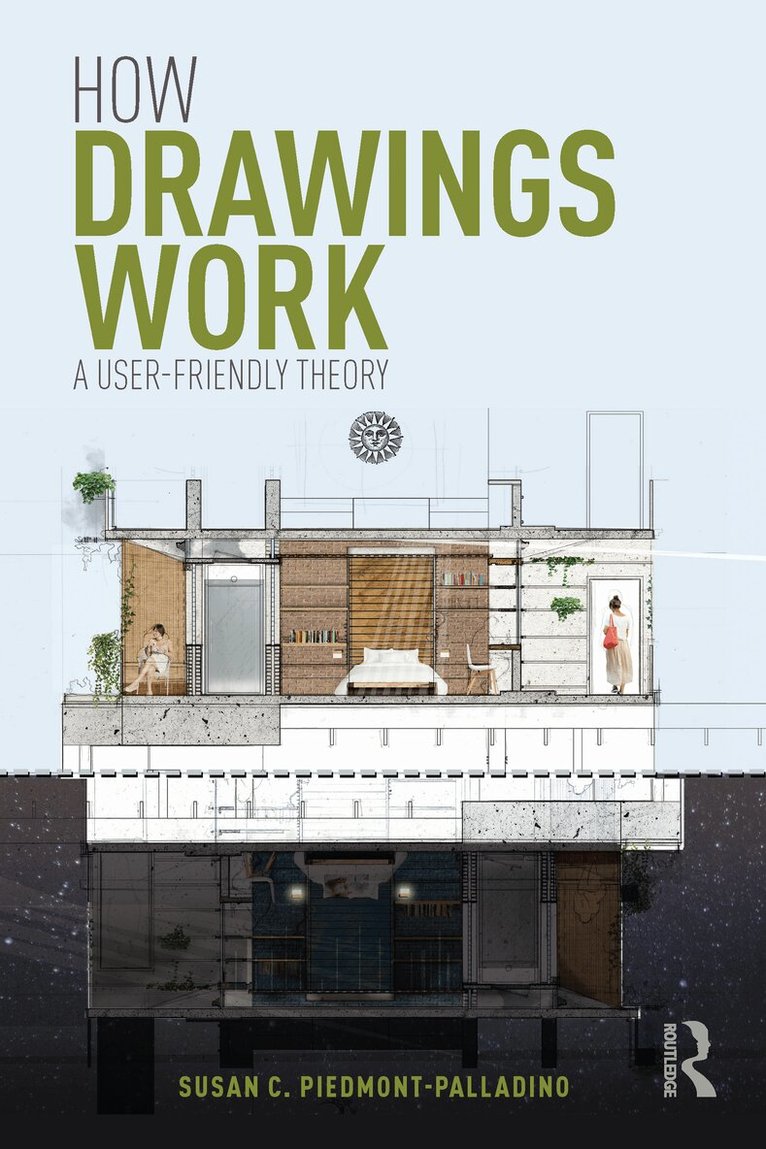
    How Drawings Work cheekily explains that what architects make is information that enables other people to make buildings. That information comes in a variety of forms: drawings by hand and computer, models both physical and virtual, and words as needed. The book reflects in witty prose on the nature of architectural drawings as tools of communication, pulling from a diverse and eclectic landscape of theories from grammar, functional linguistics, philosophy, art criticism, science fiction, popular culture, and, of course, architecture, to propose a new way to think about architectural communication.

    Produktinformation

    • Utgivningsdatum:2019-01-15
    • Mått:156 x 234 x 17 mm
    • Vikt:572 g
    • Format:Inbunden
    • Språk:Engelska
    • Antal sidor:180
    • Förlag:Taylor & Francis Ltd
    • ISBN:9781138692961

    Utforska kategorier

    • Arkitektur inom Kultur
    • Referensverk och tvärvetenskap inom Samhälle och politik
    • Inredningsarkitektur inom Kultur

    Mer om författaren

    Susan C. Piedmont-Palladino is a professor of Architecture, Coordinator of Urban Design, and the Director of Virginia Tech’s Washington / Alexandria Architecture Center in Alexandria, Virginia, USA. She is also a curator at the National Building Museum in Washington, District of Columbia, and a registered architect in the Commonwealth of Virginia, USA.

    Recensioner i media

    "Susan Piedmont-Palladino provides wonderful insight into the various types and functions of drawings. This valuable book is both practical and inspirational and should be read by architects as well as students of design and others interested in built environments."Frederick Steiner, Dean, School of Design, University of Pennsylvania"No need to be an architect to appreciate this erudite, illustrated exploration of communication through drawing. Susan Piedmont-Palladino critically analyzes drawing types, purposes, pitfalls and history, from cave art to digital modeling. Yet her insightful, intellectually rigorous writing, often punctuated with 'just-between-you-and-me' asides, is witty and charmingly conversational."Roger K. Lewis, FAIA, Architect & Planner, Professor Emeritus, University of Maryland School of Architecture, Planning and Preservation, Columnist, The Washington Post"Susan Piedmont-Palladino has written a book about drawing unlike any other. She recounts her own discovery of the depth and diversity of architectural drawings, exploring analogies with language and finding parallels with art history. It is an accessible book and a deeply personal and philosophical one as well, and it is well worth the time it takes to read."Professor Thomas Fisher, Director of the Minnesota Design Center at the University of Minnesota"Piedmont-Palladino takes you on an unexpected journey into a world of groundbreaking scholarship illuminated with startling 'aha' moments and profoundly witty observations. She makes you think and she makes you laugh—sometimes sequentially, sometimes simultaneously. If you have ever seen a drawing or made a drawing, you will want to read this book. Now that I have read it, how I think about language and about drawing will never be the same again."Chase W. Rynd, Executive Director and CEO, National Building Museum "How Drawings Work is an altogether marvelous contribution to the literature on representation. Moving with agility across a range of perspectives—aesthetic philosophy and linguistic theory, architectural history and professional practice, science fiction and commercial advertising—Susan Piedmont-Palladino crafts a series of insightful arguments on the changing nature of architectural communication."Nancy Levinson, Places Journal"Piedmont-Palladino understands how architects’ use tools not just to design but find our way through the world. This wise exploration expands our understanding of how and why architects communicate—to each other and those who inhabit our creations—and deftly challenges the false choice between the analog and the digital by reframing our understanding of both."Phil Bernstein, Associate Dean and Senior Lecturer, Yale School of Architecture and former Vice President at Autodesk"Susan Piedmont-Palladino's boundless imagination shines in her new book. With grace and wit, she reveals the intellectually rich history of the architect's most basic tool--the drawing. Utterly delightful."Lance Hosey, author of The Shape of Green: Aesthetics, Ecology, and Design

    Innehållsförteckning

    • Preface Introduction: An irresponsibly brief history of drawing(s) Rhetoric and persuasion Direction of fit Matching the world Wishes and instructions The Elevation: the world’s most dangerous drawing Into the uncanny valley Conclusions and QuestionsAcknowledgementsBibliographyImage credits