• Fri frakt över 249 kr
  • •
  • Snabba leveranser
  • •
  • Billiga böcker
Kundservice

Du är på sajten för privatpersoner.

Företag, bibliotek eller offentlig verksamhet?

Du handlar på classic.bokus.com, där alla dina funktioner finns intakta.
Till classic.bokus.com
Bokus logotyp. Gå till startsidan.
  • Erbjudanden
  • Nyheter
  • Student
  • Topplistor
  • Barn & ungdom
  • Bokus Play
  • E-böcker
  • Pocketböcker
  • Spel & pussel

10% rabatt på allt med kod NYSTART10 →

Sidfot

Mina sidor

    Hjälp

    • Kundservice
    • Vanliga frågor och svar
    • Frakt och leverans
    • Retur vid ångerrätt
    • Reklamera vara
    • Betalning
    • Köpvillkor
    • Allmänna villkor
    • Information om webbplatsens tillgänglighet

    Om Bokus

    • Om oss
    • Pressrum
    • För studenter
    • För företag
    • För bibliotek och offentlig verksamhet
    • För leverantörer
    • Hållbarhet

    Populärt

    • Aktuella erbjudanden
    • Presentkort
    • Studentlitteratur
    • Nya böcker
    • Topplistor
    • Signerade böcker
    • Engelska böcker

    Inspiration

    • Boktips
    • BookTok
    • Populära bokserier
    • Barnbokskaraktärer
    • Populära författare
    Logotyp för Bokus
    Följ oss på Facebook (extern länk)Följ oss på Instagram (extern länk)Följ oss på YouTube (extern länk)Följ oss på TikTok (extern länk)
    bokus @ CookiesAnpassa cookiesIntegritetspolicyKöpvillkor
    Till Citymail hemsida (extern länk)Till Budbee hemsida (extern länk)Till Postnord hemsida (extern länk)Till Schenker hemsida (extern länk)Till Early Bird hemsida (extern länk)Till Walleys hemsida (extern länk)
    1. Samhälle och politik
    2. Samhälle och kultur

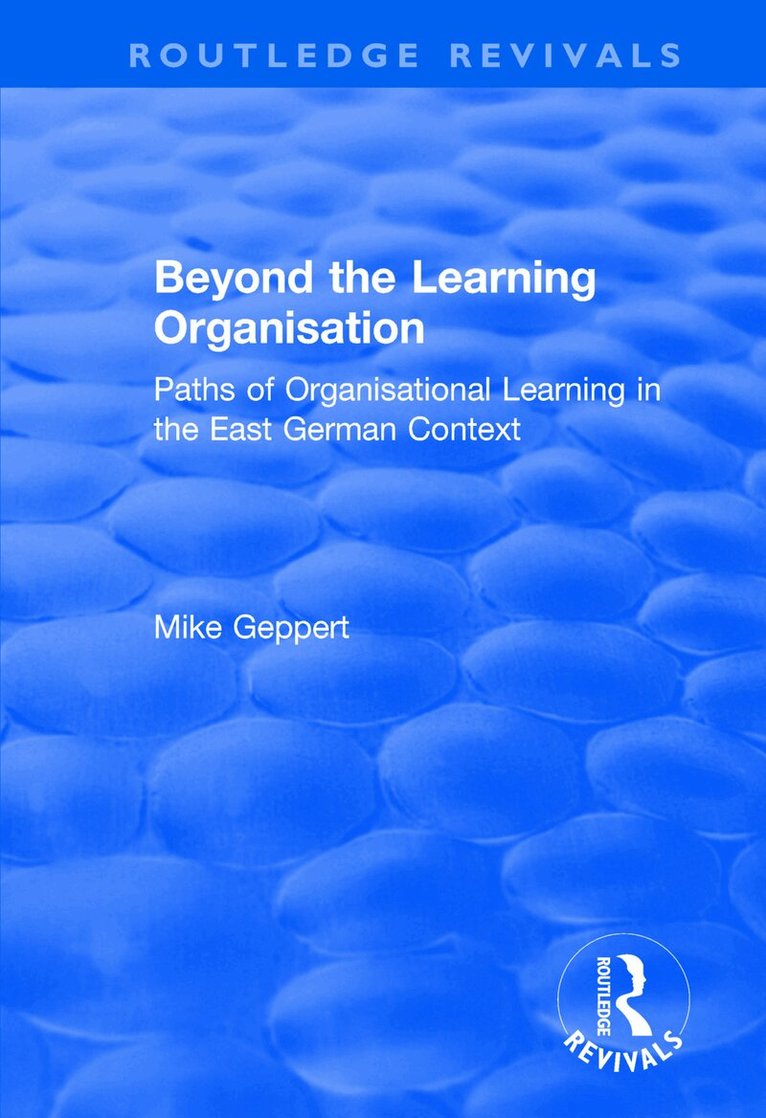
    Beyond the Learning Organisation

    Paths of Organisational Learning in the East German Context

    AvMike Geppert

    Häftad, Engelska, 2019

    Del i serien Routledge Revivals

    513 kr

    Beställningsvara. Skickas inom 10-15 vardagar. Fri frakt över 249 kr.

    Fler format och utgåvor

    E-bok

    605 kr

    E-bok

    622 kr

    Inbunden

    1 468 kr

    Beskrivning

    This title was first published in 2000. In contemporary management literature, the idea that managers and organizations should learn and provide widespread capabilities for learning to learn is gaining popularity. Some see reflexive thinking and learning as being the proper response to the transformation of industrial society. However, this study is not concerned too much with the reasons for learning, but is more about how actors and groups of actors actually learn and the resources at their disposal for learning. The study aims to show that differences in social context do matter, and analyzes the organizational learning process in the political and social transformation of East Germany.

    Produktinformation

    • Utgivningsdatum:2019-11-11
    • Mått:150 x 219 x undefined mm
    • Vikt:390 g
    • Format:Häftad
    • Språk:Engelska
    • Serie:Routledge Revivals
    • Antal sidor:210
    • Förlag:Taylor & Francis Ltd
    • ISBN:9781138739772

    Utforska kategorier

    • Samhälle och kultur inom Samhälle och politik

    Innehållsförteckning

    • Theories of organizational learning, institutional settings and enactment - introduction, the roots of organizational learning in organization theory, the idea of organizational learning, learning revisited, towards an analysis of organizational learning processes in different social contexts; research design, company cases and methods of investigation - introduction, research interests, preparatory and selection phase, intensive research phase, phase of analysis, concluding comments; trajectories of learning in three East German companies - case study A-integration in a large industrial group, case study B-searching for a market niche, case study C-the creation of new markets; a systematic comparison of the cases - introduction, summary; intertwining organizational learning and institutional settings - introduction, institutional tensions in processes of organizational learning and their impact on the micro-macro problem, dissimilarities in the social construction of cultural systems and their impact on the micro-macro problem, concluding remarks and outlook.